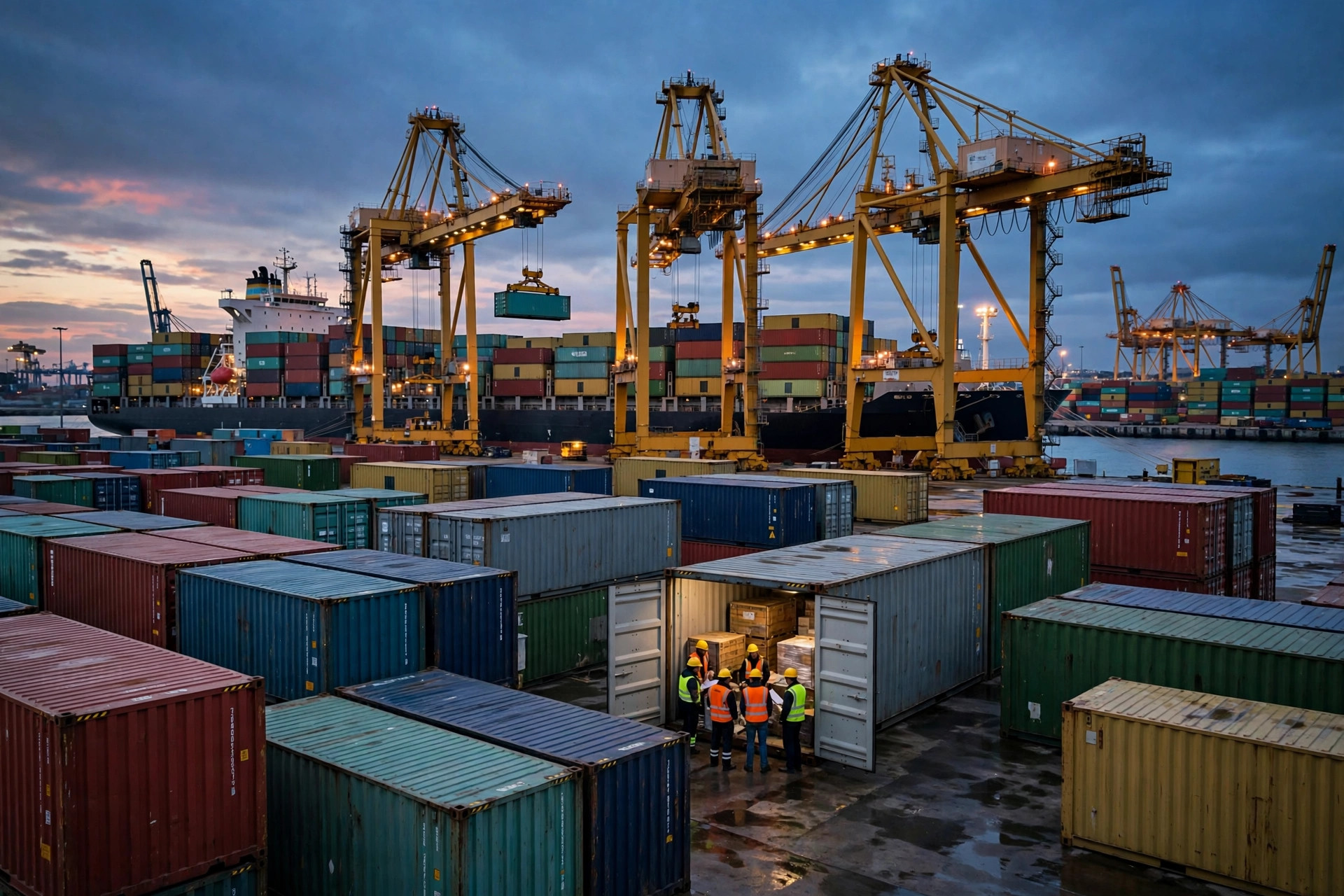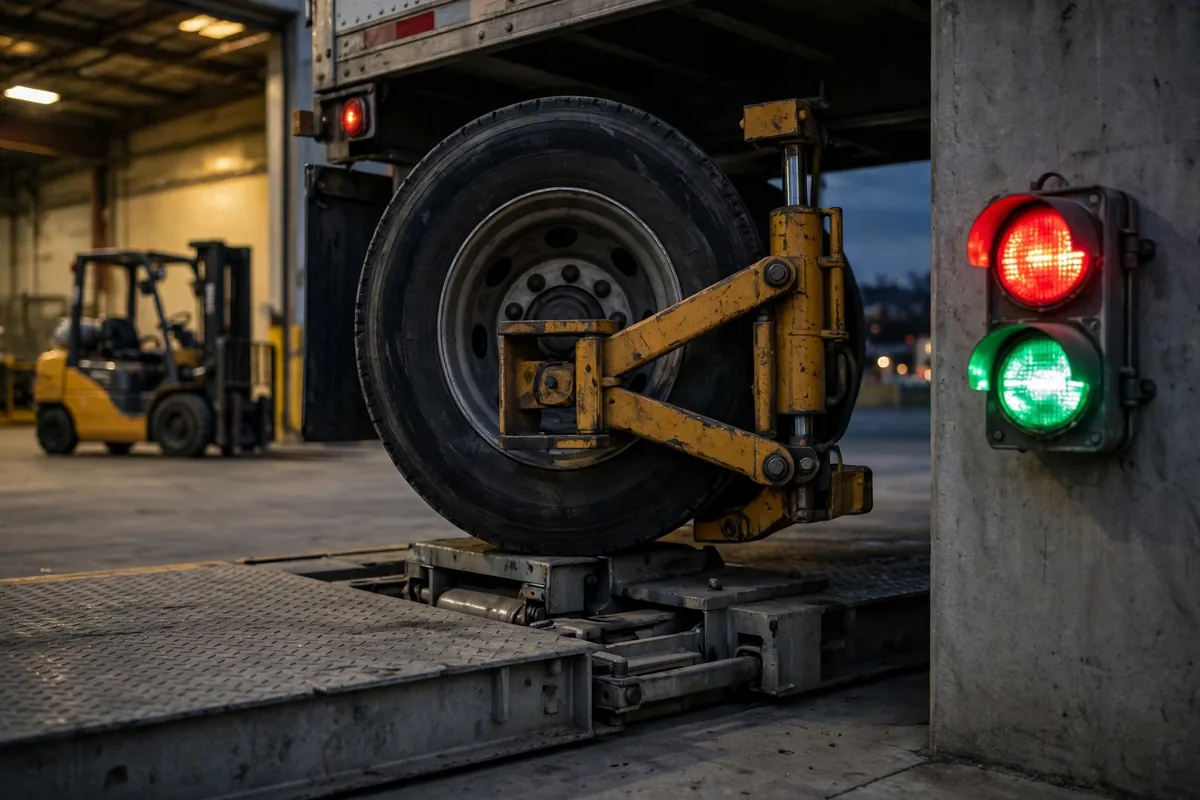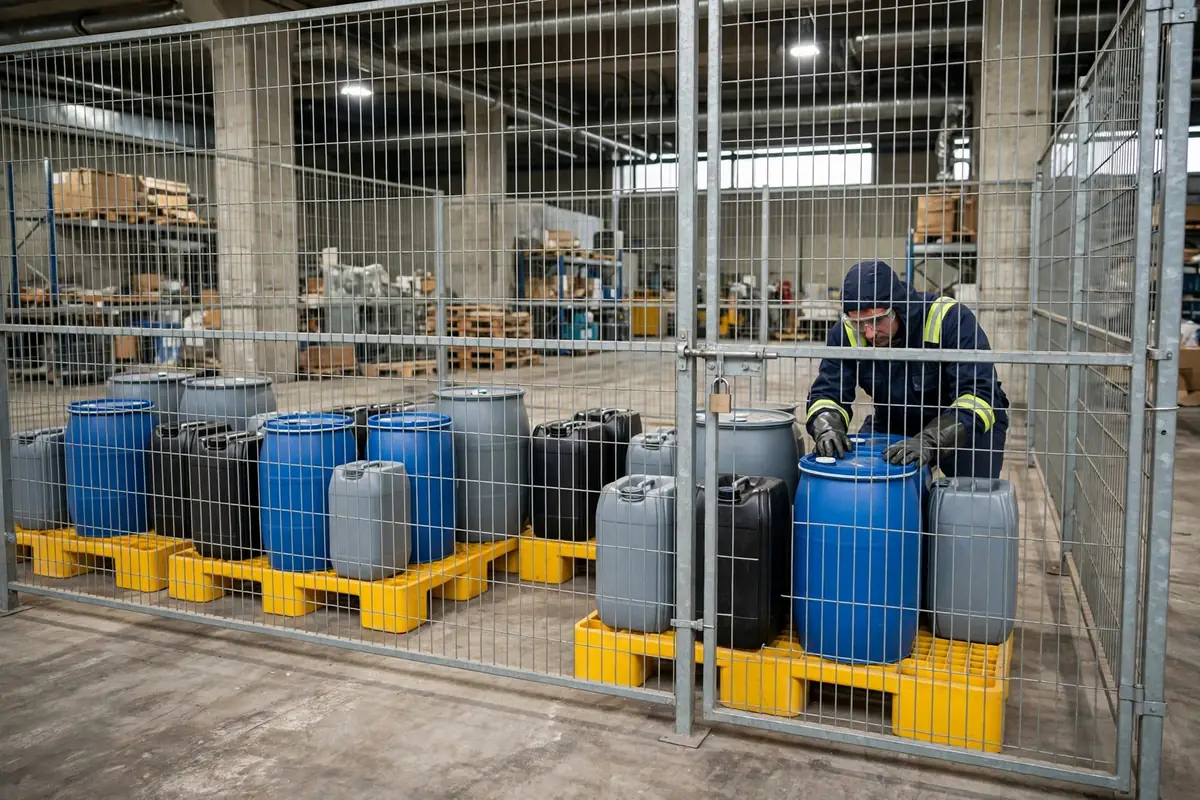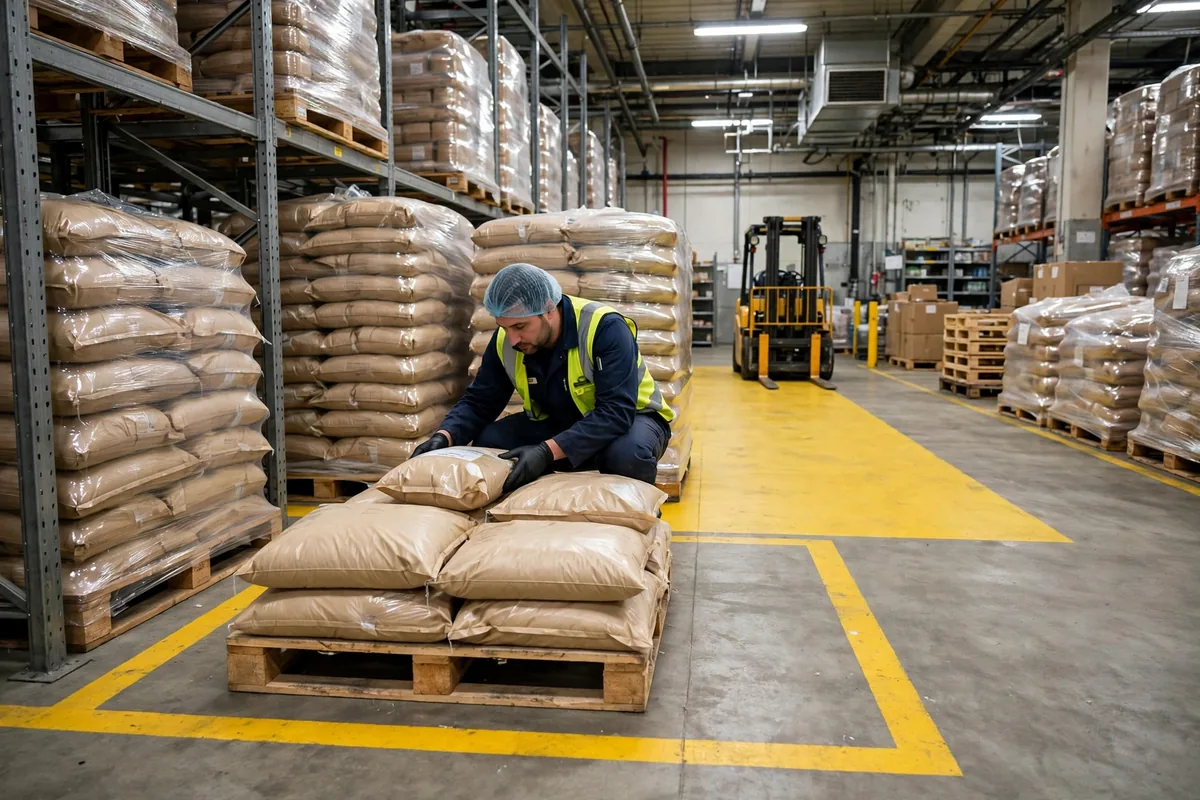
Six in the morning, still half dark. In an allergen segregation warehouse, the day is won or lost in the first minute: the dock door rolls up, a truck backs in with a flour-based ingredient, and my forklift driver, Old Zhang, starts to roll — and I stop him. Not to slow him down. That load has not cleared quarantine, and nobody slots un-checked food freight straight into a general location on my floor. The crew used to grumble about the pause. Honestly? The pause is not what costs time. The cost is the three days after a mistake, when a batch sits on hold and the whole building stops to dig through records. Our order never changes: zone it, quarantine it, verify it, then slot it. Reverse it and you spend the week patching holes.
Most food warehouses treat allergen segregation as a storage problem: this side of the racking for that, done. On a real floor, failures rarely happen in the rack. They happen in the twenty minutes at receiving, when a forklift crisscrosses zones, when tools are shared with no cleaning step, and when a torn bag spills and somebody sweeps the powder into the next zone. A pretty map with an uncontrolled dock is decoration.
allergen segregation warehouse zoning starts with a map the whole shift can read
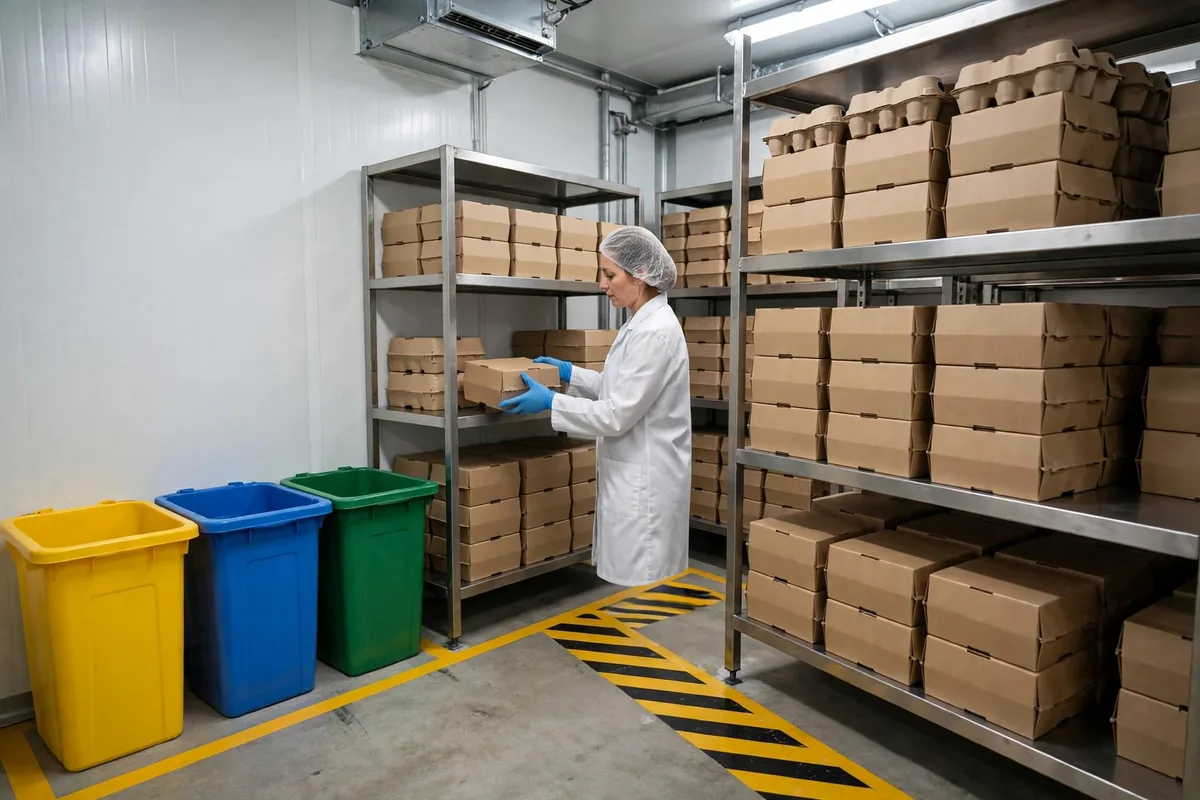
Our map does not live in the office. It hangs at the receiving door and by the forklift charging area. It shows three things: the allergen zone, general storage, and receiving quarantine. Colors are distinct, arrows show the route in and where freight goes next. A new hire learns the map before touching a pallet. Cannot read the map, cannot receive alone.
Zoning is not cutting the building in half. We cut by risk and by travel route together. Ingredients that throw dust or leak sit away from general food and from outer-pack work. Full-pallet, slow movers go deep. Fast movers stay near their own zone's exit, so a forklift never crosses the other zone to reach them. Here is the counterintuitive part: farther apart is not automatically safer. Push the zones to opposite ends and routes get longer, crossings multiply, and tires and pallet bottoms carry the problem with them. Segregation is not a distance contest. It is a route contest — short, one-way, non-crossing routes beat raw distance every time.
We learned that before one peak season. A nut-containing ingredient was staged temporarily near a general-zone aisle because it was "only for two days" and the labels were on. For two days, every forklift, picker, and temp on that flow passed it. On night shift the lead found a damaged outer case, powder leaked onto the pallet edge, and shut that section down on the spot. No harm left the building, but the night cost three extra hours: cordon, count, clean, and re-check every load that had traveled the same route. After that, one rule became permanent: freight can wait; routes cannot be improvised.
allergen segregation warehouse discipline lives or dies at receiving quarantine
If I could protect only one step, I would protect receiving. A problem stopped at the dock is still at the dock. A problem slotted into the rack becomes a building-wide search.
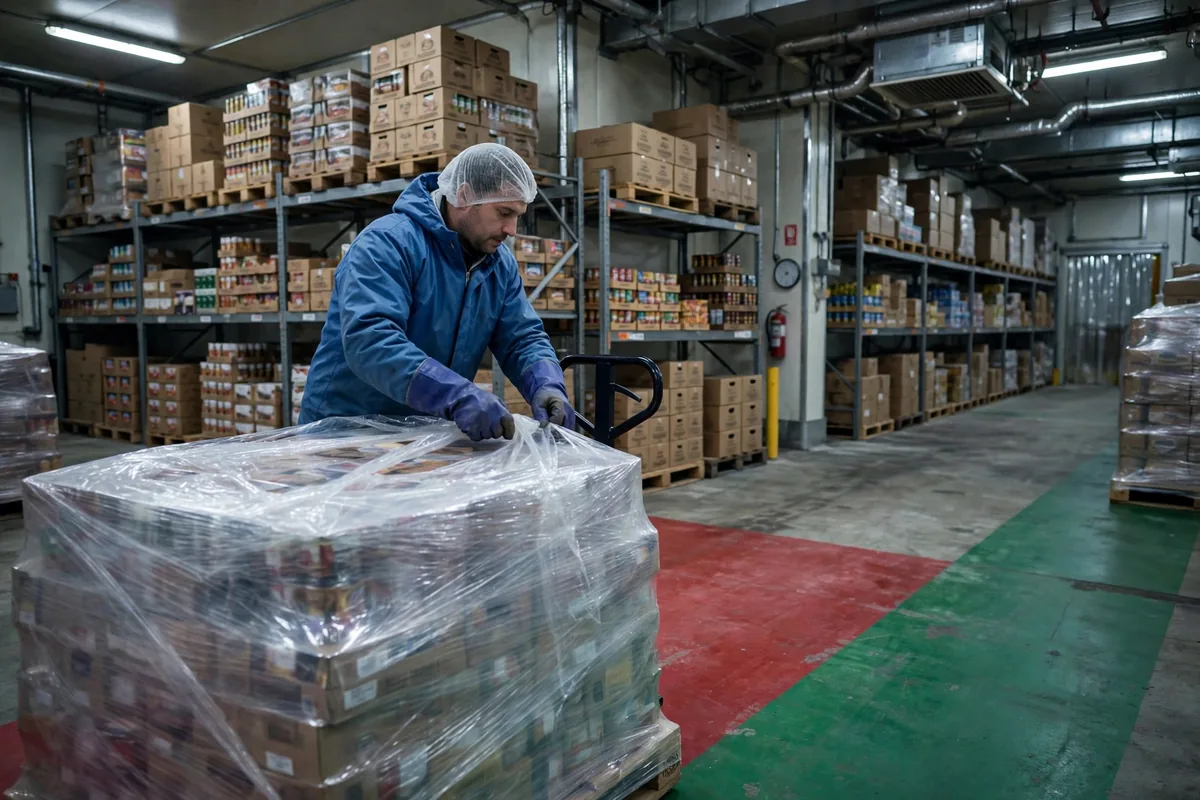
Our routine has five fixed steps. One, match paperwork to product and lot before unloading — a mismatch stops the load. Two, unload into quarantine, never straight to a rack, and inspect outer cases there for damage, leaks, and missing labels. Three, verify allergen identification; if the paperwork says it and the case does not, or the system record was never set up, the load is not verified and stays in quarantine. Four, location assignment follows the zoning map — the system does not get to drop allergen freight into a general slot because one is empty. Five, release is signed: who checked it, who released it, and when, so a later problem traces to a person, a pallet, and a time.
One autumn night shift nearly slotted a seasoning ingredient into general storage. The cases were clean, the paperwork thin on ingredient detail, and the young receiver wanted to keep the dock moving. On handover I asked one extra question and had him re-read the supplier document traveling with the load. Sesame was in the ingredient list. That load went to the allergen zone with a reassigned location, and the detour cost under an hour. Slotted wrong, it would have been picked as general freight next morning, and no hour would have fixed it. Asking one more question at receiving is never the embarrassment. Slotting one wrong pallet is.
The economics agree. A clearly labelled hypothetical example — assumed numbers, not our real data: suppose 40 food pallets arrive a day, 10 allergen-bearing. Holding each an extra 10 minutes in quarantine costs roughly 100 minutes of attended labor a day. Price one mis-slotted pallet instead: cordoning, recounting, re-checking everything that shared the route, and the customer hold conversation can eat two full shifts in one event, plus freight frozen meanwhile. Quarantine time is a budgeted cost. A segregation failure is an unbudgeted explosion.
For the broader framework — why allergen and non-allergen stock are separated at all — the earlier overview on this site is worth reading alongside this piece: the basics of allergen segregation in food warehouses. That article covers the "why separate" ground. This one covers the floor-level "how": how the map is drawn and how receiving actually runs.
Shared equipment is where most plans quietly die. A large building might dedicate forklifts. A mid-size food warehouse runs a small fleet across both zones, and sharing itself is not the sin — sharing without a cleaning node is. Our rule: a forklift leaving the allergen zone for general work stops at the cleaning point first. Forks, tires, and body sides — anywhere dust or liquid can ride — get cleaned and checked, the lead marks the board, and only then is the truck released. Small tools are stricter: shovels, brooms, and hand jacks are color-coded, one set per zone, and the wrong color gets called out before it crosses the line.
People ask where peak season finds time for cleaning. Peak is exactly when it matters — more trucks, more people, more temps, and "use your judgment" scales to nothing. So we batch allergen-zone work: run a batch, clean the truck once, then turn to general work. A truck jumping zones eight times an hour creates eight cleaning obligations nobody will honor. Batching cuts the number of cleans — and, counterintuitively, that is what makes each clean actually happen, properly, every time.
Spill response is decided before anything spills: stop, cordon, report, then clean. A torn bag leaking powder does not get swept first; work stops, the area is cordoned so people and trucks stop tracking through it, a photo is taken, and the lead is called. Cleaning uses the allergen zone's dedicated tools, waste is bagged and leaves by its own route — never into general trash — and surrounding locations and the travel route are inspected before the cordon comes down. Last spring a powder bag slid off a pallet edge during picking and split on the aisle. The picker's instinct was a broom; a senior hand stopped him and pulled the barrier tape first. Cleanup took about forty minutes and delayed outbound, but the two rack rows beside it stayed clean and shippable. Swept open, that powder would have ridden the whole aisle, and forty minutes would have become a day.
Keeping this alive is shift work, not paperwork. Three habits: handover walks the map — what sits in quarantine, what is on hold, which special routes run this shift, face to face. Cleaning records get checked during peak weeks, while gaps can still be explained. And weekly we trace one pallet backwards, from rack to receiving record and release signature. If the trace breaks, someone skipped a step, and we fix it that week.
One reminder for fellow warehouse managers: do not turn allergen control into a poster on a wall. It is the pause at the receiving door, the clean before a truck changes zones, and the cordon that goes up before the broom comes out. With those habits alive, ordinary rack separation will hold. Without them, the widest gap between zones is peace of mind you have not earned. Which categories, labels, and customer audit requirements apply in your building always follows your customers' current documents and the latest official rules — check those directly rather than treating any article, including this one, as the standard itself.
That six a.m. pause? I have called it for years, and I will keep calling it. Truck arrives, freight waits in quarantine, nobody rushes the check. A warehouse stays steady on small pauses, held every shift, without exception.
By Chen Feng, Warehouse Operations Manager