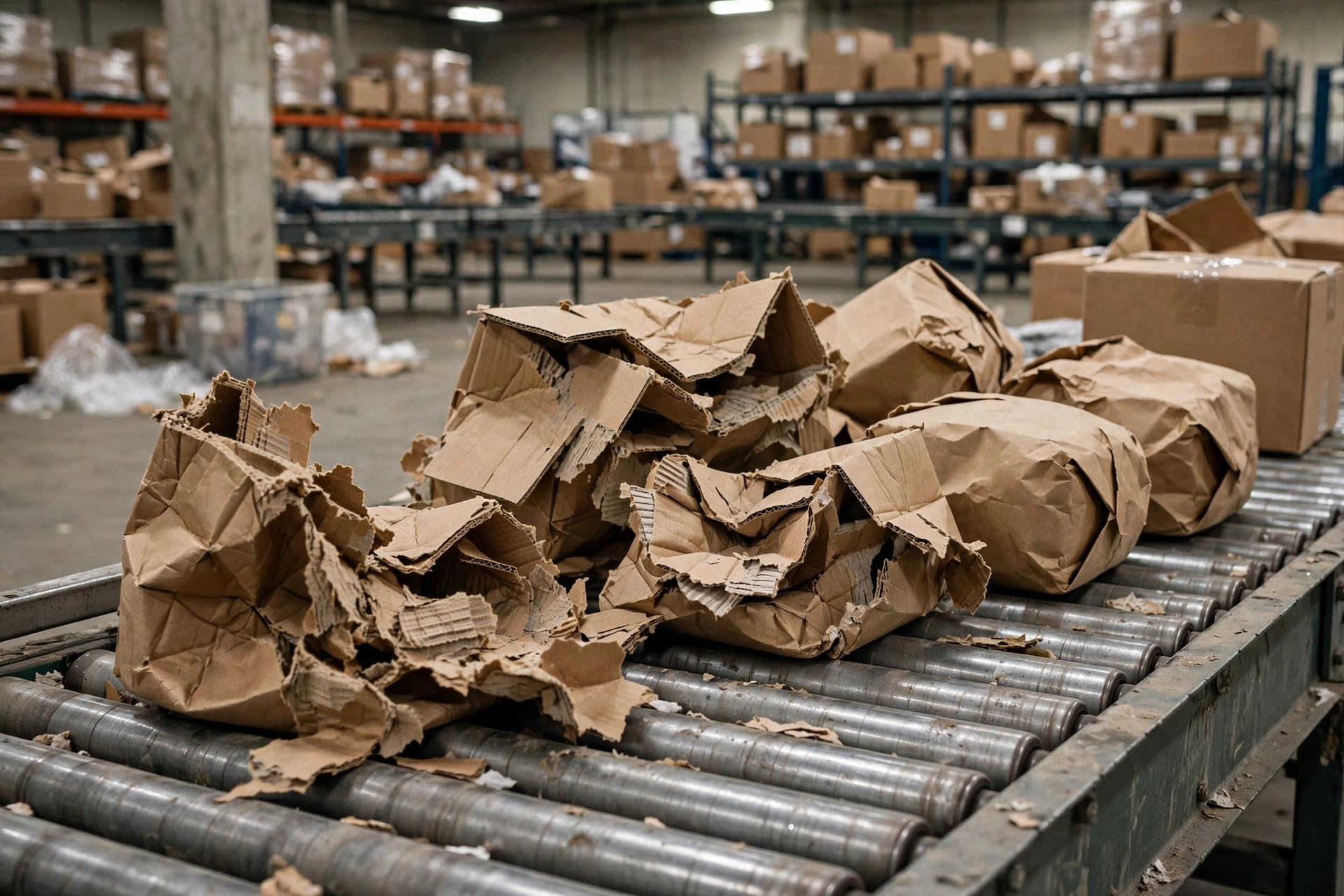
A friend who sells outdoor gear called me last month: "Da, our damage rate hit 7%. Customers are furious. We switched carriers twice and it's still happening — the couriers must be throwing our boxes around." I told him to hold off on blaming the carrier. In most of the cases I've looked at over the years, the real culprit is the box itself or the case sealer. If you're googling "why do shipping boxes keep breaking," you're asking the right question — but most people start the investigation in the wrong place.
Diagnosing carton damage is a three-step job: the box, the case sealer, and the handling process. Run them in that order and you almost never miss.
Step 1: Why do shipping boxes keep breaking? Start with the box spec
First, two specs people constantly mix up: ECT (edge crush test) and Mullen (burst strength). Think of it this way — ECT answers "how many layers can you stack," Mullen answers "can it get punctured." ECT measures vertical compression strength, which is what stacking is about. Mullen measures resistance to puncture and side pressure.
Most e-commerce warehouses use single-wall boxes rated at 32 ECT, which roughly corresponds to a 65-lb load rating. A lot of purchasing managers treat that number like scripture, but it's a lab-condition rating. In a real parcel trailer, cartons get stacked five or six high, and the box at the bottom carries the combined weight of everything above it. A 25-kg box with four boxes stacked on top is carrying 100 kg — more than three times its 29-kg rating. Of course it crushes.
Here's my dividing line: any box 24×24×24 inches or larger carrying heavy product goes double-wall (48 ECT class), no debate. Single-wall 32 ECT is a spec for light goods in small-to-medium boxes, not a universal answer. A shocking number of damage problems trace back to exactly one cause: wrong box spec for the job.
Then there's the trap buyers fall into: optimizing unit price. A single-wall 32 ECT carton costs meaningfully less than a double-wall 48 ECT one, so procurement does the math — "a few million cartons a year, we save a fortune" — and switches everything to single-wall. What they don't calculate is the other side: damage rate climbing from ~1% to ~5%, and the added cost of refunds, reships, bad reviews, and return freight, which runs many times the carton savings. It's like buying cheap tires for highway driving — you save on rubber and pay double on repairs.
Another underestimated killer: used cartons. Plenty of warehouses love re-shipping in recycled boxes because it looks like free money. The industry's general observation is that a second-use carton loses roughly 30–40% of its strength — you can't see it, but the board is already "a bone that's been fractured once." For heavy or high-value goods, reusing cartons is a hard no from me, and I'll say it bluntly.
Moisture, too. Wet board loses ECT far faster than most people expect — half a day sitting by the warehouse door in rainy season and the strength is gone.
Real case: autumn 2024, an outdoor-gear seller in Yiwu, Zhejiang, shipping folding tables and chairs. Boxes were 28×20×18 inches, single-wall 32 ECT, each weighing in just over 25 kg. During the Double 11 peak season, the damage rate hit ~7%, and six out of ten damaged boxes had crushed corners. They spent a month yelling at the carrier. Then they switched to double-wall 48 ECT cartons. Damage dropped to just over 1%. Each carton cost only a few cents more, and they saved tens of thousands in after-sales costs during peak season.
Step 2: The case sealer is the silent box-breaker
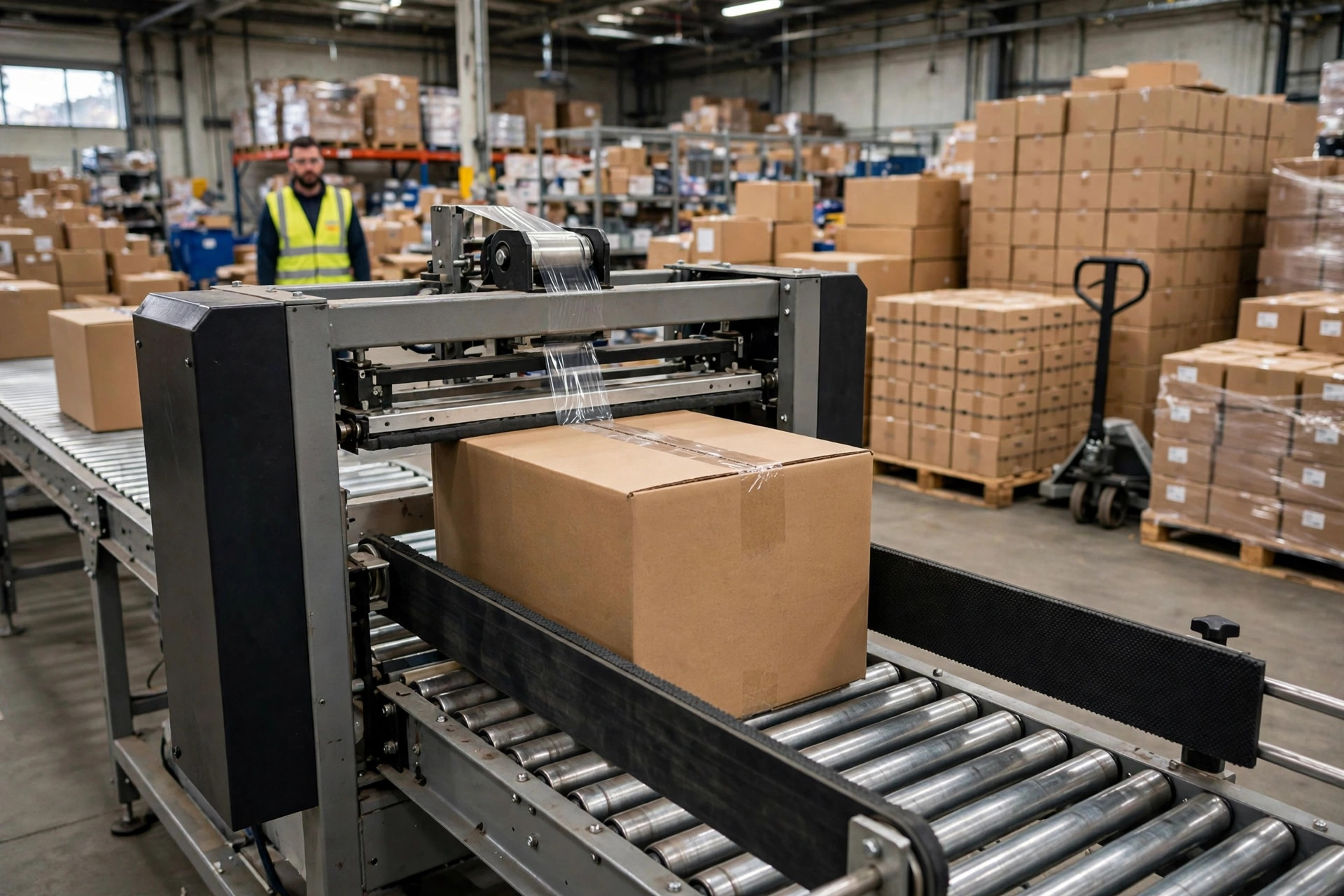
If the box checks out and damage is still high, your next suspect is the case sealer. It inflicts "internal injuries" you can't see until the box falls apart in transit.
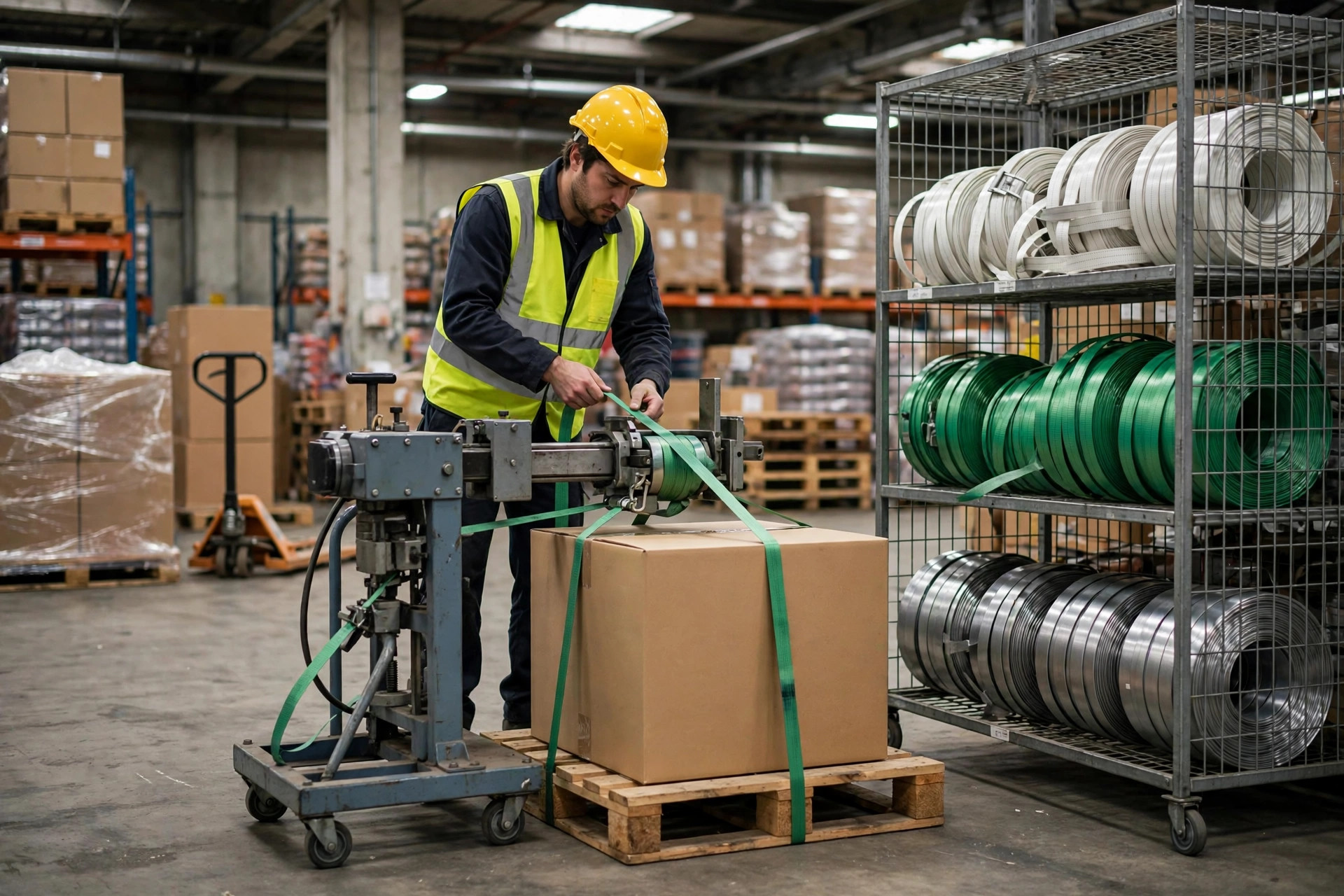
Crime number one: excessive tape tension. Many sealers ship from the factory with the tension set too high, and the tape cuts into the board surface — especially at the corners. The box is already damaged before it leaves your dock. The test is simple: look at a sealed box; if the tape has pressed a visible groove into the board, the tension is too high. Back it off one notch, and a lot of "mysterious" damage disappears on its own.
Crime number two: scoring wheels set too deep. The score line is supposed to make the flaps fold smoothly, but press it too deep and you've basically engraved a tear line into the board. Put a heavy load on it, and the carton cracks right along the score.
Crime number three: dull blades. Ragged tape edges, poor cuts, weak seals — bottom flap pop-opens trace back to this all the time. Blades are consumables. Replacing them every few months isn't waste; waiting until they're dull wastes the seal quality of every box in the meantime.
Crime number four: sealer height never adjusted. You changed box sizes, but the machine is still running last batch's height setting — the pressure head either can't reach or presses too far.
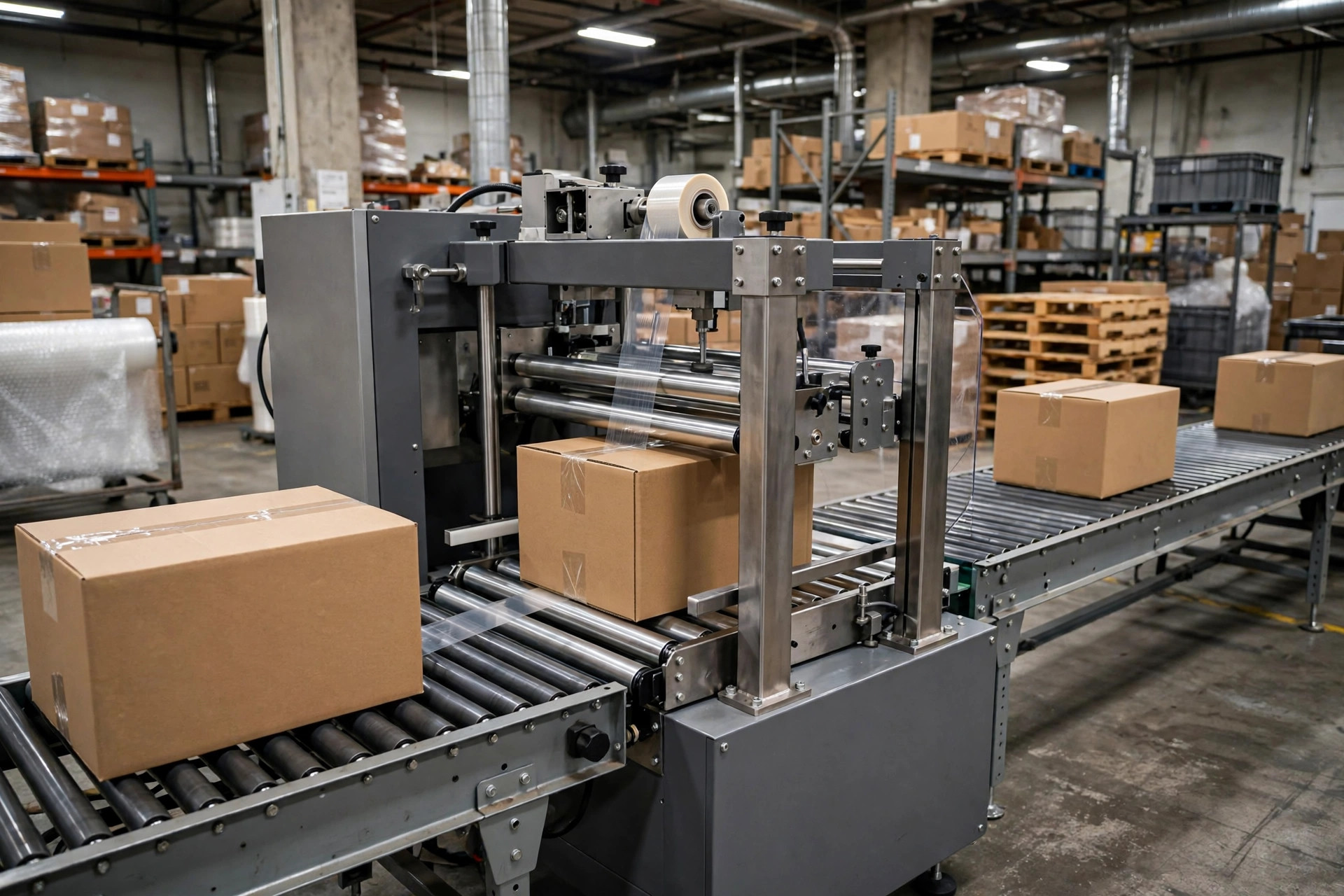
Real case: May 2025, a small-appliance warehouse in Foshan, Guangdong. Damage running just above 4%, mostly bulging side walls and popped bottom seals. They audited the cartons — fine. The culprit turned out to be scoring wheels set too deep plus excessive tape tension. Two parameter adjustments, half a day's work, zero cost. Damage fell below 1%.
Here's the counterintuitive call: a case sealer set too tight damages boxes more than one set too loose. Too loose just gives you a weak seal. Too tight is performing surgery on the carton.
Step 3: Read the damage like a crime scene — a symptom-to-cause table
Handling problems (over-stacking, throwing) absolutely exist, but they leave different signatures than box-spec or sealer problems. Read the damage pattern and you can usually pinpoint the root cause:
| Damage pattern | Points to | Check first |
|---|---|---|
| Crushed corners, all four caved in | Over-stacking / insufficient ECT | Stack height, switch to double-wall |
| Bulging side walls | Overfilled contents / excessive tape tension | Reduce fill or back off tension |
| Popped bottom seal, cracked flap seal | Scoring wheels too deep, dull blades, high tension | Adjust sealer parameters |
| Punctured surfaces | Insufficient Mullen / rough handling | Higher-Mullen board, add inner cushioning |
| Soft, saggy board that collapses when squeezed | Moisture | Check storage conditions, add moisture protection in rainy season |
Walk the floor with this table, snap photos of a few damaged cartons, match the patterns — you'll have your direction in half an hour. Infinitely more reliable than "let's try switching carriers."
Is the money worth it? Watch this one number
Let's do the math. For every 1 percentage point you shave off the damage rate, how much do you save in after-sales cost, reships, and review damage? For that Yiwu seller, spending a few cents more per carton on double-wall board erased tens of thousands in peak-season losses. I ran the numbers for them: the carton upgrade cost a fraction of what they were bleeding in after-sales.
So stop opening with "it's the carrier's fault." Walk the sequence — box, then sealer, then handling — and eight times out of ten, the answer is in the first two steps. Next time someone on your team asks why shipping boxes keep breaking, hand them the table first. Is the money worth it? You'll know by watching that one number come down.
By Da Liu, Automation Engineer