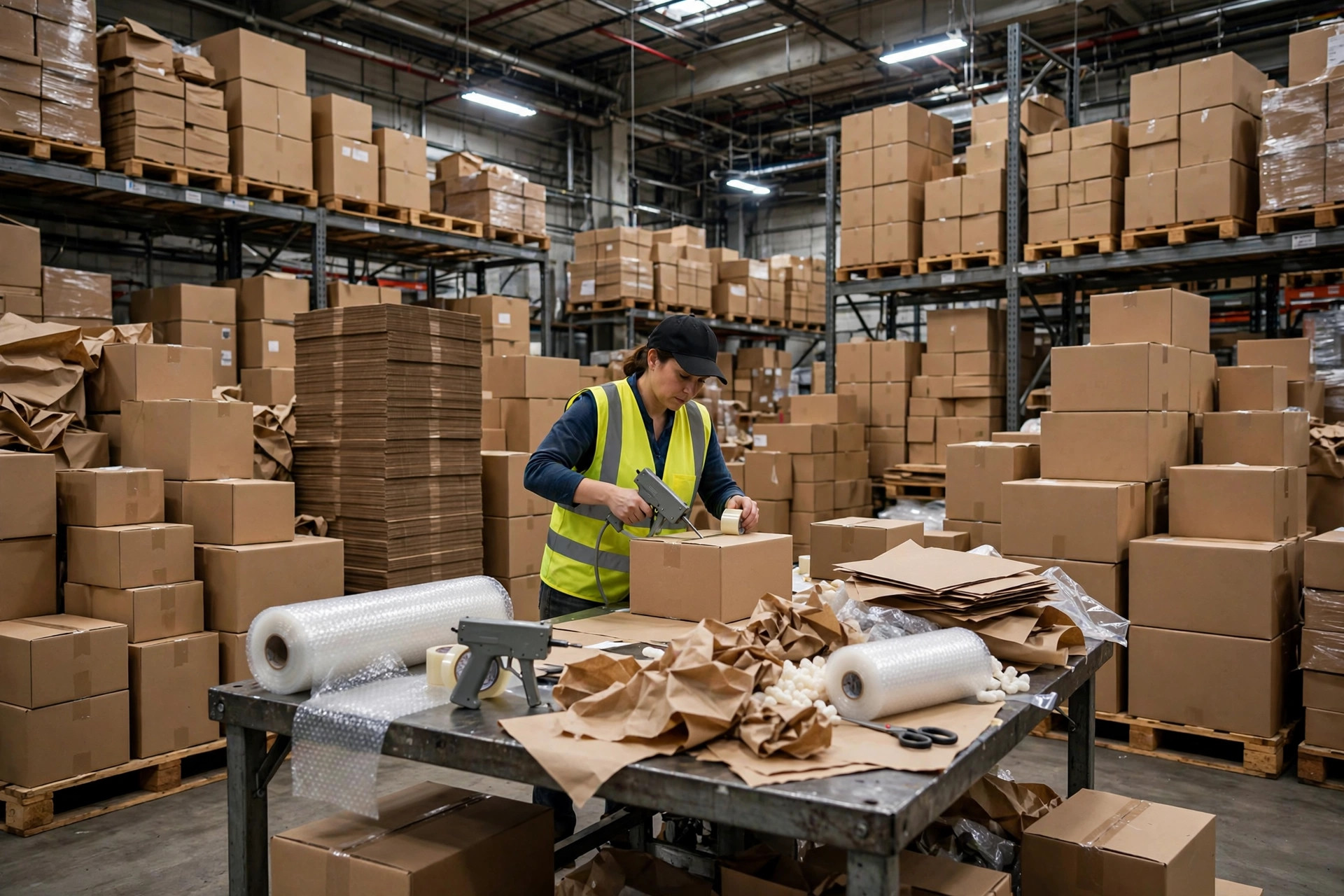
If I walk into a warehouse and see eighteen different carton sizes stacked next to the pack stations, I don't need the P&L to tell me the story: that operation is burning enough money on packaging every year to buy an automatic case erector. The cartons themselves are the smallest part of the bill. The real money goes to three things: packers hunting for the right box, inventory and pallet positions eaten by carton stock, and dimensional weight quietly leaking out of every oversized shipment.
More Box Sizes, Slower Packing: It's a Curve, Not a Line
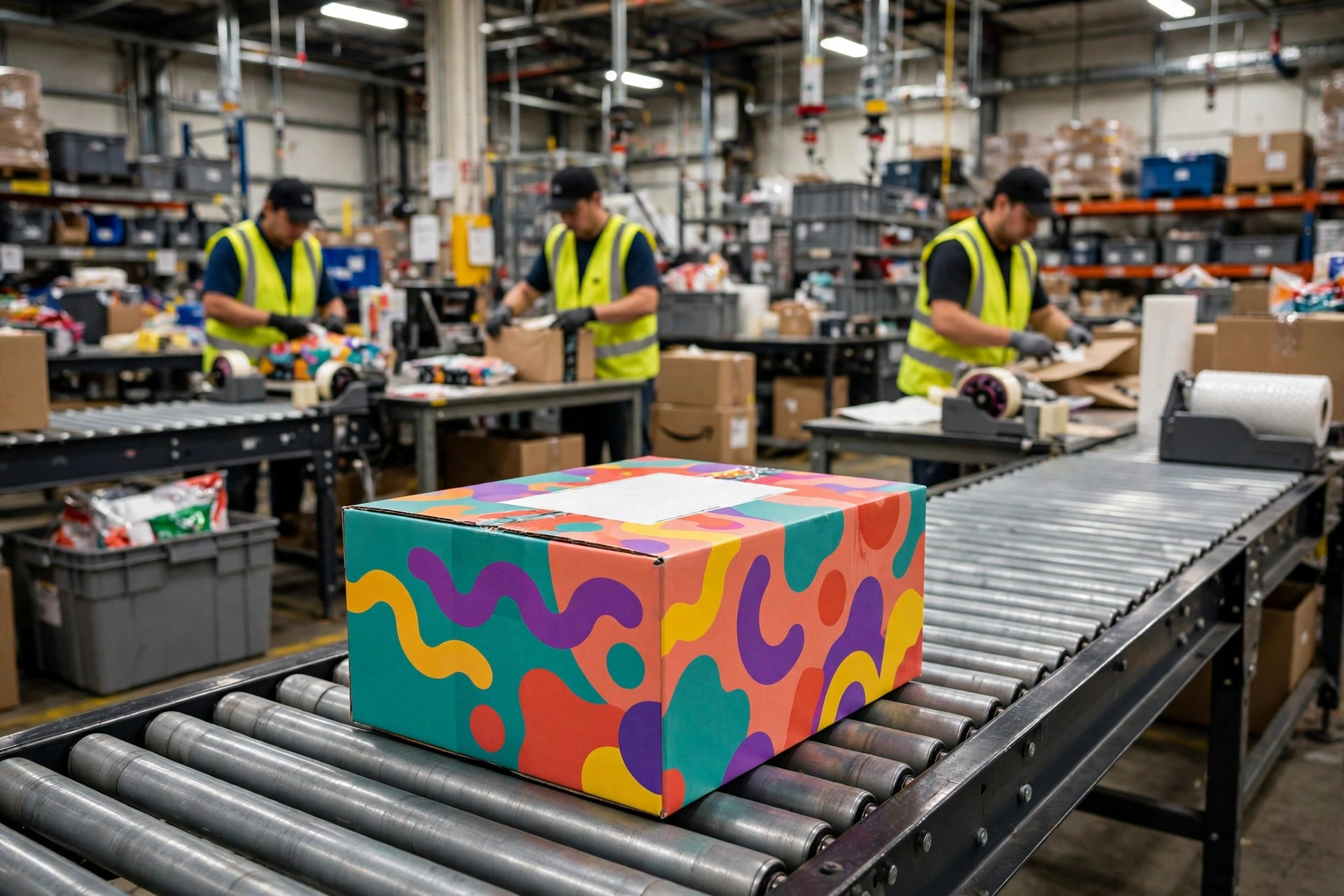
Think of it like a mechanic's wrench set: three common sizes and you grab without looking; twenty sizes and you flip through the drawer every time. Same at the pack bench. I measured one operation running 18 carton sizes: packers spent an average of 11 seconds per order just finding and test-fitting a box — pick one up, eyeball it, too big, swap, too small, swap again. After cutting to 6 sizes, that dropped under 4 seconds, and total pack cycle time fell from 47 to 34 seconds per order.
The mechanism is simple. Every additional carton size taxes you three ways: decision time at the bench, carton inventory (each size needs at least half a pallet staged nearby — 18 sizes means 9 pallet positions permanently occupied by cardboard), and training cost (new hires must memorize which box goes with what, adding a week to ramp-up). On the benefit side, each step up in "box fit" saves marginally less dunnage and DIM weight. Plot it and you get the curve: the first 5–6 sizes cover 85%+ of orders; beyond that, cost climbs in a straight line while savings crawl along the floor.
Time to call out a fake requirement: some managers are obsessed with "one box per SKU" — a custom-fit carton for everything. That's like building a custom cubby for every pair of shoes you own. Sounds refined, costs you five extra minutes every morning. Custom carton sizes only make sense for hero SKUs shipping five figures a month with highly uniform dimensions. Everything else is a vanity project burning your labor and inventory budget.
Cutting 20 Sizes Down to 6: Three Steps
Step one, pull the data. Export six months of shipped-order dimensions and weights — most WMS platforms already store this; if not, hand-measure a 500-order sample, that's enough. Step two, cluster. Group by the outer dimensions of the packed parcel. No fancy algorithm needed — sort by volume in a spreadsheet, scatter-plot it, and the clusters jump out visually. Target: 5–6 standard carton sizes covering 85–90% of order volume. Step three, absorb the tail. Don't add sizes for the remaining 10–15% of oddballs and oversize items. Use height-adjustable cartons — one box with scored lines for three height settings — plus bubble wrap and honeycomb paper. That covers nearly everything.
Where's the cutoff? My rule of thumb: a site doing 2,000+ orders a day with 500+ SKUs is wasting money past 8 carton sizes; under 500 orders a day, cap it at 4–5. Every size beyond that burns at least several thousand dollars a year in combined procurement, inventory, and labor cost, while the dunnage savings wouldn't cover the coffee budget.
Case one: fall 2023, a DTC small-appliance brand running its own fulfillment center in New Jersey, about 2,800 orders a day, 18 carton sizes at the pack stations. Measured pack cycle: 47 seconds per order, 11 of them box-hunting. After clustering SKU ship dimensions and cutting to 6 standard sizes plus one adjustable-height box, a re-measure two months later showed box search at 4 seconds and total cycle at 34 seconds. With 12 packers at $18 an hour across two shifts, the labor saved equaled nearly 3 full-time heads a month — they skipped hiring 4 seasonal temps that peak season. Carton unit cost actually fell about 12%, because 6 sizes meant bigger POs and real negotiating leverage.
New SKUs Launch, Carton Count Explodes Again
This is the most common way the whole thing dies: three months after the cleanup, dozens of new SKUs launch, purchasing casually adds 5 new box sizes, and within half a year you're back where you started. The fix is one line in the new-product launch process: every new SKU must fit an existing carton size; anything that doesn't goes to a quarterly review where ops and the packaging engineer jointly decide whether a new size is justified. My bar for adding a size is deliberately brutal: if the SKU's six-month forecast doesn't crack the top 20% of SKUs by volume, it ships in an adjustable box with dunnage. No new size. And carton count gets reviewed monthly, like inventory turns.
Case two: early 2024, an Amazon seller in California selling home-storage products, 3 hero SKUs, shipping in boxes two sizes too big — roughly 8 cm of slack on each dimension. Sounds trivial, but US small-parcel DIM billing divides L×W×H by 139 and rounds up to the pound; measured billable weight ran about 40% over actual weight. At 20,000+ orders a month and $1–2 extra per shipment, that's nearly $20,000 evaporating monthly. Right-sizing the cartons cut the monthly freight bill about 17%. That money had nothing to do with carton purchase price — it was pure tax on picking the wrong box size.
The Math: What Standardization Actually Saves
For a mid-size site at 3,000 orders a day, 22 working days a month, cutting from 18 sizes to 6:
| Cost item | Before (18 sizes) | After (6 sizes) | Monthly delta |
|---|---|---|---|
| Box-search labor | 11 sec/order | 4 sec/order | ~$2,300 saved |
| Carton procurement | High unit cost, small lots | ~12% lower unit cost at volume | ~$8,500 saved |
| Carton inventory footprint | 9 pallet positions | 3 pallet positions | ~$150 saved |
| Dunnage | Heavy use in oversized boxes | ~30% less | ~$800 saved |
| DIM weight waste | Depends on prior oversizing | Mostly eliminated | Thousands to tens of thousands |
The labor math: 66,000 orders/month × 7 seconds saved ≈ 128 hours × $18/hour ≈ $2,300. Procurement assumes roughly $1.10 average carton cost per order, down 12%. Total: about $11,000–12,000 a month, $140,000+ annualized — before counting the DIM row, which is often the biggest line of all.
Here's the counterintuitive part: a tighter-fitting box isn't always better. Chasing "perfect fit" by growing from 6 sizes to 14 saves a little dunnage and DIM weight, but it can't cover box-search time doubling, carton inventory doubling, and longer new-hire ramp-up. And the sharper sting: the money saved on carton purchase price is worth less than the money saved on labor. Managers who grind suppliers over a 5% carton discount are doing the wrong math — in packing, labor and freight are the two biggest cost buckets, and the carton itself is a distant third. Cut 5 seconds off pack cycle time and you'll beat any procurement negotiation.
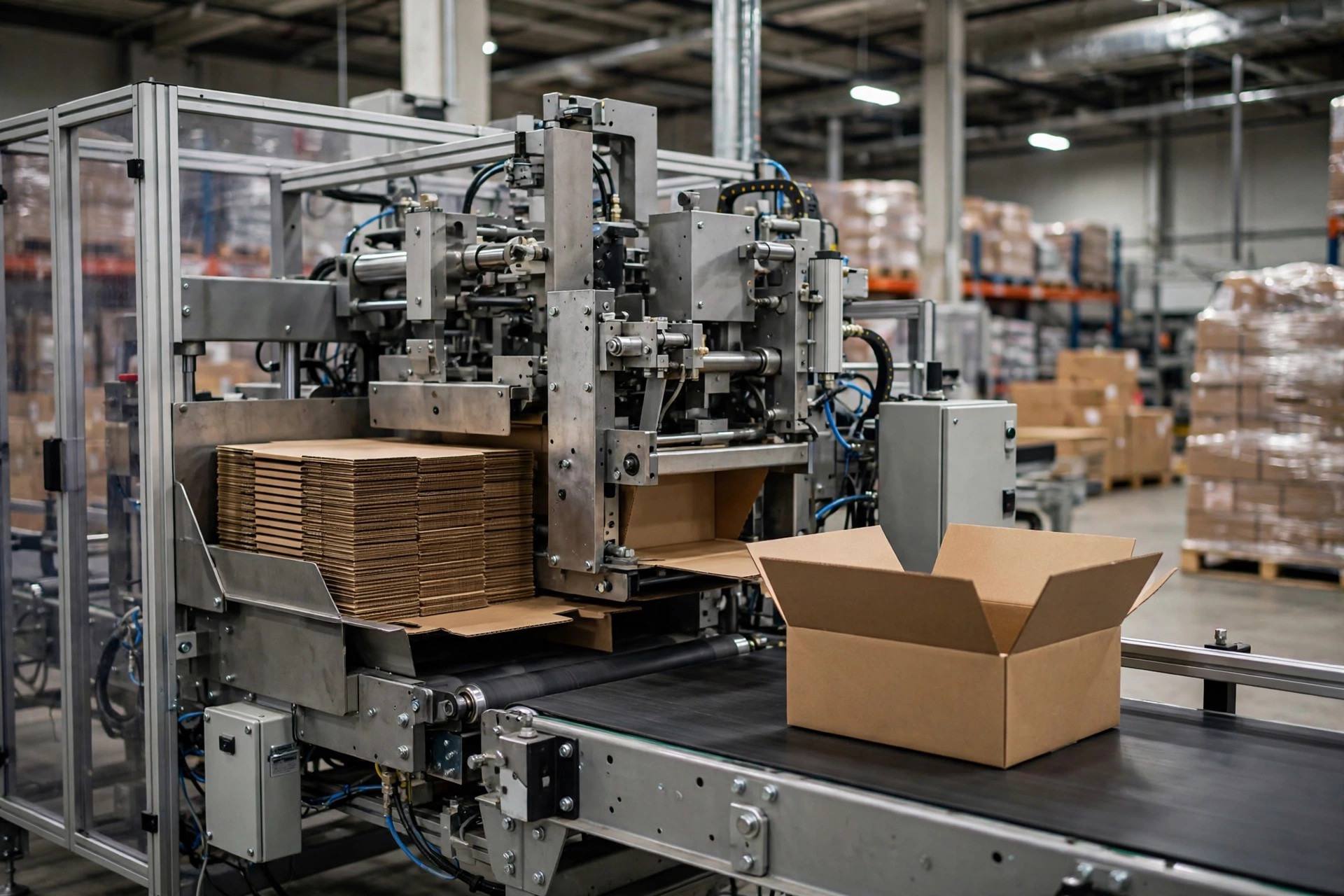
So is the money worth it? Watch one number: total pack time per order. Every benefit of carton standardization eventually lands in that single metric — box search under 4 seconds, total cycle under 35 seconds. Hit it and the money was well spent. Miss it, and you either still have too many sizes, or it's time to buy that automatic case erector.
By Da Liu, Automation Engineer