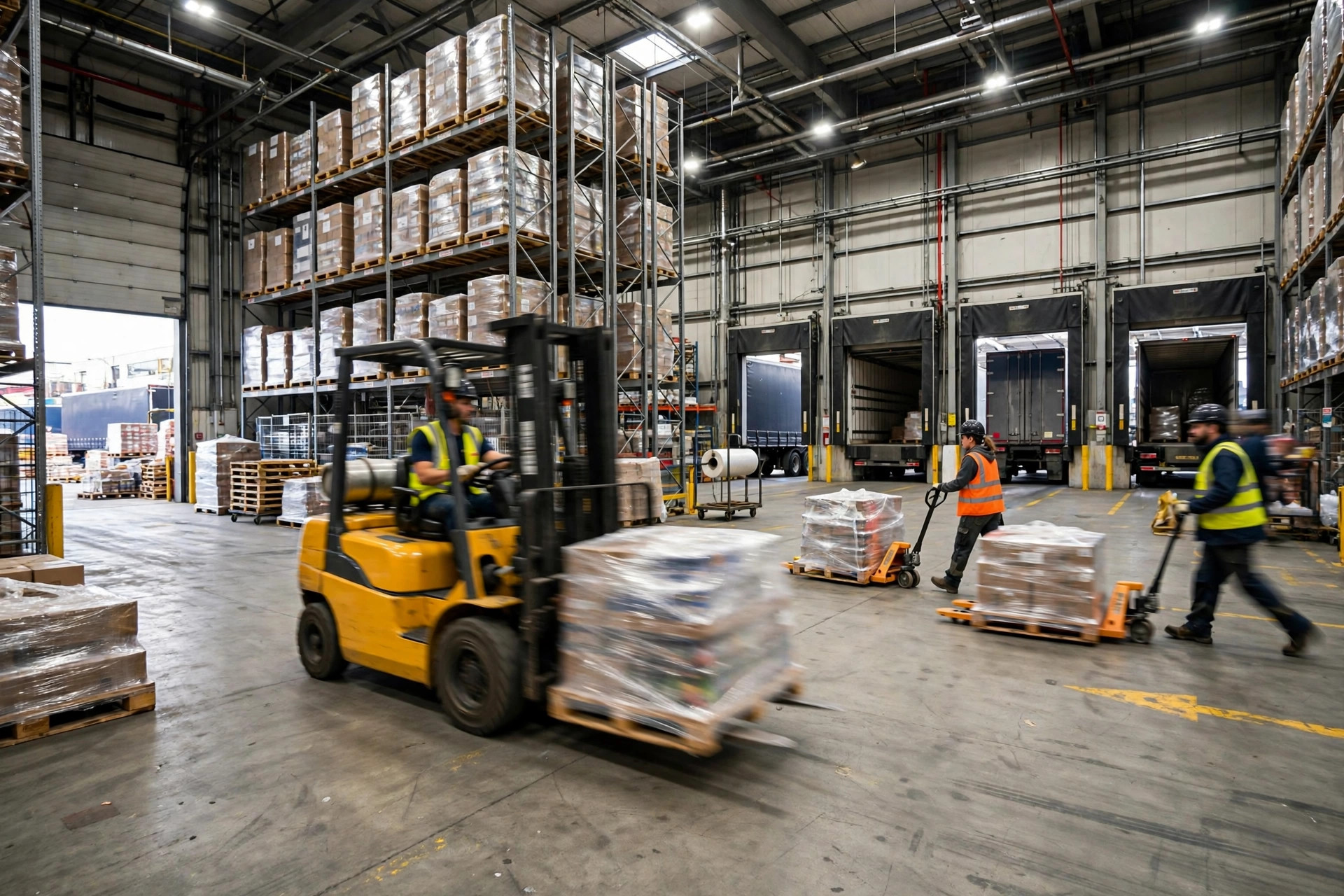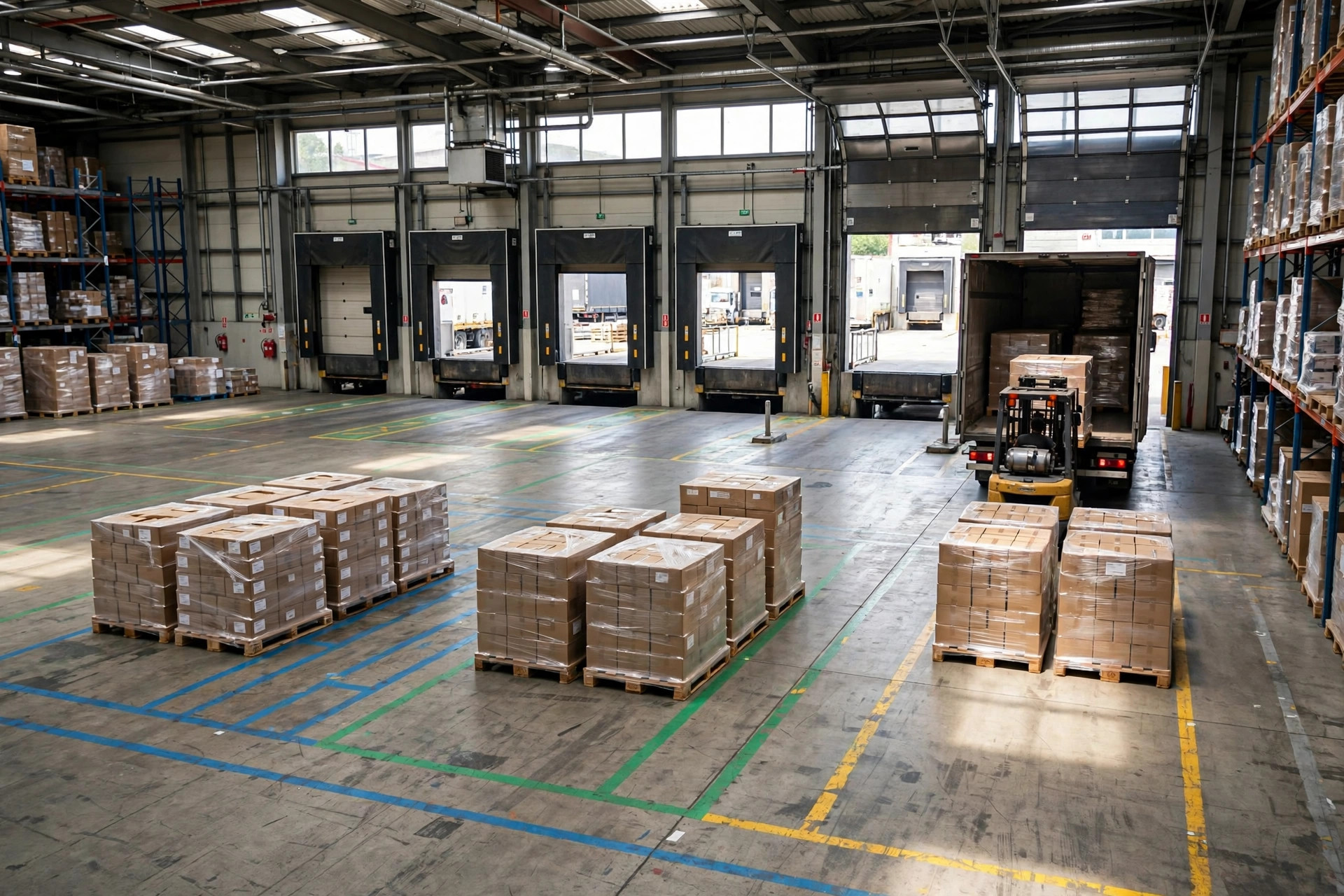
The outbound staging area looks like nothing — just an empty patch of floor. But if you've run a warehouse, you know it's where outbound plans go to die. Mixed-up waves, wrong load sequence, freight sitting in staging too long — any one of these can wreck a full day of shipping. I've managed big DCs, 200 people on the floor, and watched staging areas grow from 8 pallet spots to 300-plus. Here's what actually works, learned the hard way.
Let me take you to a morning shift.
Peak season last year, 6 a.m. I walk the floor and the outbound staging area is already a mess — pallets everywhere, no lanes, nothing labeled. Forklift driver Dave is circling the zone with his scanner, shouting: "Boss, I can't find the full load for the 7 a.m. SoCal run." I crouch down and check a pallet tag. My stomach drops. The wave number on the tag doesn't match the door number. Night shift had picked the freight and dropped it wherever there was open floor, tags never updated. That morning we shipped three trucks late. One was a customer pickup — the driver waited at our gate nearly four hours, face like thunder. That's the day it clicked for me: the staging area isn't "empty floor." It's the throat of the whole outbound operation.
How a Staging Area Falls Apart
The mess always starts in the same three places.
First, waves get mixed. Picking runs in waves, fine — but at staging, workers drop pallets wherever it's convenient. A 40-pallet truckload ends up scattered across six corners. Finding all 40 takes 40 minutes, and the driver's watching the clock.
Second, the load sequence is backwards. This one burned me bad. Two years ago we had a home-goods customer: one truck, five store stops. The pallets for the first stop should load last, and the last stop should load first — reverse order. Our crew loaded in pick order instead, just shoving freight on. At the second stop, the driver spent over two hours unloading, because the freight he needed was buried behind freight for stops three, four, and five — everything had to come off and go back on. The customer called my cell directly. That day I learned: load sequence isn't "get it on the truck." It's reverse-engineered from the delivery route.
Third, dwell time nobody owns. Freight gets staged, the truck doesn't show, the driver runs late, and pallets just sit. Sitting half a day is fine. Sitting two days eats your floor. Worst are the time-sensitive loads — fresh food, promo goods with hard dates. We used to run on an unwritten rule: "deal with it when the truck comes." Result? A dozen or so pallets permanently "waiting" in staging, new freight with nowhere to go, overflow into the aisles, forklifts can't move, and the whole outbound rhythm breaks.
Honestly, all three problems share one root cause: nobody owns the staging area. Picking has an owner. Loading has an owner. The staging in between belongs to nobody — so it belongs to chaos.
Three Mistakes We Had to Make Ourselves
You don't learn this stuff from a manual. Three scars I'll share.
Scar one: painting grid lines on the floor. Two years back I figured staging zones were simple — buy some paint, mark Zone A, B, C, one per wave. Looked great. Lasted about a week. Night shift is always short-handed, forklift drivers drop pallets wherever's closest, and the painted zones became decoration. We changed the approach: no fixed grids. Movable barriers and hanging wave cards instead. The card travels with the wave — this wave loads out, the card comes down and goes up on the next open spot. Dynamic zones. People follow things that move. Fixed grids are for visitors on a tour; moving cards are for people doing the work.
Scar two: letting one veteran carry the load sequence in his head. We had an old-timer, Zhao, fifteen years on the floor. He knew exactly which pallet loaded first on every truck. It worked — until Zhao took a week off and the whole building fell apart. So we put the sequence on the paperwork: every pallet tag now prints the wave number plus a load line like "LOAD SEQ: 3/40." Workers don't memorize anything; they stack by the number. Zhao looked at it and said, "Should've done this years ago — my head's not a computer." Here's the truth: any process that lives only in one person's memory is a ticking bomb.
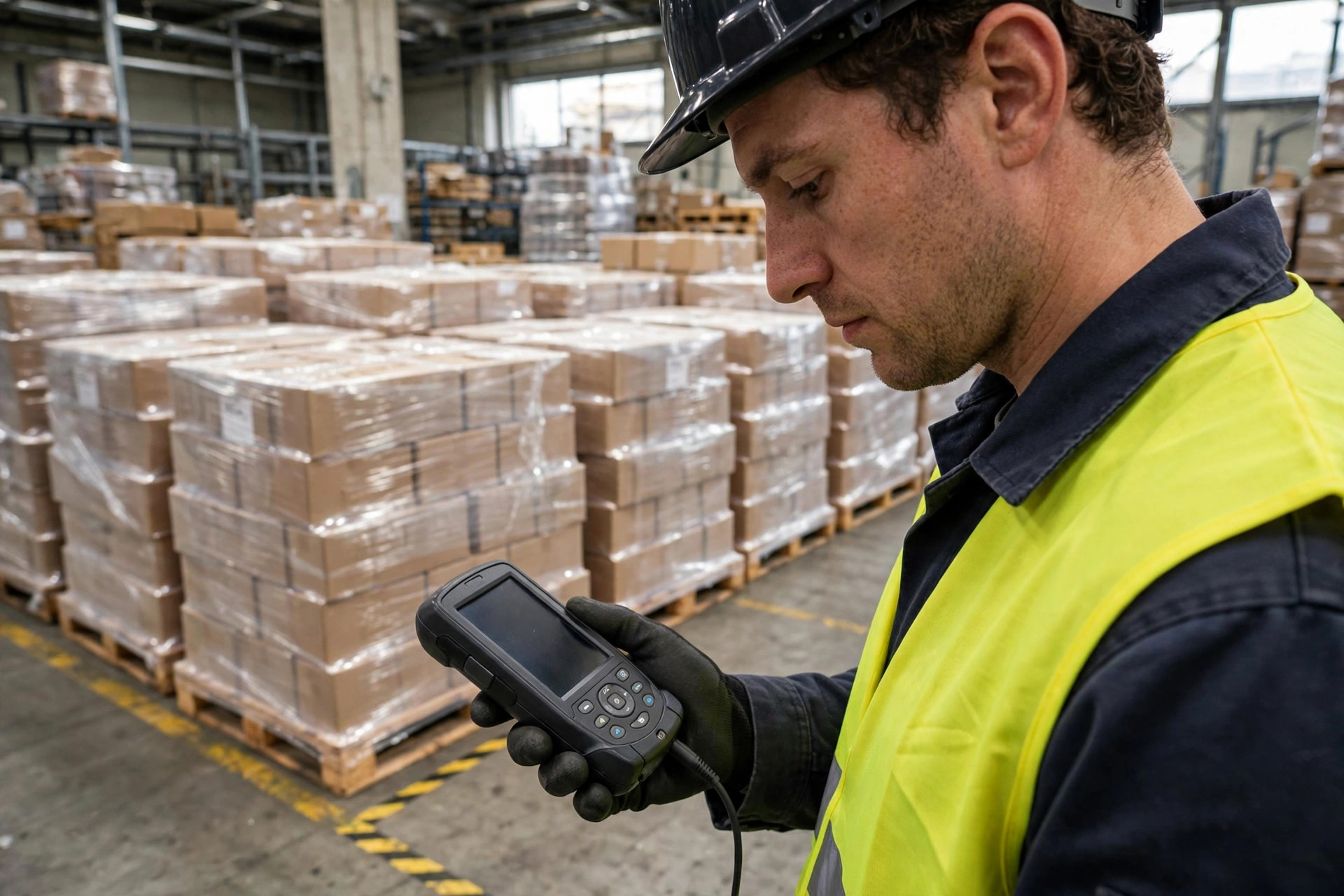
Scar three: managing dwell time by yelling. Freight sat too long, the shift lead would walk the floor and yell: "Whose pallets are those? Move them!" Worked for two days, then back to normal. Finally we made it a system rule: the staging completion time prints on every pallet tag. Over 4 hours without loading — the system flags it yellow and pushes it to the shift supervisor. Over 8 hours — red, straight to my phone. No willpower required; the system watches. First month after the change, pallets sitting over 8 hours dropped from 20-plus a day to under 3.
What We Do Now — The Fixed Routine
After two or three years of trial and error, this is our standing playbook. Steal what fits.
Rule one: one wave, one spot. Every outbound wave gets one dynamic staging slot, with a hanging card: trailer number, destination, planned load time. Picked pallets go only to their wave's slot. Wrong slot — the scanner beeps on tag scan. First week, the crew cursed it. A month later nobody did, because the time saved finding freight was real: 40 minutes of hunting per truckload down to 10.
Rule two: a printed load sequence. Covered this above — sequence on the tag, reverse of the delivery route. The system holds each customer's standard route; the wave paperwork prints the sequence automatically. Route changes on the fly? The supervisor adjusts it on the scanner, and it syncs to everyone's paperwork. Remember: a wrong load sequence doesn't ruin one truckload — it ruins the schedule at every stop on the route.
Rule three: graded dwell-time control. Our standard today:
| Dwell Time | Level | Action |
|---|---|---|
| Under 4 hours | Normal | Leave it alone, inside staging rhythm |
| 4–8 hours | Yellow alert | Pushed to shift supervisor — find the cause: waiting on truck, paperwork, or people |
| 8–24 hours | Red alert | Pushed to the manager, resolution plan within 2 hours |
| Over 24 hours | Exception | Must leave the wave slots, moved to a holding area |
That table is posted on a column in the staging area where everyone sees it. The rules are rigid, but the key is the push — the system pushes automatically, nobody has to remember to check.
Rule four: clear the floor before shift end. Thirty minutes before the night shift clocks out, the staging area must hold nothing except freight with a confirmed load time. Anything left gets written in the handover log: which pallets, why they're still here, what time they move tomorrow. Sounds old-school. Works better than anything. Staging areas die from overnight leftovers piling up — the clear-out rule zeroes the floor every day.
Before we controlled dwell time, 30 to 40 pallets of "we'll deal with it later" sat in staging permanently. They blocked wave slots, new waves had nowhere to stage, and forklifts ran detours — roundabout routes, double-handling pallets. Two forklift drivers spent close to half their shift shuffling freight around. Run the labor cost per driver-hour and you're looking at thousands a month burned on re-handling alone — before late-shipment penalties and customer complaints. A well-run staging area doesn't save face. It saves real money.
One contrarian take to close on: bigger staging areas aren't better. A lot of managers think more floor space means freight has somewhere to sit and things won't get messy. Wrong. The bigger the staging area, the deeper the stale freight hides, and the less anyone manages it. We actually shrank our staging zone — forcing faster turns, tighter wave scheduling, quicker loading. Less room means problems can't hide, and management gets easier. Honestly, a lot of management headaches are just "too much space" enabling bad habits.
Everybody in this business knows outbound is where the customer grades you, and the staging area is the desk where you write the report. Keep the desk clean, the grades take care of themselves. Go look at your own staging area — if it's a mess, don't blame the crew first. Ask yourself three questions: are the zones clear, is the load sequence defined, and is anyone watching dwell time? Get those three right and you're most of the way there.
By Chen Feng, Warehouse Operations Manager