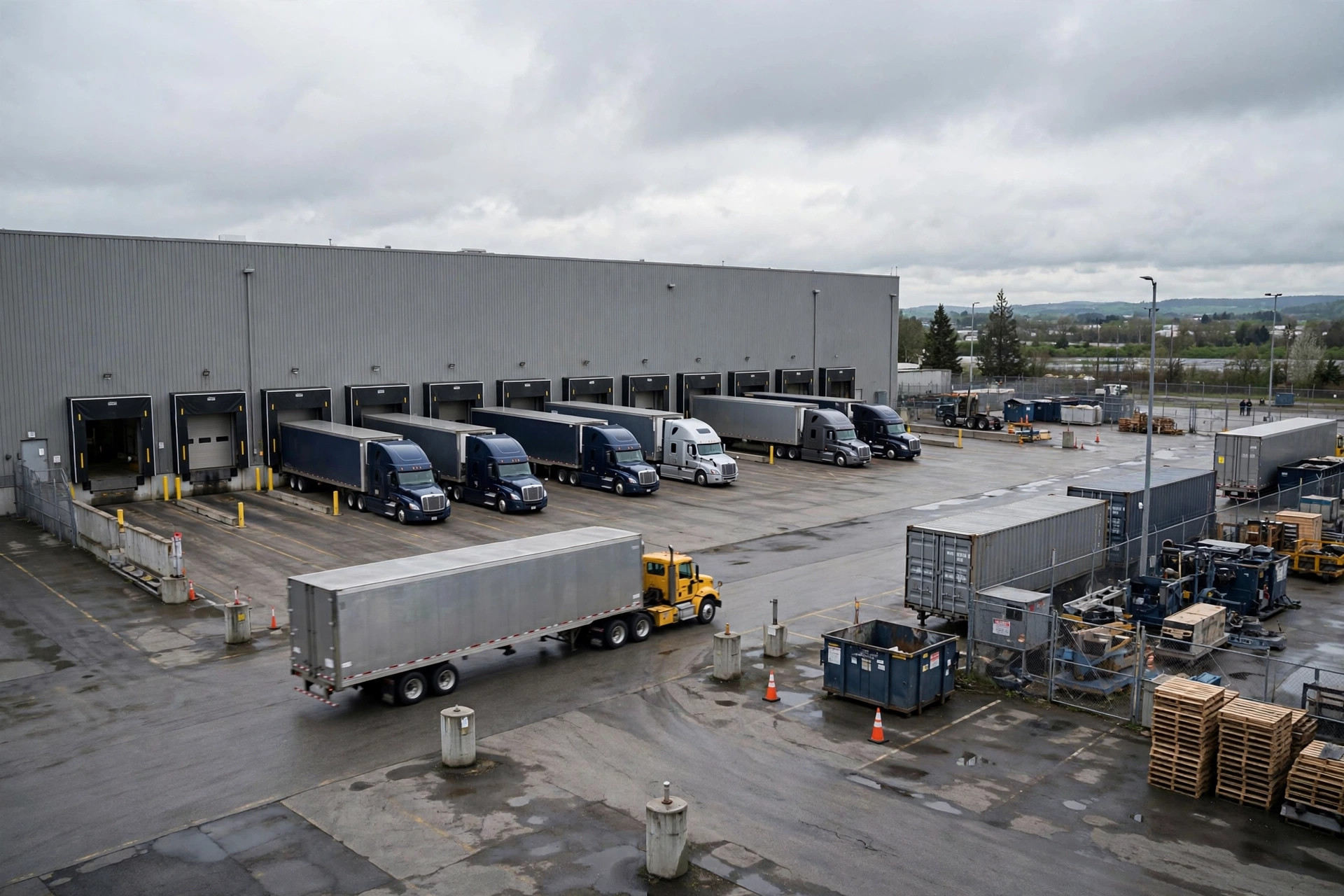
Monday morning before last year's peak season, 7:40 AM. I had just walked into the warehouse when our system admin Xiao Li blocked the doorway: "Manager Chen, waves are stuck again. The task allocation module in the WMS took 40 minutes to release a 3,000-order wave and it's still not done."
That was the third time we'd been choked by the "execution layer" right before peak. The WMS handled inventory beautifully, but the moment it came to wave release, task dispatch, multi-zone coordination — real-time orchestration work — it lagged. And that's the WES selection question we had to answer: do we buy a standalone WES (Warehouse Execution System), or keep limping along with the WMS's built-in execution module?
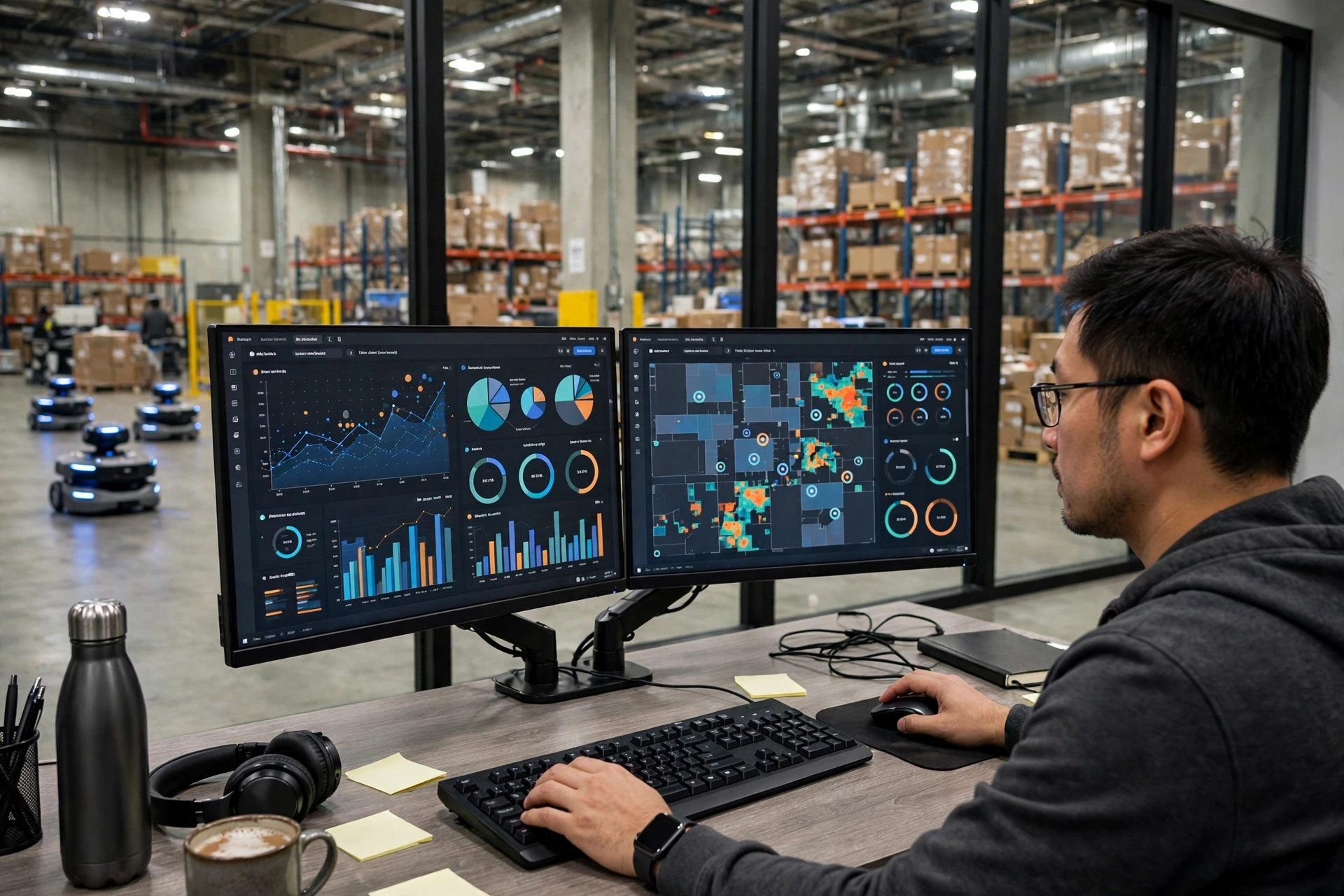
Let me be straight with you, folks — there is no standard answer. But after three years of stepping on rakes, I've boiled it down to four dividing questions. Answer them and the decision basically makes itself.
Dividing Question One: How Complex Are Your Waves, Really?
The WMS's built-in execution module does "planning": it knows how many orders ship today, whether inventory covers them, how to cut waves. A WES does "execution": this second, which picker goes to which aisle, how AGVs and humans stay out of each other's way, how exception orders jump the queue.
Our warehouse was doing 8,000 orders a day across three temperature zones (ambient, chilled, frozen) plus a returns area. The WMS task module released work by "wave-by-zone" — the chilled-zone pickers would finish and stand around waiting while the system waited for the ambient zone to wrap up. The wave couldn't close, so the next wave couldn't release. After we brought in a standalone WES, tasks were dispatched in real time by "person-equipment-aisle." Whichever zone finished first automatically received the next wave's tasks. No more waiting.
My rule of thumb is simple: if you run more than 5 waves a day, or have 2+ zones that need coordination, the WMS built-in module probably isn't enough. Single zone, small waves, simple flow — the WMS module is plenty. Don't burn money on a standalone WES. Our neighbor, an auto-parts warehouse doing 2,000 orders a day in one zone, runs fine on the WMS module. A WES there would be pure self-inflicted pain.
Dividing Question Two: How Much Equipment, and How Mixed?
This is where WES vendors love to snow you. One of a WES's core values is the "equipment-neutral layer": AGVs, AMRs, conveyors, robotic arms — whatever brand, the WES orchestrates them all. The WMS built-in module usually only plays well with its own ecosystem's equipment.
In 2023 we deployed 12 AMRs from vendor A. In 2024 we added 8 more from vendor B (cheaper). The WMS module could only dispatch vendor A's robots; vendor B's had to be dispatched through their own app. The result was surreal: two fleets of robots in the same aisle, one listening to the WMS, one listening to its own app — they nearly collided. A standalone WES brought both fleets under one roof with unified path planning, and that ended it.
So the second dividing question: will you have equipment from two or more vendors, now or within three years? Yes — a WES earns its keep. No — one equipment type for the foreseeable future, and the WMS module plus the vendor's own system will do.
Dividing Question Three: How Many Exceptions?
A WMS runs on plan, and plan is exactly what exceptions break. Volume spikes, rush orders, stockouts, equipment failures, no-show staff — in the WMS world these are "exception handling." In the WES world they're called "Tuesday."
Real example. Last Singles' Day, a major client dropped 1,500 rush orders on us, same-day ship required. In the WMS, those orders had to wait for the current wave to finish before they could be inserted — at least 2 hours. The WES approach: split the 1,500 orders into high-priority tasks, inject them at the front of every picker's task queue, let the conveyor auto-divert. All 1,500 shipped within 3 hours. Not a penny of SLA penalties.
The third dividing line for WES selection: if exception, rush, and inserted orders exceed 10% of daily volume, a standalone WES starts paying for itself. Below that, the WMS's exception workflows are clumsy but survivable.
Dividing Question Four: Can Your IT Team Catch It?
Unpopular opinion: a standalone WES is a high-maintenance system. It integrates with the WMS (inventory, order master data), with equipment (PLCs, robot APIs), with conveyor PLCs. More interfaces, more operational pressure.
When we went live, IT was two people — one for network, one for the WMS. For the first three months: interface issues, data sync gaps, lost tasks. The IT guys were working past midnight daily. Eventually we signed a managed-services agreement with the vendor and hired a dedicated systems engineer. Only then did things stabilize.
So the fourth dividing question is the most practical: do you have at least one IT person who can read interface logs and hold their own with the vendor's engineers? If not, a standalone WES just means daily firefighting. Better to run clean processes on the WMS module first, and add the WES when the people are in place.
How We Decided
Four questions answered, our answer was: go standalone. Three temperature zones to coordinate, two AMR vendors, peak-season exceptions over 15%, IT staffed up — we cleared all four lines.
Six months after go-live, wave release time dropped from 40 minutes to 8, and per-picker productivity rose 22%. But full honesty: the project took 7 months, two more than planned, and the first year of interface debugging and process tuning nearly broke IT.
My reminder to fellow operators: in WES selection, don't start with the feature checklist — start with these four dividing questions. If you fail three of four, stick with the WMS module, spend the money on people and process optimization instead, and you'll probably get better results. Systems serve people. Don't buy a system just to have a system.
By Chen Feng, Warehouse Operations Manager