
March 14, 2025. Night shift. 2:40 a.m.
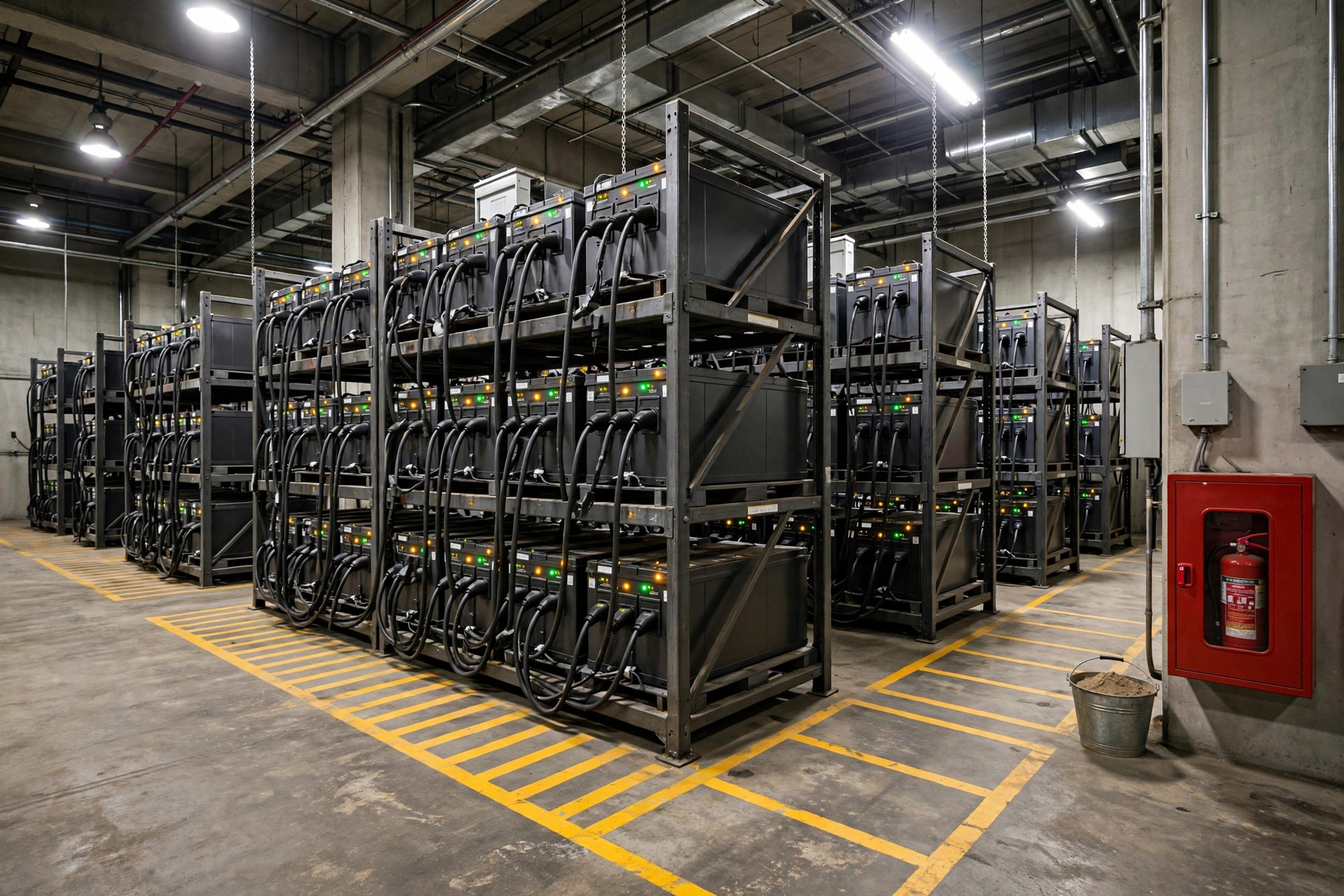
The smoke alarm went off in the charging area. Our night lead ran over and found a forklift lithium battery smoking white — and the charger light was still green. Still charging. That was the closest I've come to lithium battery thermal runaway in fifteen years of warehouse work.
I'll be straight with you: my back went cold. I've seen cardboard fires, pallet fires — I know those. But lithium batteries burn different. After that night, we rebuilt our charging area from scratch. Here's what we did, where the money went, and the mistakes you don't need to repeat.
How the Charging Area Became a Hazard
In 2023 we swapped our diesel forklifts for lithium ones — twelve trucks. The "charging area"? A corner next to receiving. Two rows of racks, a few power strips. Guys would drive back, drop the battery on the rack, plug in, walk away. Swollen batteries? Still charged. "It still works," they'd say.
Looking back, we were stacking up trouble. Lithium batteries hate three things: overcharging, heat, and physical damage or swelling. We had all three — summer sun beating through the receiving doors, chargers mixed and matched, swollen packs nobody flagged. Nothing happened for a while, but that was luck, not management.
The Counter-Intuitive Part: Your Extinguishers Won't Stop Thermal Runaway
My first fix: I bought eight dry-chemical extinguishers and hung them in a row on the charging area wall. Felt good. Then the fire department came for an inspection, and one question stopped me cold: "You know dry chemical won't stop thermal runaway, right?"
Remember this one: when a lithium-ion cell goes into thermal runaway, it generates its own oxygen inside the cell. Smother it with dry chemical or CO2 all you want — the reaction inside doesn't stop. Extinguishers aren't useless; they'll knock down small flames around the battery. But if you're counting on one to put out the battery itself, forget it. And Class D powder? That's for lithium metal — primary cells — a completely different thing from our lithium-ion packs. Don't buy the wrong one like I almost did.
We learned the hard way in July 2024. A battery was swelling. The night-shift guy figured "it still charges," plugged it in, went to eat. Came back to a pack too hot to touch, case already deformed. Lucky it didn't ignite — we scrapped it the same day. Since then: any swollen battery gets isolated and tagged the same day. Nobody gets to "try it once more."
A buddy's warehouse in the next industrial park wasn't as lucky. Winter 2024, their charging corner caught fire overnight with nobody on shift. By the time smoke reached the office, half the receiving area was gone. One cause: unattended overnight charging. That story did more for my renovation budget than any proposal I ever wrote.
Here's what the fire crew taught us — the whole mindset has to change: when lithium batteries burn, the goal isn't "extinguish," it's "isolate and cool." Separate the runaway pack from everything else, hit it with large volumes of water to keep it cool, let it burn out under control, and make sure nothing else catches. I resisted that at first — a fire you're not trying to put out? But these folks deal with this stuff every day. Listen to them.
Here's how we rank our three lines of defense:
| Method | Against thermal runaway | Against surrounding flames | Our verdict |
|---|---|---|---|
| Dry-chemical extinguisher | Can't stop the internal reaction | Knocks down small flames | Keep them, but don't bet lives on them |
| Fire blanket | Can't cover sustained venting | Blocks sparks and embers | Bought two, for covering nearby cardboard |
| Copious water + isolation | Cools and prevents spread — the only reliable play | Effective | Our main approach; added a hose by the hydrant |
Where the Money Actually Went
The rebuild happened in April 2025: a dedicated room with a fire door, smoke plus heat detection wired to the duty room and my phone, two fire blankets, sand buckets, a hose line, all chargers standardized — plus scrapping those swollen packs. I won't quote our numbers since every operation is different, but do your own math: what's one burned rack position plus half a day of shut-down receiving worth, versus one rebuilt charging area? The answer is obvious.
On the regulatory side, OSHA and NFPA both publish guidance on lithium battery storage — check their official sites for the latest requirements. We built to the fire department's recommendations, which run stricter than the written code. The code is the floor, not the ceiling.
Our Lithium Battery Charging Area: The Fixed Routine
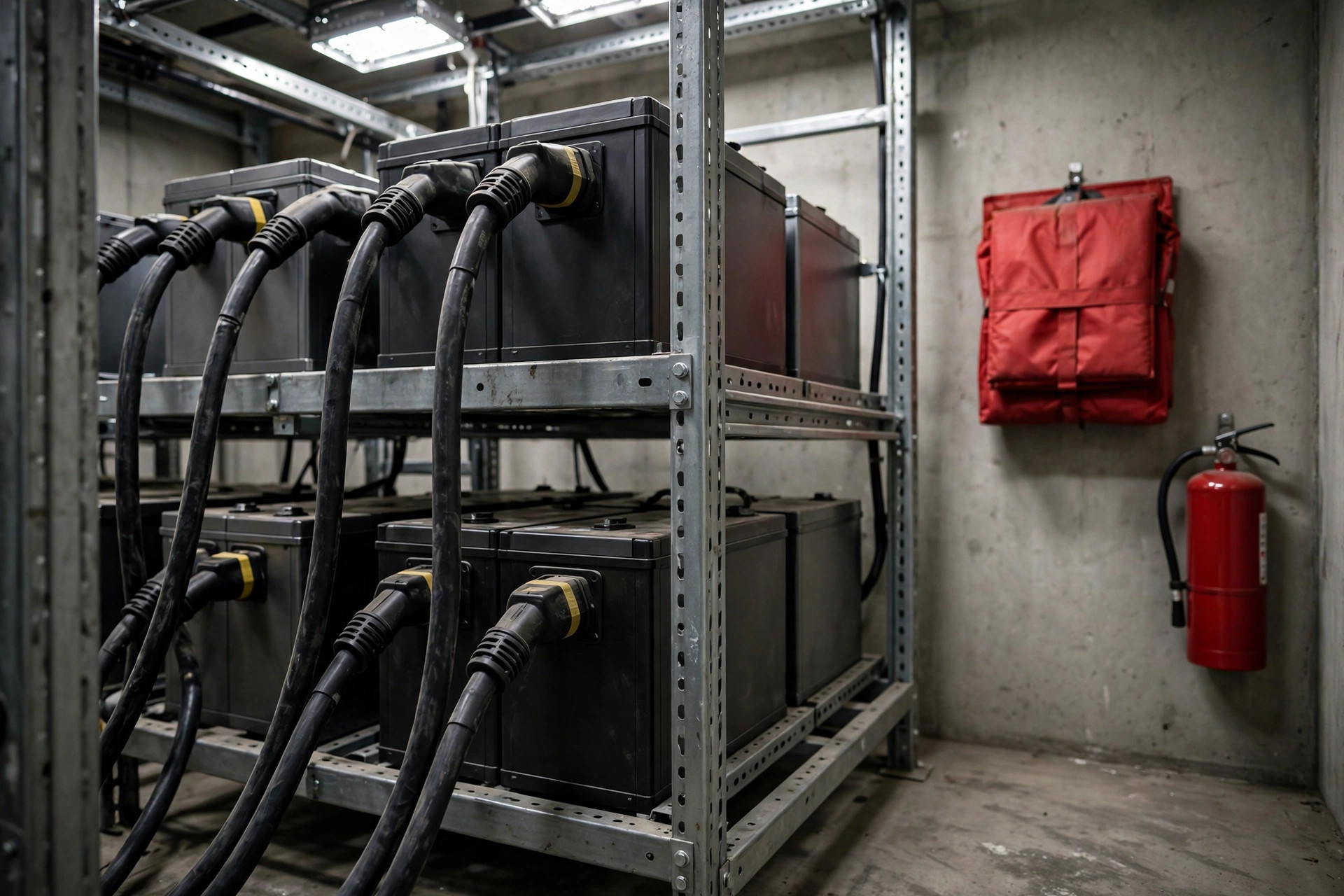
- Location: its own small room, walled off from storage, fire door at the entrance. There's a real dilemma here: put it too far away and people won't bother walking over — they'll charge at their workstations, which is worse. So we picked "two steps away, but behind a wall." Close enough that people actually use it, separated enough to be safe.
- Charging happens on day shift only, when people are around. No overnight charging. That rule was written in fear — night shift is thin, and if a pack starts smoking with nobody nearby, you're done. The veterans complained it would slow things down. Two months in, nobody mentions it.
- Every battery has a number. Swollen, damaged, or running hot — isolated and tagged the same day, scrapped within 48 hours. Dedicated chargers, no mixing.
- Smoke plus heat detection, alarms wired to the duty room and my phone. Fire blankets, sand buckets, hose — lined up by the door.
- A three-level response posted on the wall: ① swelling or heat — cut power, isolate, dedicated watch; ② smoking — cut power, clear the area, call it in; ③ fire — don't be a hero, isolate and cool, call 911. Each level names exactly who does what. No figuring it out in the moment.
One last piece of straight talk. The biggest risk in a lithium battery charging area isn't the battery — it's people. People who cut corners, people who say "it still works," people who find rules annoying. We audit charging logs monthly now, and swollen packs get traced back to the shift lead. A rule nobody enforces is no rule at all.
Go look at your own charging area today: is it next to a cardboard pile? Is it charging overnight with nobody around? Are swollen packs still "serving with honor"? If any of those is true, fix it this month. Don't wait for the smoke alarm.
By Chen Feng, Warehouse Operations Manager





