Let me tell you something. The first time I rode along on a container pickup out of Callao, one thought stayed with me the whole way: pick the wrong street for your warehouse here, and you have wasted the entire day before you even start.
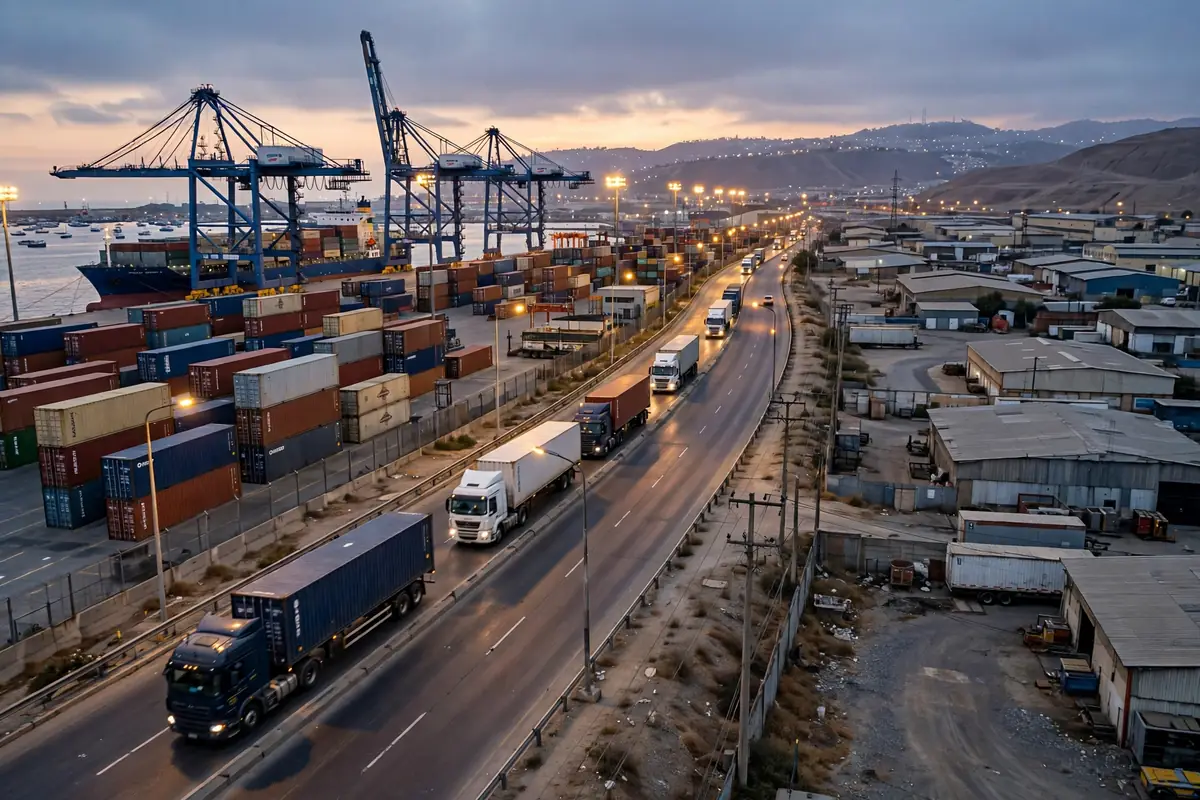
Callao is Lima's seaport. Every container comes ashore there. But the freight's journey does not end at the gate. The stretch from the port into the city, and then out to wherever your warehouse sits, is where the money leaks and the schedules fall apart. Outsiders shopping for lima callao warehouse logistics peru ask about rent per square metre. Old truckers ask a different question: how many turns can one truck honestly make in a day from that address, and who pays for the hours spent sitting in traffic?
After fifteen years on the road I have a habit: in a new city, I do not look at warehouses first. I ride with local drivers for two days. Distance on a map lies. Time on the road tells the truth.
A pickup that ended after midnight
Some years back I was helping a small-appliance importer set up in Lima. The container cleared during the day, and by the time the paperwork was done, evening was coming on. The fleet figured the roads would be empty at night, so they would haul the box straight to a warehouse on the east side of the city. What they found leaving the port area was every truck and chassis in the district crawling in the same direction. By the time the road finally opened up, the warehouse's receiving window was nearly closed. The driver talked his way in with the guard, the unloading got done, and the crew got back well past midnight.
The next day they ran the same route in daylight and arrived with time to spare.
What does that tell you? The Callao-to-Lima run is not a question of how far. It is three questions that have to line up: what time of day you move, which route the truck takes, and when the warehouse stops receiving. Miss the alignment and the truck burns hours, the driver's day runs long, and tomorrow's schedule starts broken. Port operating hours, local traffic patterns, and receiving windows all change — always confirm the current situation locally before you build a schedule on last season's experience.
That importer learned. Pickup day became a receiving-only day: count it, rack it, nothing more. Outbound orders started the following morning. It looked a day slower on paper. In practice, the warehouse never again had a full crew standing around waiting for a box that arrived after their shift ended.
The cheap warehouse that charged tuition every day
Another customer, a household-goods distributor, rented their first Lima warehouse the way most people do: cheapest rent they could find. The building itself was fine — big, clean, modern. It was just far from the port and far from most of their customers. The first month's spreadsheet looked great.
Then the operation started telling the truth. A port pickup became most of a day, there and back. Deliveries into the city meant a truck left in the morning and the dispatcher could not count on it again until late. As order frequency rose, the only fix was more trucks and more drivers. The rent they had saved went straight back out as transport cost within a few months, with a reputation for slow delivery thrown in for free.
I did the arithmetic with them the trucker's way — no fine numbers, just turns. A truck based near the work makes a certain number of loaded turns a day. The same truck based far away makes fewer. The difference is freight you simply do not move that day. A driver's day is only so long, and every hour of it spent crawling in congestion or running empty miles is an hour you paid for and got nothing from. They eventually moved. Rent went up. The fleet got smaller. And peak season stopped being an emergency that needed rented trucks to survive.
So here is my rule for Lima: draw three lines before you talk rent. Port to warehouse. Warehouse to your main customers. Warehouse to the main highway. If two of those three lines clog up every day, the cheap building is not cheap.
How I judge a warehouse location
I do not know the fancy siting models. I look at four things, all learned from the road.
First, the pickup run. Measure port-to-warehouse time at truck speed, not car speed, and ask how container pickup appointments and queues actually work there right now — confirm it locally, because port practice shifts. For an import warehouse this run is the lifeline. If it does not work, everything downstream is improvised.
Second, where your customers are. If most of your freight delivers to particular districts of Lima, put the warehouse on that side of the city. Lima is a big place, and crossing it all day, every day, is a tax you pay in driver hours. Do not let your delivery trucks commute across the whole city so your rent line looks good.
Third, whether trucks can actually work the building. Enough dock space to turn a rig around. A yard where trucks can queue without blocking the street. A receiving window long enough to absorb a late arrival. These matter more than extra racking inside. A beautiful warehouse your trucks cannot get into is a warehouse you do not have.
Fourth, peak season headroom. When volume jumps, can the surrounding roads, the yard, and the docks take extra trucks and overtime unloading? Peak is the real test of any address. Places that flow beautifully in a quiet month can seize up completely when everyone else's freight arrives at the same time.
Run those four checks first. Then negotiate rent. Reverse the order and you are trading cheap rent for daily congestion, one truck-hour at a time.
The counterintuitive part: nearest the port is not automatically best
Plenty of importers land in Lima and say, put the warehouse right by the port, pickups will be easy. Fair enough — if most of your freight turns around near the port or goes back out by sea. But if most of it sells into Lima itself, a port-side warehouse means every delivery starts with a long run into the city. You saved distance on the pickup, which happens once per container, and you pay it back with interest on deliveries, which happen dozens of times a day.
A pickup is one box, one trip. Deliveries are every day, all day. Siting the warehouse to flatter the one-off trip at the expense of the daily work is a mistake I have watched smart people make because they studied a map instead of riding in a truck. So ride the routes. Sit in the cab for a pickup run and a delivery run before you sign anything. One day in that seat teaches you more than a month of spreadsheets.
Plain advice before you sign
Do not schedule pickups and outbound dispatch to fight each other on the same day. Leave buffer. You do not control the port or the road, but you do control the schedule. Use a local fleet that runs these routes daily — a driver who knows which road moves at which hour carries knowledge you cannot buy off a shelf, you can only hire it. Put receiving hours and peak-season overtime arrangements in the lease conversation early, not when a truck is sitting at a closed gate in December. And for customs, tax, and labour rules in Peru, use a proper local agent and adviser and go by the latest local requirements — a trucker's job is getting your freight to the door on time, and the paperwork deserves people who do it for a living.
As the old saying goes: know the road, and the freight moves easy. Lima is not a hard place to run freight. It just punishes shortcuts. Ride the road first, then rent the warehouse. That order has never failed me.
By Shifu Zhao, Trucking Veteran (15 yrs)