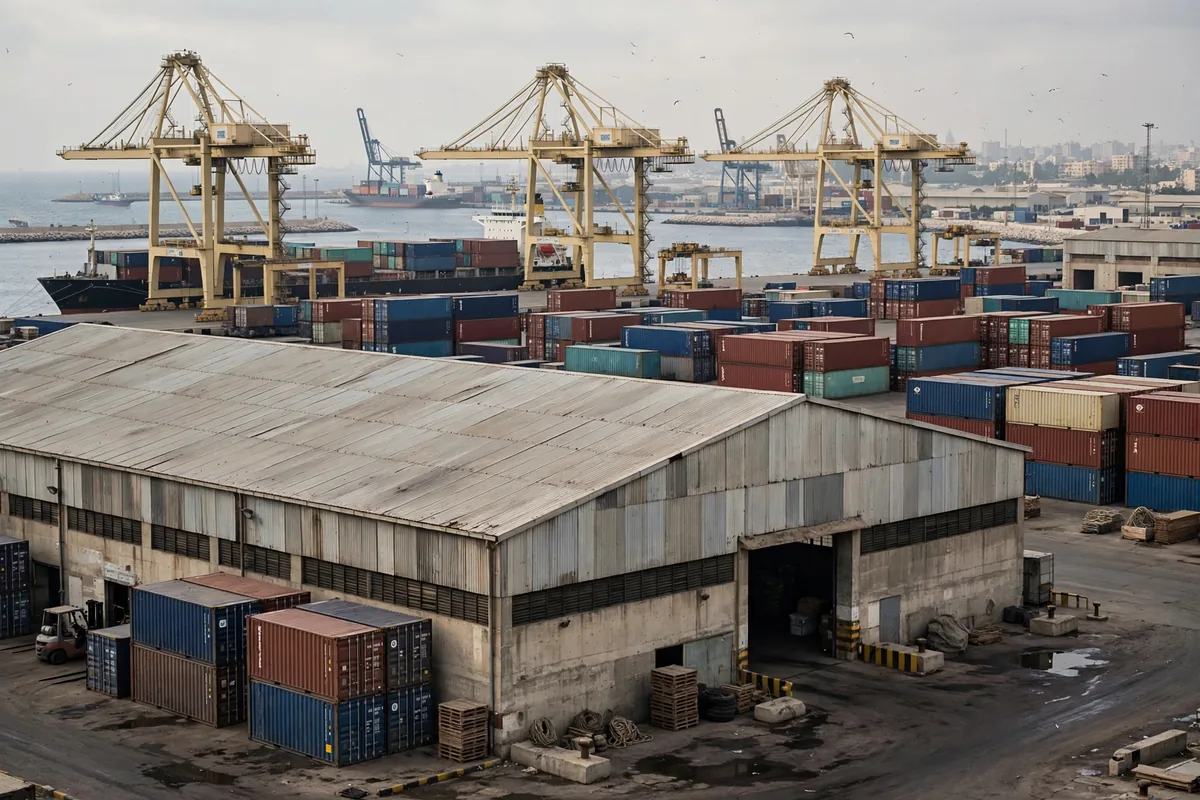
We had a client who chose his first warehouse near Alexandria with one question: how close is it to the terminal? The cheapest quote and the shortest line on the map won the contract the same day. Three months later he called me, and it was no longer a pricing conversation. It was a rescue call. Containers were hard to pull in peak weeks, devanning queued behind other customers, and even booking a reliable short-haul truck cost extra money and extra favours. His own summary was better than any sales deck I have ever written: I thought Alexandria Egypt Port Warehouse Logistics was a rent game. It turned out to be an exit-route game.
If you sell into Egypt, or use Egypt as a Mediterranean distribution point, start there.
Close to the port is not the same as fast out of the port
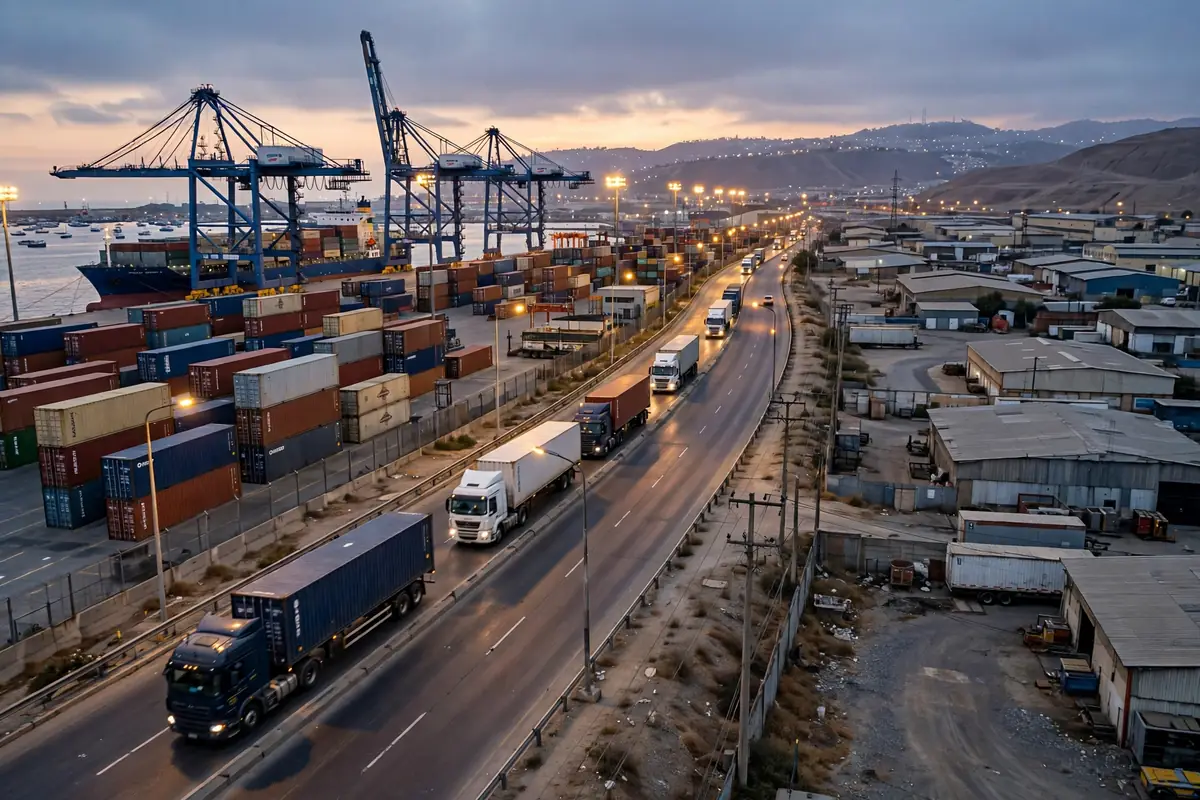
Alexandria is Egypt's long-established Mediterranean gateway. Port activity, the old city, and industrial pockets sit close together. That concentration is useful — forwarders, customs brokers, trucking capacity, and labour are all nearby — but it also means the warehouses closest to the port are a mixed bag. Some are perfectly serviceable older buildings. Others have low clear height, too few docks, yards where a container truck has to reverse into traffic, and streets that punish any schedule you wrote in an office.
The distance on a map and the time on a driver's day sheet are different numbers. I never quote a client a precise saving here, because rates and surcharges vary by contract and season — check the provider's latest official quote — but the structure of the cost is consistent: the cheap warehouse usually charges you later, in waiting, double handling, and missed onward departures.
Our first case is a home-goods importer who began in 2023 with a small unit near the port area while volumes were modest. Trial shipments went fine. Then he consolidated orders for Egypt's northern market and onward distribution toward southern Europe through the same building, and the building became the bottleneck. Full containers waited for devanning space. Cartons for different destinations were staged on the same floor and buried each other. Picking turned into searching. The rent he had saved was quietly spent several times over on storage overruns and re-handling. Nobody had lied to him. He had simply bought the wrong line item: square metres, when what he needed was throughput.
The counterintuitive judgment I give every client is this: in Alexandria, the second ring is often the better first choice. Sites toward the industrial and logistics clusters around Borg El Arab and Amreya tend to offer a more workable combination of docks, yard turning space, and access to main roads. You drive a little further from the quay and get your goods moving sooner. When I walk a site with a client, I look at the yard before the rent roll: can a container truck enter the dock without a three-point turn, does water pool after rain, and can the site work extended hours in peak season when you actually need it? Those three answers are worth more than a small difference in rent per square metre.
Alexandria or Suez? It is a split, not a contest
The second client shipped auto parts and small equipment from Asia. Part of his volume sold inside Egypt, part moved onward across the Mediterranean, and a smaller part headed toward Red Sea and Gulf markets. His first instinct was to site everything on the Suez side, because his ships transited the canal and the geography felt logical on a slide. We costed both patterns route by route — I will not publish his numbers, they belong in his contract — and the pattern was clear once we separated the freight by final destination rather than by port of arrival. The majority of his goods were consumed in northern Egypt or distributed around the Mediterranean basin, and Alexandria handled that flow with fewer awkward land legs. Only the Red Sea and Gulf portion genuinely benefited from a Suez-side arrangement around Ain Sokhna.
So he split it. Alexandria became the main warehouse and Mediterranean distribution point. The Suez side was used flexibly, for bonded and transit services, without a fixed warehouse lease. Six months later he told me that split had quietly saved his season: when Red Sea routing became unreliable for a period, his Mediterranean volume kept moving from Alexandria on schedule, because he had not chained his whole inventory to one corridor.
That is the trade-off most siting decks miss. Alexandria Egypt Port Warehouse Logistics is not a contest between two ports where one wins. It is a portfolio question. Put fixed cost where your repeat volume is. Keep the secondary corridor flexible until its volume earns a building.
| Dimension | Alexandria pattern | Suez / Ain Sokhna pattern |
|---|---|---|
| Best-fit freight | Northern Egypt sales, Mediterranean onward distribution | Red Sea and Gulf transit flows |
| Port character | Established Mediterranean gateway, dense service ecosystem | Canal-adjacent, stronger fit for canal and Red Sea routing |
| Warehouse stock | Older buildings near port; more balanced choice in second-ring industrial areas | Newer large-format stock suited to high-volume transit |
| Main risk | Congestion near port, uneven older buildings, short-haul variability | Long land legs if consumption is actually in the north |
| Contract focus | Docks, yard, peak-season working hours, container pull arrangements | Bonded and transit terms, free storage period, onward connection liability |
Use the table as a negotiation checklist, not as a verdict. Egypt's import documentation and advance cargo declaration requirements have been adjusted in recent years, and the operative detail changes; always confirm the current position against Egyptian customs and the official filing platform, and treat any agent's old screenshot as history, not policy.
In practice, I never negotiate the warehouse alone. I put the warehouse operator, the customs broker, and the short-haul carrier in the same conversation and pin down three things before signing. Who owns each milestone once a container discharges? Can devanning, labelling, and photo documentation happen in one facility, in one queue? And when something goes wrong at midnight before a sailing, who is authorised to spend money first and argue later? If the contract cannot answer those three questions plainly, I advise the client to walk away at any rent.
Watch, too, for the classic low-quote structure. The headline rent covers storage and little else. Devanning, palletising, shrink wrap, labelling, inspection support, and exception handling appear later as add-on lines, sometimes with peak-season capacity quietly excluded. None of this is unusual in 3PL — I sell these contracts for a living — but a good operator will hand you the full add-on schedule before you sign, not after your first container lands. Ask for it in writing and price a realistic month, including one problem shipment, before comparing sites.
Two smaller site checks save disproportionate pain. For higher-value goods such as small appliances and parts, put security patrols, camera retention, and dual-check release procedures in an annex rather than accepting a verbal assurance. For bulky, low-value freight, check the roof and floor after rain instead; northern Egypt has a wet winter season, and an older building's damp problem will introduce itself to your cartons long before it appears in a brochure.
So how do you decide, concretely, this week? Take your next six months of expected volume and split it three ways by final destination: Egypt domestic, Mediterranean onward, and Red Sea or Gulf. If the first two dominate, place your main warehouse in Alexandria's second-ring industrial areas and choose docks and yard over a marginal rent saving. Serve the third flow with flexible transit and bonded capacity until its volume is steady enough to justify fixed cost. Review the split quarterly. Corridors change faster than leases do, and the warehouse that was right for your launch mix can become the constraint on your growth mix.
Next time you negotiate a contract, remember to ask these three questions. Where, in which clause, are the peak-season rules for container pulls and devanning queues? Can I have the complete add-on price list, not the headline sheet? And if a documentation delay is not my warehouse's fault, from which day do storage charges run, and is there a cap? An operator who answers all three crisply is worth shortlisting. An operator who waves them away and pushes you to sign is telling you, for free, exactly how your first problem shipment will go.
By Susan, 3PL Sales Director