In bogota colombia warehouse logistics last mile, we had a client who shipped into Colombia for the first time in March 2024, and his opening question was exactly the one I expected: shouldn't the warehouse be as close to downtown as possible? I told him to hold that thought. In this market, the most expensive tuition most brands pay is for those four words, close to the customer.
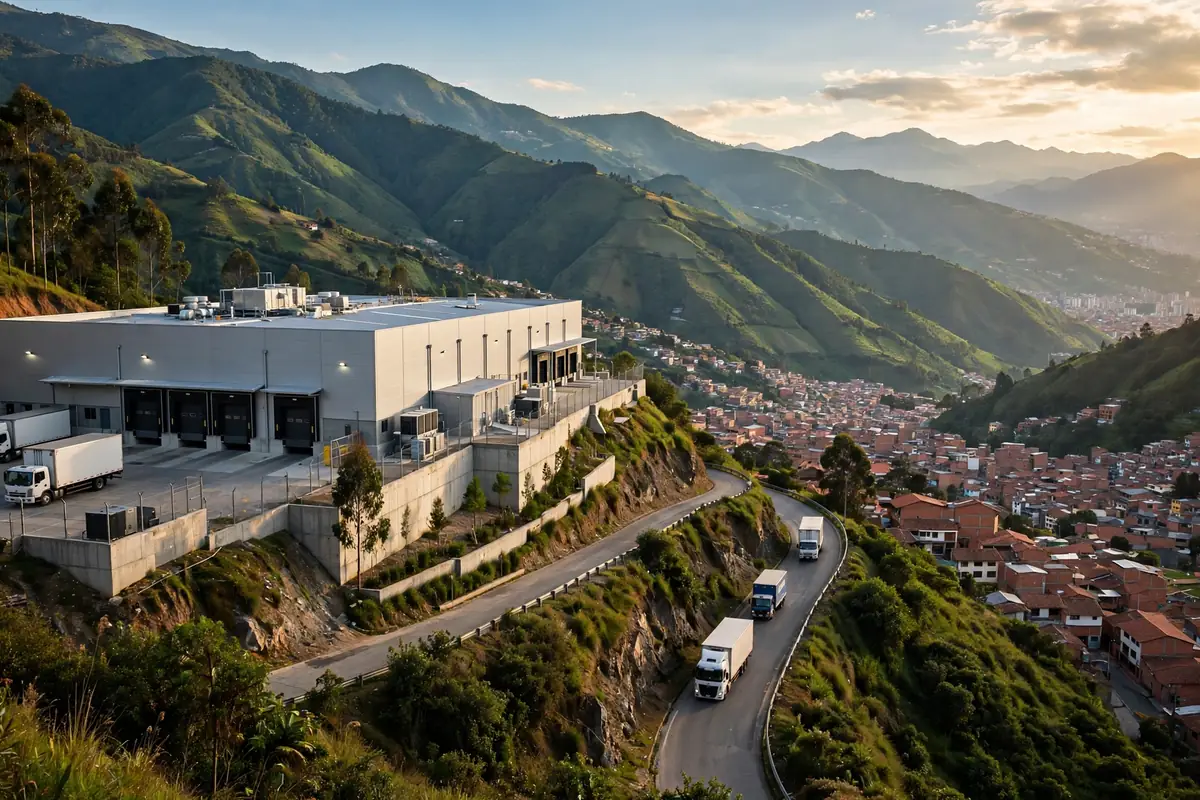
Start with the city itself, because Bogota does not behave like the markets most of my clients know. It is a high-altitude capital, well above the coastal ports where freight enters the country, and cargo has to climb a serious stretch of mountain road to reach it. Lead times you would assume from a flat, coastal market simply do not apply. Inside the city, peak-hour traffic can turn a short hop into a long one. So when we talk warehousing and delivery here, straight-line distance on a map is nearly useless. What matters is drive time by time of day. I put that on the table with every client entering Colombia, before we discuss a single rate, because every bad decision I have seen in this market started with someone importing assumptions from a flatter, faster city.
Bogota colombia warehouse logistics last mile starts with site selection
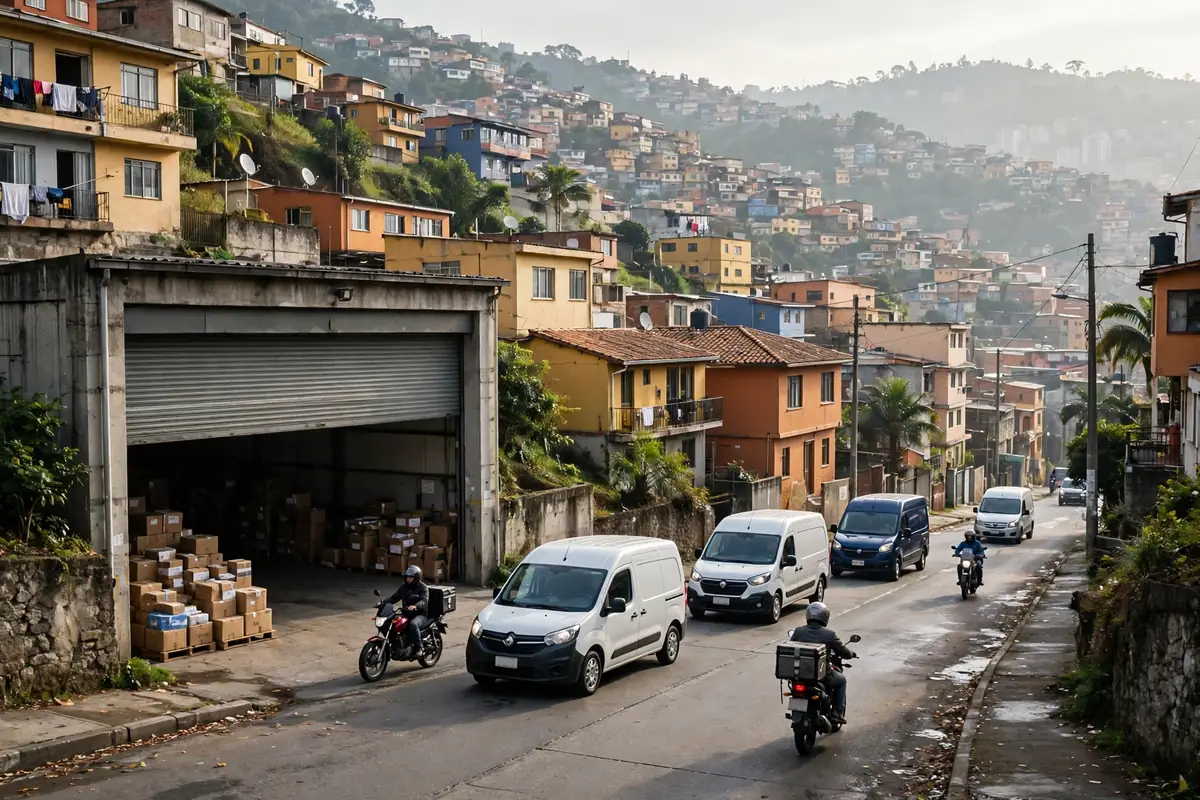
In the second half of 2024, a small-appliance client of ours entered Bogota determined to take a city warehouse. His logic sounded airtight: closer to the retail districts, faster delivery, happier customers. Then we ran the numbers together, and he changed his own mind. City space costs more to rent and run, and it is hard to expand when volume grows. Outskirts space is cheaper and easier to scale, but every delivery run pays a traffic toll going into the city. He landed on a split model: a main warehouse outside the city for storage and wholesale orders, and one very small forward point inside the city for frequent small orders.
When you negotiate a site, ask three questions before you look at rent:
| Question | Points to a city site | Points to an outskirts site |
|---|---|---|
| Are orders mostly small, frequent, and time-sensitive? | Yes, strongly | Only with a forward point to protect lead time |
| Is volume bulky, slower-moving, or wholesale-heavy? | Space runs out fast | Yes, strongly |
| Will you need to expand quickly in peak season? | Very hard to expand | Expansion is far easier |
Now the counter-intuitive part, and I have watched clients resist this one: a warehouse farther from the customer does not automatically mean a worse customer experience. In Bogota, what hurts you is not distance, it is departure timing. An outskirts warehouse that understands its entry windows into the city, dispatches consolidated loads early in the morning, and runs dense city routes in the afternoon can hold a steadier delivery promise than a city warehouse shipping whenever an order lands. The real trap of the city site is not the rent. It is the false comfort. Because you are close, nobody designs the dispatch rhythm, and then peak season arrives, traffic locks up, and the whole plan falls apart in a week.
What bogota colombia warehouse logistics last mile delivery really looks like
Second story. In February 2025, a beauty brand we support launched its online channel in Bogota, and in the first week the rescheduled and returned deliveries piled up faster than its service team could answer messages. When we reviewed the failures together, the product was fine. The delivery promise was the problem. Address descriptions did not work the way the brand's home market expected, some orders needed a confirmation call before a driver could complete them, and once a vehicle missed its window into the city, that day's promise was gone. We changed three things: the checkout page quoted a delivery range instead of a single day, the service team made one confirmation call before dispatch, and volume was split between direct dispatch from the main warehouse and top-up dispatch from the forward point. Within a month, the reschedule rate came down noticeably. How you word your own delivery promise should follow your carrier's actual performance in the city, not the promise your marketing team wishes were true.
On cost, one warning I give every client: do not compare rent alone. Add the daily runs into the city, the second-attempt deliveries, and returns handling to the outskirts option, and half the rent saving can disappear. Then add the lower failed-delivery rate to the city option, and some of that higher rent earns itself back. The honest way to decide is with your own order profile. Lay out three numbers: your order size distribution, how time-sensitive your customers actually are, and your returns rate. With those three on the table, the right site usually picks itself in one meeting. On local tax, customs, and employment specifics, I always tell clients to rely on current official guidance and a licensed local adviser. I will not quote rates I cannot verify, and you should not build a market entry budget on numbers from an article, including this one.
A last word on negotiation, because this is where my clients leave money behind. With a local 3PL in Bogota, do not spend all your leverage pushing the storage rate down a fraction. Put departure windows, peak-season expansion priority, and response times for exception orders in writing. In a city like this, two extra dispatch runs guaranteed in peak season are worth far more than a small discount on space you may outgrow by November anyway.
Next time you sit down to negotiate a contract, remember to ask these three questions. How do you guarantee runs into the city during peak traffic hours? If I need to expand in peak season, how far ahead can you confirm space? And who owns address confirmation and rescheduling calls, your team or mine? Ask those three, and you will know within one meeting whether you are talking to a partner who truly understands bogota colombia warehouse logistics last mile, or one who is only selling you a cheap rate.
By Susan, 3PL Sales Director