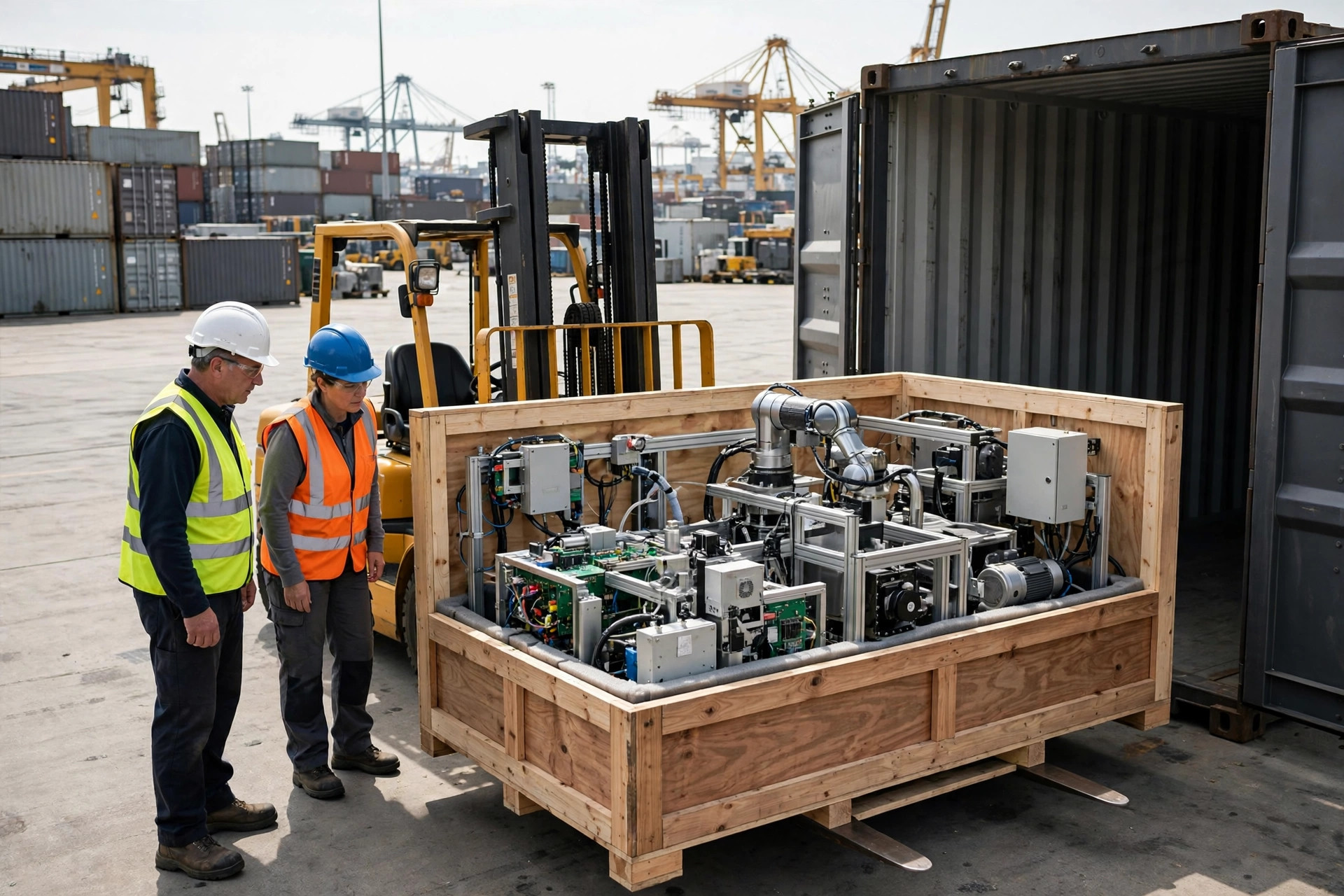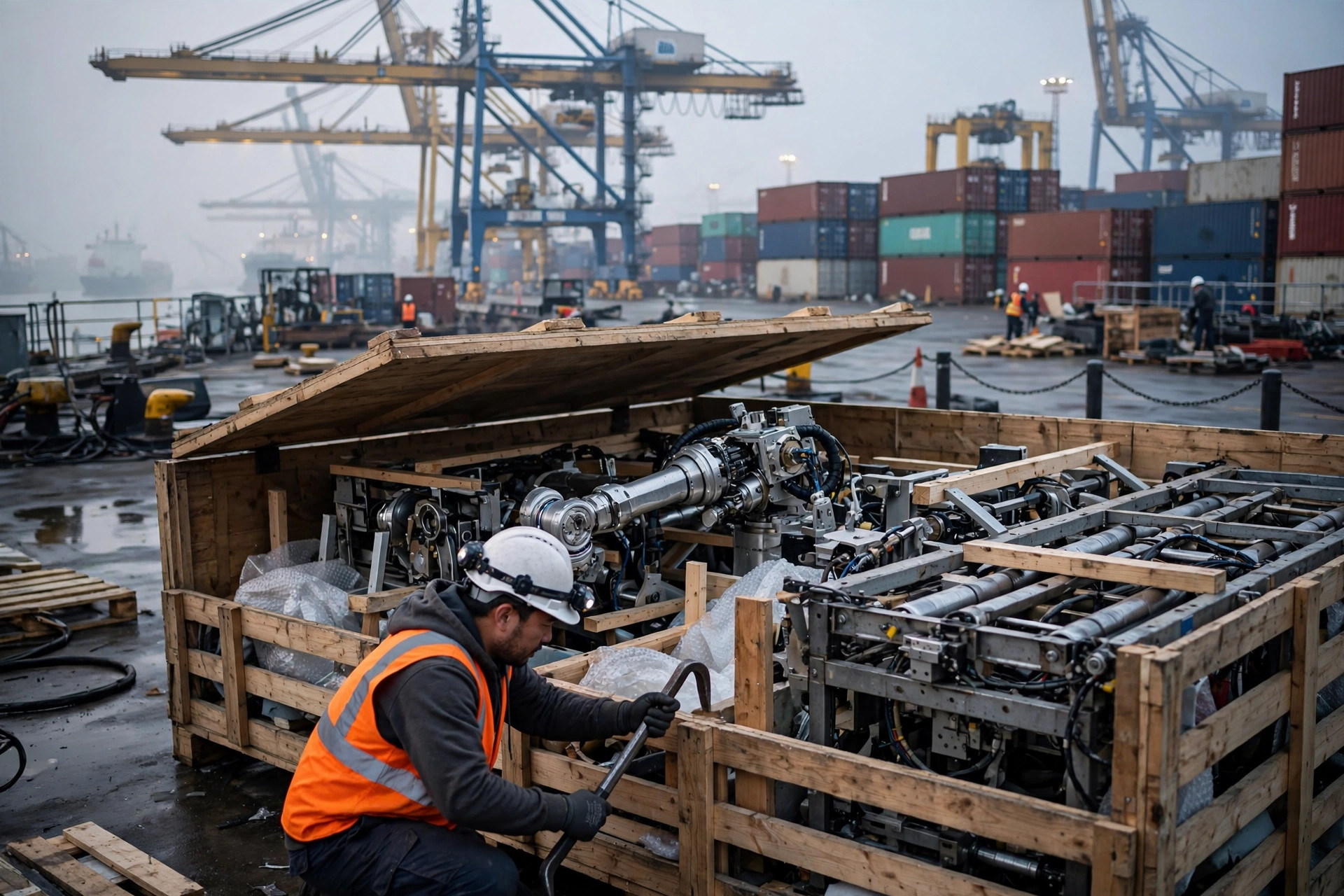
We had a client who ordered an automated storage system from Guangdong in 2024 — $1.2 million contract, paid by letter of credit. The goods were loaded on the vessel. Then the bank said two words: documents discrepant, payment refused. The factory was waiting on the balance to make payroll. The client was waiting on the equipment to start installation. A $1.2 million shipment floating at sea, both sides staring at each other.
It took six weeks, two amendments, and the whole project slipped two months. The problem wasn't the equipment. It was a piece of paper: the soft clauses in the LC.
More and more US buyers are importing automation equipment from China these days — AS/RS, sortation lines, AGVs, routinely several hundred thousand to over a million dollars a pop. The bigger the ticket, the more likely it's an LC deal — and the more likely someone gets hurt by soft clauses. Let me explain how this works.
What soft clauses really are: terms the factory can't satisfy on its own
The logic of a letter of credit is "pay against compliant documents," regardless of whether the goods themselves are any good. But some clauses hand the power to produce those documents to the buyer (the applicant) or someone the buyer nominates — the beneficiary (the factory) can't assemble compliant documents no matter how hard it tries. Those are soft clauses.
Plain English: any clause reading "subject to the buyer's written approval," "certificate to be issued by a buyer-nominated inspector," or "to the buyer's satisfaction" is a soft clause. Whether the factory gets paid stops depending on how good the goods are and starts depending on whether the buyer feels like cooperating. Banks examine documents against the LC text only — fairness of the terms isn't their problem. That's the bank's safe harbor under UCP 600 (ICC Uniform Customs and Practice for Documentary Credits, Publication No. 600, in force since 2007); exact practice varies by issuing bank.
That $1.2 million system had two landmines. First: "inspection certificate to be issued by the buyer's nominated inspection agency." The nominated inspector was booked out three weeks. The factory had finished the goods, but no inspector meant no certificate, and no certificate meant no shipment. Second: "shipment notice subject to the buyer's written confirmation 7 days prior to loading." The buyer's purchaser was on vacation. No reply, no loading. By the time the buyer returned and confirmed, the presentation period had expired. The bank looked at it: late presentation, discrepant, refused. Textbook.
See the cruelty of it: the factory did everything right, and still couldn't get paid. That's the nastiest thing about soft clauses — they move the power over payment from "are the goods good" to "does the buyer want you to get paid."
Client story number two: two discrepancies, eleven days of idle line
In 2023, another client imported a cross-belt sorter line from Zhejiang, LC value north of $600,000. One clause read "vessel name and voyage subject to the buyer's written confirmation prior to shipment." The factory was chasing a sailing, loaded first, and sent the confirmation a day late. The bank: loading date predates buyer's confirmation. Discrepancy one.
Then the invoice: one letter off in the spelled-out amount. The bank: amount in words and figures don't match. Discrepancy two. The issuing bank refused. The client ended up wiring funds to take up the documents, the goods sat at the port eleven extra days, and amendment plus demurrage ran into the low thousands — exact figures depend on the bank's actual charges, but for those eleven days the client's US installation crew stood around billing day rates.
That's when the buyer finally understood: an LC isn't "insurance once opened." An LC is a documents game, and the clauses are the rules.
The review checklist: once before the LC is issued, once before documents are presented
Anyone who's been on the selling side long enough keeps a scar-tissue checklist. Mine has two passes: review the terms before issuance, review the documents before presentation.
Before issuance, flag every clause that requires an action by the buyer, then ask one question: can the factory satisfy this clause without the buyer? If not, it's a soft clause. Mark it red.
The checklist:
-
Rewrite inspection clauses as enforceable hard standards. Not "inspection by buyer-nominated agency" — instead, a mutually agreed third party (say, SGS, BV, or Intertek, pick one of three), inspection criteria referencing the contract's technical annex, a deadline (so many days before shipment), and who pays. Give the buyer one of three reputable inspectors and they usually let go of "it has to be my guy."
-
Leave slack in shipment-notice periods. Ten to fifteen days' notice before loading is a sane window — it leaves room to rebook. The tighter the deadline, the less operating flex the factory has, and the likelier a discrepancy becomes.
-
Don't strangle the presentation period. Fifteen to twenty-one days after the bill of lading date is a common comfortable range, subject to the issuing bank's requirements. A short presentation period turns one courier delay into a late presentation.
-
Put discrepancy and amendment fees in the sales contract. Banks charge for raising discrepancies and for amendments. Agree upfront who pays, or you'll negotiate it mid-crisis.
-
Split large equipment payments. Thirty percent advance by wire plus seventy percent by LC, or shipment-by-shipment LCs. Betting the entire exposure on one LC means betting it all on one document checker's pen.
Before presentation, check the documents word by word against the LC text: amounts in words and figures, vessel and voyage, shipment date, number of copies, endorsements. The document checker's eyes are the last gate. I've seen more deals die from carelessness than from bad clauses.

Negotiating soft clauses: don't fight them, translate them
A lot of buyers hear "change the clause" and assume you're being difficult. But soft clauses cost the buyer too — a refused payment means goods floating at sea and the buyer's own project delayed. The negotiation frame is "certainty for both sides," not "who wins."
First move: translate the soft clause into a hard standard. The buyer wants "nominated-agency inspection"? Fine: "SGS, BV, or Intertek, your pick of three, criteria per the contract annex, completed ten days before shipment, our cost." What the buyer actually wants is "someone credible checks quality" — not "the person who can stall me must be mine." Give them certainty and they usually release the grip.
Second move: add reciprocal protection for the factory — if the buyer doesn't confirm within the agreed period, confirmation is deemed given. Write it into the LC terms and the cost of buyer delay lands back on the buyer. Most buyer delays aren't malice, just slow internal process; a "deemed confirmation" clause mysteriously speeds up their internal process.
Third move: if a soft clause won't budge, change the payment instrument. If "buyer's written confirmation" absolutely must stay, don't do a 100% LC — take a wire advance plus an LC for the balance, or ask the issuing bank to add confirmation. A confirming bank dramatically improves the factory's certainty of getting paid — and who pays the confirmation fee is a negotiating-table question.
At the end of the day, reviewing LC documents isn't a test of English. It's a test of risk awareness. Every occurrence of the word "buyer" in the clauses is one more handover of control. Two hours reviewing terms before signing beats six weeks of firefighting after.
Next time you negotiate a contract, ask these three questions: one, can the factory satisfy this clause without the buyer? Two, if the buyer doesn't cooperate, does the factory have recourse? Three, if inspection gets stuck, who covers the cost and the time?
If you can answer all three, the LC is safe to open.
By Susan, 3PL Sales Director