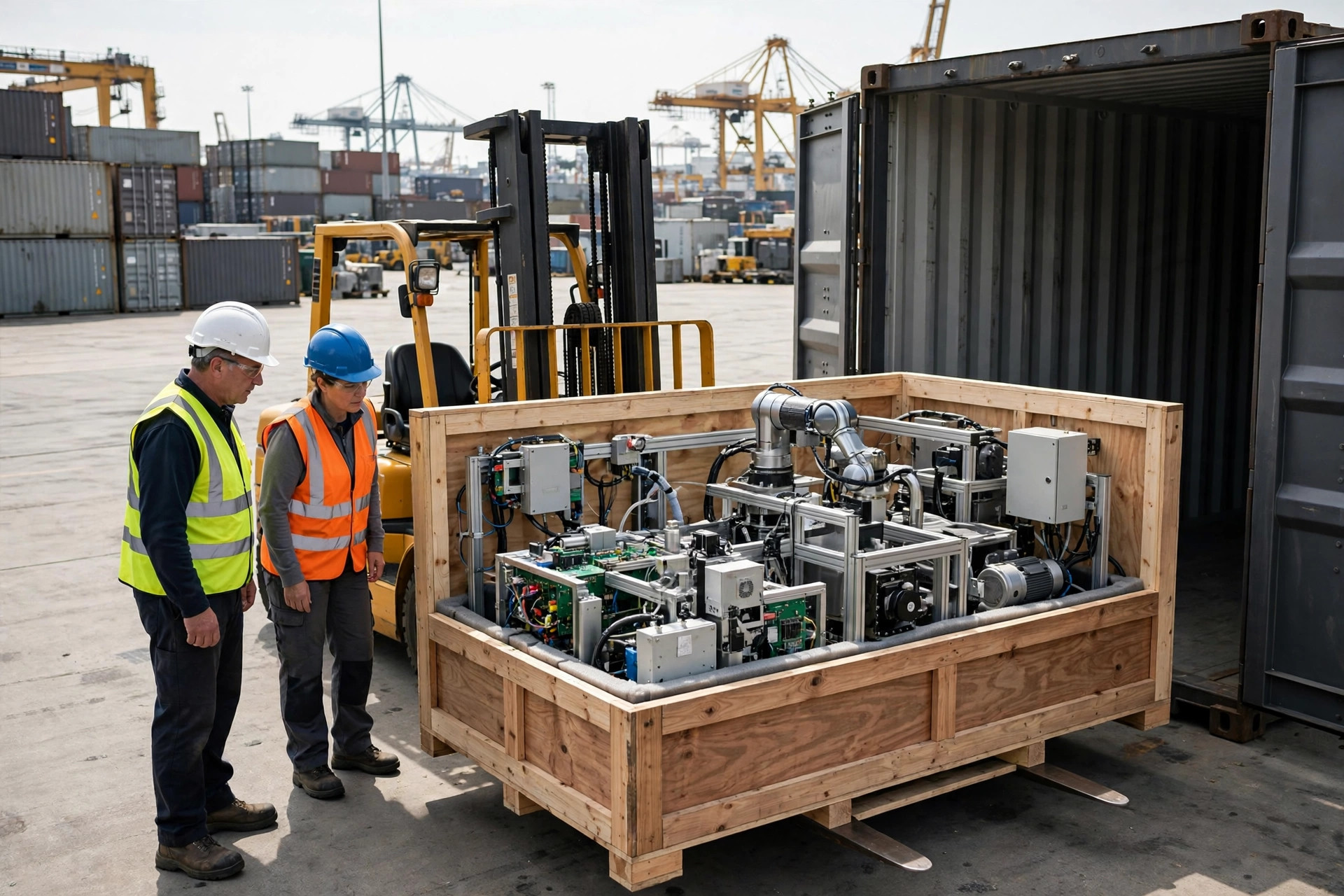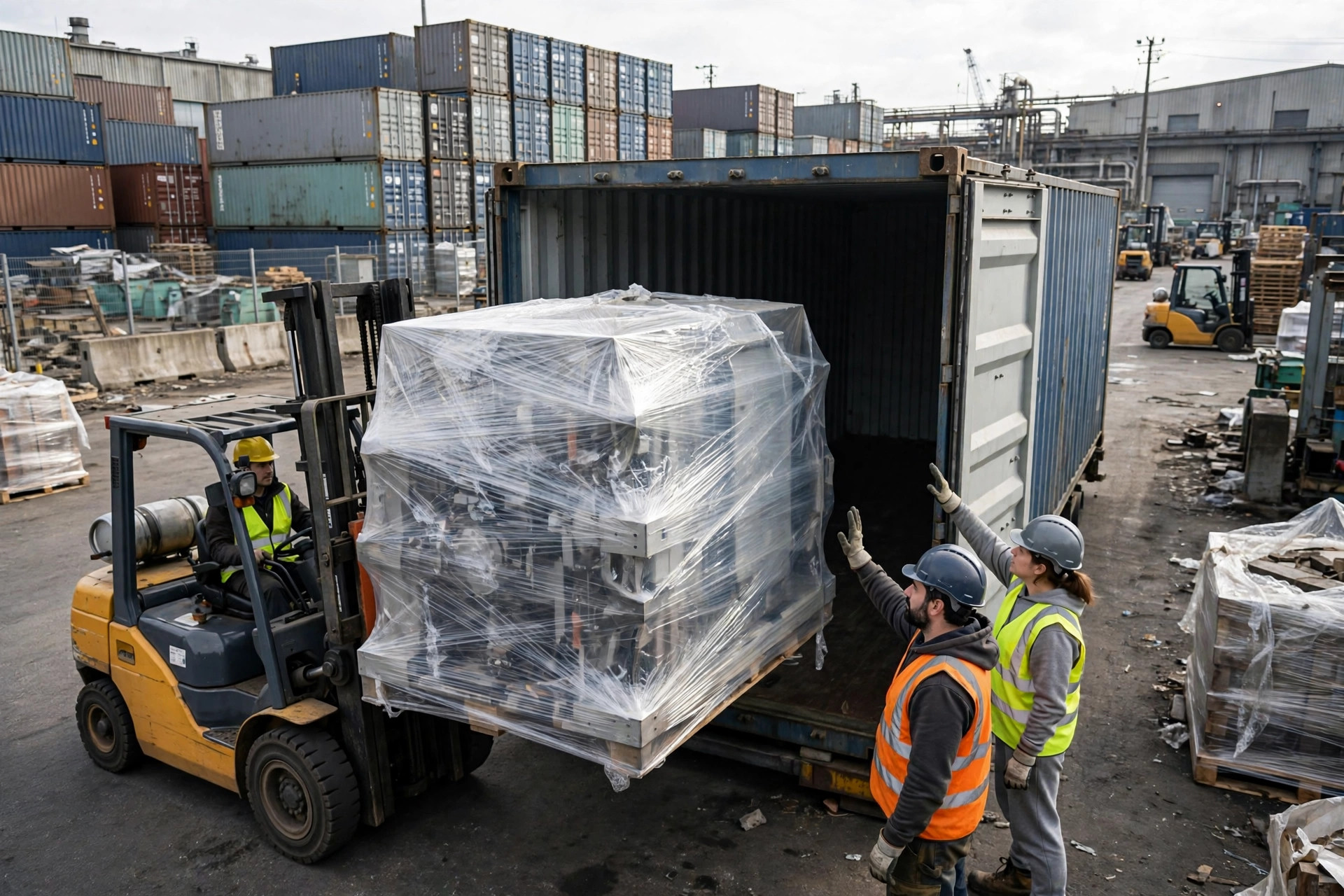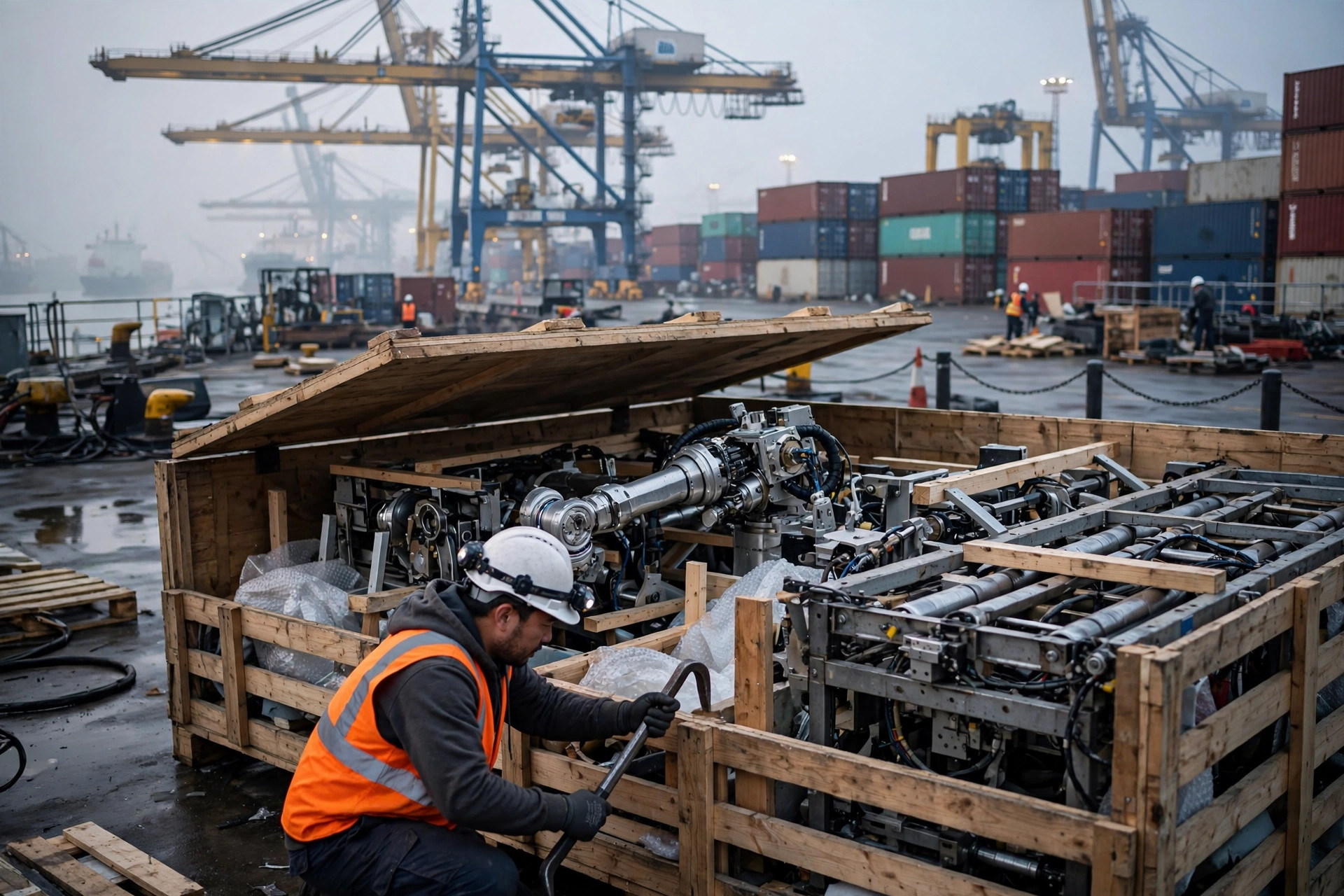
We had a client in the furniture business leasing 120,000 square feet in Ontario, California — a textbook case of automation equipment split shipment import. In the spring of 2025, the call came down from the top: install a conveyor line plus a put wall. The gear shipped from overseas in 4 separate ocean shipments — 12 forty-foot boxes, Yantian to Long Beach. The plan looked beautiful on paper: everything in by June, install in July, live before the August peak.
Then the steamship line moved up the second sailing by five days. The forwarder's ISF was still filed on the original schedule, and by the time anyone noticed the manifest didn't match the actual loading, we were inside the 24-hour window. CBP flagged the filing as non-compliant, the cargo got pulled for exam on arrival at Long Beach, and 6 containers from shipments 2 and 3 sat at the terminal — held for 6 days.
Let me price those 6 days, because this is where split-shipment projects quietly bleed. Demurrage and detention at Long Beach were running several hundred dollars per box per day at the time — 6 boxes times 6 days burned twenty to thirty thousand dollars before anyone lifted a wrench. The install crew — the maker's engineers plus local contractors — was already staged at the warehouse, idle for 3 days, on the clock. Worst of all, the project slipped two weeks and missed the August peak window. The client read us and the forwarder the riot act — but honestly, half of that mess was baked into a contract that never spelled out who owned what.
Here's the part nobody puts in a quote: the forwarder's proposal listed the ISF filing fee for one shipment. The client assumed "one equipment set" meant one filing. Four shipments meant four ISF filings, and the difference showed up quietly on the monthly invoice. The exam-handling fee was quoted as "as incurred" — once a container gets pulled, a multi-thousand-dollar bill lands on your desk and you have zero leverage, because they're holding your boxes.
ISF and the 24-Hour Rule: Split Shipment Import's First Trap
The regulatory fact first, so nobody thinks I'm fear-mongering: for US ocean imports, the ISF (Importer Security Filing, the "10+2" rule) must reach CBP at least 24 hours before loading. Hard rule, not a suggestion.
Split shipments are where this rule bites hardest: 3 to 5 shipments means 3 to 5 independent ISF filings, each with its own 24-hour countdown. Carriers change schedules like the weather — three days early, a week late, totally normal. CBP's clock doesn't accept "the carrier moved the sailing."
Non-compliance hits on two levels. First, CBP penalties — amounts and current policy are on CBP's website, they get adjusted, and I'm not quoting a number you'll wave at an officer six months from now. Second, and worse: once cargo is held, demurrage, detention, and idle-crew costs pile up fast and routinely dwarf the fine.
So the first question in any forwarder negotiation: "Is ISF billed per shipment or bundled for the whole set? If a sailing changes and we refile, who watches the clock — and is there a fee?" Get it in the quote's notes. It saves half the arguments later.
One Entry or Four? The Circuit Breaker Question in Split Shipment Import
The second trap in automation equipment split shipment import is how you file the entries. Clients usually arrive with one of two instincts: "four shipments, four entries, nice and clean" or "can we roll it into one entry and save on brokerage fees?" Both instincts are half right.
The fee mechanics: MPF (Merchandise Processing Fee) and HMF (Harbor Maintenance Fee) change on CBP's schedule — check the current published rates there, because I won't hard-code numbers that go stale. The logic is fixed, though: MPF is assessed per entry, with a minimum and a maximum. Four entries, four MPF charges; one consolidated entry, possibly one.
Sounds like one entry saves money, right? Here's the counterintuitive call: the extra paperwork cost of split entries isn't waste — it's insurance.
Another client put an automated storage system in New Jersey in fall 2024, also 4 shipments — but we wrote that contract, so the strategy was locked in up front: separate ISF and entry per shipment, under a continuous bond (an annual bond that beats four single-entry bonds). Shipment 3 got pulled for exam. Only shipment 3 was held. Shipments 1 and 2 cleared and went straight to the install crew, who started building with what had arrived; by the time shipment 4 landed, shipment 3 was released. Zero delay.
That's the entry working as a circuit breaker: one shipment has a problem, the rest keep flowing. Consolidate into one entry to save a few brokerage fees, and that exam holds everything — four shipments baking at the terminal, the whole crew standing around. One day of that costs more than a year of extra filings. Do the math.
| One consolidated entry | Separate entry per shipment | |
|---|---|---|
| MPF and similar fees | Possibly paid once — cheaper | Paid per entry — several filings |
| Brokerage service fees | One | Per shipment |
| Exam risk | One exam holds the entire filing | Only the flagged shipment is held — risk isolated |
| Warehouse receiving rhythm | Everything must arrive before release; staging crunch | Receive and install as shipments land; work in parallel |
| Best fit | Low cargo value, stable sailings | Expensive equipment, volatile sailings, tight install schedule |
Split Shipment Import Is a Warehouse Scheduling Problem Too
Clearance is only the first half. The second half plays out inside the warehouse — where plenty of projects quietly derail.
Automation equipment isn't parcel freight: big, heavy, doesn't fit standard racking, and every shipment needs staging space. Four shipments means four waves through staging — plan it badly and the warehouse becomes a parking lot. Our rule: staging footprint, free-time allowance, and overstay rate get negotiated with the 3PL in the contract, before the first container lands. After arrival, you have no leverage.
Second insider point: shipment sequencing. Installation has a critical path — control cabinets, the master control system, and electricals must arrive before the mechanical build-out proceeds. Smart buyers write "ship in installation sequence, critical components first" into the purchase contract. If the maker ships "whatever finishes first," you get a mountain of steelwork while the control cabinets ride the last vessel, and your crew bills you by the day for standing around. No expediting saves a schedule when that clause was never written.
Third: receiving inspection, per shipment — count, condition, serial numbers, photos on file. High-value components get dented and short-shipped more often than anyone admits, and the inspection record is your only claim evidence. One more from the sell side of the desk: 3PL receiving fees are quoted per pallet or bundled per shipment. On four shipments, per-shipment bundling means paying for the same work four times — negotiate down to actual volume (pallets or pieces), or a bundled split-shipment rate.
The Document Checklist: Run It Before Anything Sails
Final piece — the checklist, walked before the first vessel loads. Equipment imports carry two more document categories than ordinary cargo:
Per shipment, always: bill of lading, commercial invoice, packing list, ISF filing confirmation, entry filing documents, customs bond.
Equipment-specific: HTS classification confirmation — automation gear is classification-disputed territory, and the duty gap between two plausible classifications can run several percentage points, so get a licensed classifier's opinion instead of guessing; proof of origin; wood-packaging fumigation certification (ISPPM-15 mark) — without it, a container can be refused outright; electrical equipment certifications.
Write into the contract: shipment sequencing terms, document delivery deadlines (and what the penalty is when documents arrive after the cargo), and who owns exam cooperation.
Next time you're negotiating a contract, ask these three questions:
First, to the forwarder or broker: "ISF, entry, exam handling — which are billed per shipment and which per container? If we get examined, what's the fee — put it in the quote."
Second, to the 3PL: "How is receiving priced for split shipments? How many free staging days, and what's the overstay rate? Who coordinates the install crew's site schedule, and who owns the delay if it slips?"
Third, to the equipment maker: "Can you ship in my installation sequence, critical components first — in the purchase contract? And if your documents arrive after the cargo, how are liquidated damages calculated?"
Ask those three, and the split-shipment game is basically yours to lose.
By Susan, 3PL Sales Director