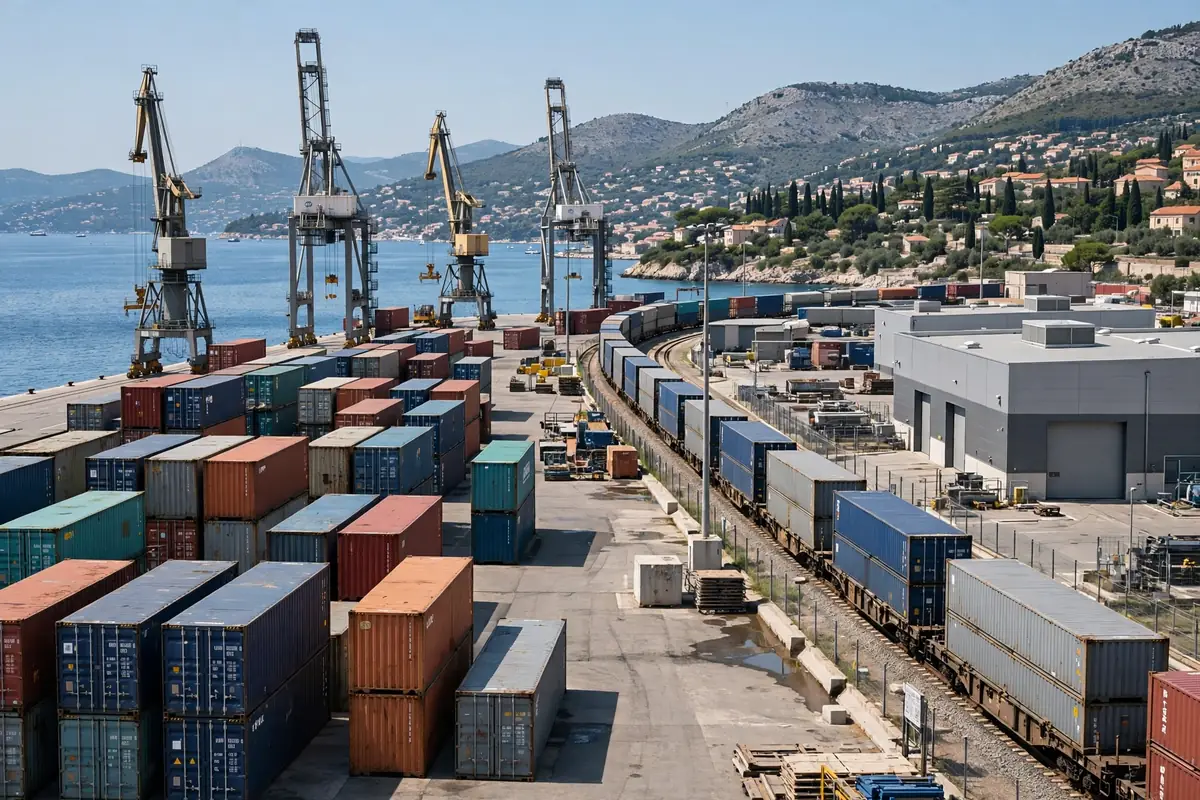
At 6:40 in the morning, before the light is fully up, the night shift pushes the last pallet into the handover lane and tells me the rail-fed batch will be late again. Let me be straight with you: working a warehouse around Koper, what scares me is not volume. It is timing that does not line up. Koper slovenia port warehouse logistics sounds like a port topic, but once freight reaches the warehouse door it becomes a topic about shifts, docks, and handovers. A vessel berths, a train arrives, trucks queue outside, and if any one of those slips by half a day, the whole day inside the warehouse has to be replanned.
I do not do grand Central Europe strategy. That is office work. I only talk about what happens after freight reaches the gate: how we receive it, how we split it, and how we get it out on time. I have worked both port-side and inland warehouses, and what follows is what we learned by getting it wrong first. For customs and rail policy details, always check the latest official guidance. What I can give you is the floor-level practice that actually holds.
Koper slovenia port warehouse logistics runs on the rail terminal clock
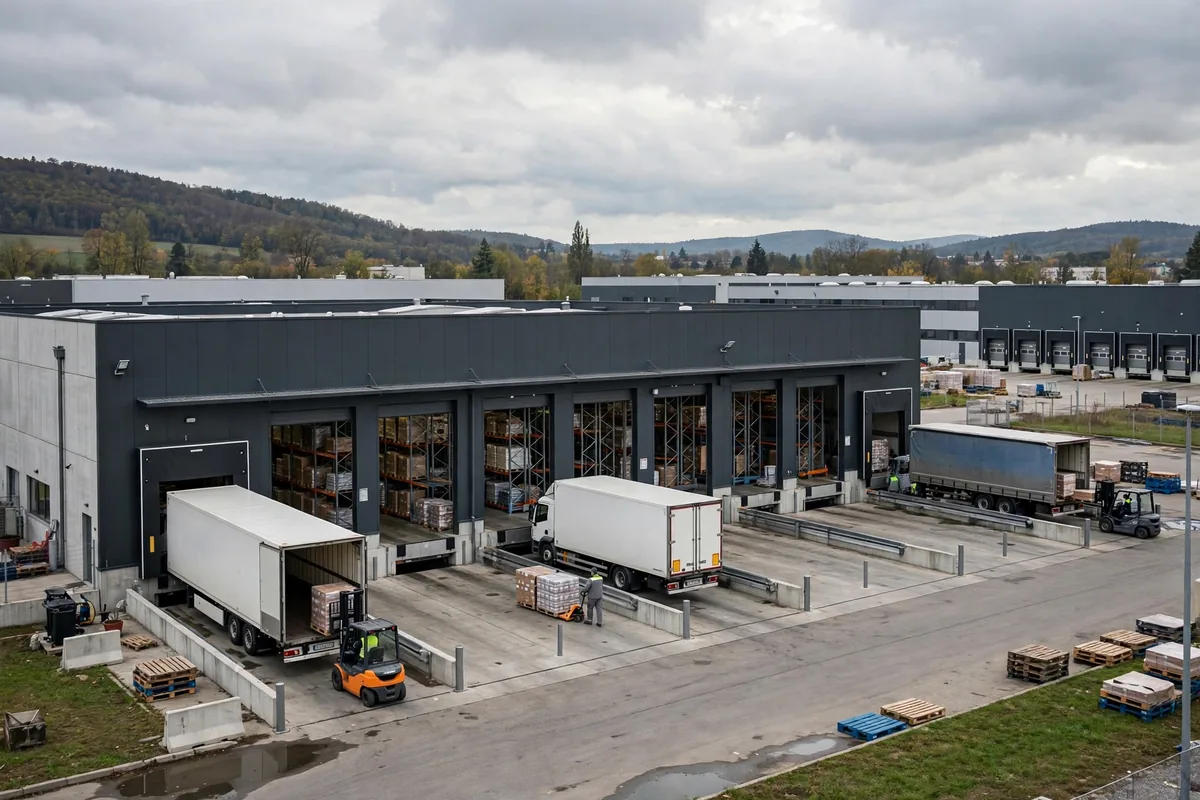
Take one specific morning. On a Monday in autumn 2024, as an illustrative example, our warehouse was due to receive a batch short-hauled from the Port of Koper in the morning and split it toward Austria in the afternoon. The port leg ran late, the freight reached us close to midday, and the dock was still holding Hungarian-bound freight from the night before that had not yet departed. Two crews squeezed onto one dock, forklifts kept yielding to each other, and the shift lead was close to losing it. We saved the Austrian cut-off only by moving two people across shifts and pushing the Hungarian load to the evening shift.
That day taught me the rule I still use: the rhythm of koper slovenia port warehouse logistics is set half by the vessel and half by the railway. Koper sits at the northern end of the Adriatic, and its advantage is proximity to the Central European hinterland, Austria, Hungary, and Slovakia. Freight discharged there can move north by rail and road without first sailing to a northern mega-port and then travelling back south. But you only collect that advantage if the warehouse and the rail terminal connect properly. Trains run in fixed windows. Miss one window and you may simply wait for the next one. Trucks are flexible, but they bring their own cost and queuing problems.
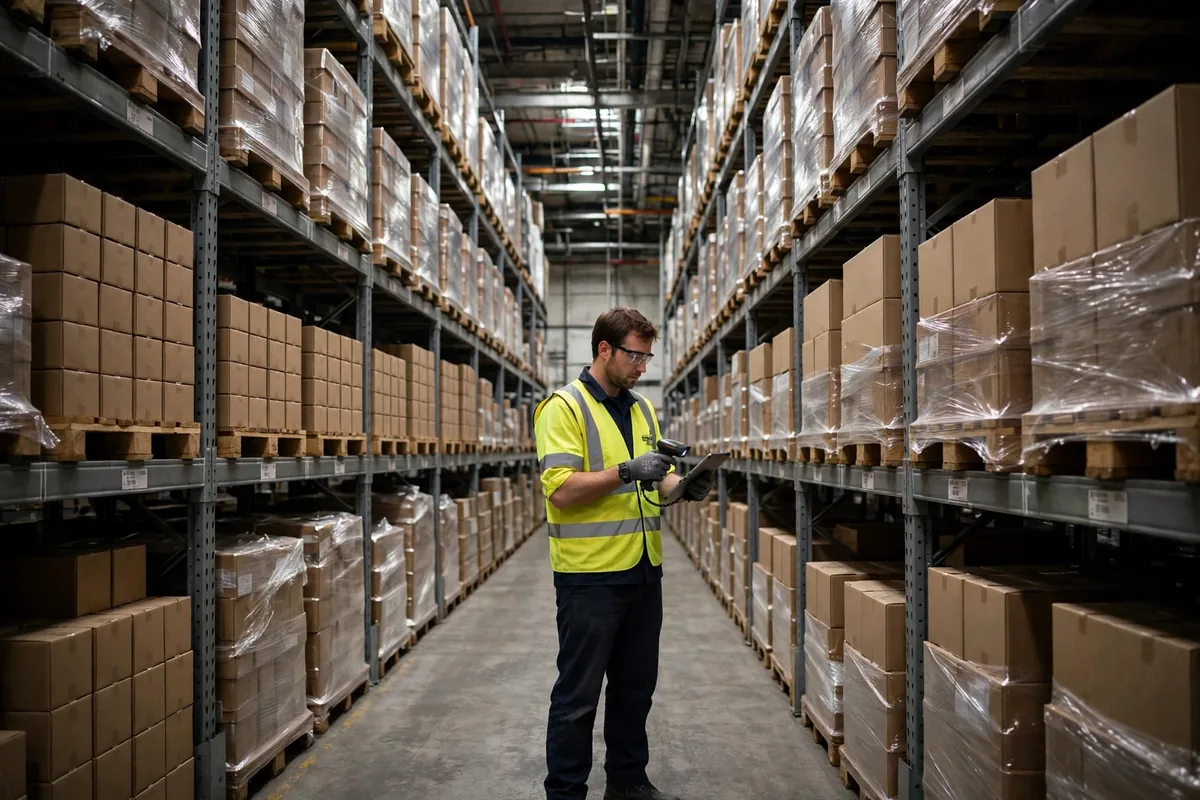
Our fixed practice now is to roster by arrival wave, not by calendar day. A port short-haul arrival is one wave. A rail arrival is another wave. Every wave gets its dock, its crew, and its split sequence decided in advance. The shift lead carries a wave sheet that says what arrives, at what time, how many pallets, and which zone it goes to first. A new hire learns more from that sheet than from listening to me talk.
Here is the counterintuitive part. Most people assume the best warehouse is the one closest to the port gate. Honestly, a site right by the port saves a short haul, but its docks and yard are often tight, and its rail connection is not necessarily the convenient one. We later chose a distribution site where the rail terminal connection was smoother and the docks were wider, accepting a slightly longer short haul in exchange for unblocked receiving and makeable train windows. A warehouse does not win by being near the port. It wins by turning freight smoothly.
Koper versus Hamburg and Rotterdam, felt on the warehouse floor
People often ask me how routing through Koper differs from Hamburg or Rotterdam. I do not compare throughput rankings. I compare what my hands feel on the floor. The northern ports genuinely offer more sailings and more choice. But when a mega-port gets busy, container pickup queues and terminal congestion make arrival times at the warehouse unpredictable. Freight arrives this morning one day and tomorrow afternoon the next, and you cannot roster against that. Around Koper, sailings are fewer, but for Central European freight the northbound leg after discharge is relatively short, and the rhythm is easier to plan in advance. For a warehouse, a plannable rhythm is worth more than almost anything.
In spring 2025, as an illustrative example, we handled freight that had to reach buyers in both Hungary and Slovakia. Routed through a northern port and distributed southbound, it would have needed a longer in-transit buffer and a second distribution split, holding freight in the warehouse for at least a couple of extra days. Routed through Koper, it entered our warehouse once, split once, and both lines moved out the same day, with noticeably less dwell. That does not mean Koper always wins. If your final buyers are in northern Western Europe, or your sailing naturally calls in the north, dragging freight through Koper is a detour dressed up as a strategy. Choosing a port is like choosing a warehouse: look at where the freight ends, not at the fame of the name.
Keep a simple decision frame on your wall. If endpoints sit in Austria, Hungary, or Slovakia and volume can form stable waves, cost the Koper line first. If endpoints scatter across many Western European countries and you need dense mega-port sailings to consolidate, cost the northern ports seriously. And never cost freight alone. Add warehouse dwell: every extra day freight sits with you is a day of rent, a day of supervision labor, and a day of delivery risk. Spread that cost out honestly and many cheap-looking routings stop looking cheap. The table below is illustrative, to show structure rather than promise numbers. Confirm live quotes before deciding.
| Factor | Via Koper into Central Europe (illustrative) | Via northern port, distributed south (illustrative) |
|---|---|---|
| Best-fit endpoints | Austria, Hungary, Slovakia and nearby hinterland | Northern Western Europe and scattered multi-country endpoints |
| Warehouse splits | Usually one split on entry | Often a second distribution split |
| Roster predictability | Waves can usually be locked earlier | Arrival times drift more under congestion |
| Main risk | Fewer sailings, train windows to protect | Pickup queues and a longer inland leg |
Site choice is docks and terminals; dispatch quality is the handover
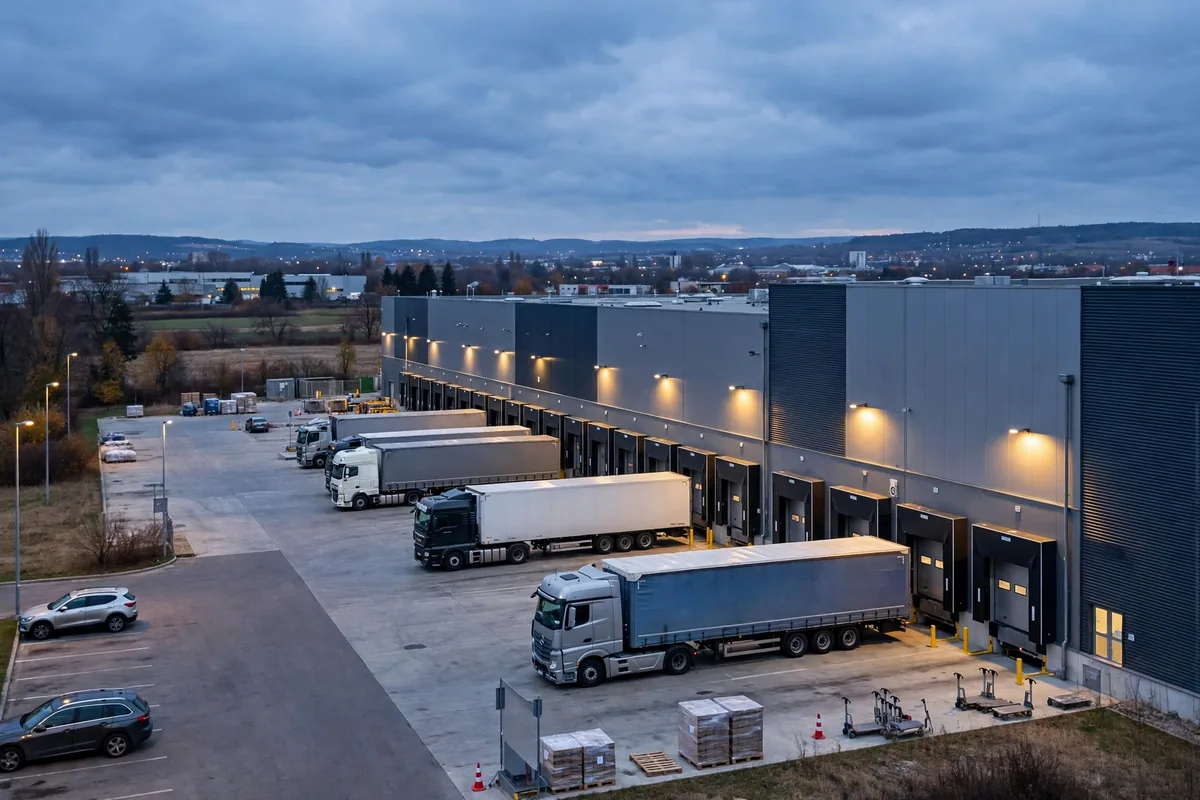
When I judge a warehouse site, I look at three practical things only. First, whether the docks are enough: at peak, can receiving trucks and dispatch trucks work at the same time without blocking each other at the gate? Second, whether the link to the rail terminal runs smoothly: is the short-haul route prone to blockage, and do terminal cut-offs match the warehouse dispatch rhythm? Third, whether the yard and the returns area have spare room: Central European distribution freight is mixed and messy, returns and relabeling work cannot be avoided, and without space for it, small jobs will strangle the whole building. A cheap site whose docks jam every day is a site I tell fellow managers to avoid. The rent you save returns as daily overtime.
Our dispatch handover rules were written after mistakes, not before them. Night shift used to hand over to day shift on a single sheet of paper, and sloppy handwriting once cost the day shift half an hour hunting for freight. Now we check three things at the truck: count, location, and seal. Before departure, the driver, the warehouse clerk, and the shift lead stand at the vehicle, confirm the numbers together, and keep a photo record, so nobody rewrites history later. Once, as an illustrative example, a Hungary-bound truck had a seal number one digit off. We caught it at the vehicle and fixed it on the spot. In a warehouse, small things like that are the big things.
One straight word about rostering: stop treating the night shift as the cleanup shift. In koper slovenia port warehouse logistics, the night receives short-haul freight and prepares the early train windows, so the night shift is really the opening of the next day. We now put our most experienced lead at the start of the night shift to straighten out the waves first. When the day shift takes over, the work is already flowing and nobody has to rediscover where everything is. The right people in the right hours beat two extra hires.
A closing reminder for fellow managers: do not only talk to the port and the shipping line. Pin the rail terminal timetable on your warehouse office wall, right next to your roster. When those two sheets agree, your warehouse is steady. When they disagree, you will fight fires every day no matter how little freight you have. Keep the building steady, and customers will trust you with the next shipment too.
By Chen Feng, Warehouse Operations Manager