Let me be blunt: selling jewelry online isn't scary because of traffic. It's scary because of lost packages.
A lost $50 t-shirt? Reship and move on. A lost $800 necklace? That's two weeks of profit gone. Last Black Friday, a $320 pendant (my cost) vanished from a USPS Ground Advantage shipment. The automatic coverage was $100. I ate the other $220. That day I tore my whole shipping process down and rebuilt it from scratch.
Everything below was paid for in real losses: how to secure the warehouse, how to buy insurance, how to pack low-key, and how to verify returns.
Do the insurance math before you ship
USPS insurance has three tiers, and every jewelry seller should memorize them:
| Service | Coverage | Cap |
|---|---|---|
| Priority Mail / Ground Advantage | Automatic | $100 |
| Add-on USPS insurance | Pay per piece | $5,000 |
| Registered Mail | Built into the fee | $50,000 |
Two traps. First, standard USPS insurance caps at $5,000 — anything above that needs Registered Mail, which is slow (roughly 10-14 days, and USPS makes no delivery commitment on it) and pricey. Second, UPS and FedEx declared value also defaults to $100 included; anything above costs extra per their current rate tables — check the latest published rates before you quote.
Here's my playbook now: under $100, ship Ground Advantage with no add-on insurance — if it's lost, I reship and eat it. $100-$500, buy add-on insurance up to full value. Over $500, signature confirmation is mandatory (about $3.95 when added online, $4.95 at the counter — verify current rates on the carrier site). Over $2,000, I go straight to third-party parcel insurance.
Third-party insurers are criminally underrated. There are services built for e-commerce shippers charging around 1% of declared value (check current pricing), and their claims process is far less painful than USPS. USPS gives you 60 days from the mailing date to file, and incomplete paperwork means instant denial — my $320 pendant claim took 47 days and paid out only the $100 automatic coverage, because I hadn't bought add-on insurance in the first place. Whose fault was that? Mine.
Run the total math: 2,000 orders a month at a $150 average price, insuring everything at roughly 1% costs $3,000 a month. One lost $1,200 necklace recovers nearly half of that. The math isn't hard — the hard part is killing the "it won't happen to me" mindset. When it happens to you, there's no one to cry to.
One more insurance habit that saves claims: keep purchase receipts or appraisal documents for every SKU you insure above $500. USPS pays out on the lesser of declared value and actual cash value at the time of mailing — if you can't prove what the piece was worth, the adjuster decides, and the adjuster is not your friend. I keep a shared folder with supplier invoices matched to SKUs; when a claim needs evidence, it's a five-minute job instead of a two-week scramble.
In the warehouse, control the hands first
The biggest risk for high-value small items isn't in transit. It's inside the warehouse.
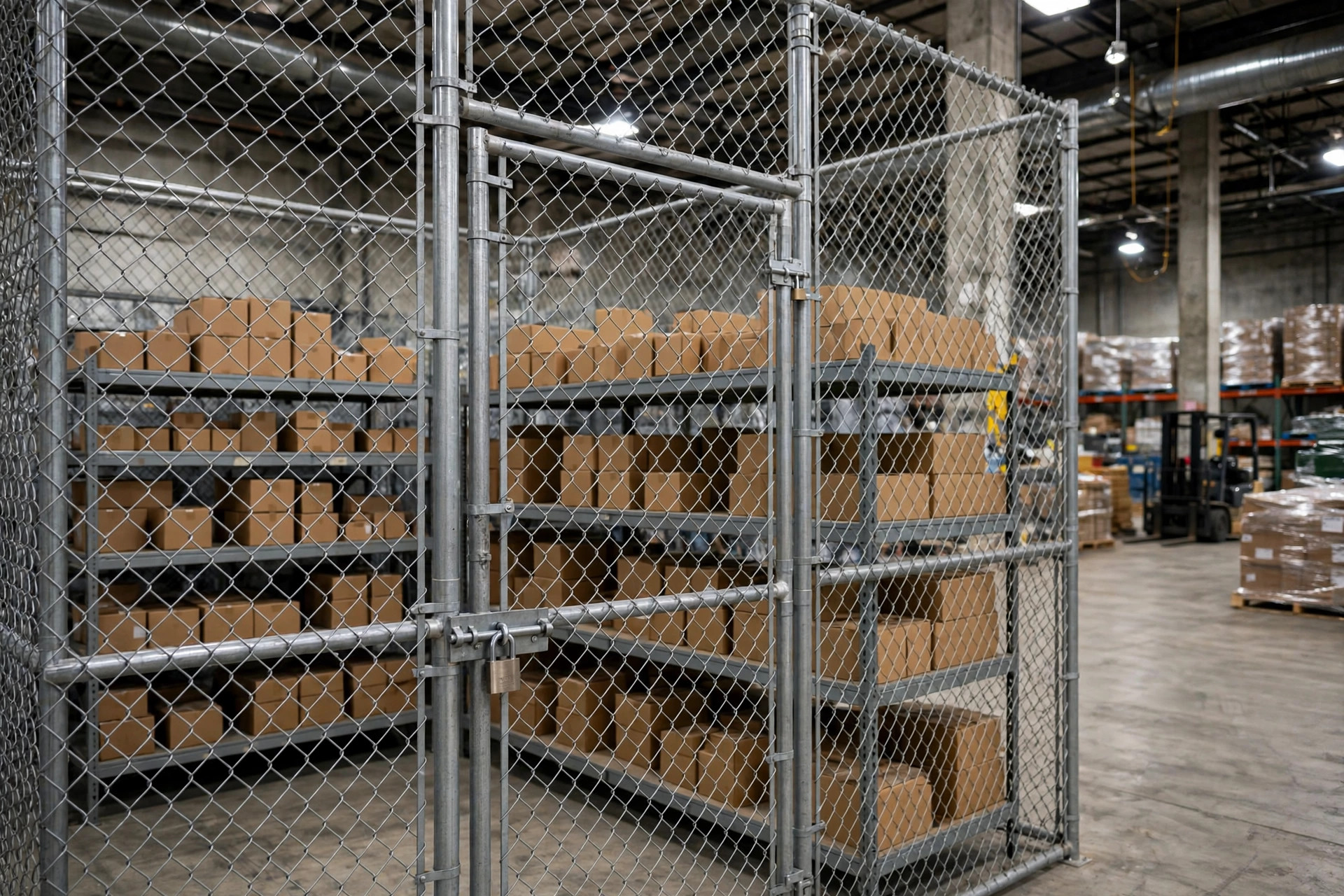
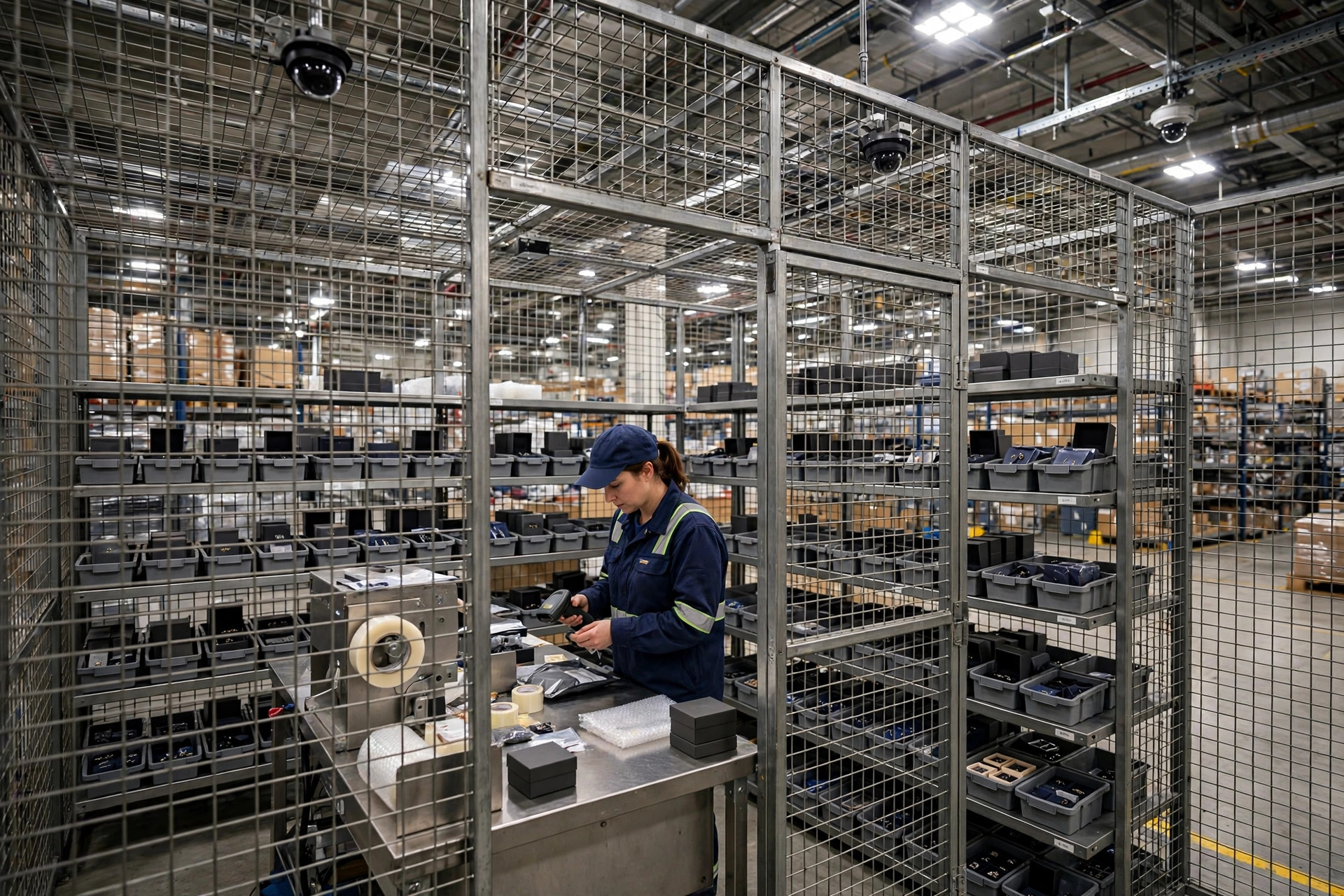
Here's how my space runs now (a caged section inside a 3PL): all valuable SKUs live behind wire-mesh fencing, and exactly two people hold keys. A camera points straight down at the pick station, footage kept 90 days. Picking is two-person verified — one picks, one scans. Cycle counts happen weekly; any variance over one unit locks the cage until the footage is reviewed.
If you use a 3PL, ask these four questions before signing: Do valuables get a segregated area? Is access logged by person? Do cameras cover the pick and pack stations? Is the lost-item reimbursement standard written into the contract? If they can't answer, walk away. Don't hesitate.
And here's the counterintuitive one: don't put valuables in the most ergonomic pick slot. Convenient means everybody walks past, which means highest risk. My high-value SKUs sit at the back of the cage — 20 extra steps per pick, and shrinkage dropped to zero. Best "walking fee" I ever paid.
The quieter the box, the safer the package
Porch pirates read boxes. A carton printed with a jewelry brand logo is a sign that says "something expensive inside."
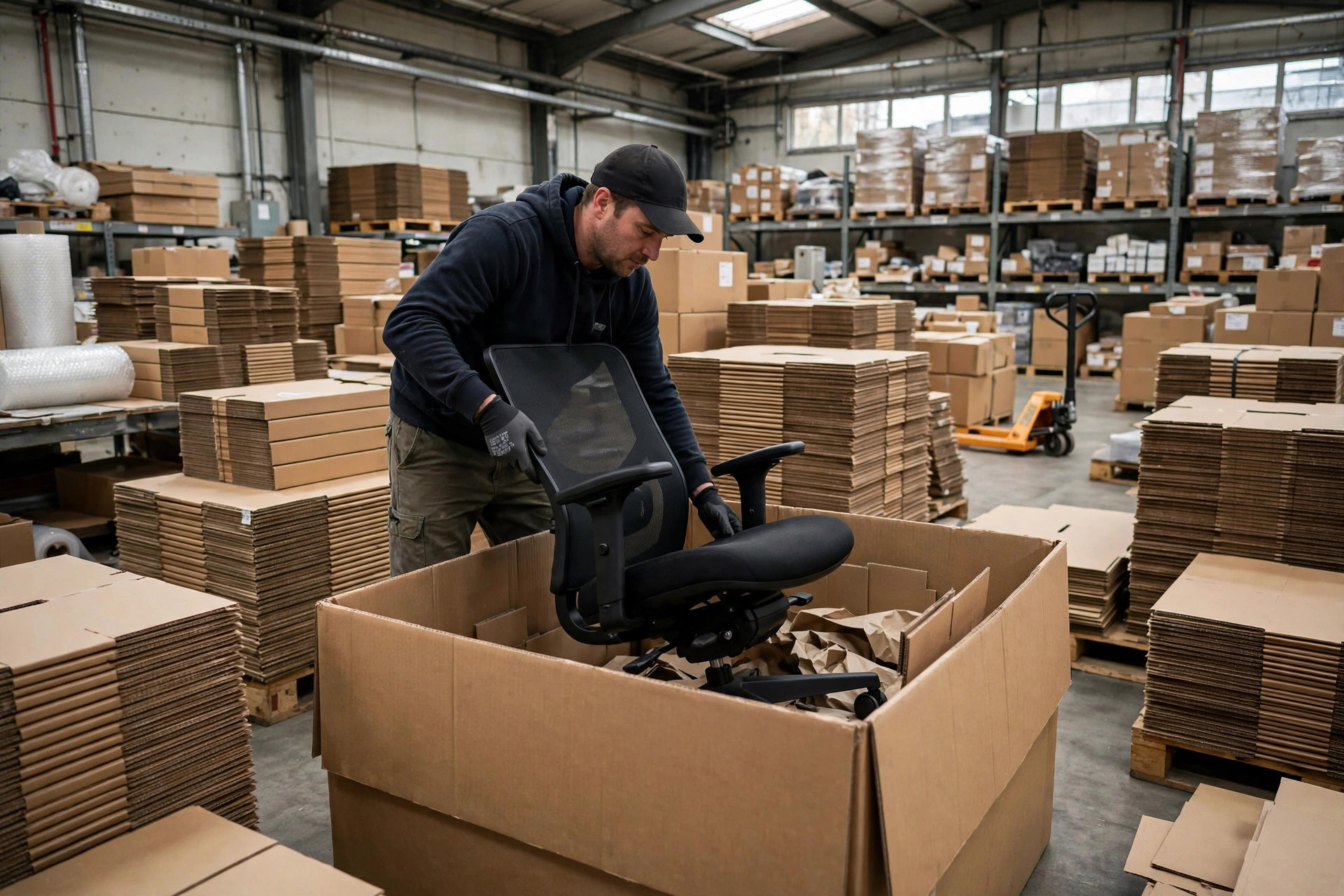
My three rules for outer packaging: no logo, no word "jewelry," no brand colors. Just the plainest kraft box you can find. All the branding goes inside the box — the customer opens the outer carton and steps into your brand world. The unboxing moment loses nothing.
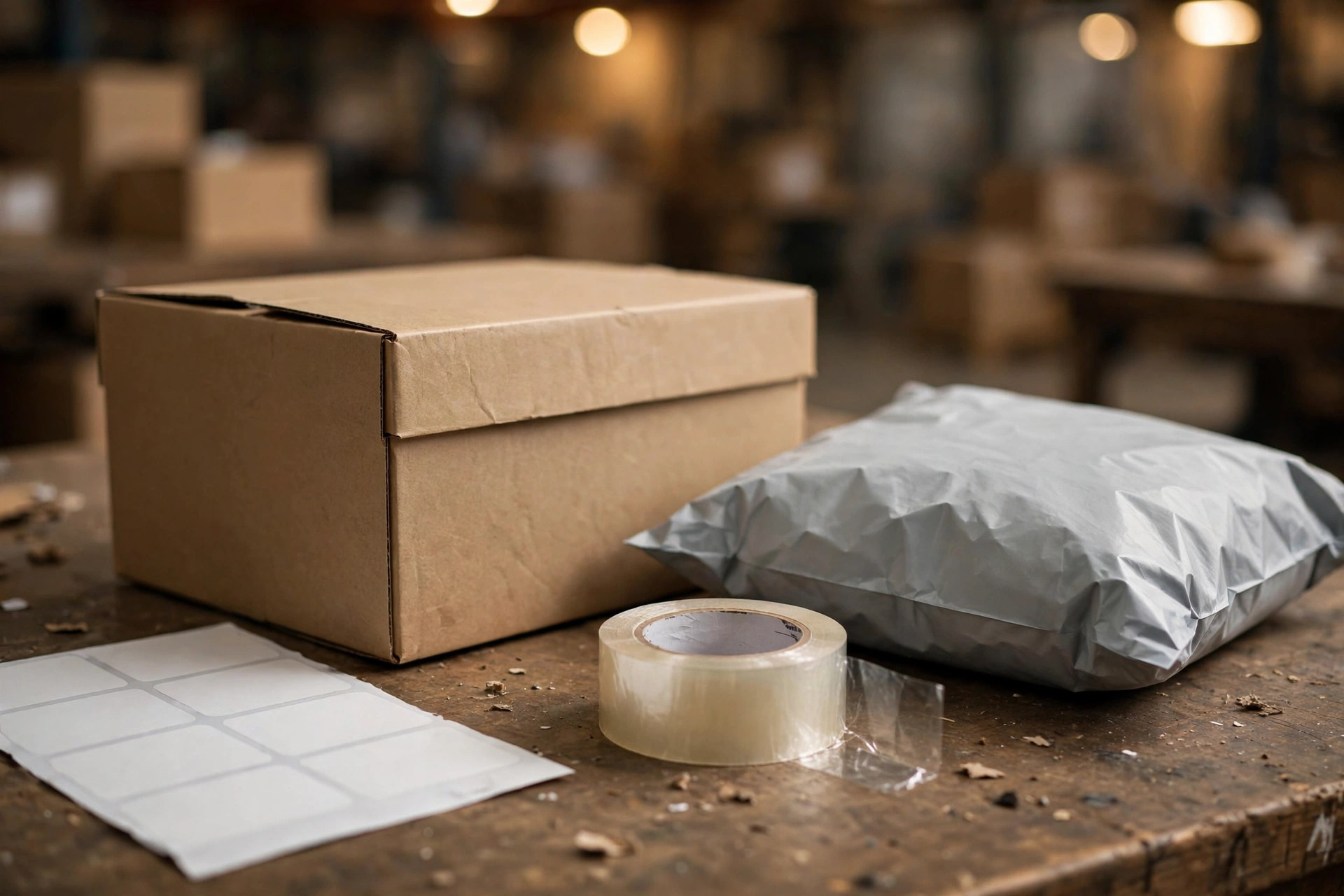
Shipping labels matter too: describe the contents as "accessories," never "gold necklace." Declare the value truthfully (claims need to match), but never print it on the outside of the box. Use the warehouse address as the return address, not your brand name.
I tested this myself: before switching to unbranded outers, I averaged 3-4 "customer says never arrived" disputes a month. In the three months after the switch, exactly one. Porch pirates don't steal boxes that look worthless. That's human nature — you can't change it, so work with it.
Returns: verify before you refund
Jewelry returns are deeper water than outbound shipping. My worst hit: a $900 bracelet came back, and inside the box was a $20 knockoff. The marketplace refunded the buyer instantly; it took me two weeks of appeals to recover half.
Iron rules now: weigh the return before opening it, film the entire unboxing, flag anything that doesn't match the outbound weight record, verify authenticity — SKU match, craftsmanship details, metal stamps — and finish verification within 48 hours with records uploaded.
Write it into the warehouse SOP: no video, no opening; no weight check, no receiving. With a complete evidence chain, marketplace appeals are winnable. Miss one link in that chain, and you're the one who "can't prove it."
The honest truth
Selling high-value small items, security isn't a cost — it's profit. Full insurance coverage, a locked-down cage, discreet packaging, verified returns. Get those four right and shrinkage drops below 0.1%.
I tested this myself — last Q4 peak season, I shipped 6,800+ orders, lost 2, and both claims paid in full. Sleeping well at night is worth more than anything.
By Ah K, E-commerce Seller (5 yrs)