Here's my verdict up front: pet food ecommerce fulfillment is one of the toughest games in the business. Not because traffic is hard — because the product itself fights you. Expiry dates tick like a countdown, big bags tear like they're designed to, and last-mile freight on a 40-pound bag eats margin for breakfast.
Americans spent over $65 billion on pet food in 2024, per the American Pet Products Association. That's real money. But I've seen too many sellers win on marketing and die in pet food ecommerce fulfillment — on these exact three problems: expiry, busted bags, and heavy last mile.
In 2023, a natural dog food DTC brand in Southern California came to me. The founder was a pet nutritionist — great formula, strong repeat purchase — but after outsourcing warehousing, nobody watched expiry dates. One batch, 8 tons of chicken recipe, arrived with 5 months of shelf life left. The sales forecast was optimistic. Four months later half was still sitting there, and the remaining shelf life fell below Amazon's FBA threshold. The whole batch got removed. Removal fees, freight, plus the product value — well into six figures, gone. The founder told me: "I spent three years on the formula. I lost to a date."
Here's what most people get wrong: they think expiry management means FIFO. Wrong. FIFO is a motion; turnover is the lifeblood. The sellers with the best expiry numbers aren't the strictest ones — they're the fastest ones. Counterintuitive, but sit with it and it's all true.
Pet Food Expiry Management: Memorize Your Days of Inventory, Not FIFO
Dry kibble typically lasts 12–18 months. Sounds generous, right? Two sides to it: you count from production to expiry; the channel counts from receiving to sale. FBA has a remaining-shelf-life threshold for dated inventory (check Seller Central for the current policy) — miss it and your stock never goes live. Ocean freight, customs, and transloading can eat two or three months before you even start selling.
Four rules, all paid for in real money:
Receiving: lock in lot and expiry. Make expiry a mandatory field in the WMS — no expiry recorded, no putaway. Don't trust "we'll backfill it later." Later never comes.
The 90/60/30 escalation. At 90 days, purchasing and ops sit down and re-forecast. At 60, clearance triggers automatically — bundles, buy-one-get-one, loyalty coupons, whatever it takes. At 30, write it off and stop dreaming.
Picking must be FEFO by system rule. If the rule isn't in the system, pickers will always grab the bag nearest their hand.
FBA stock gets its own expiry math. Count the full chain from factory floor to live listing, then back your replenishment schedule off that lead time.
The math makes it obvious. Say you do $100K a month with a 3% expiry write-off rate — that's $36K a year in the dumpster. Cut it to 1.5% and you save $18K, enough to hire a solid warehouse lead for half a year. I've run this math for sellers more than once. It hurts every time.
Busted Bags: The Hidden Cost Sink of Pet Food Ecommerce
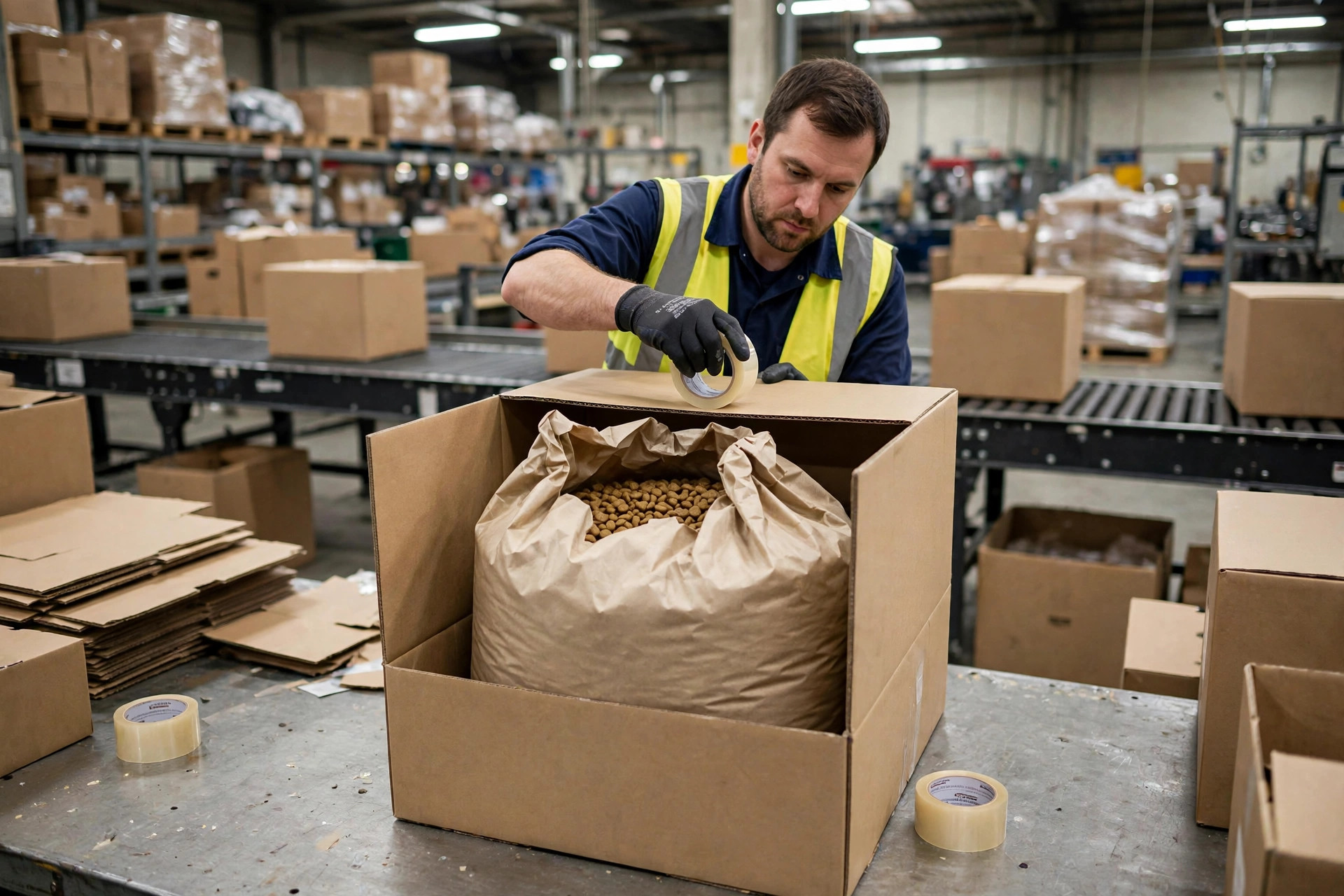
Second war story. Peak season 2022: a 3PL friend in the Midwest took on a pet food client shipping mostly 40-pound bags. First month, damage rate under 1% — nobody worried. Then Black Friday week tripled volume and the damage rate spiked toward 3%. Every busted bag meant a full refund, a reshipment, and a one-star review saying "the bag arrived torn." Two months of peak season cost that client roughly what they paid in warehousing for the whole year.
Big bags and small bags are two different businesses:
| Big bags (30–40 lb) | Small bags (5–15 lb) | |
|---|---|---|
| Ticket size | High — one bag equals three | Low — lives on repeat and bundles |
| Damage risk | High — dead weight plus conveyor drops | Low — packaging protects it |
| Last-mile share of margin | Brutal — often most of the gross profit | Manageable |
| Returns handling | Nightmare — returned bags are usually trash | Relatively simple |
Bluntly: big bags look high-margin, but one bad shipment eats the profit of three good ones. Three non-negotiables: inspect heat seals before outbound — quarantine anything puffy or leaking air; bag-in-box with secondary poly wrap, don't cheap out on it; double-wall corrugate, because single-wall won't survive 40 pounds of abuse. Each rule was bought with real money.
Heavy Last Mile: No Cheap Fix, Only a Fix That Doesn't Lose Money
The last mountain grinds the hardest. How much shipping will a dog owner pay for a 40-pound bag? Reality: past a point, they drive to the store or switch to smaller bags. But carriers don't care about your margin — heavy is heavy, billed by the pound, and 70 pounds is the common surcharge threshold (policies change; check the carrier's site before you quote).
Two sides again: single-warehouse shipping keeps inventory simple, but cross-zone parcels bleed you dry; split inventory across coasts saves real freight, but doubles replenishment complexity — beyond most small sellers.
My rule of thumb: under 500 orders a month, don't touch split warehousing — optimize packaging and carrier rates from one warehouse. Over 2,000 a month, run the split-inventory math seriously — east and west coast stock keeps most orders within 2–3 zones, and the freight savings usually cover the extra storage and transfers. Between 500 and 2,000 is the worst zone — neither option pays. Find a 3PL with a warehouse in your target market, test regional fulfillment first, then decide.
One more most people miss: zone skipping (truckload to the destination region, then inject into last-mile carriers) pays back far better on heavy freight than on small parcels. On a 40-pound bag the savings are per-pound — several dollars a shipment.
Three years of this taught me one line: pet food ecommerce fulfillment isn't won by the best marketer. It's won by whoever's product survives handling, turns fast enough, and ships cheap enough. Clear those three mountains and your repeat rate finally means something.
So here's my question for you: is your pet food business making money selling food — or working for the carrier and the landfill?
By Lao Mi, Supply Chain Veteran (20 yrs)