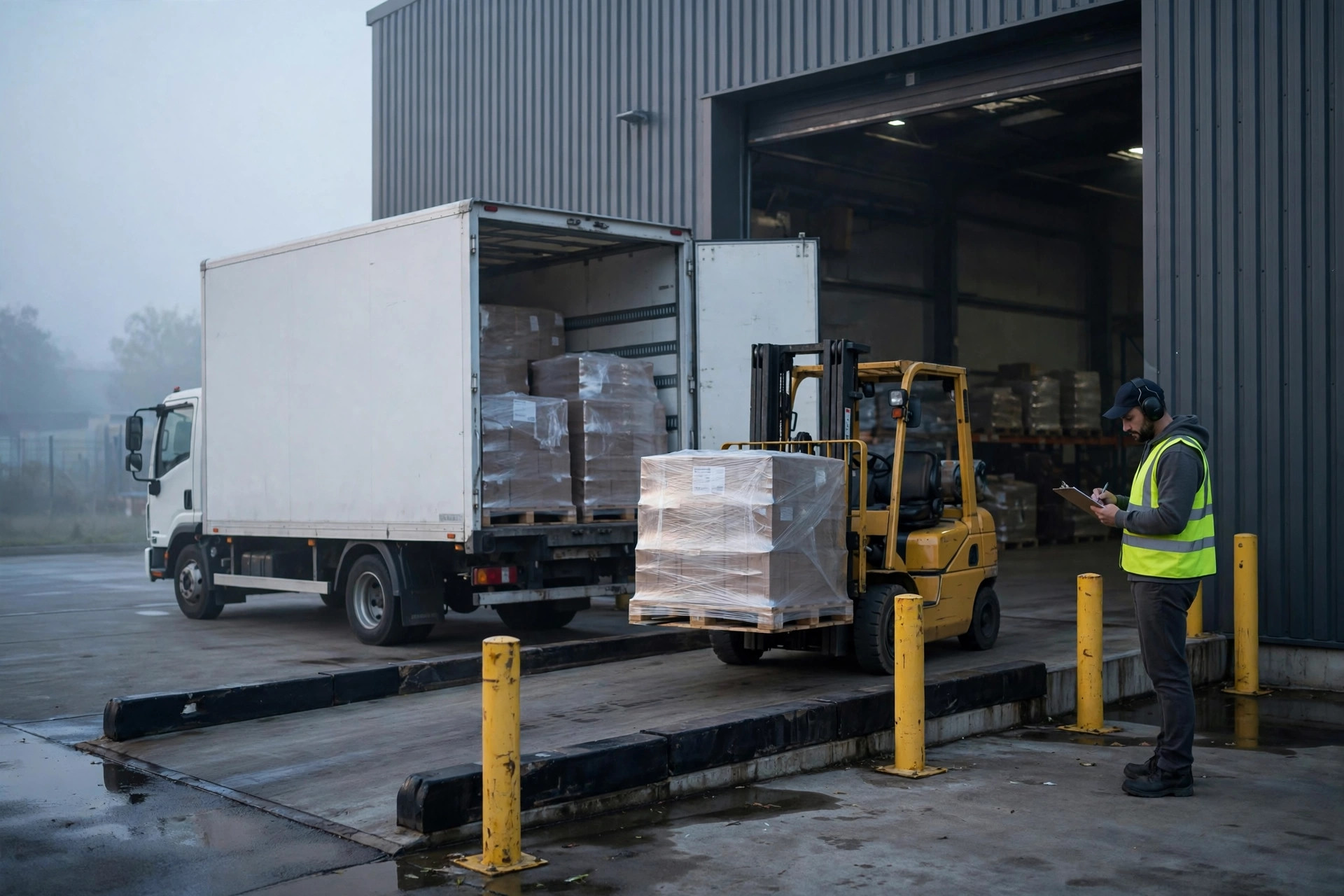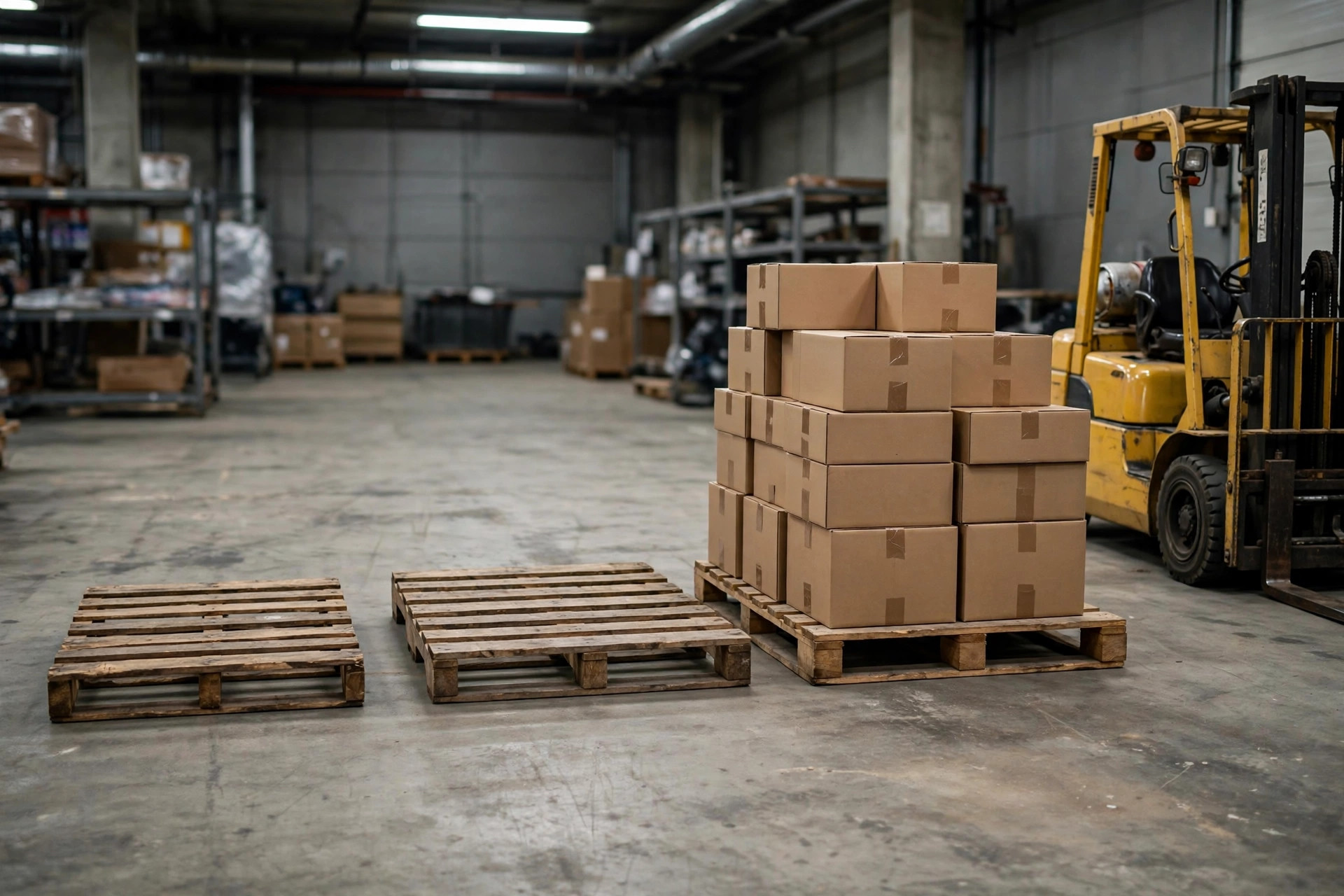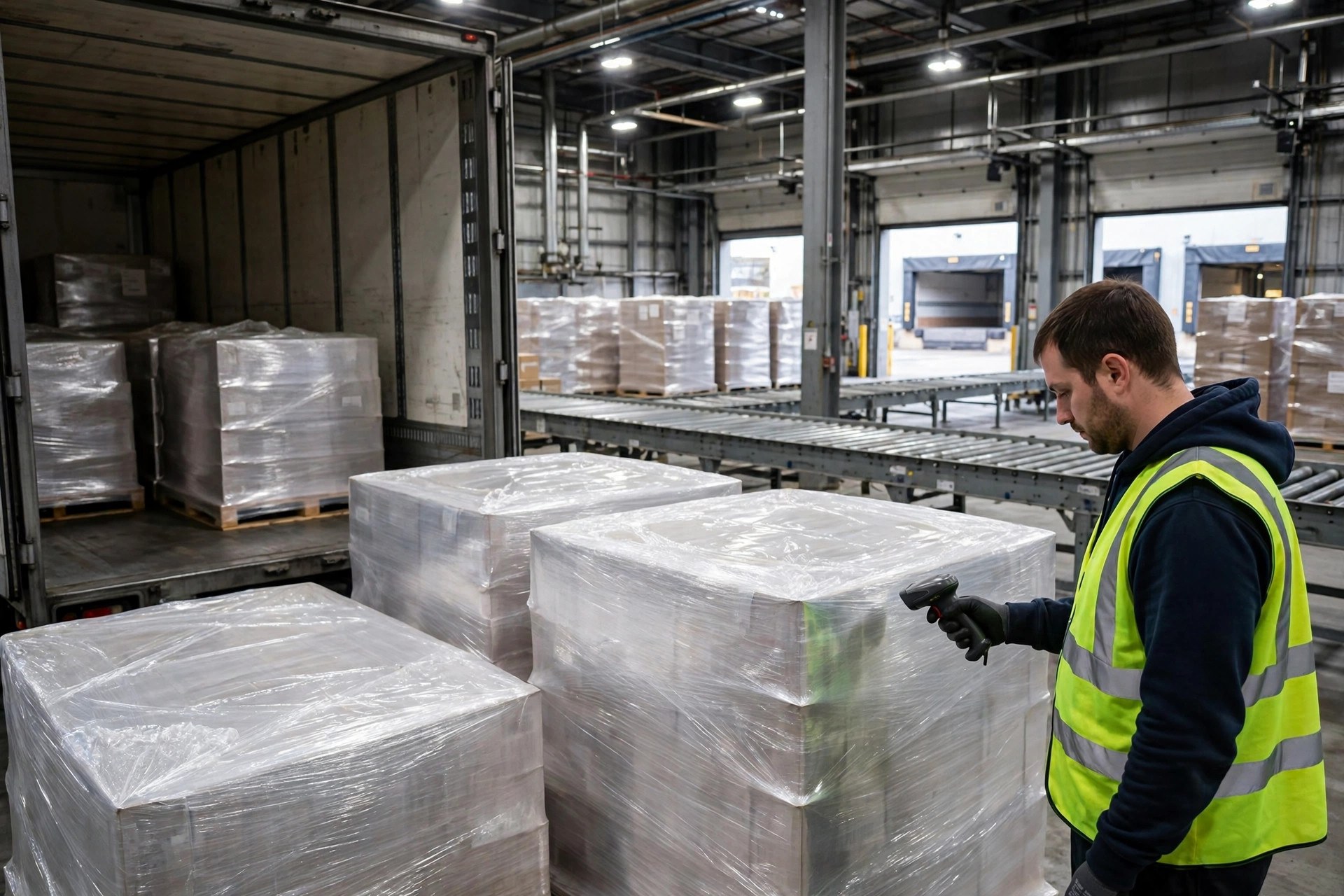
At 9 AM on the 15th of last month, a 9.6-meter box truck backed up to our dock with 40 pallets. Xiao Li, my receiving guy, raised his scanner: beep — no data. Beep — no data. Three labels in a row, all dead air. I walked over and had to laugh: the supplier's labels were pure performance art. Some were stuck on the bottom of the cartons — you'd have to flip the box to scan them. Some were half-sealed under packing tape, the barcode reduced to a sad little stub. And seven pallets had no labels at all; the SKU list came entirely from the driver's memory. Three of us worked from 9 AM until dark. Forty pallets took eight full hours, and our first-pass scan rate didn't even hit 60%. That's how our small warehouse learned inbound labeling ASN compliance — the hard way, one slap at a time.
Our Predicament: The Big-Company Playbook Isn't for Us
Some background: our warehouse is 3,000 square meters. The receiving team is four people including me, plus two temp hands during peak season. We serve a dozen or so small and mid-size e-commerce clients, a few hundred SKUs, and margins thin as tissue paper.
When big companies talk ASN, they mean EDI integration, SSCC pallet codes, and automated system validation — a setup that easily costs hundreds of thousands of yuan. We can't burn that kind of money. But we got ambitious once: I spent over 20,000 yuan on a WMS plugin with an ASN module, thinking we'd "do it right the first time." Nobody at our suppliers could use it. Their shipping clerk is in his fifties and barely manages WeChat — you want him to log into a system and file an ASN? Dream on. Three months after purchase, total logins could be counted on one hand. Money down the drain.
The low point came at the end of 2024. Riding the Singles' Day aftershock, an apparel supplier we'd worked with for two years sent 60 pallets in one shot. Their ASN email said 1,200 cartons. Actual delivery: 1,340. The extra 140 cartons had no labels, no explanation, nothing. My team spent two days reconciling, the client screamed about stockouts, and we ended up eating over 2,000 yuan in expedited air freight. That was the moment it clicked: labels can't depend on supplier goodwill, and they can't depend on expensive software either. We had to design our own spec — one so simple that anyone could follow it.
Our Small-Warehouse Inbound Labeling ASN Compliance: Three Things, All Free
After licking our wounds, I built what I call the "budget ASN compliance kit." Three items. Total cost: zero.
Item one: an email template. Suppliers must send one email 24 hours before shipping. Fixed subject line format: [ASN] Supplier name + delivery date + pallet count. The body is a single table: SKU, product name, carton count, batch, production date. Who can't send an email? If you can send an email, you can file an ASN.
Item two: a label sample. I drew an A5 label template in Word and sent it to every supplier: supplier abbreviation top-left, big SKU text plus barcode (Code128, free font, downloadable anywhere) in the middle, carton count, total cartons, and batch bottom-right. Print it, stick it on the carton. Three iron rules: stick it dead-center on the side of the outer carton, never cover it with tape, and one pallet gets exactly one SKU.
Item three: an Excel checklist. When goods arrive, the receiving team ticks off each line against the email. Quantities don't match? Photo it on the spot, drop it in the WeChat group. Full evidence chain, zero room for arguments.
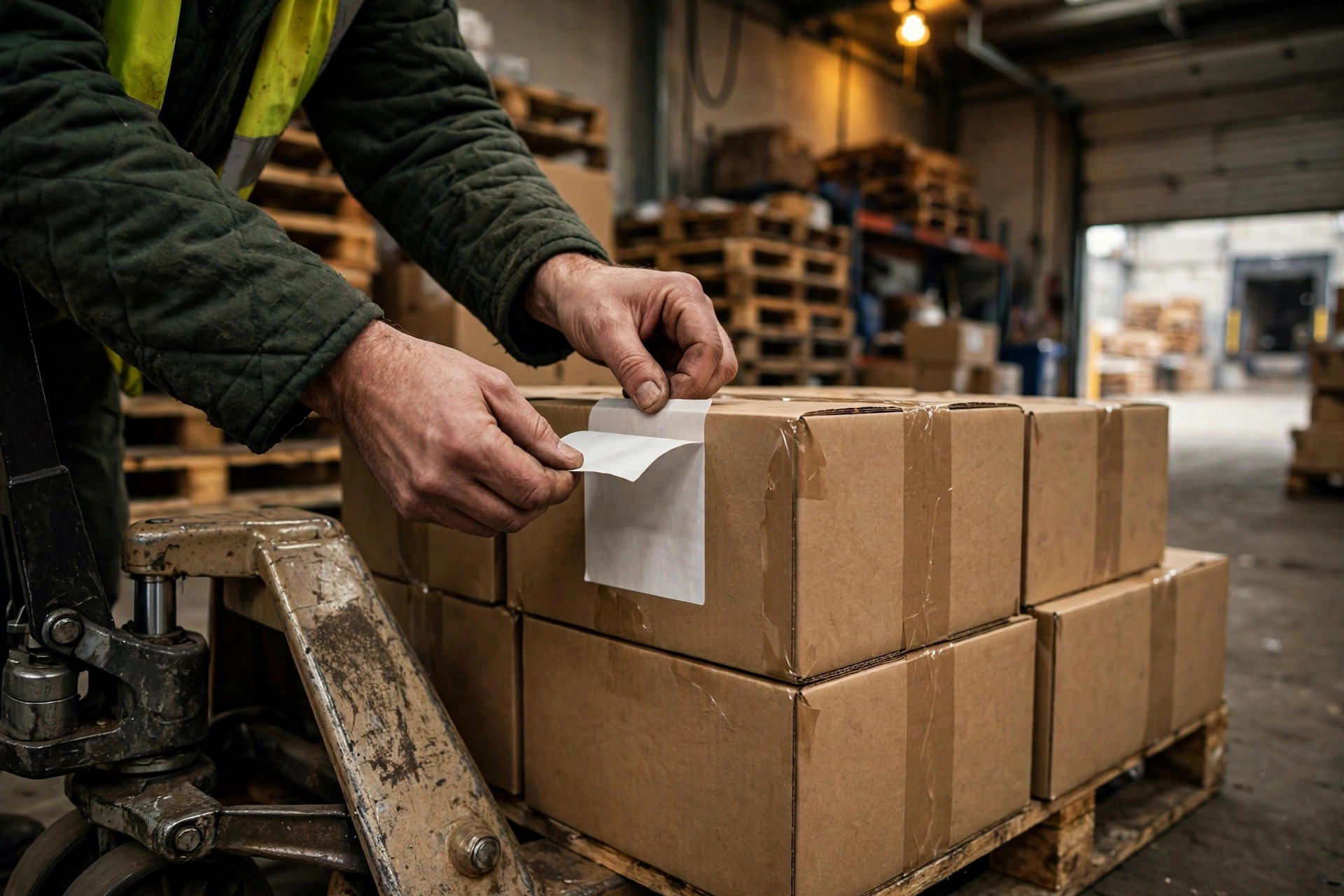
No EDI. No system integration. No six-figure budget. The core of inbound labeling ASN compliance was never technology — it's "tell me what you're shipping before you ship it, and make it recognizable when it arrives." What big companies solve with software, we solved with an email and a sheet of paper. Laugh all you want. It works.
Getting Suppliers to Comply: Three Moves From the Trenches
Writing the spec is easy. Enforcement is the hard part. Why would a supplier listen to you? You're small, your volume is small, and the big suppliers don't take you seriously. This is where the real game begins — three moves, all paid for in cash and tears:
Move one: put the ugly terms up front, in the quotation. When onboarding a new supplier, I attach the labeling spec to the quote with one extra line: "Non-compliant inbound labels: unloading fee +50%, and your truck unloads last." Don't underestimate "unloads last" — the difference between a driver waiting two hours and waiting half a day beats any fine. One complaint from the driver back at the depot, and the supplier hurries to fix things faster than you ever could.
Move two: let the supplier taste the upside. Fines alone don't work — people need to feel they gain something. A household-goods supplier boss thought it was a hassle at first, so I walked him through the math: before, his shipments kept getting bounced back for relabeling, trucks going back and forth, costing him tens of thousands a year in extra freight; after the spec, his first-pass rate shot up and returns basically dropped to zero. He's now rolling our label template out across his whole company. See? Saving money is the universal language. Nobody argues with money.
Move three: make an example — but only once. Last year a supplier skipped labels three times in a row. The fourth time, I sent their 20-pallet truck straight back: relabel everything, then come again. After that one incident, every supplier fell in line. Remember: a rule's power isn't in how harsh the penalty is, it's in whether it actually gets enforced. Cry wolf three times and nobody believes you on the fourth. But send one truck back for real, and everybody believes you forever.
The Results: Run the Numbers
| Metric | Before | After (3 months) |
|---|---|---|
| Avg. receiving time (40 pallets) | 7–8 hours | 2.5–3 hours |
| First-pass label scan rate | Under 60% | Over 90% |
| Monthly reconciliation disputes | 5–6 | Less than 1 |
| Monthly receiving-team overtime | ~30 hours | ~8 hours |
The labor math is the sweetest part: peak season used to force me to hire two temps — nearly 10,000 yuan a month extra. Now the four of us handle it comfortably, maybe two overtime days at peak. The savings cover the team's quarterly bonus with change to spare. Xiao Li actually smiles when a supplier's truck pulls in now — "A truck with good labels unloads smooth as silk," he says.
Three Pieces of Advice for Fellow Small Warehouses
One: don't start with software, start with paper and pen. Your suppliers probably don't have systems either. An email template, a Word sample, and a WeChat group beat any software. Consider a real system when your volume triples — spend money where it counts.
Two: fewer rules are better. My first draft was two full pages of requirements. Nobody read it. After cutting it down to three iron rules (where to stick it, don't cover it, one SKU per pallet), compliance shot up. A spec people actually follow is a good spec. A spec nobody reads is scrap paper.
Three: treat suppliers as teammates, not vendors. Take the boss of a well-behaved supplier out for dinner now and then, talk about cutting costs together. When he's nice to you, he thinks about you for one extra second when shipping — and your receiving team suffers one hour less. Business is done by people, not by systems.
And here's the counterintuitive truth nobody tells you: most people think labeling compliance is about "managing suppliers." It's really about saving yourself. Big companies lean on systems and fines. We small warehouses lean on relationships and arithmetic — make the supplier feel that cooperating with you beats not cooperating, and the whole thing falls into place. In this game, the winner isn't whoever shouts loudest. It's whoever does the math first.
Small warehouses have their own way of surviving: no budget for fancy systems, so we use relationships and homegrown tricks — and get the job done just as well.
By Xiao Ma, Small Warehouse Owner