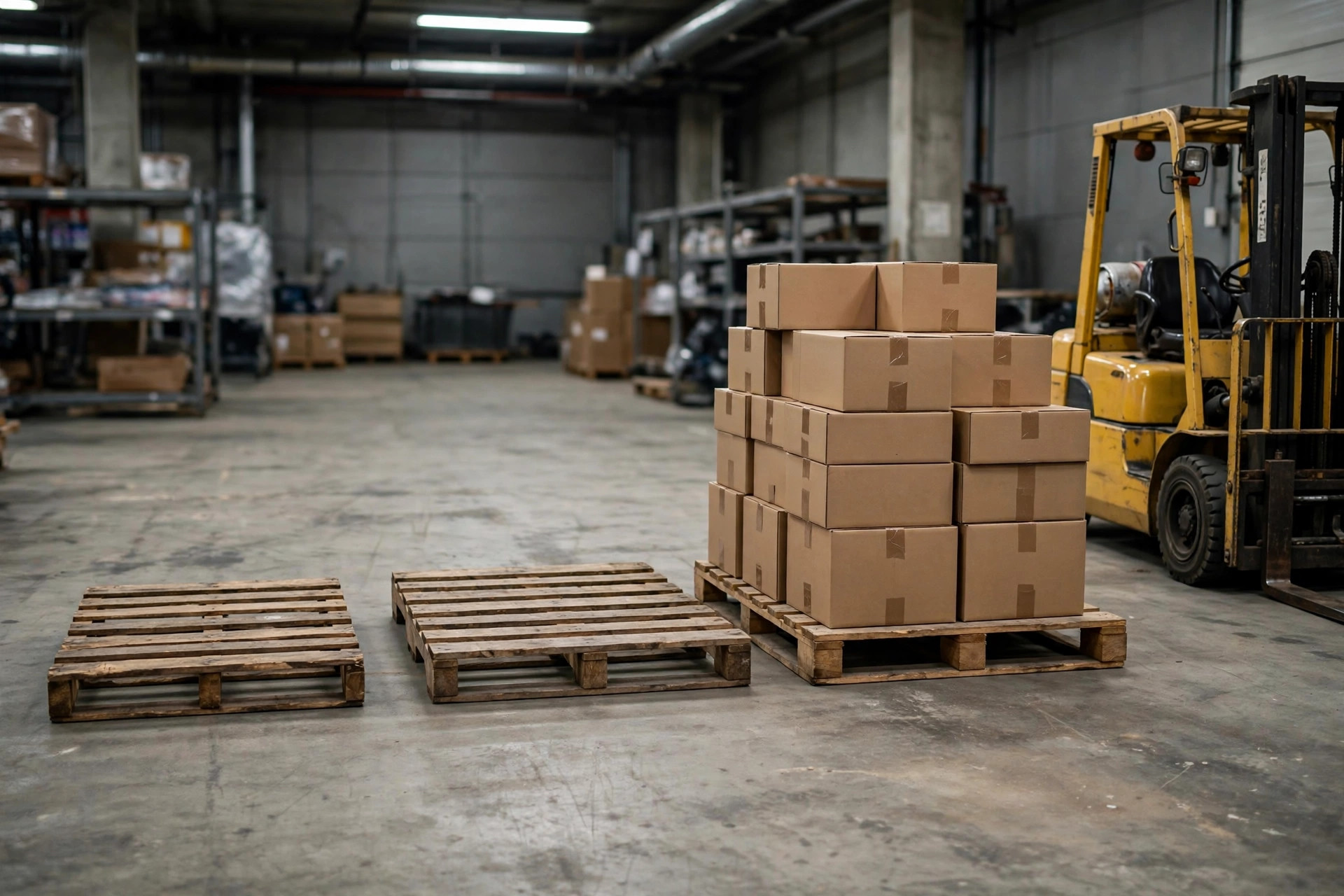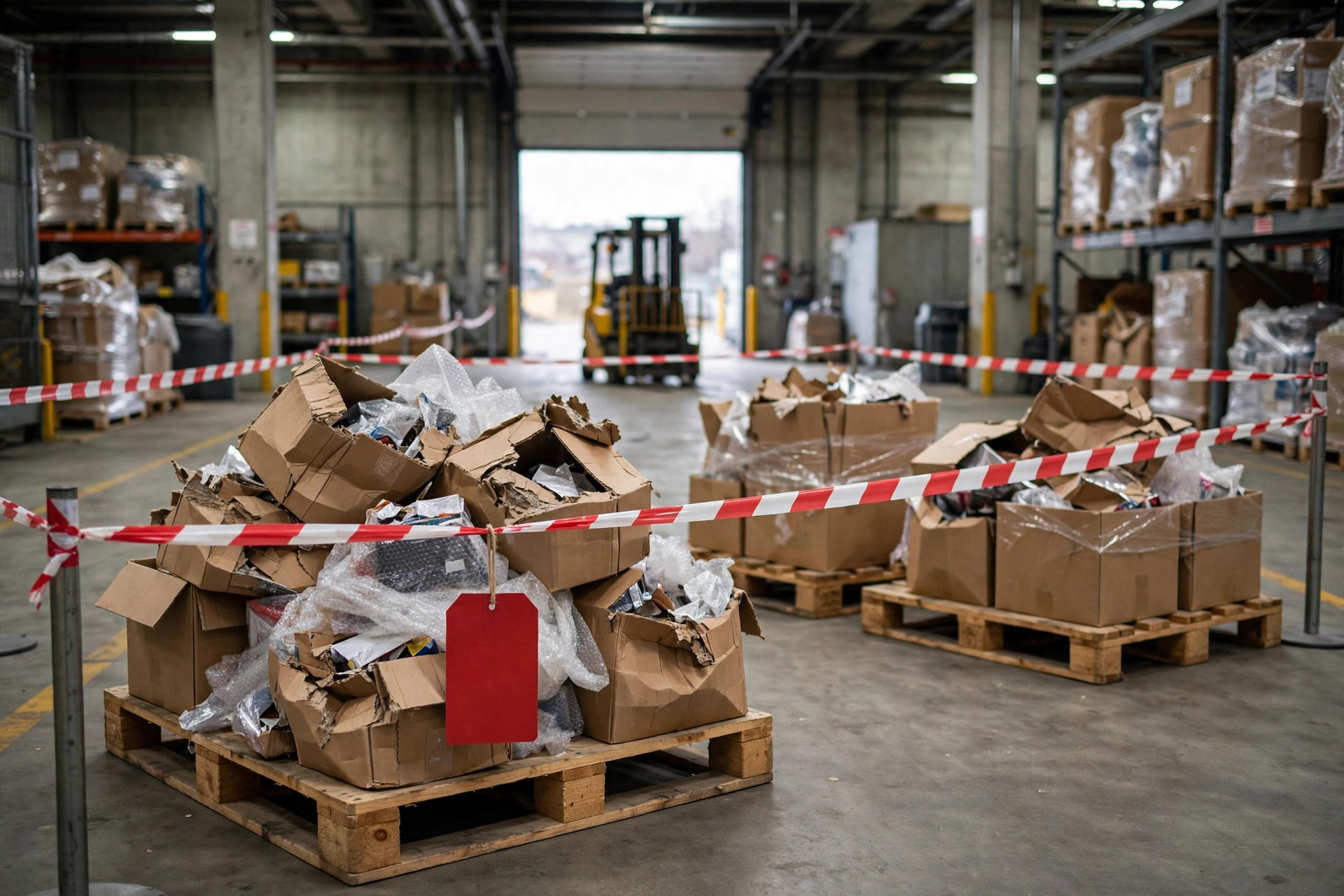
I'm telling you — fifteen years on the road, and the saddest thing I've seen isn't a breakdown on I-10. It's a receiving guy at the dock, pen in hand, staring at a crushed pallet, frozen on one question: sign, or not sign? When it comes to how to file an LTL freight damage claim, nine out of ten cases are won or lost in that one minute at the tailgate.
Last fall I was unloading at a warehouse in Fontana, and the driver in the next dock door was in a shouting match with the receiver. The kid signed clean on twelve pallets of commercial ovens — the pallets looked fine from the outside. Two weeks later they opened the boxes: three pallets of ovens with crushed housings, nearly $40,000 in damage. He filed a claim. The carrier shut it down with one sentence: you signed a clean POD, and your concealed-damage notice came more than 5 business days after delivery. Claim denied.
The kid was sick about it. Standing there listening, I thought — this isn't his fault. Nobody ever told him about the 5-day rule.
So here's the whole thing in plain talk: what to write on the POD, how the 5-day clock works, how to answer the carrier's denial lines, and how to get your money back inside the 9-month window.
Your POD Notation Is Worth Half the Load
Here's the verdict up front: the POD — the proof of delivery — is the lifeblood of your claim. Every word you write on it becomes evidence later. Everything you don't write never happened.
The right way: when the freight comes off, walk around the trailer first. Leaning pallet, torn shrink wrap, crushed cartons, short count — write it on the POD in plain words: "2 pallets crushed," "1 carton short," "shrink wrap torn." Then have the driver sign next to your note, and take photos with timestamps.
Let me give you the good version of this story. A couple years back in Dallas, I was dropping eight pallets of auto parts at a cross-dock, and the receiving lady had sharp eyes — she spotted the innermost pallet leaning before the forklift even touched it. She wrote "1 plt tilted, 2 ctns crushed" on the POD and had me sign it. Snapped a dozen photos. Seventeen days later, $9,200 paid out. Why so smooth? Because the evidence chain was complete from the minute of delivery. The carrier had nowhere to hide.
Two ways to sign that will kill you: writing something vague like "subject to inspection" — plenty of carrier tariffs say outright that this notation doesn't count, so it's the same as writing nothing; and signing clean without looking. The moment you sign clean, the burden of proof flips entirely onto you.

The 5-Day Concealed Damage Clock Is a Kill Line
Packaging looks fine, you open it up, the goods inside are wrecked — that's concealed damage, and it's the toughest fight in the claims world.
The industry rule: within 5 business days of delivery, you must notify the carrier in writing. Written — email or the carrier's online claim portal counts, a phone call doesn't. Some carriers are stricter, with 24-hour notice written into their tariffs, so "check your carrier's latest terms" isn't boilerplate here. It's a survival tip.
Four things to do inside those 5 days: one, stop — don't unpack further, freeze the scene. Two, photograph everything — the damage, the packaging, the pallet, the labels. Three, notify the carrier in writing and request an inspection. Four, keep all the packaging — the inspector can sometimes read more from the packaging than from the product itself.
Why is 5 days life or death? Past that window, the carrier's default assumption is that the damage happened in your own warehouse. That kid in Fontana lost nearly $40,000 because his email went out almost two weeks late.
Here's the counterintuitive part: notifying within 5 days doesn't mean you get paid. On concealed damage the burden of proof sits entirely with the receiver, and the carrier will very likely deny first. Be ready for round two.
The Carrier's Three Favorite Denial Lines — and How to Answer
Fifteen years, and I've heard every denial line so often my ears have calluses. It always comes down to three:
"Packaging didn't meet standards — that's the shipper's problem." The answer: photograph your packaging at origin and keep it on file. Most of these fights come down to two sets of photos — what it looked like leaving, what it looked like arriving.
"Your POD was signed clean, so it arrived in good condition." The answer: that's why you notate specifically at delivery and never write "subject to inspection." Already signed clean? Your only path is the concealed-damage channel — written notice within 5 business days, not a day late.
"You're past the deadline." The answer: burn two clocks into your memory — 5 business days to report concealed damage, and 9 months from delivery to file the formal claim. That 9-month floor comes from the federal Carmack Amendment, 49 U.S.C. § 14706(e) — carriers can give you more time, never less. Denied anyway? You have at least 2 years from the written denial to sue, same statute. On deadlines, a month early beats a day late.
How to File an LTL Freight Damage Claim: the 9-Month Checklist
The formal claim is a different animal from the 5-day notice. The notice says "I found damage, come look." The claim says "here's the loss, pay up." The 9-month clock starts on delivery day.
Here's the checklist, item by item:
- Original BOL and the POD — notated is better
- Commercial invoice proving the value
- Paid freight bill
- Dated photos of the damage and the packaging
- Claim letter: which shipment (pro number), what was lost, why the carrier is liable, and how much — a specific, calculable dollar amount
- Repair estimate or scrap certificate (fix it if it's fixable — the repair cost is part of the claim)
After you file, federal claims rules require the carrier to acknowledge within 30 days and reach a decision within 120 (check the current regulation and your carrier's process). Radio silence? Follow up in writing every two weeks and keep records. If they deny it, don't panic — you have 2 years to sue, and plenty of these settle once a lawyer who knows Carmack gets involved.
One trade-off most people get backwards: damaged freight arrives — refuse it, or notate and accept?
| Notate, accept, then claim | Refuse outright | |
|---|---|---|
| Who holds the freight | You — you can use it, repair it, sell the salvage | The carrier — you have no say |
| Extra charges | None | Return freight and storage may land on you |
| Claim difficulty | Notation + photos = complete evidence | Harder to prove, longer fight |
| Best for | Most damage and shortage cases | Only when the whole shipment is a total loss |
My verdict: unless the entire shipment is unsalvageable, notate-and-accept wins every time. Refusing feels good for a minute, but with the freight in their hands, you've handed away every chip you had.
Declared Value: Do the Math Before You Skip It
Last thing: the declared value box on the LTL BOL. Leave it blank and the carrier defaults to its standard cap — every carrier computes it differently, some by weight, so check your carrier's latest tariff.
A back-of-the-envelope example (illustrative math — confirm rates with your carrier): say 200 lbs of high-value auto parts actually worth $30,000. The declared-value surcharge usually runs well under a couple dollars per $100 of declared value — declaring the full $30,000 might add a bit over a hundred bucks to the freight bill. Skip it, and the default per-pound cap might pay out only a few thousand. That hundred bucks buys you a five-figure difference in recovery.
My rule of thumb: if the goods are worth clearly more than the default cap would pay, fill in the declared value. Cheap, heavy, low-value freight — skip it. Don't flinch at the surcharge; when things go wrong, it's the only thing standing between you and the loss.
Fifteen years and thousands of loads, and it all comes down to one line: put the ugly words up front — it beats slapping your thigh later. Look three times before you sign, and don't regret it after. Whether you win an LTL freight damage claim is seventy percent decided the moment the pen hits the paper.
By Shifu Zhao, Trucking Veteran (15 yrs)