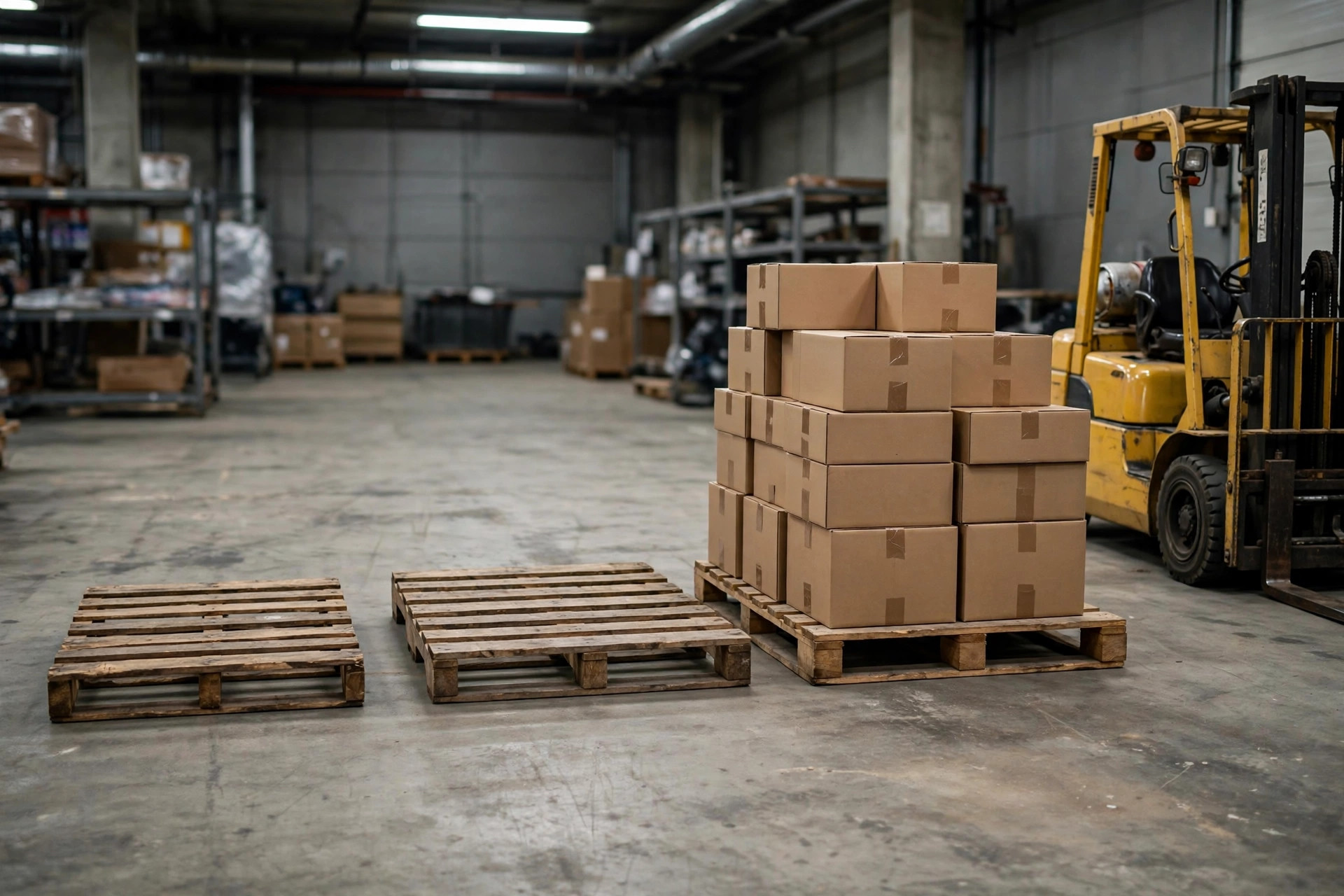
Let me give you the verdict first: when it comes to standard pallet size, a warehouse should commit to one primary pallet. Mixing pallet sizes saves a little money on pallets and pays it back many times over in labor, product damage, and downtime. Let me be clear about both sides of this: no pallet size is right or wrong on its own. The mistake is running several sizes in one building and expecting your racks, forklifts, and automation to keep up.
Three Standard Pallet Sizes, Three Logistics Systems
The GMA 48x40 inch pallet is the default language of American warehousing. GMA stands for the Grocery Manufacturers Association. The pallet is 48 inches long and 40 inches wide, and US retail, distribution, and 3PL warehouses are built around it. Rack depth, forklift forks, trailer loading — all of it grew up around this footprint. Inside an American warehouse, it is the common tongue. GMA pallets come in stringer and block styles, and the entry type matters: a four-way entry pallet can be picked up from any side, while a two-way pallet only takes forks from two sides. That detail decides whether your pallet jack can even move it.
The Euro pallet, 1200 by 800 millimeters, is the product of the European system. Long and narrow at 1200 millimeters by 800, it fits European trucks and European racking. Under the EPAL system, pallets follow shared inspection and repair standards: a damaged pallet gets repaired, and one that can't be repaired gets retired. Circulation works because everybody plays by the same rules.
The Japanese standard pallet, 1100 by 1100 millimeters, is the T11 type. Square, 1100 millimeters on each side, it is the most common pallet in Japanese corporate supply chains and Asian import and export. A square pallet loads into containers and racks completely differently from a rectangular one, and a warehouse used to rectangles will misplace it the first few times. Each of these three sizes grew out of its own logistics system. None is more advanced than the others. Take any of them out of its home system and it gets awkward.
I've Seen Too Many Mixed-Pallet Disasters
In 2019, I helped a 3PL in Ontario look at their operation. They served US domestic customers and one European customer at the same time, and GMA and Euro pallets were mixed all over the floor. The rack beam spacing was set for a 48-inch depth. A Euro pallet sitting in that rack only covered 800 millimeters of depth — one end hanging in the air, the other end short of the beam. Forklift drivers spent extra time on every putaway just lining pallets up. Over a month, the re-palletizing labor alone would have paid for a fresh batch of pallets. Worse, the overhanging end took the load unevenly, pallets deformed over time, and product damage followed.
Another warehouse took in a Japanese customer's freight on 1100 by 1100 pallets, into racking set up for GMA. Each pallet stuck out on both sides. Manual areas could muddle through, but the automated storage system alarmed and stopped — the forks and conveyors were calibrated for 48 by 40, and the Japanese pallet didn't match. The whole shipment had to be re-palletized onto GMA pallets before it could go into stock. Labor, time, all of it gone.
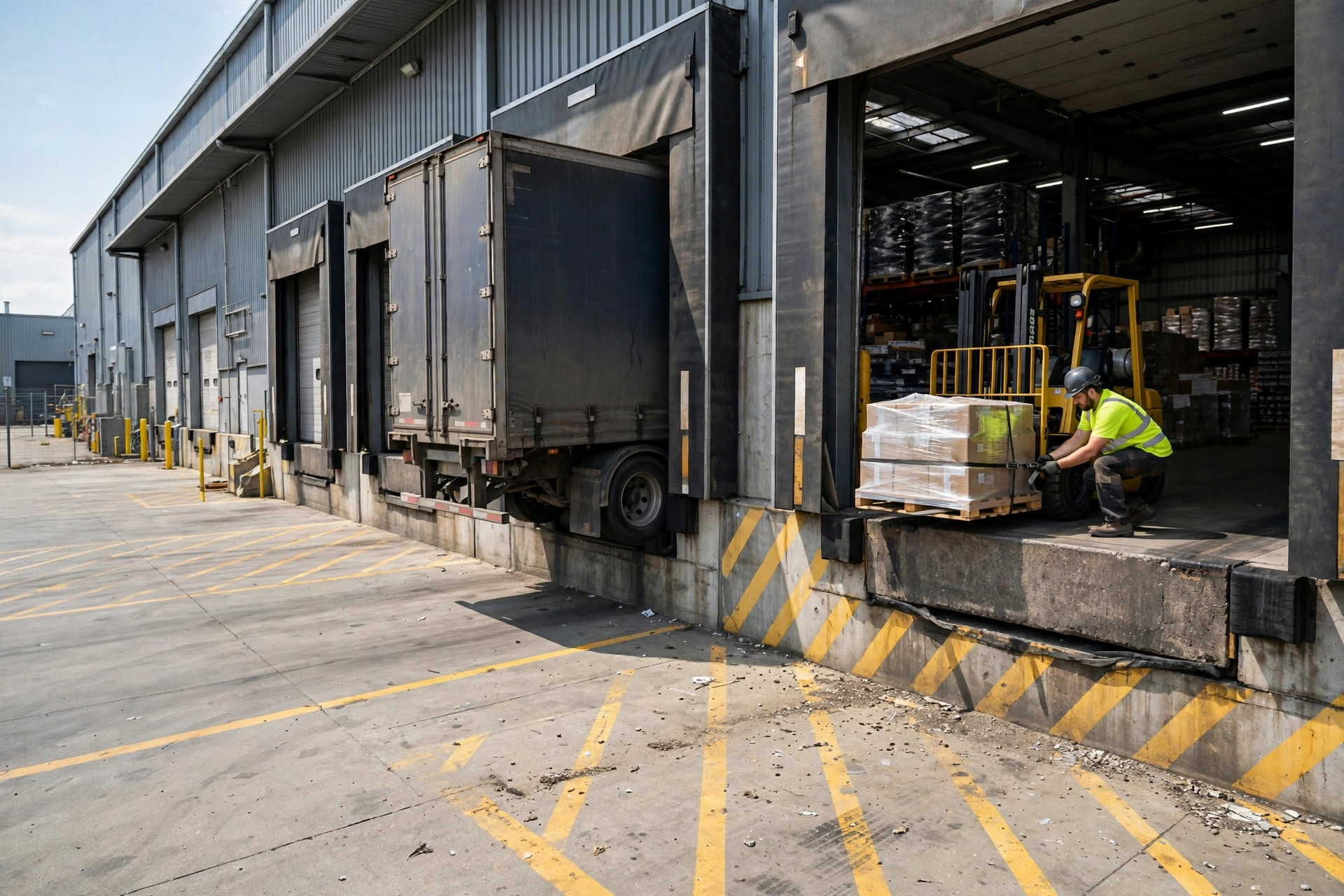
The trouble comes in three layers. At the rack layer, beam spacing and depth fit one size. At the forklift layer, fork length and entry direction fit one size. At the automation layer, conveyors, stacker cranes, and dimensioners are calibrated for one size. Mixed pallets fight you on all three layers at once.
Take the forklift layer one step further. A 48-inch fork picking up a Euro pallet with only 800 millimeters of depth either punches through the load or fails to reach the bottom, leaving the pallet wobbling on the fork tips. Over time, drivers either slow down or hit something. Both outcomes cost money.
Put Pallet Specs on the Receiving Checklist
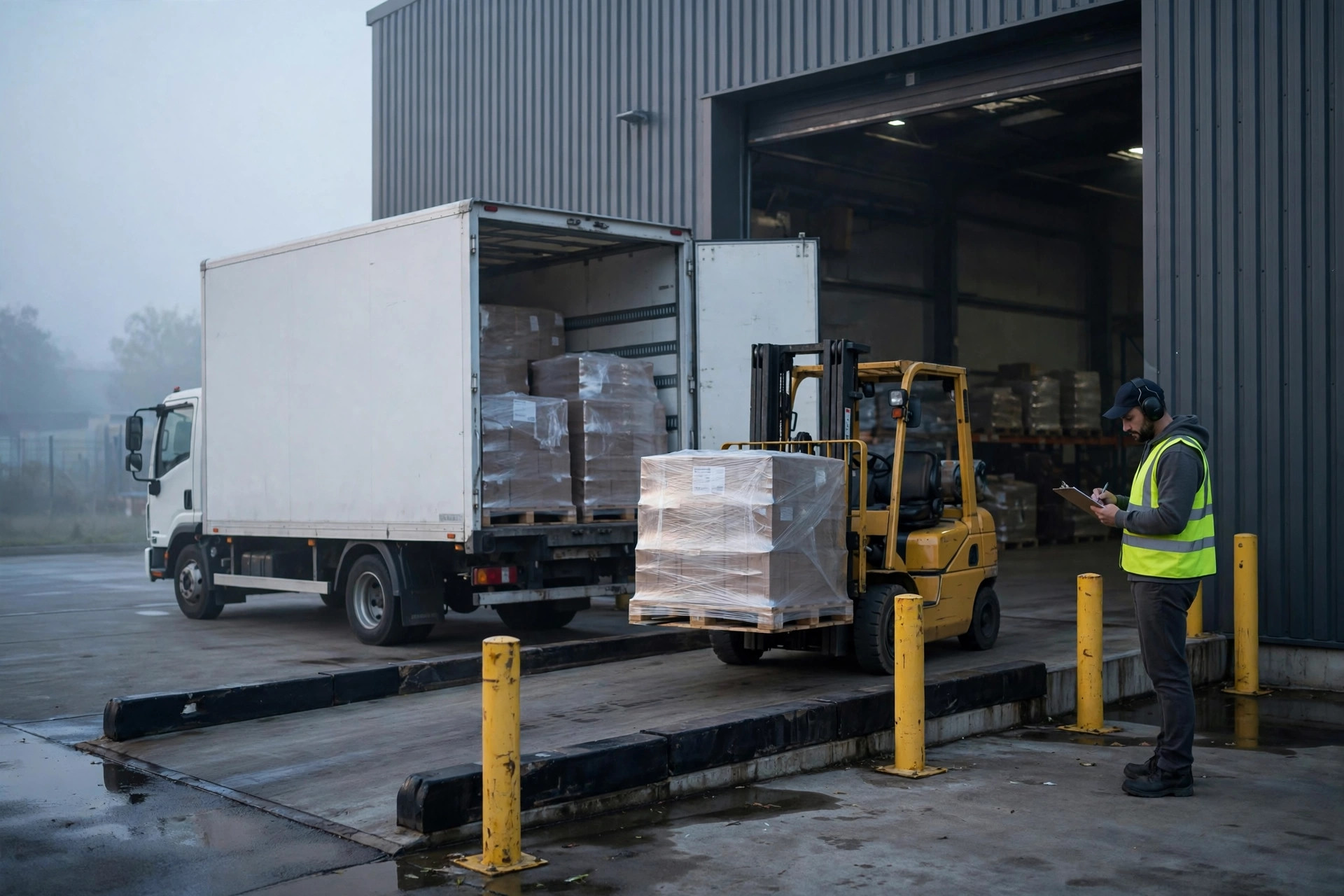
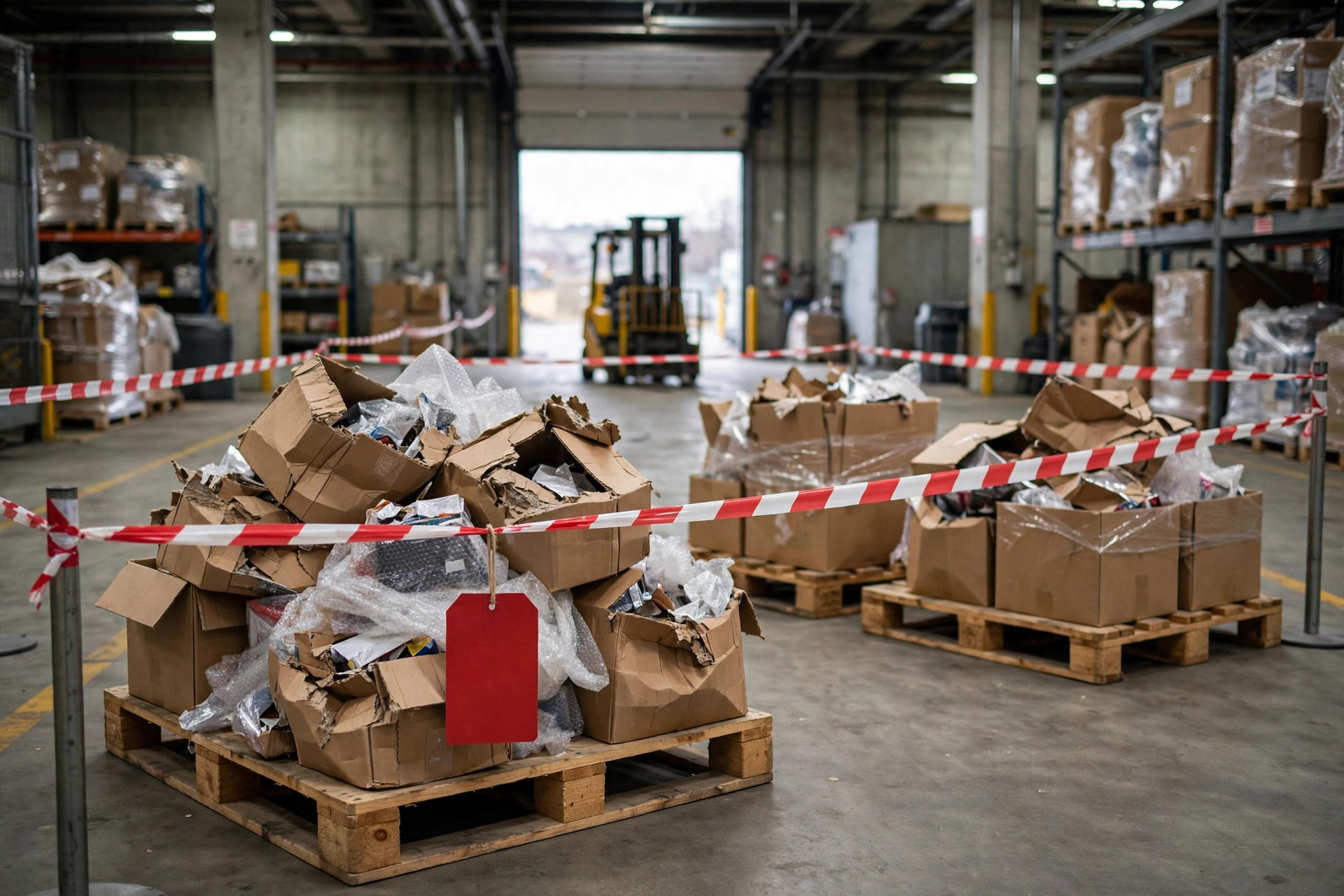
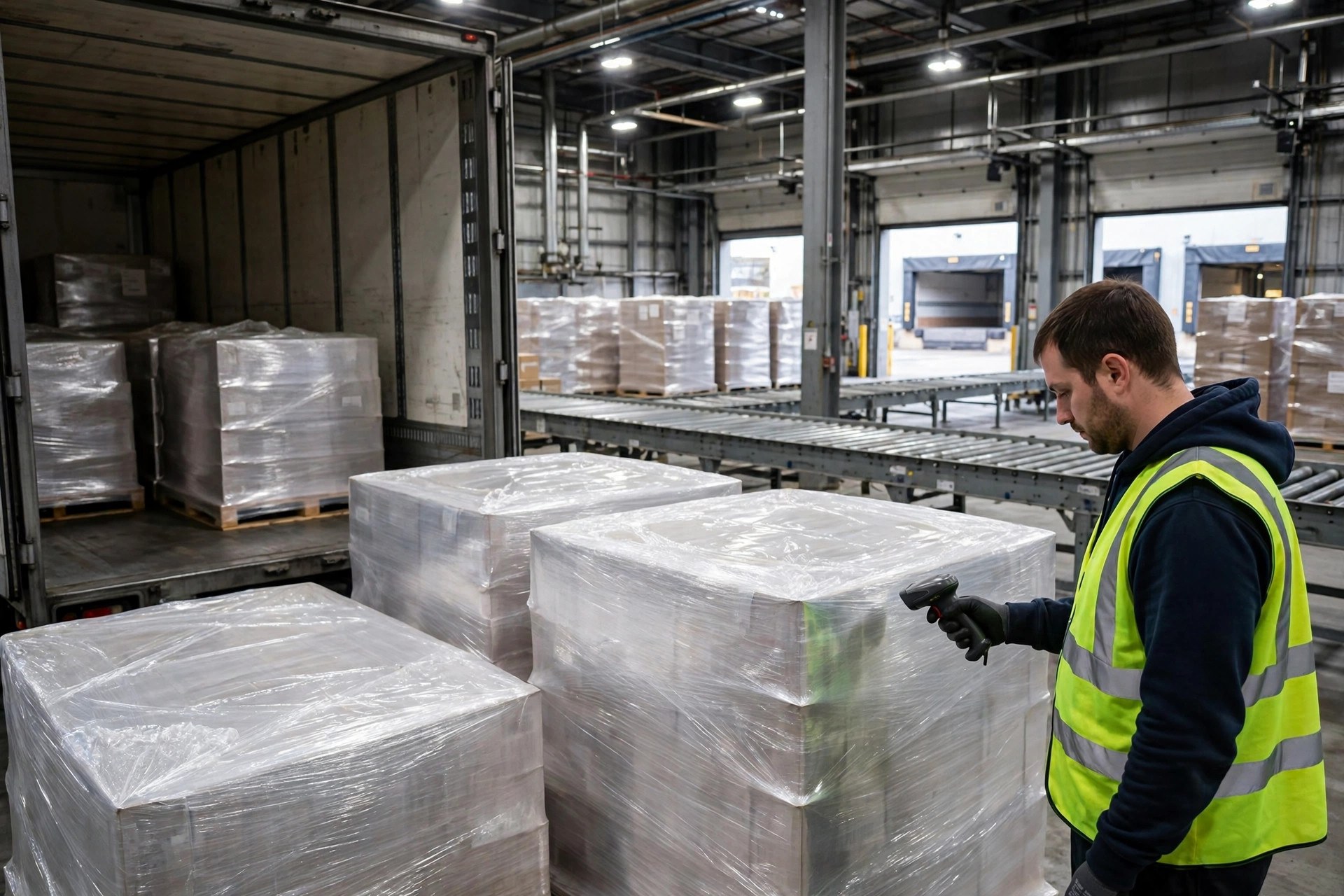
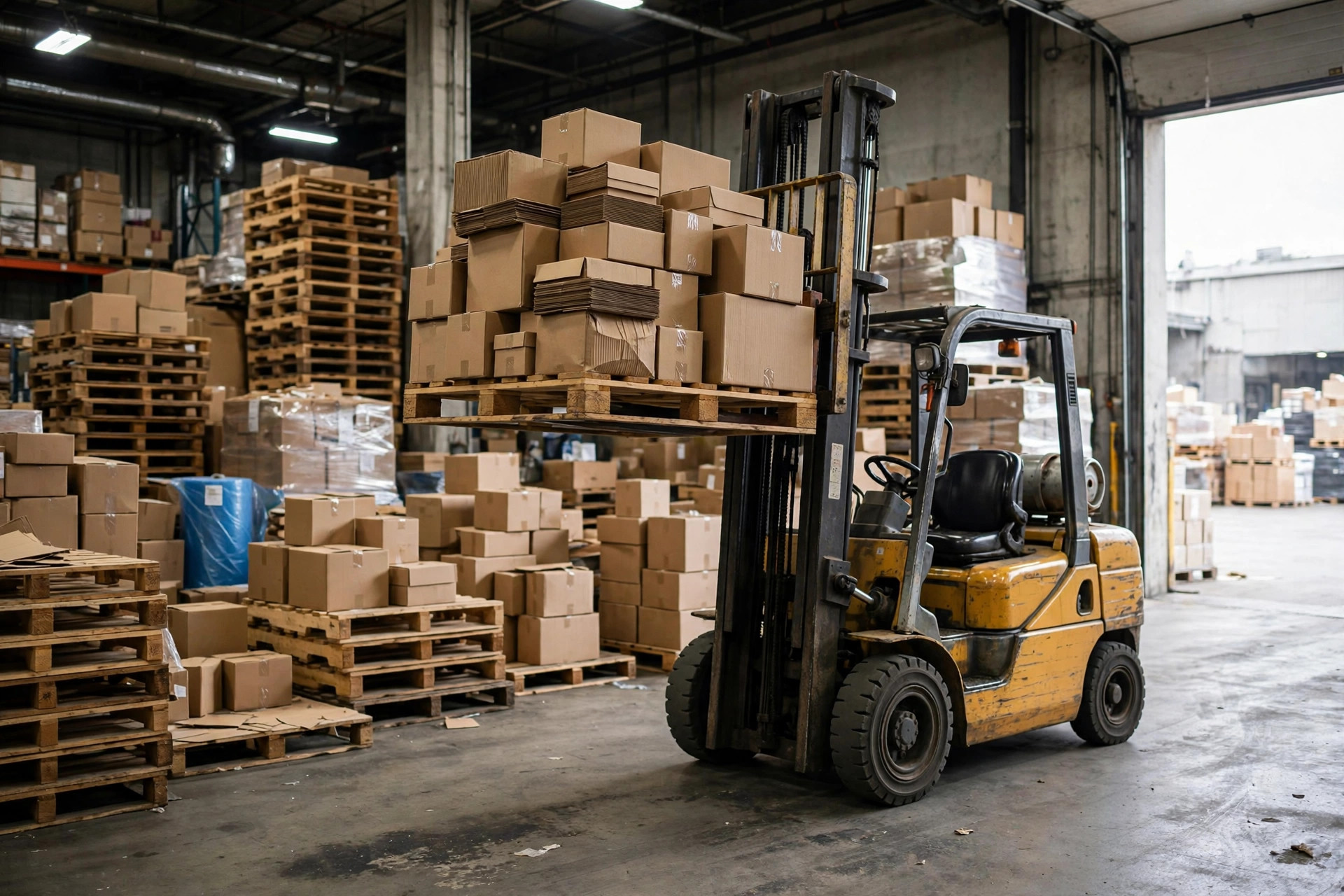
My fix: add one line to the receiving checklist for pallet spec. If an inbound pallet is the wrong size, broken, or deformed, deal with it at the dock — it doesn't go into stock. Set aside a dedicated re-palletizing area so it never blocks the receiving lane. Before a new supplier's first delivery, send them a pallet spec sheet spelling out size, material, and damage standards. Say the hard part up front. Holding this one gate cuts mixed-pallet trouble at least in half. The receiving check should cover size, broken boards, nails sticking out, moisture and mold, and any disposable one-way pallets that slipped into the load.
Empty pallet storage needs rules too. Don't stack empty pallets past a safe height, keep the aisle by the wall clear, and pull damp pallets out to dry or scrap instead of mixing them back into circulation. The pallet area looks trivial — until a messy dock starts eating into receiving throughput.
Pick Your Standard Pallet Size by Customer and Channel
Selection isn't that complicated. Follow your customers and your channels:
Settle the material question at the same time. Wood pallets are cheap and easy to repair, but they crack, sprout nails, and go moldy when damp. Plastic pallets are clean, durable, and dimensionally stable, but expensive — losing one hurts. Food and pharma customers with strict hygiene requirements are usually worth plastic. For general warehousing and circulation, wood is fine. Pallet rental and pooling services, where you pay per use instead of owning a fleet, suit operations with fast turnover and heavy pallet loss.
| Customer / channel | Primary pallet | Note |
|---|---|---|
| US domestic retail, distribution, 3PL | GMA 48x40 | The default option, no need to overthink it |
| European import / export | Euro 1200x800 | Ship to Europe on Euro, don't keep converting |
| Japanese / Asian supply chains | Japanese 1100x1100 | The most common for Japanese customers |
| Mixed customers | One primary pallet + a re-palletizing area | Mixing is an ongoing cost, not a one-time hassle |
Here is the counterintuitive part: the most expensive thing isn't buying pallets. It's the labor of every re-palletizing job, every damaged case, every automation stoppage that mixed pallets cause. Standardizing pallets costs money you can see. Mixing pallets costs money you can't see, but it keeps charging you. Put plainly, pallet selection isn't a purchasing question. It's a cost-structure question.
Tomorrow, walk into your warehouse and look at the racks. If two or more pallet sizes are sitting there side by side, it's time to make the call.
By Lao Mi, Supply Chain Veteran (20 yrs)