Let me be blunt: with imported automation equipment, customs clearance is only halftime. The second half is played inside your own warehouse — and most importers never prepared for it. I've seen too many projects where the equipment crossed the ocean without a scratch, then spent two weeks after arrival digging itself into a hole: missing parts found at unboxing, nowhere to stage the crates, installers flying in while the warehouse still hasn't cleared a path. Here's the verdict up front: arrival at port is not delivery. It's delivered when it's installed, powered on, and running. Duty rates are whatever CBP publishes — check their site for the latest, I won't quote numbers here. Today is about what you can actually control: warehouse-side prep.
The War Story: Two Missing Sensors, Six Weeks Lost
Fall 2023, Inland Empire, California. A client distributing auto parts had ordered sortation feed modules from Europe — about a dozen wooden crates by ocean freight. I happened to be on site for the unboxing. Crate nine: two photoelectric sensors and a bundle of proprietary cable, missing. Worse, a control cabinet door had been crushed in transit and wouldn't close. The installer's slot was the following Wednesday — a four-day window, flights already booked. Replacement parts air-freighted from Europe: roughly ten days, plus customs clearance on top. Whether the cabinet could be straightened on site needed the manufacturer's remote sign-off. End result: the installer rebooked, one four-day trip became two, and the whole project slipped six weeks. Two sides to this story: nobody can prevent transit damage, but "unboxed too late, discovered too late" was entirely the warehouse's fault. Two weeks earlier, and the replacement lead time would have fit neatly inside the installer's window — zero rebooking fees.
Receiving Inspection for Imported Automation Equipment: Count, Look, Match
Three things. Skip one and you're planting a landmine.
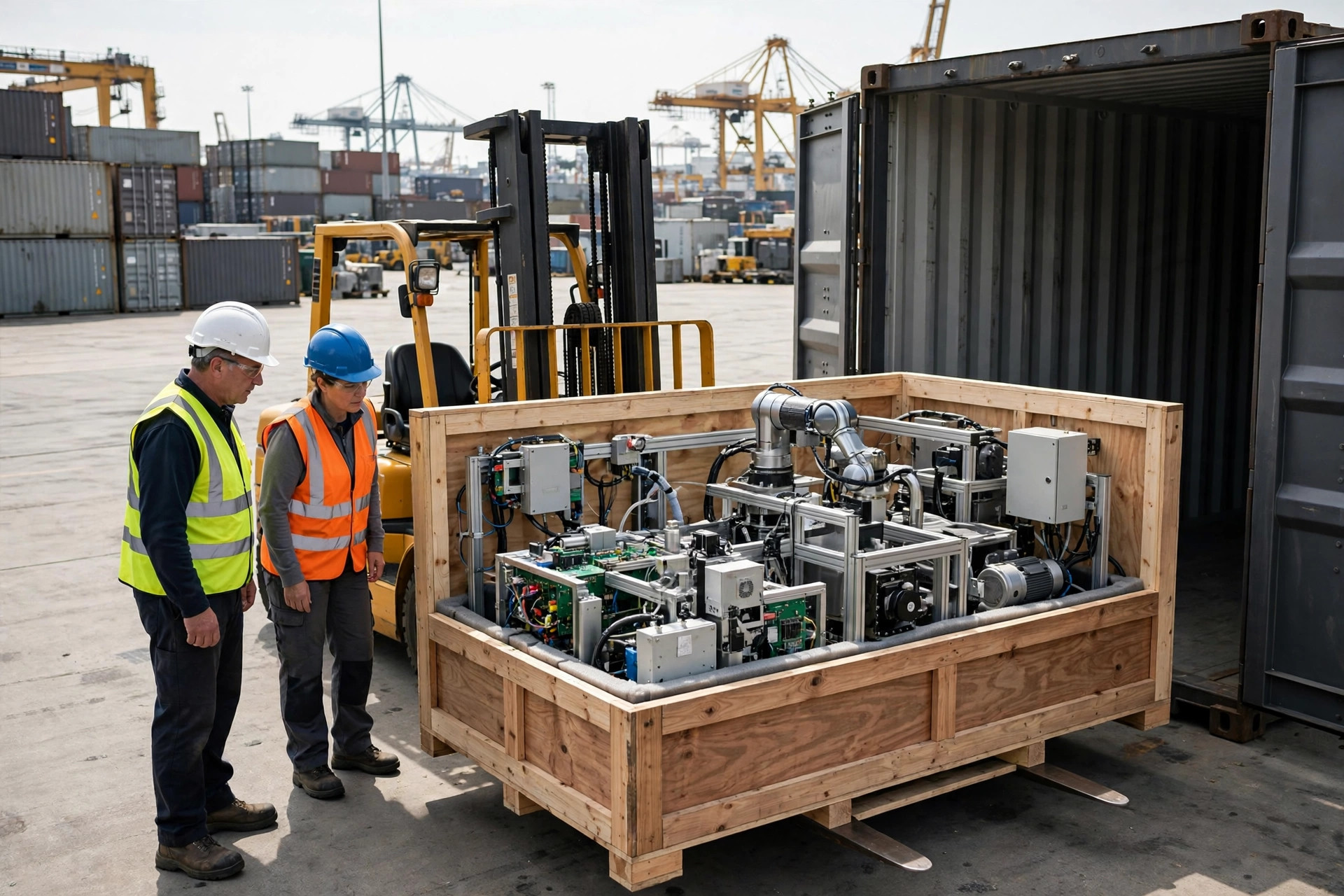
First, count. Check every crate against the packing list, match crate numbers to the list, and count small parts inside each crate. Automation accessories ship split across crates — sensors in one, cables in another, brackets in a third. Miss one crate at receiving and you'll find out on installation day, when it's too late.
Second, look. Check crates for damage and water stains. Check the tilt indicator labels — if they've tripped, the crate was tipped or dropped, and the precision components inside need extra scrutiny. Photograph everything before you open the crate, not after. Order matters.
Third, match serial numbers. Match the serial plate on each unit against the factory paperwork, and photograph it. Warranty runs from the serial number — if it doesn't match, you'll have zero leverage in a warranty fight later.
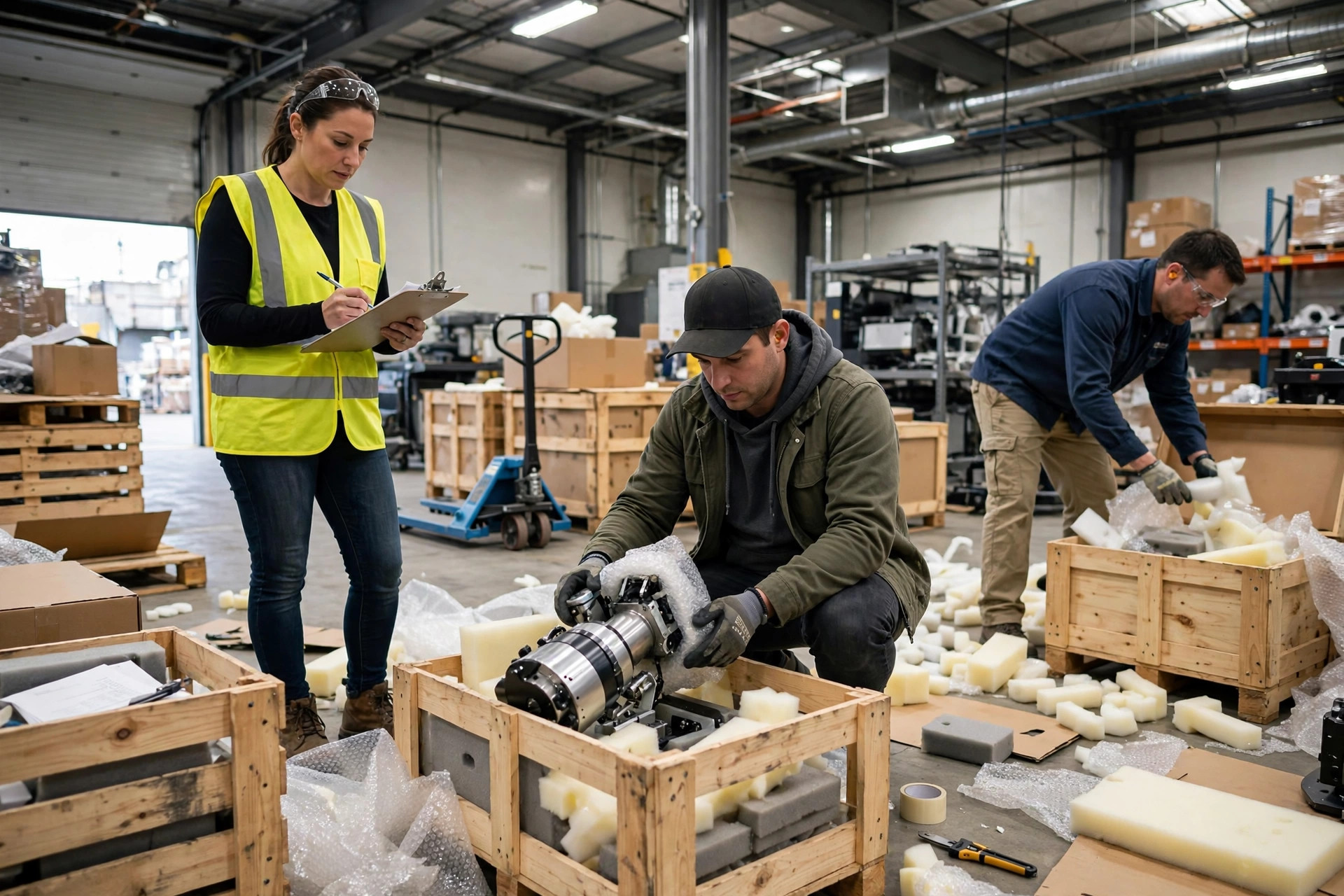
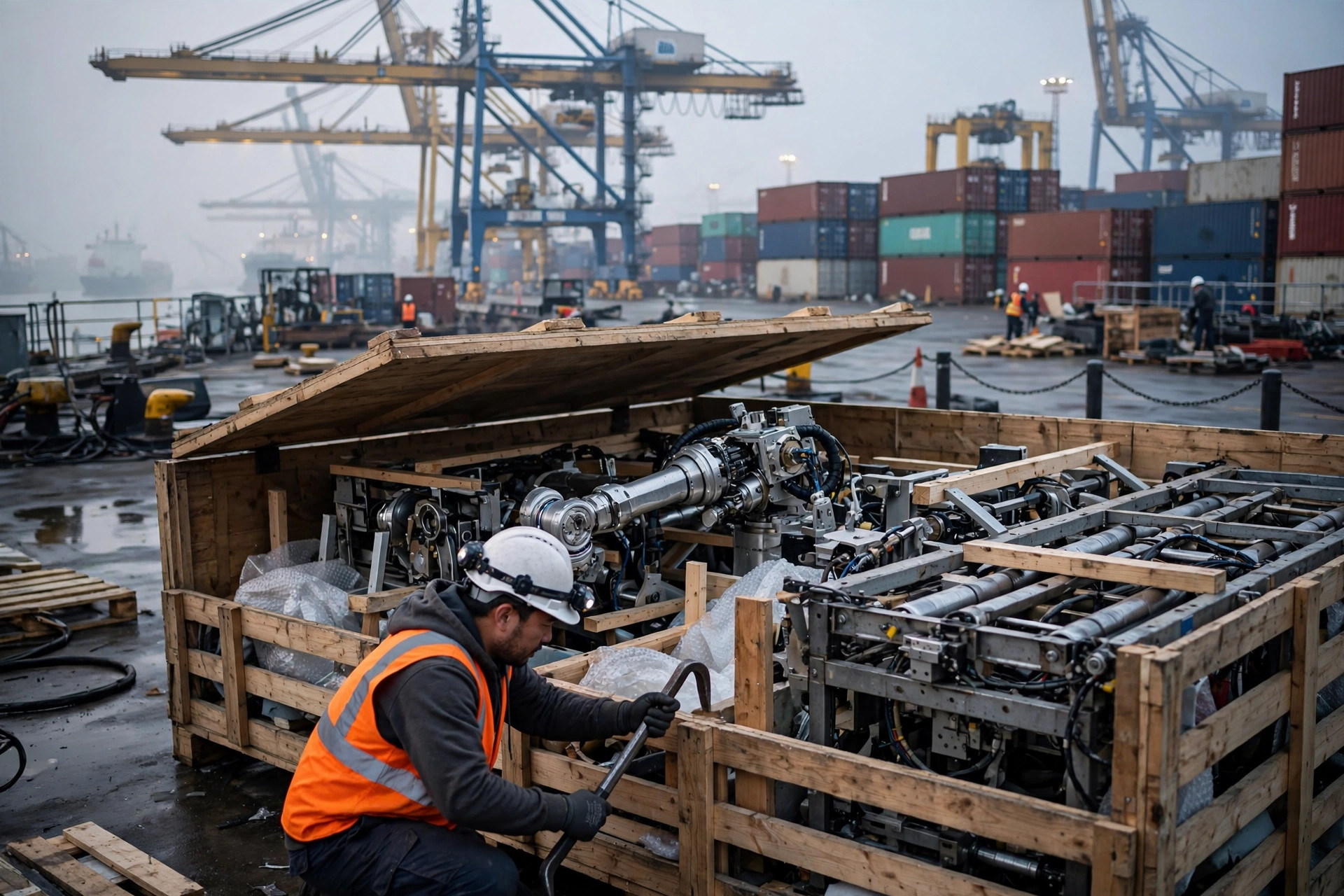
Two counterintuitive details. One: don't rush to throw the crates away. Damage claims require the original packaging — toss it and you've voluntarily surrendered your evidence. My rule: any crate with an exception keeps its packaging until the claim is closed. Two: send the shortage and damage list to the supplier and the forwarder in writing within 48 hours, email with a paper trail. A phone call doesn't count. Raise it a week later and "you lost it yourselves" is all you'll hear.
One compliance note while we're here: check wooden packaging for the IPPC heat-treatment mark. Non-compliant wood packaging can get your shipment held by CBP — check CBP's website for the current enforcement posture. This should have been confirmed with the supplier before the crates ever left the factory; discovering it at arrival is too late.
Staging Imported Equipment: Moisture and Dust Are Just the Basics
Between arrival and installation — days at best, weeks at worst — the staging area is the equipment's home. I've seen too many bad versions of this home.
Give it its own space. A dedicated, ideally locked or barriered zone, separated from daily operations. Automation equipment "disappears" in warehouses in creative ways: paint scraped by a forklift, used as a step ladder, an accessories carton hauled off as trash by the cleaning crew. Don't laugh — I've seen every one of these happen for real.
Moisture and dust control is the floor, not the ceiling. Precision components hate humidity; coastal warehouses most of all. Don't stage next to the dock doors, where rain and dust walk right in. Follow the storage temperature and humidity spec in the equipment manual — don't guess. In a place like Arizona, where a warehouse can bake past 110°F in summer, electronics sitting in that heat for weeks is a risk you chose.
Two sides to the unbox-or-not question, and it's a real trade-off:
| Approach | Cost | Payoff |
|---|---|---|
| Unbox and inspect early | Eats staging space, risks handling damage on the second move | Find shortages early, order spares in time, protect the installer's window |
| Keep everything crated | Problems surface late — possibly with the installer standing there | Saves space and labor; the crate is the best protection there is |
My call: inspection is non-negotiable — unbox down to the point where you've verified the goods. But don't shuffle big verified units around twice, and lock small precision parts in a cage. Take a bit of both columns and keep both costs under control.
The Installation Path: Aisles, Floor Load, Debris — Miss None
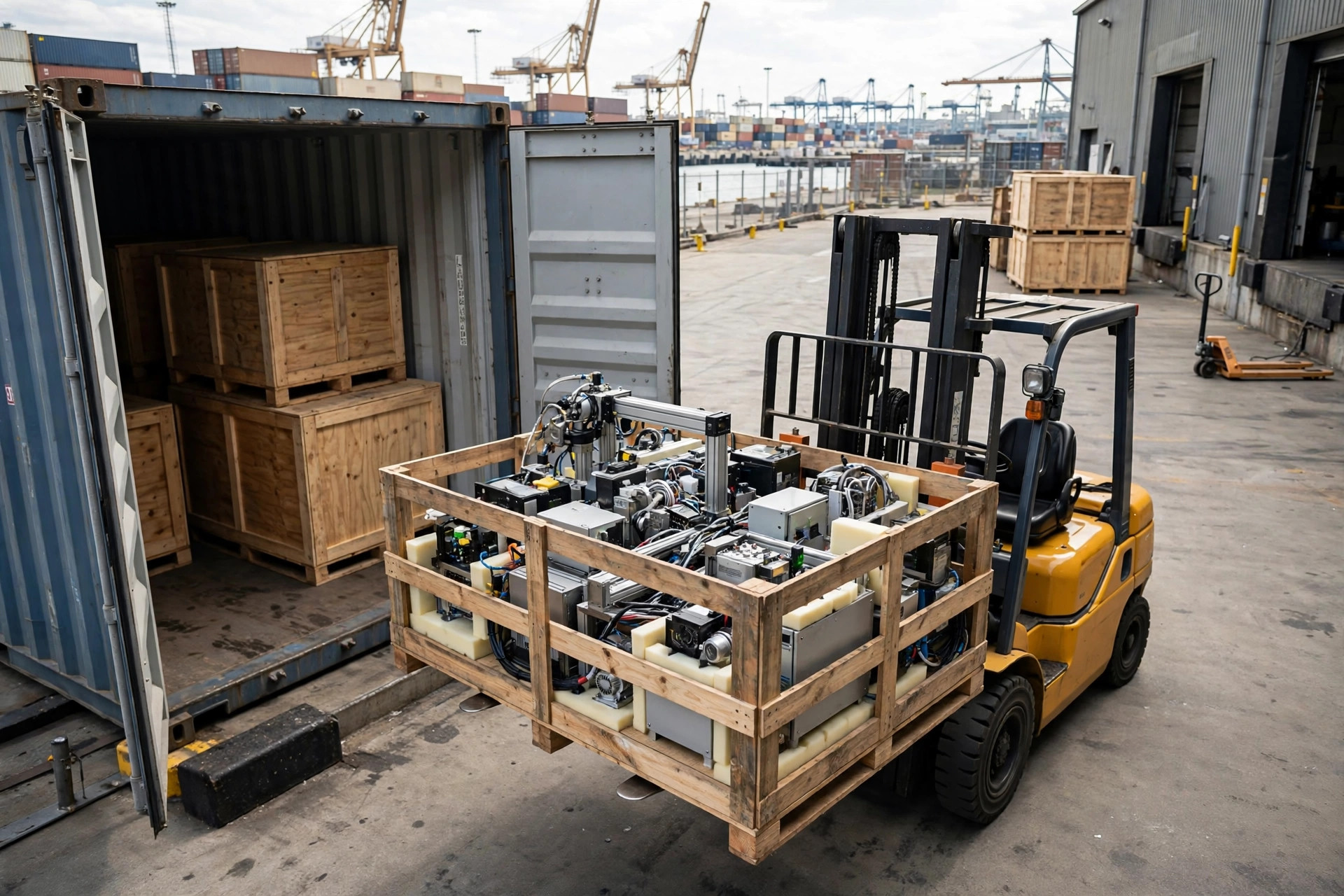
Before the installer lands, the path comes first. Clear the route from staging to the install location. Check turning radius, check door clear height — equipment that arrived in a 40-foot container routinely exceeds the dimensions you're used to from daily pallets. Don't size it by habit.
Floor load: ask the landlord first. Don't roll heavy modules onto a mezzanine on a verbal "should be fine" — get the slab rating in writing. Forklift capacity too: heavy modules may need a bigger lift or a crane. Discovering your forklift is undersized with the installer already on site means renting under pressure, if you can rent at all.
And the thing everyone forgets: unboxing debris. A mid-size sortation system unboxes into enough crates, foam, and stretch film to fill one or two 30-yard roll-offs. Book the haul-away in advance, or the debris piles up in the install zone and the engineer has nowhere to stand. That's money burned for nothing. One more: forklift operators must be certified — that's an OSHA requirement. Keep temp labor away from equipment moves; if something goes wrong, your insurance won't cover it.
Syncing With the Installer: They Bill by the Day, You Burn by the Day
The scarcest resource in the whole imported automation equipment project isn't the equipment — it's the installer's calendar. International travel plus day rates; one rebooking and flights and hotels get bought twice while money pours out. Everything on the warehouse side must be done before they land: inspection complete, shortage list sent, staging cleared, path open, forklift or crane confirmed. My practice: a 15-minute alignment call one week before arrival — warehouse manager, project owner, installer — walking a checklist line by line. Nothing gets a "we'll figure it out when you're here."
Now the math nobody does — where the money goes when the project slips a week:
| Cost bucket | How it burns |
|---|---|
| Installer rebooking / standby | Day rates plus change fees, burned for nothing |
| Capital tied up | Hundreds of thousands, sometimes millions, of equipment sitting idle |
| Warehouse labor | Unboxing crew and forklift drivers idling |
| Delayed go-live | Lost peak-season capacity — the biggest line item, and the one nobody calculates |
Here's the contrarian take: people haggle over duty rates down to the decimal (check CBP's site for the latest — I won't quote what I can't verify), but nobody prices the delay. The delay is usually bigger — and it's entirely within your control. You can't negotiate the tariff. You can absolutely get your warehouse ready.
Equipment that crossed an ocean without losing a part, then ran into trouble inside your own warehouse — I've heard that joke too many times. Next time you order, ask yourself one question first: on the day the installer lands, will my warehouse be ready?
By Lao Mi, Supply Chain Veteran (20 yrs)