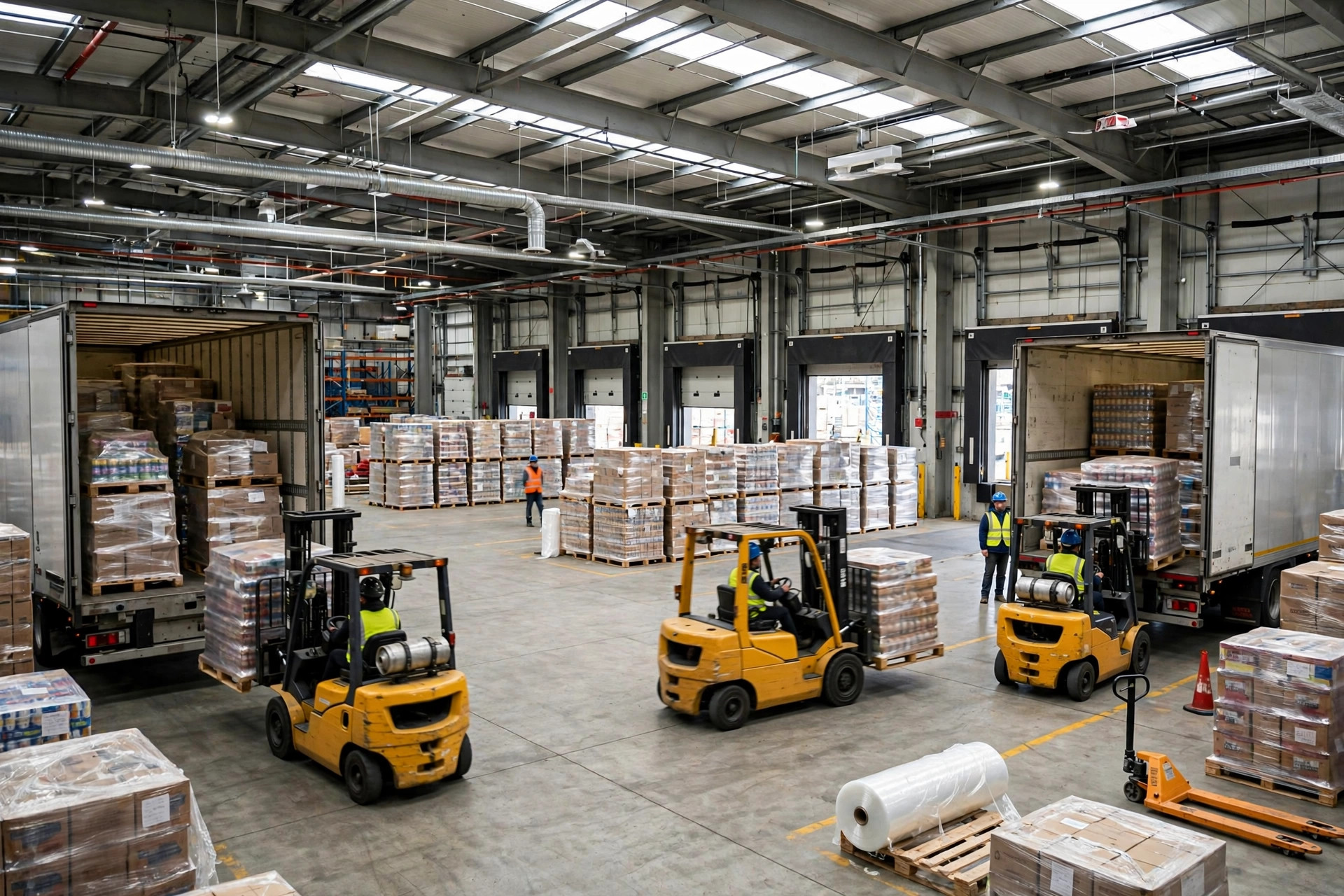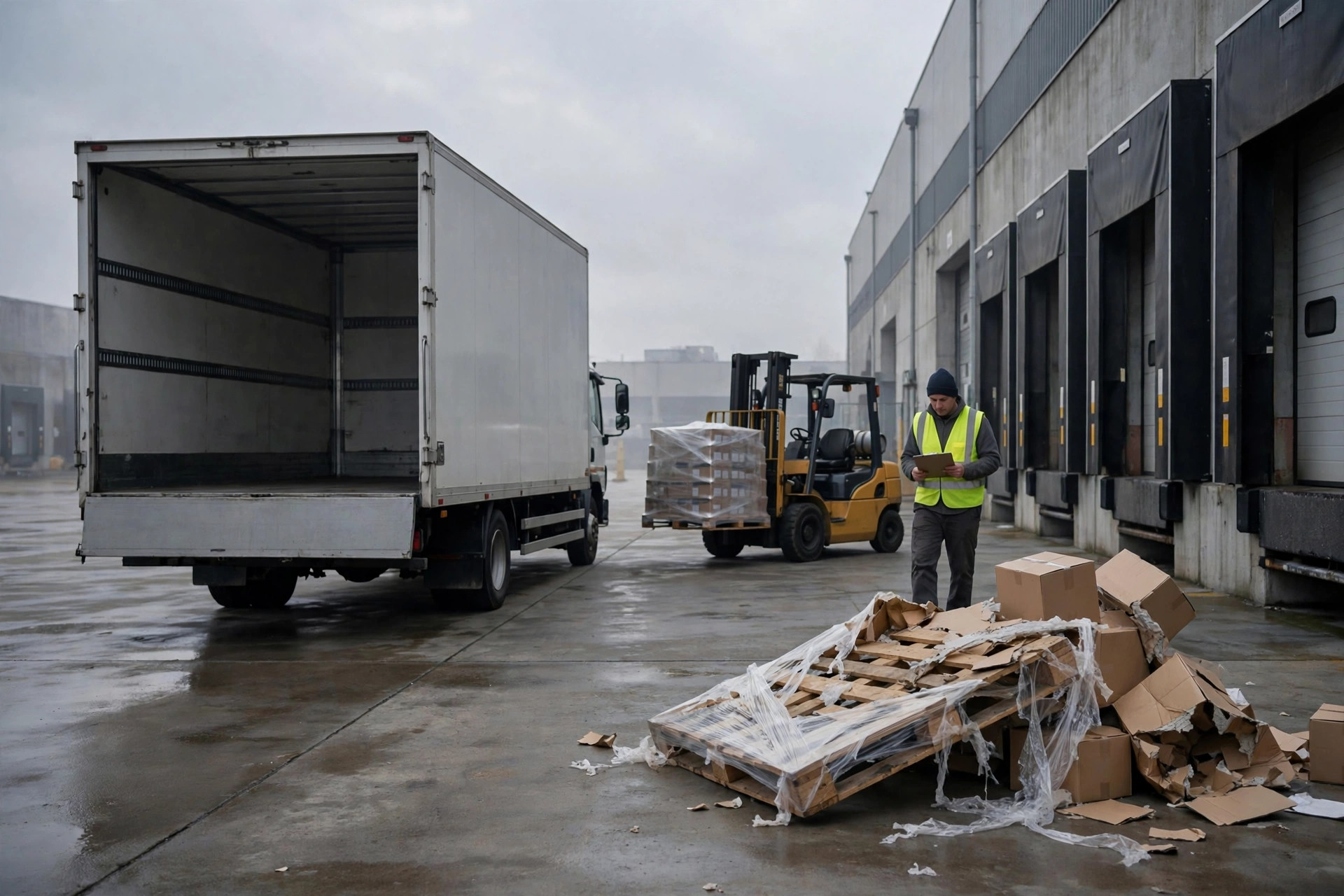
November 2023. I'm backing into a dock in Columbus, Ohio, and the receiving kid is squatting next to a pallet of small kitchen appliances, scratching his head. Shrink wrap looked perfect. He opens two cartons — three blenders inside, all with cracked jars. "Shifu," he asks, "can I even file on this?" Listen. After fifteen years hauling LTL, I've watched this movie a hundred times. So here's the straight answer on how to file a freight claim for damaged LTL shipment: seven steps, from the signature on the delivery receipt to the check in your mailbox — written from the receiver's side of the dock, because that's the side nobody writes about.
Two true stories: one got paid, one didn't
The one that got nothing is that Columbus warehouse. November 2023, eight pallets of kitchen appliances roll in. The outside looks fine, so the receiver signs the delivery receipt "clear" to save time, and the truck leaves. Six days later, during cycle count, they open cartons and find three blenders with shattered jars — classic concealed damage. The shipper calls the carrier. The carrier's answer: concealed damage reported more than 5 days after delivery, claim denied per tariff. Three units at about $120 cost each — $360 gone — and they were heading into Black Friday short on stock, so the expedited replacement freight ran them nearly another $200. All because of two words: "day six."
The one that got paid happened in the summer of 2021, Dallas, Texas, at a building-materials distributor. One pallet, 40 cartons of tile. Five cartons arrive with crushed corners, visible right at unload. The receiving lead knew the drill: she wrote "5 cartons corner-crushed, pallet #3 of 6" on the POD and had the driver sign next to it. Then she took 20-plus photos — full pallet, close-ups of the damage, the PRO number in the same frame. Cargo value about $2,200. Full claim packet filed within 45 days. The carrier paid roughly $1,900 on the damaged portion. That same year, another warehouse across town took nearly identical damage, signed "OK" on the POD, and got exactly zero. The carrier's line: "You signed it clear."
Put them side by side and the lesson is simple: a freight claim is won or lost in the ten minutes at the dock door. Everything after is paperwork. Here are the seven steps.
Step 1: Walk the pallet before you sign anything
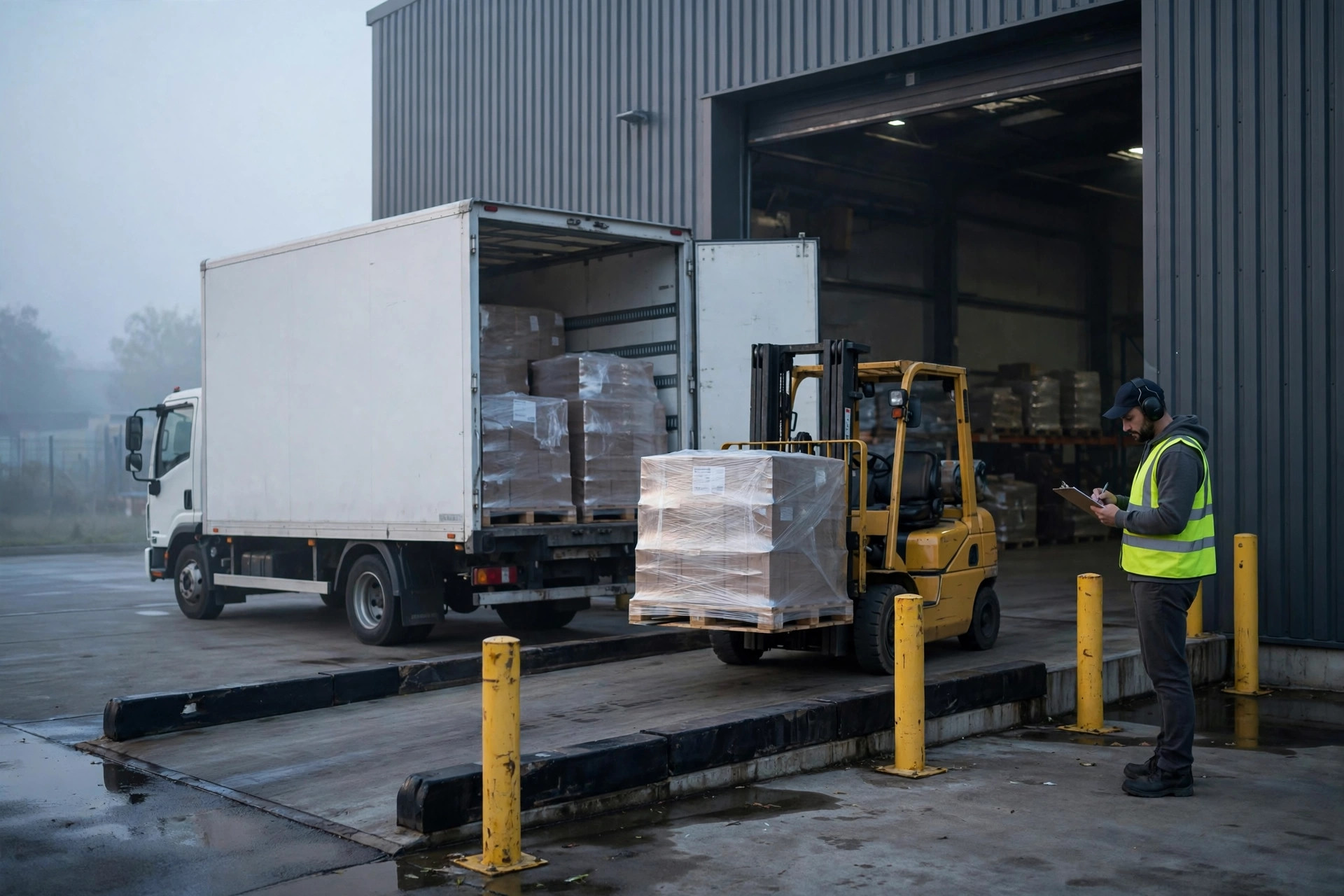
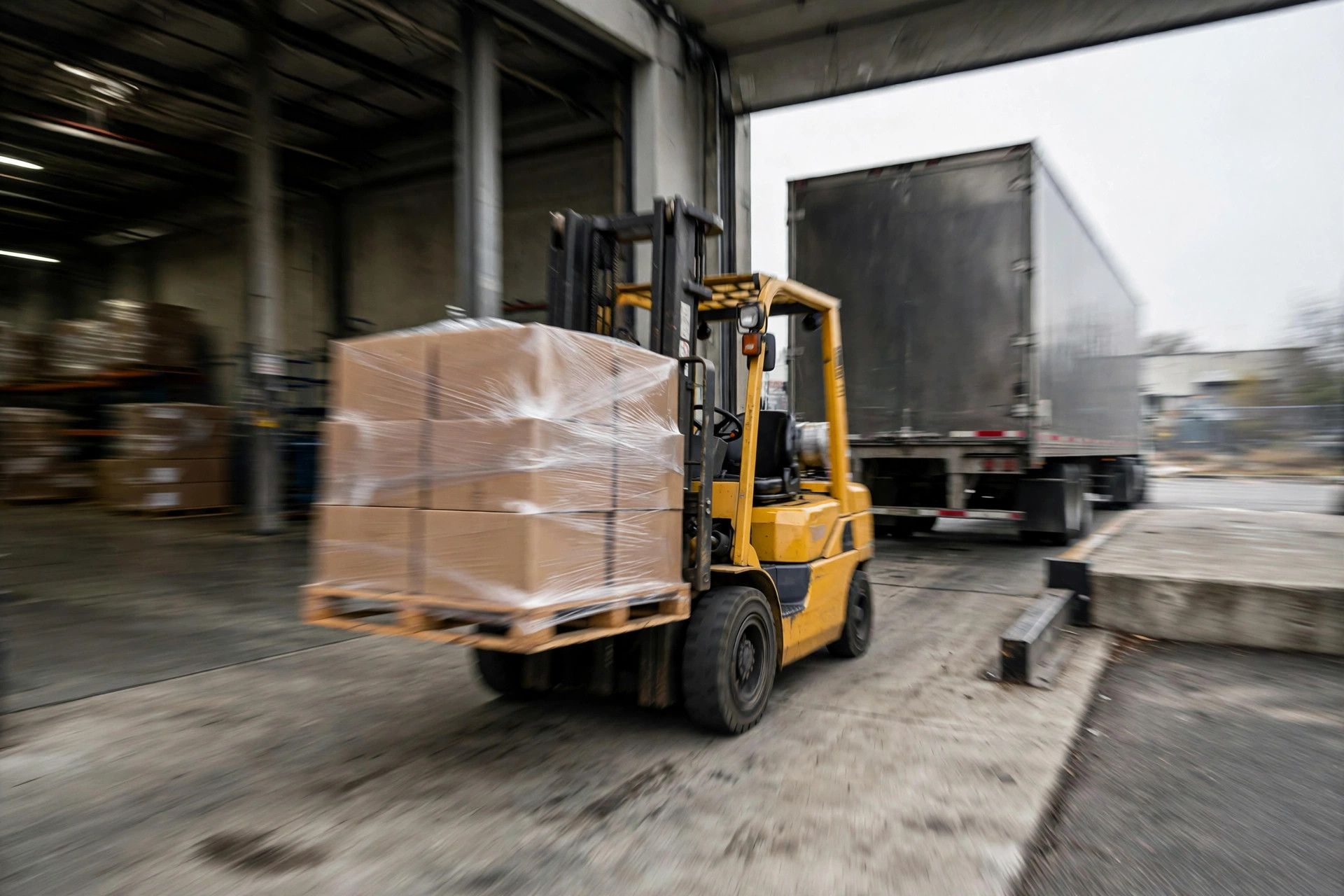
Driver opens the trailer — don't let him rush the unload. Walk around the pallets first: torn shrink wrap, caved-in carton corners, leaning stacks, water stains. See something off? Photo first, then ask the driver to hold up. Three minutes here can be worth thousands of dollars.
Step 2: Note the damage on the delivery receipt — your claim's first piece of evidence
This is the step that matters most. On the POD or delivery receipt, never just scribble your name. Write three things: which pallet or cartons + what the damage looks like + how many. Plain English works fine: "3 cartons crushed on pallet #2," "1 pallet leaning, shrink wrap torn." Then have the driver sign next to your note. A lot of receivers skip this — too much hassle, don't want to offend the driver. Here's the thing: the driver doesn't mind. A clear note actually helps him close out his own paperwork. Be shy now, argue alone later.
Step 3: Photograph everything — remember "three in one frame"
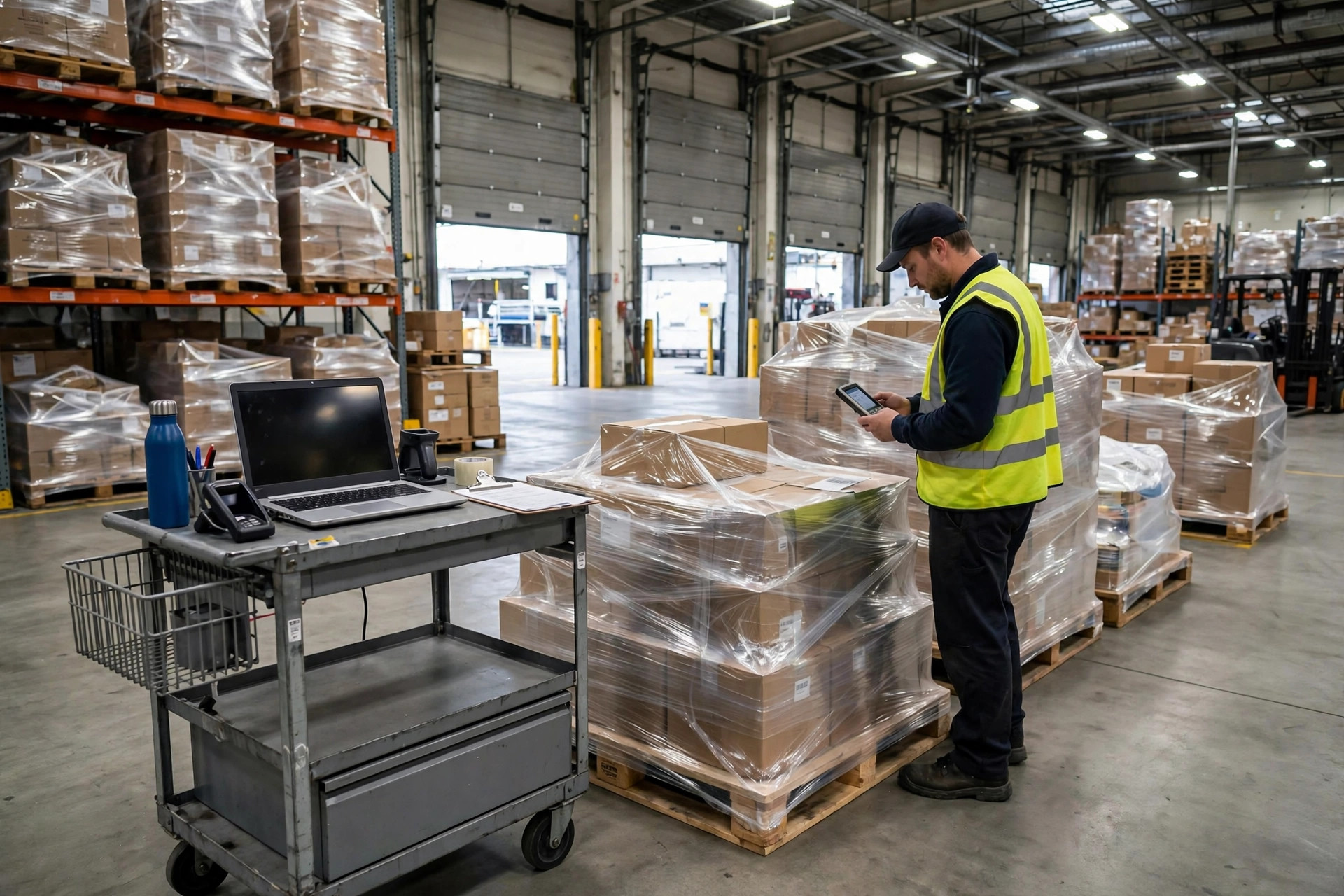
Your phone is your best weapon. Three sets: ① the full pallet, so it's clear which shipment this is; ② close-ups of the damage, so it's clear how bad it is; ③ the PRO number or shipping label in the same frame as the damage, so it's clear this damage belongs to this shipment. Dark trailer? Turn on the flash. A walk-around video works too. Save the photos to a computer the same day — if the phone gets lost, so does your evidence.

Step 4: Keep the freight and packaging exactly as-is
The carrier has the right to send someone out for an inspection. If you've thrown away every broken carton and tidied everything up, one "unable to verify" stalls you for weeks. Set the damaged freight aside — packaging and all — until the claim is resolved. Tight on space? At minimum, get written confirmation from the carrier before you dispose of anything.
Step 5: Concealed damage — notify the carrier in writing within 5 days
Outside looks fine, inside is broken — that's concealed damage, and it's the nastiest kind. Most LTL carriers' tariffs require written notice within 5 days of delivery (check your carrier's latest published policy for the exact window) — and the clock starts on delivery day, not the day you open the box. Email plus a phone call, and keep the email as your paper trail. That Columbus kid lost his $360 on day six. My rule: high-value or fragile freight gets opened and spot-checked within 48 hours, written into the receiving SOP, no exceptions.
Step 6: Build the packet and file within 9 months — know your Carmack rights
The Carmack Amendment is the receiver's best friend: the carrier is liable for freight damaged in transit, and carriers must give you at least 9 months to file. Don't sit on it, though — fresh evidence moves faster. A complete claim packet has four things: ① the bill of lading; ② the POD with your damage notation; ③ the commercial invoice proving value; ④ photos and video, plus repair or salvage records. Missing the invoice hurts worst — with no proof of value, the carrier pays by weight, and they'll press that number as low as it goes.
Do the math: cheap freight vs. full protection — pick one. A lot of shippers book LTL on released value to cut the rate — say $2 per pound — and the freight bill drops maybe 15–20%. But the payout cap drops with it. Example: one pallet, 800 lbs, real cargo value $4,000. At $2/lb released value you save roughly $80 on freight. Then $3,000 of damage happens, and the carrier's max payout is 800 × $2 = $1,600. You eat $1,400 to save $80. Run that math before chasing the cheap rate — on high-value freight, declare full value and sleep at night.
Step 7: Follow up — and if they deny you, three more doors
Filing isn't finishing. Check in every two weeks and keep a log of every conversation. If the claim gets denied, don't just take it: ① Ask for reconsideration — reorganize your evidence, punch holes in their denial reason, and formally request a re-review; ② Bring in your broker or cargo insurance — if a 3PL booked the load, make them lean on the carrier; if you carry cargo insurance, file there; ③ Go legal — under Carmack you have 2 years to sue. Small claims court handles the small ones, no lawyer needed, filing fees are a few dozen bucks.
And here's the counterintuitive part most people miss: file against the actual carrier that hauled it, not the broker who booked it. Wrong door costs people two months, every time. Another one: writing "damaged" on the POD doesn't start a fight with the carrier — it prevents one. The fight starts when you argue about it three weeks later with nothing written down.
Five rules for shippers and warehouses (print this, tape it to the wall)
- One trained person checks every inbound load — no "whoever's free" signatures when it's busy.
- Post the POD notation script on the wall, in English and Spanish — anyone can write it right.
- High-value or fragile freight: open and spot-check within 48 hours. Make it SOP.
- Photos need three things: wide shot, close-up, PRO number in frame. Filed the same day.
- Set two alarms: day 4 after delivery (concealed-damage deadline) and month 8 (filing-deadline reminder).
One trade-off to think through: when a whole pallet arrives badly damaged, refuse it or accept-and-claim? Refusing is clean, but your shelves go empty and orders stall. Accepting is a hassle, but the supply chain keeps moving. My take: unless the freight is a total loss, accept it, notate everything, and chase the claim — keeping product flowing beats winning an argument.
I'll leave you with an old saying from the road: sign like it's carved in stone. Fifteen years out here, and I've watched too many shippers lose thousands of dollars in ten minutes at the dock. How to file a freight claim for damaged LTL shipment isn't complicated — look twice, write it down, take the photo. Do that, and the money comes back.
By Shifu Zhao, Trucking Veteran (15 yrs)