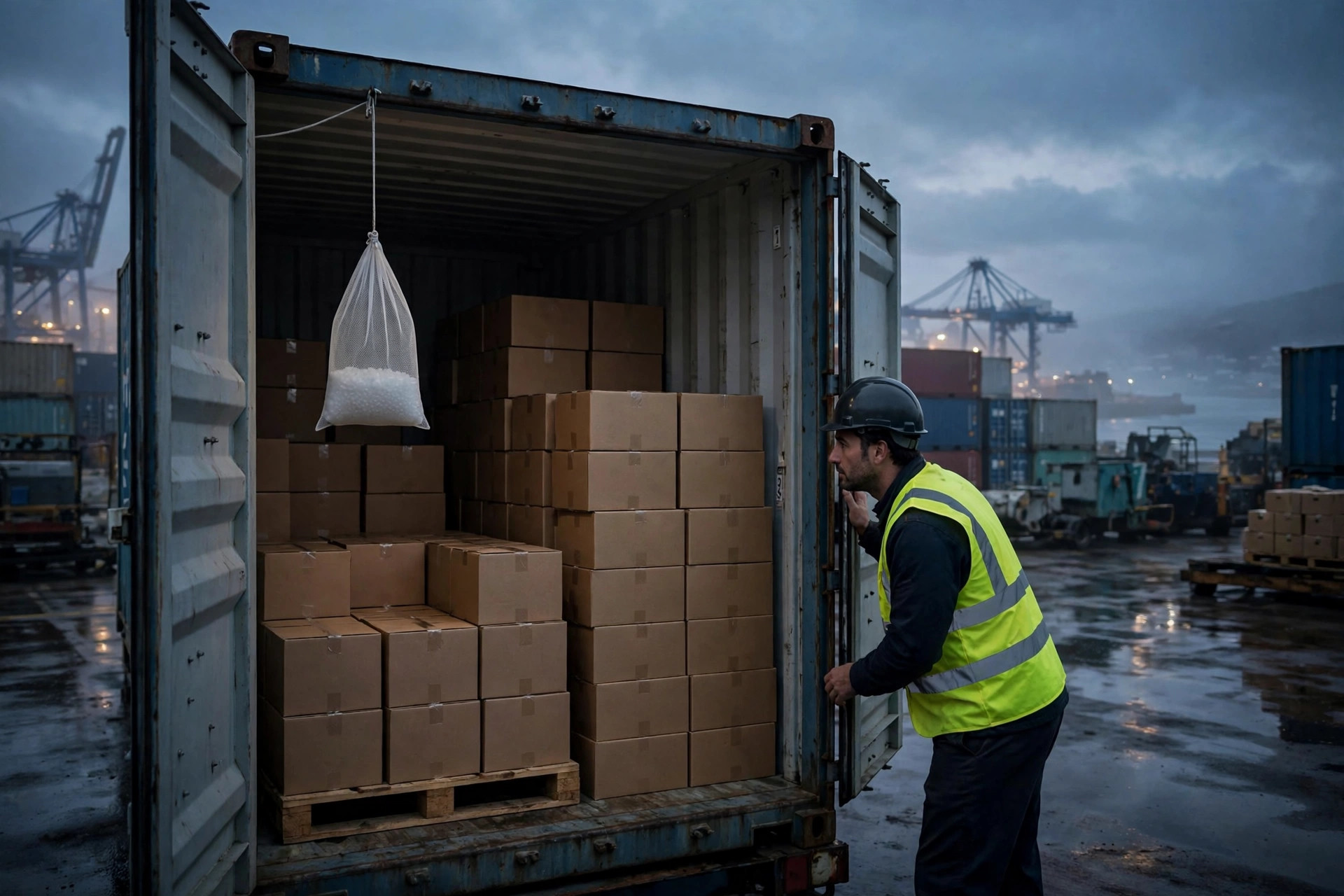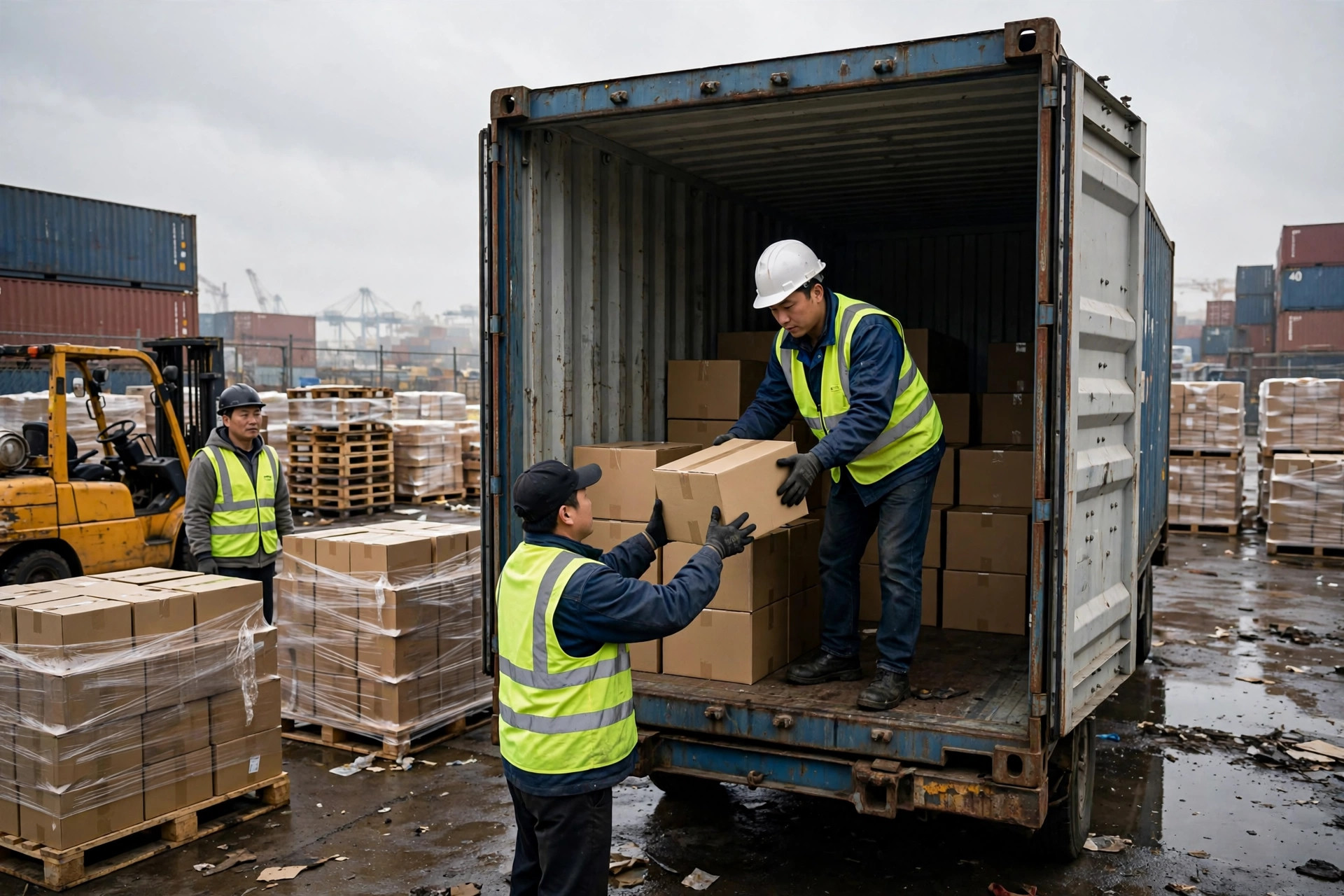
Look, I've been driving trucks for fifteen years, and I'll tell you something: the people I respect most aren't the fast drivers. They're the guys who know how to load a container.
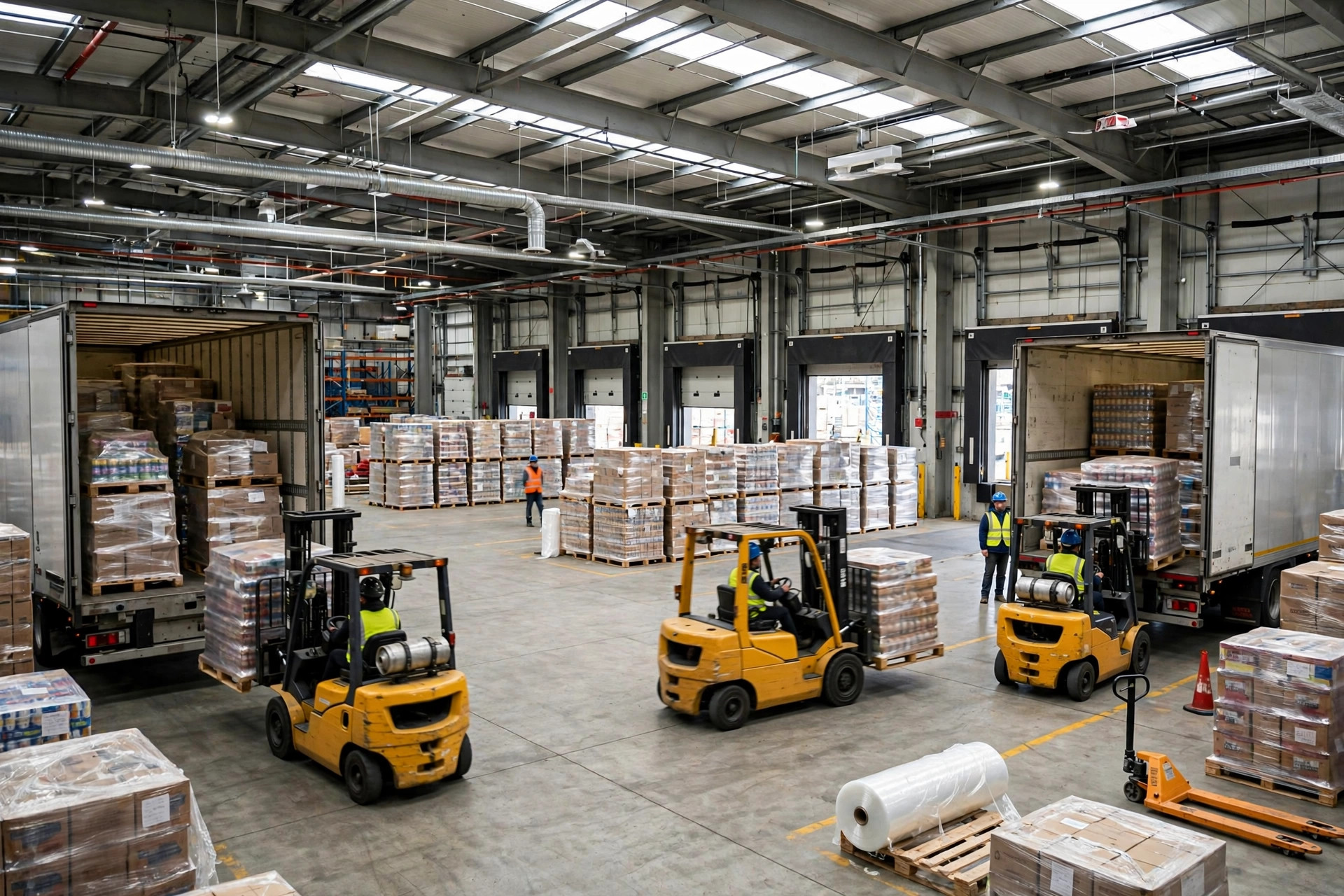
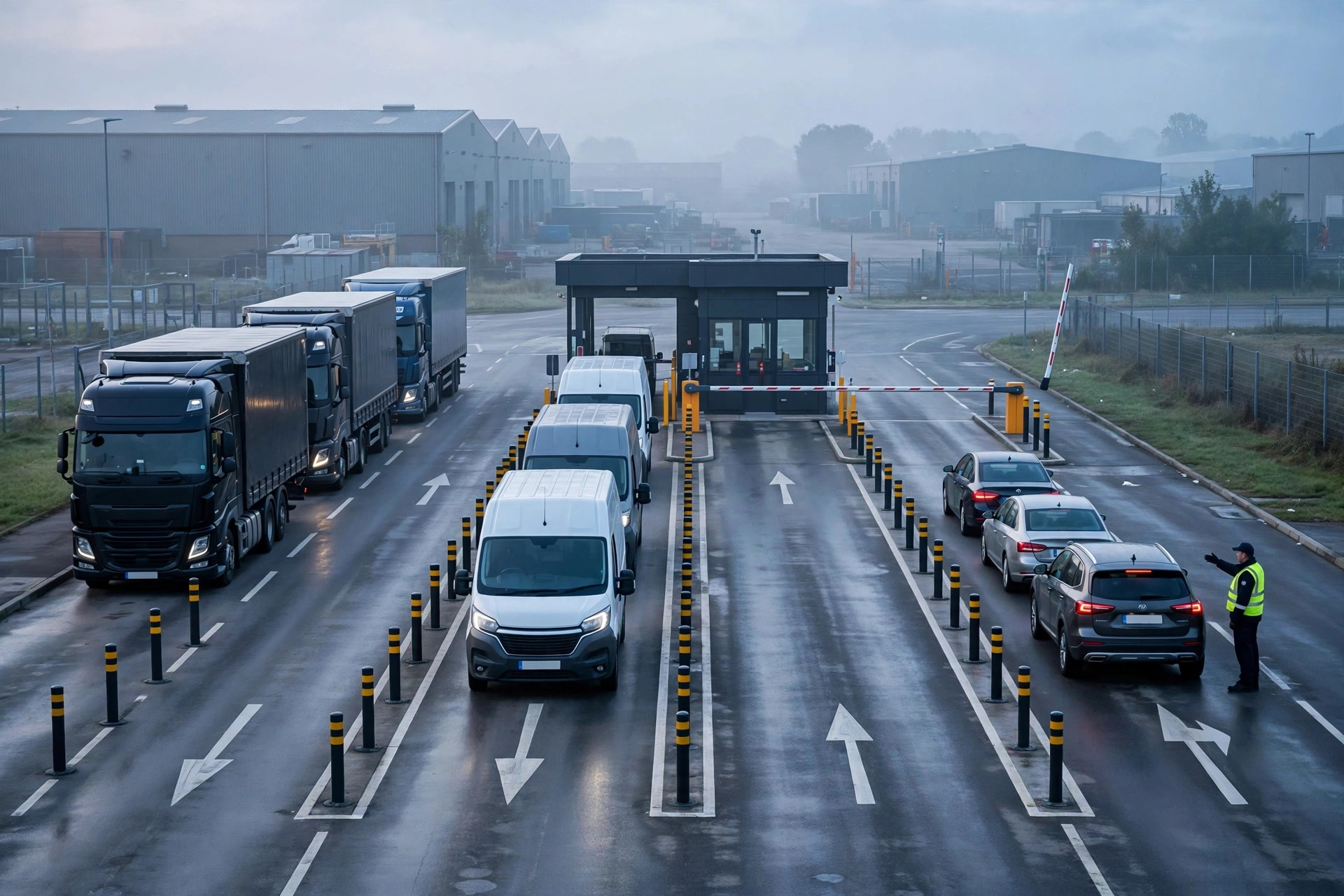
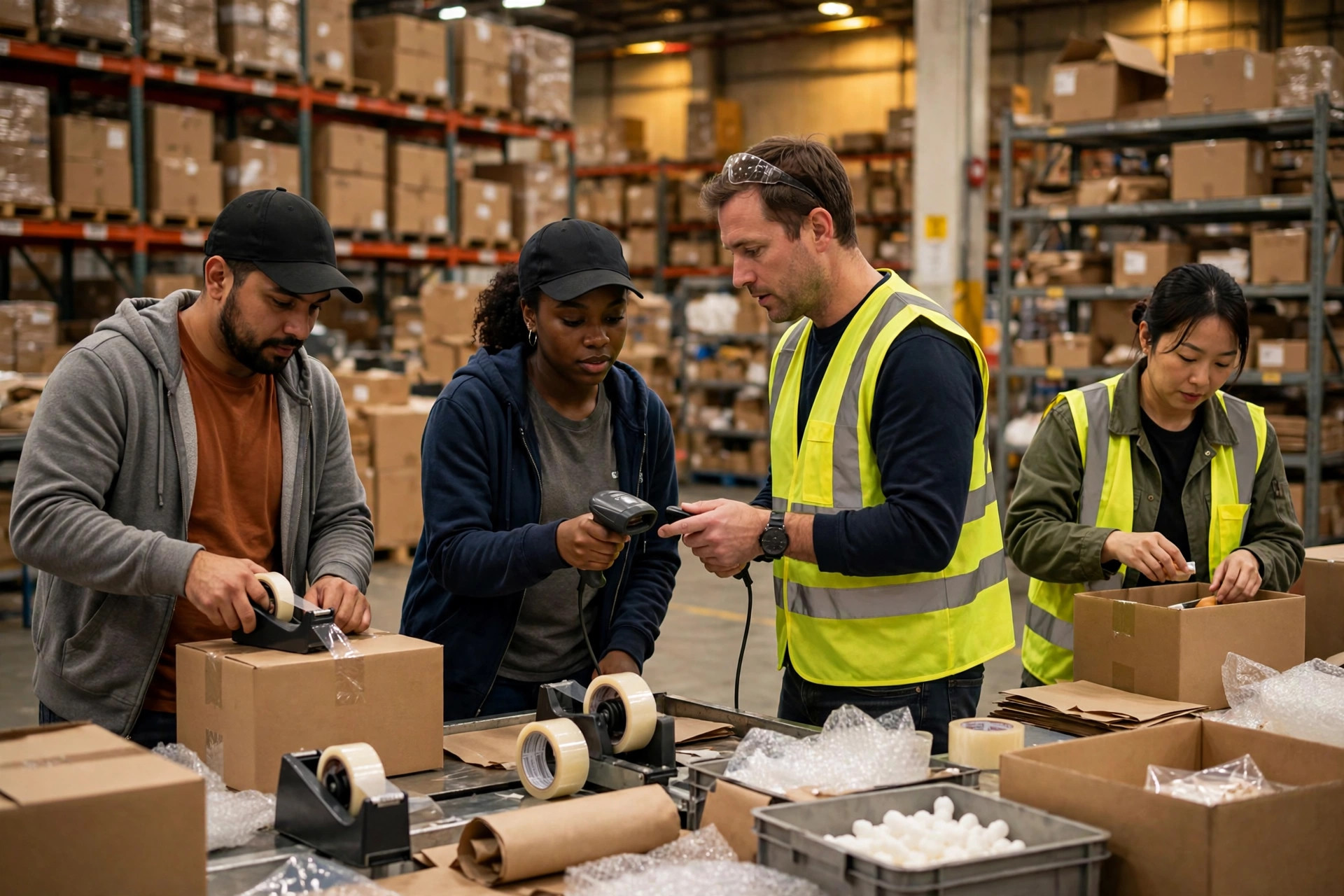
Fall of 2024, I'm in line at the Yantian port gate, waiting to drop a box. Ahead of me, a three-man loading crew led by a guy in his forties — one of those old hands. I'm stuck there nearly two hours, so I watched them work a 40-foot high cube full of lighting fixtures: dozens of carton sizes. The old-timer squatted by the doors, smoked a cigarette, and stared at the pile for a good ten minutes — loading it in his head. Then the three went to work like bricklayers. Three-plus hours, not a gap left, cartons lined up like they'd been cut with a knife. One thought: container loading is a craft.
Hand-loading a container sounds simple — just shove the freight in. But I'm telling you, it's not. That box rolls on the ocean for a month or more, and if it's loaded wrong, the door-opening at the other end is a whole different story. I've seen more ugly ones than I can count.
A true story: crushed freight, and the forwarder wouldn't pay
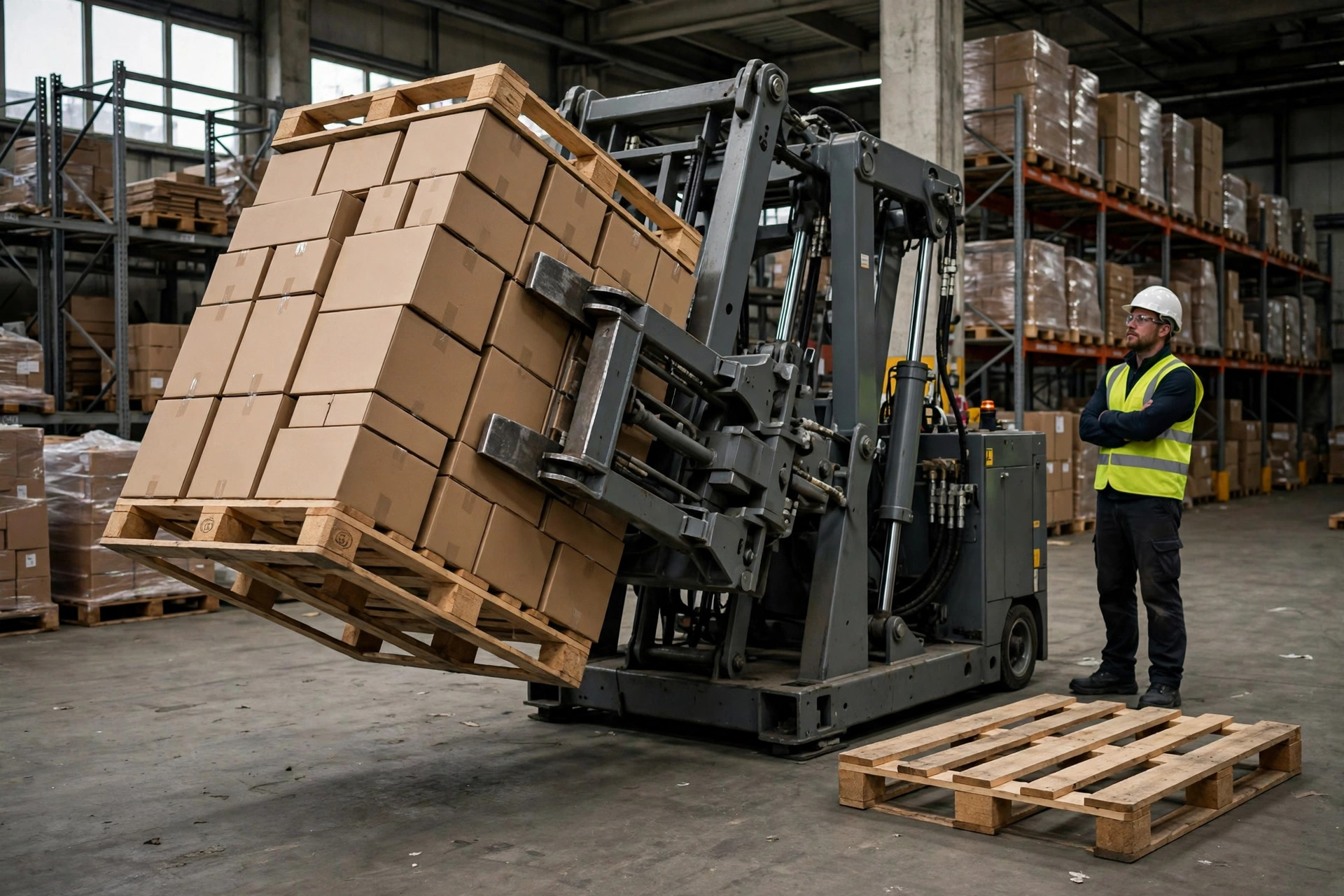
Early 2023, a small-appliance factory in Ningbo shipped a box to the Middle East. One 20-footer, loaded with electric heaters and humidifiers. Heaters are heavy, humidifiers are light — nothing wrong with that in theory. But the loading crew cut corners: the heavy heater cartons went on top, the light humidifiers on the bottom. Classic heavy-over-light. A month later, the doors opened and the bottom two layers of humidifier cartons were crushed flat, plastic housings cracked everywhere.
Damage ran into the tens of thousands. The shipper filed a claim with the forwarder, who answered with one question: you loaded this yourself — got any loading photos? Who decided the loading sequence? No answers. Under ocean shipping terms, when the shipper stuffs the container themselves, cargo damage from bad loading isn't on the carrier. The shipper ate the loss, plus a month of blown delivery time. The boss told me later the half-day of labor they'd "saved" didn't cover a fraction of it.
Here's the point: hand-loading a container isn't muscle work, it's skilled work. "Heavy goes low" sounds like folk wisdom, but every word of it was paid for in damage claims.
Four container-loading tricks from the old hands
Over the years, watching the guys who really know container loading, I've noticed they all do a few things before they lift a single carton — things rookies never think of.
First, "read" the freight before touching it. The old-timer checks three things: dimensions, weight, and crushability. No weight marks? He hefts one and knows roughly. Then he plans the order in his head: heavy, sturdy stuff on the bottom and deep in the box; light, crushable stuff on top and near the doors. Get that sequence wrong and nothing else in the whole container loading job matters. Some factories hand over a loading diagram — paper plans and actual freight never quite match.
Second, stack like a bricklayer, fill every gap. Container walls aren't flat — they're corrugated, so there are always gaps between the freight and the walls, and between cartons. The old hands interlock the layers, offsetting cartons so they bite into each other, and nothing shifts. Gaps get stuffed with bubble wrap, scrap cardboard, dunnage bags. The best guy I ever saw carried a roll of old newspaper and packed it into every nook. His line: "At sea, a fist-sized gap becomes a bowl-sized dent."
Third, lashing — not one strap skipped. This is where rookies get lazy. Cartons stacked neatly without lashing might as well not be loaded. The standard kit: webbing straps in both directions, edge protectors on the corners, cargo nets over anything that could topple. Containers have lashing rings on the walls and top rails. A 40-footer eats dozens of meters of webbing — don't skimp. One good wave and unlashed freight shifts half a meter as a block. When those doors open, it comes pouring out — I've heard of people getting their legs broken that way.
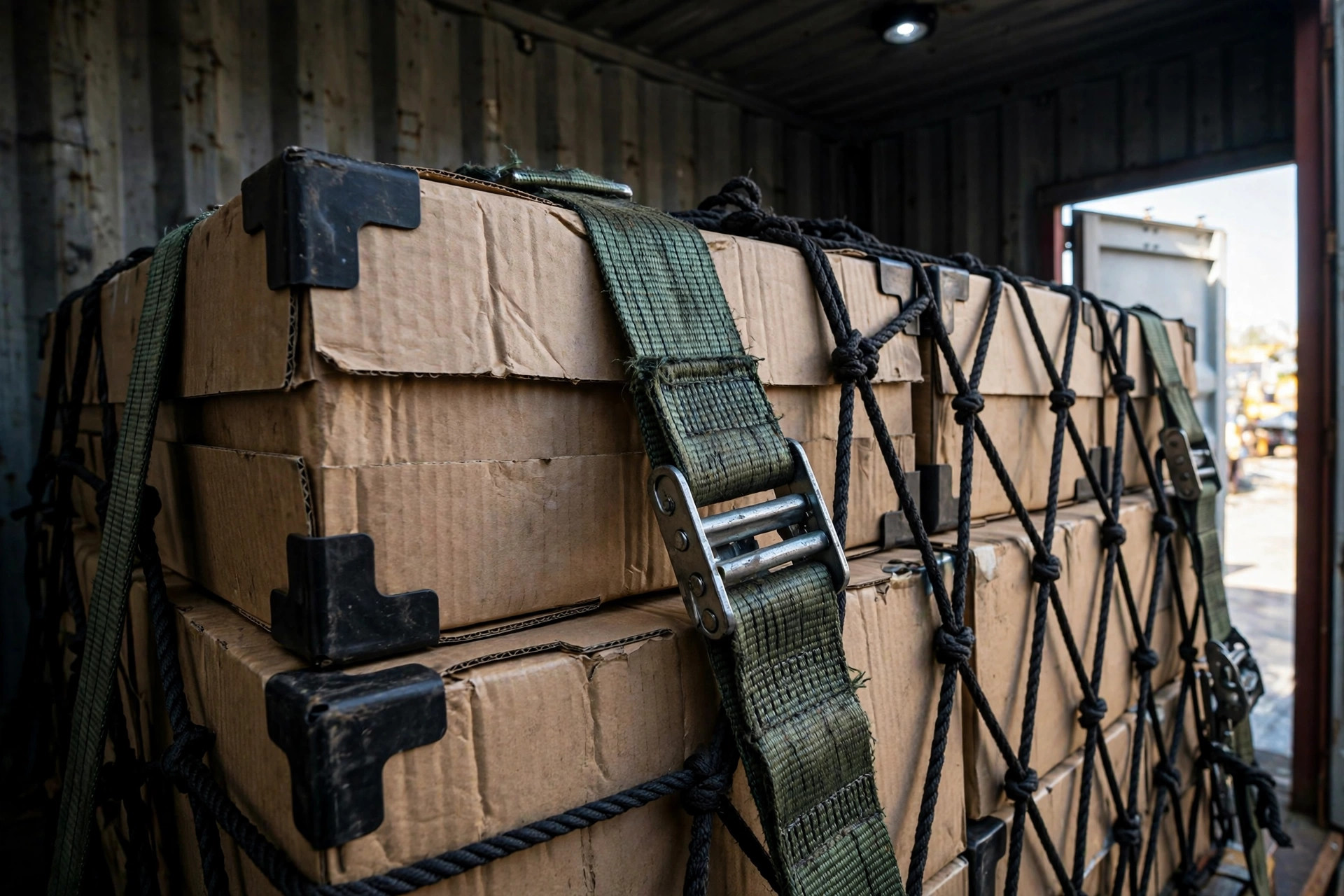
Fourth, the door end gets special treatment. A lot of damage happens right at the doors. The last meter or two is the hardest to secure, and everything leans on the doors when the ship rolls. The old hands either net the whole door-end section or wedge a row of sturdy freight in last, plus one more cross-strap. And the driver's habit that saves bones: listen before opening, open the doors slowly. Freight falling out of a container door can break a leg.
The real cost of bad container loading
I'm no accountant, but this bill I know by heart. Take a 40-footer:
| Cost item | Rough scale | Notes |
|---|---|---|
| Cargo damage | Thousands to tens of thousands | Crushed, damp, shifted and banged — depends on cargo value |
| Rework | Half a day to two days of labor + yard fees | Unload and reload at destination when it arrives crooked |
| Missed sailing | Roll to the next vessel, lose one to two weeks | Peak-season space is tight, rebooking can take longer |
| Claims | Basically zero | You stuffed it yourself — the carrier won't cover bad loading |
| Customer trust | Can't put a number on it | Deliver one box of wrecked goods and the next order never comes |
A good crew costs a few hundred extra. A bad load starts at thousands. Anybody can do that math — yet every year, people cheap out on loading.
The counterintuitive part: the scariest box isn't the half-empty one
Here's what runs against instinct: rookies fear a box that isn't full — empty space feels like waste. Old hands fear a box that looks solid and isn't.
Some boxes look packed wall to wall but are hollow inside — cartons not interlocked, gaps unfilled, straps loose. Those are the most dangerous: whoever opens the doors sees "looks fine" and drops their guard, and the whole lot comes tumbling out. A box with a little breathing room, every strap tensioned, every gap filled — that one crosses two oceans without a scratch. Good container loading isn't about filling space, it's about killing movement.
Then there's the real trade-off: speed versus quality. A fast crew turns three or four boxes a day, but fast gets sloppy. The old-timer takes an extra hour or two, and nothing shifts. When the shipper screams about the sailing, people compromise — "hurry up, we need this vessel." Making the sailing matters, but trading an hour for a whole container's safety isn't worth it. Miss the vessel and you roll to the next — the cost is known. Load it wrong and the cost at the other end is anybody's guess.
One more honest word: automated container-loading machines are getting pushed these days, and they look impressive — but they only handle uniform cartons. Chinese factories ship ten containers in nine different carton sizes; mixed loading is the norm, and no machine handles that. For mixed freight, the old hands' craft isn't getting replaced any time soon — not in the next ten years.
Straight advice for shippers and warehouses
A few practical takeaways from what I've seen at the yards and the docks:
- Measure your freight before loading day. Every carton's dimensions and weight, measured and marked. The loading crew plans the sequence from your numbers — wrong numbers, wasted plan.
- Have the supplies ready. Straps, edge protectors, dunnage bags, stretch film — staged before the crew arrives. Discovering you're out of webbing when they're standing there burns half a day.
- Hire for skill, not just price. Loading crews differ by a few hundred in quotes, and the difference is all craft. Ask one question: "Do you photograph the container loading?" The professional crews all know — photo the whole process, full panorama before the doors close. That's your only evidence if anything goes wrong later.
- Look inside before the doors close. The shipper should be there, or have the warehouse send video. Check three things: heavy stuff on the bottom, straps actually tensioned, door end secured.
- Keep the loading record. Loading photos, packing list, container number, seal number — one folder. If something goes wrong, that's your only voice.
Once that box is at sea, nobody's looking after it. Spend the extra care at loading time, spend ten times less worry at the other end.
There's an old saying: slow work makes fine work. Don't rush the loading, and the ocean crossing takes care of itself.
By Shifu Zhao, Trucking Veteran (15 yrs)