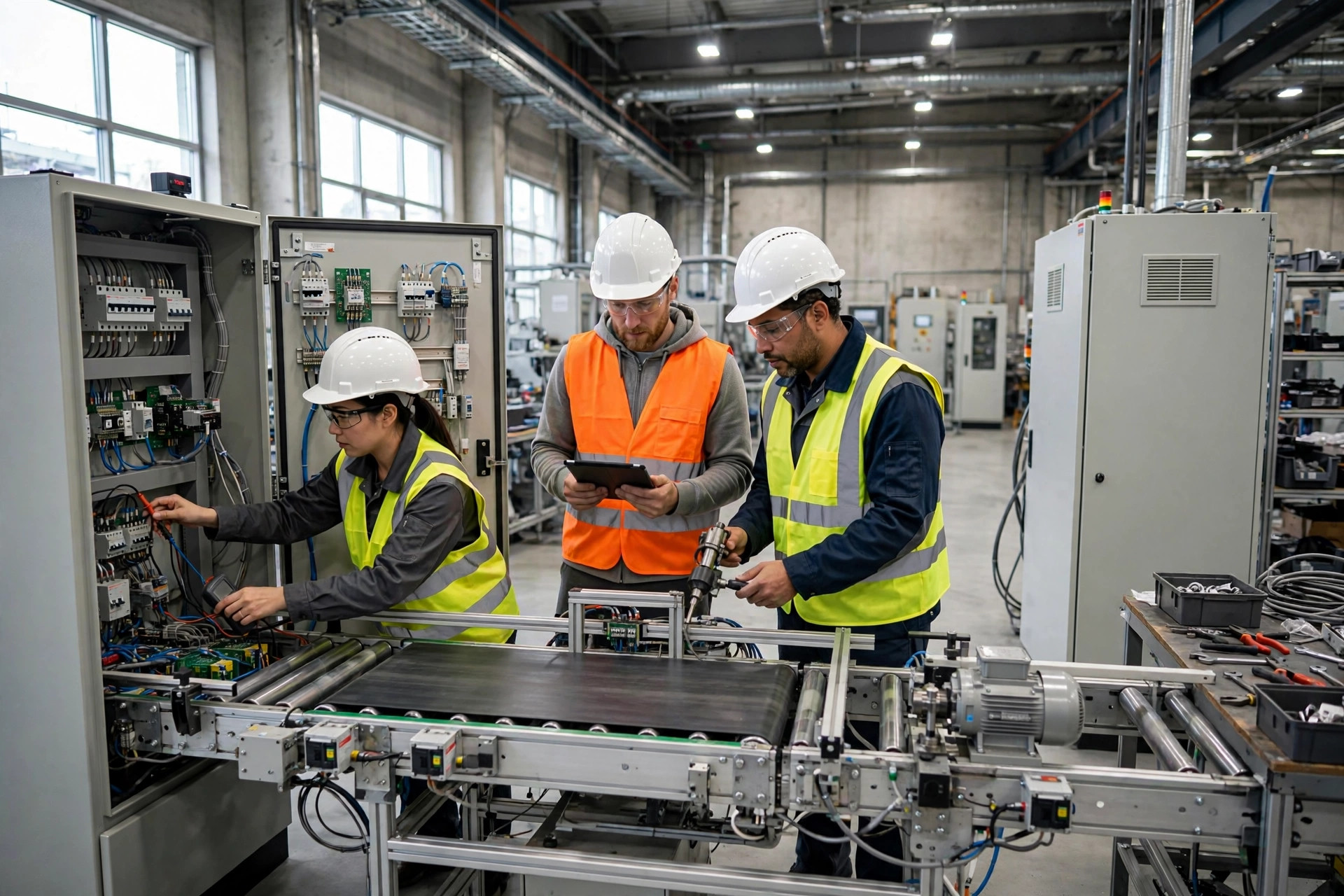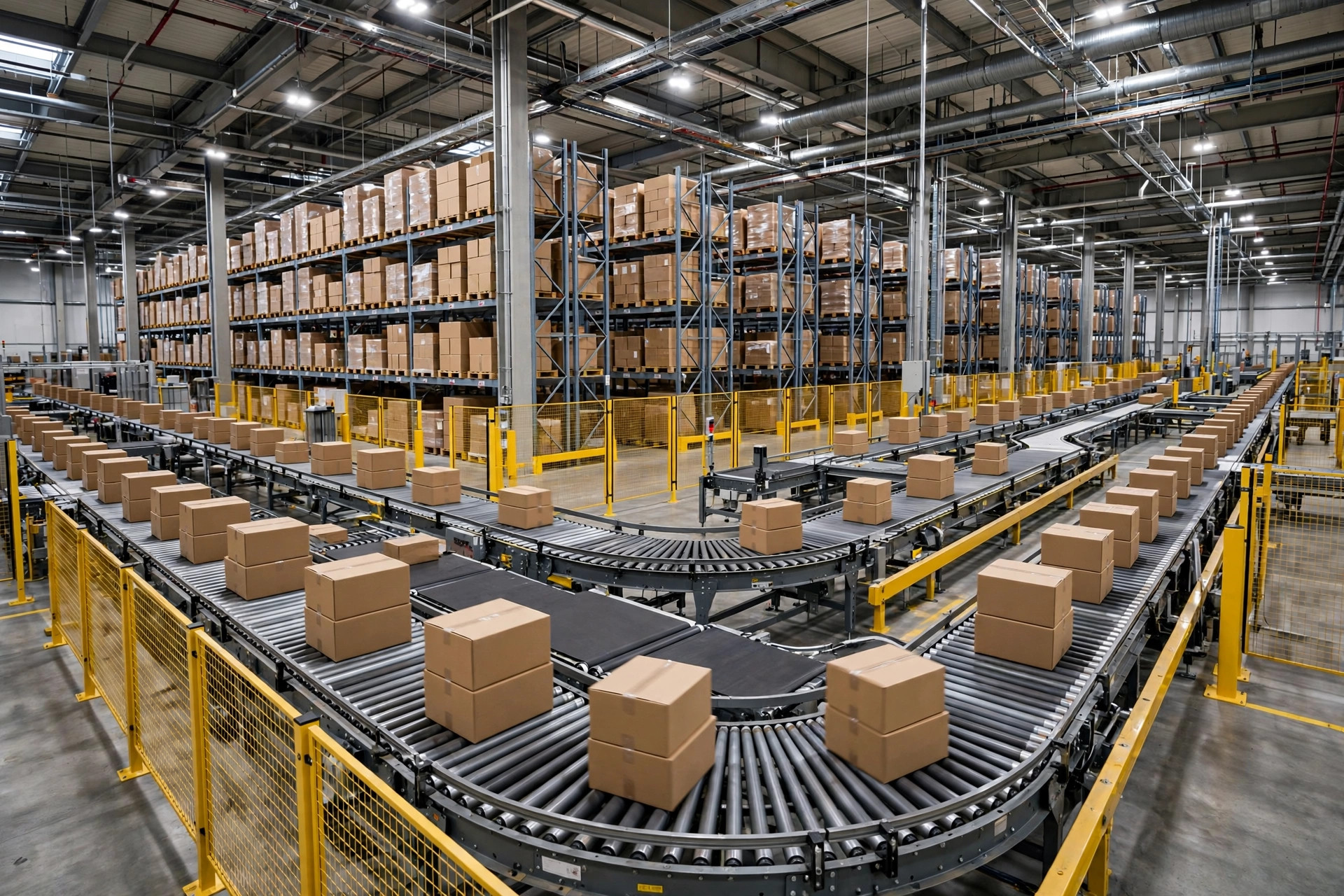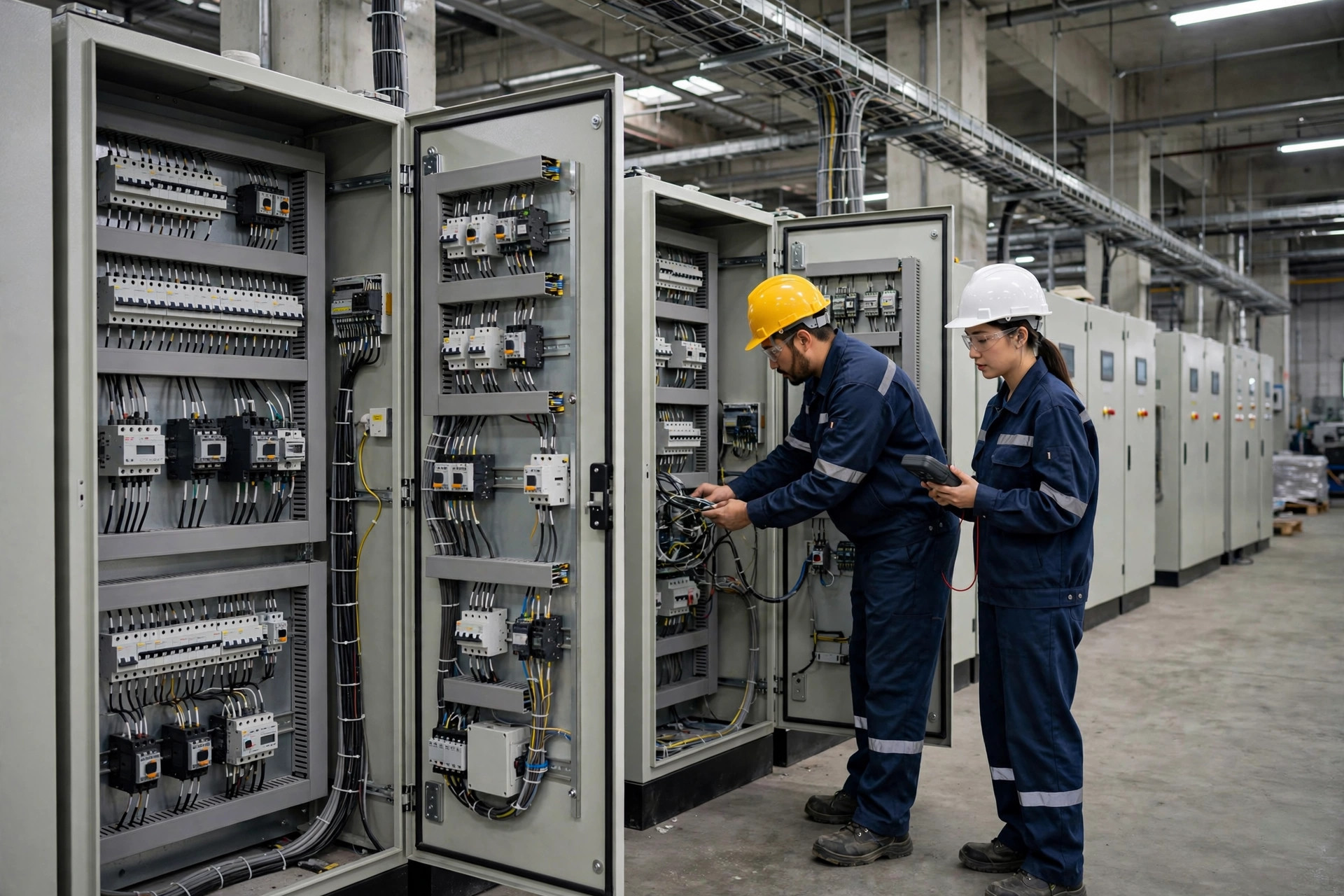
Here's the short answer: budget $15,000–$50,000 and about three months for UL certification, and you probably won't get burned. Quotes under $15,000 almost always leave out the annual factory-inspection fees. Quotes over $50,000 usually mean you filed too many models.
In the fall of 2023, the owner of a conveyor integrator in Shenzhen asked me: "Da Liu, how much does UL certification actually cost? Our first batch of 12 machines is going to Texas." I told him to set aside $40,000 and three months. His face went pale. I said, hold on, hear the breakdown first — you'll feel better about the money, especially compared to having your shipment held at the port while the customer racks up storage charges.
You may have noticed something odd: there is no price list on UL's website. Search "how much does UL certification cost for equipment" and you get a wall of agency ads, with quotes ranging from a few thousand to six figures. That's because UL doesn't publish prices. Manufacturers have to submit a Request for Quote — product models, schematics, critical-component lists — before anyone gives them a number. That information gap is exactly why this article exists.
First, Understand What You're Actually Buying
Think of UL as the American version of a safety driver's license. OSHA requires electrical equipment used in workplaces to be tested by an OSHA-recognized lab — an NRTL, under 29 CFR 1910.7. UL Solutions is one of them. So is Intertek's ETL. Note the word "is" — ETL is not a knockoff.
Both test against the same standards. Industrial control panels go through UL 508A, motors through UL 1004 — the test items are essentially identical no matter whose mark you end up with. It's like getting a driver's license: the DMV and an authorized driving school can both issue it, the license carries the same legal weight, only the tuition and the wait differ.
That analogy matters, because the entire UL-versus-ETL price gap rests on it.
Where the Money Goes: Breaking Down UL Certification Costs
I split the cost into five buckets. Check any agency quote against them and you'll see instantly whether something is hidden.
| Cost bucket | Typical range | What drives it | | Testing (the big one) | $8,000–$25,000 per control panel | Per UL 508A; sample count and number of test items | | First-time certification, total | $15,000–$50,000+ | Application, testing, file setup; more models, more money | | File setup and model extensions | Billed per added model | 12 loose models vs. 4 product families can double the quote | | Retesting after failures | Billed per round | Fail once, fix, resubmit — costs money and weeks | | Annual factory inspections | $3,000–$5,000 per visit, 4 visits a year | This is the Follow-up Service, and it never stops |
See the trap? The testing fee is just the down payment. The real "monthly bill" is four factory inspections a year — $12,000–$20,000 annually, non-negotiable. Plenty of agency quotes list only the first-year certification fee and bury the inspections in the fine print. You find out when the inspector shows up at your door.
One important caveat: every number above is a range, not a point estimate. Product complexity, model count, and whether your critical components already carry certifications all push the quote around inside the range. Anyone who promises "UL certification, $20,000, guaranteed pass" — walk away. UL itself won't quote a fixed number. What makes them think they can?
That Shenzhen conveyor shop consolidated its 12 models into 4 product families before filing. The testing fee dropped from the top of the quoted range to the middle. Model count is the single most expensive variable in UL certification.
How Long It Takes: Where the 6–12 Weeks Go
Multiple industry sources agree on the timeline: typically 6–12 weeks, with some putting it at 8–12 weeks. The time gets stuck in three places.
First, scheduling. Lab test slots have queues, and in busy season just getting a slot is a win — your samples can sit waiting. Second, rework. Every first round of testing fails a few items. Redesign, swap parts, resubmit samples: two or three weeks gone, just like that. This is the least predictable variable in the whole timeline. Third, prep for the initial factory inspection, which requires building a documentation system from scratch. Rush it and you'll collect nonconformances.
After consolidating models, that Shenzhen shop also cut its timeline from 11 weeks to 8. Want to compress the schedule? Don't bother pressuring the lab — kill your own model list and rework rounds first.
The Decision Line: UL or ETL?
This is the most valuable section in the article. Remember the driver's-license analogy: UL and ETL are both OSHA-recognized NRTLs, with equal legal standing and the same test standards. They differ in exactly three ways:
- Price: ETL's first-time certification typically runs 25%–50% cheaper than UL's.
- Lead time: ETL usually takes 3–8 weeks, UL 6–12.
- Brand: the UL mark has stronger name recognition, and some bid documents name it explicitly.
The dividing line is simple: if your customer or the bid documents specifically require the UL mark, do UL and don't try to save a dime — saving it means doing it twice. But if the customer only asks for "NRTL certification" and the local authority having jurisdiction (AHJ) accepts any NRTL, ETL is the better move — a quarter to half cheaper, and a month faster.
In early 2024, a mobile-robot maker in Foshan had its first 20 units headed to a 3PL warehouse in California, racing the peak season. The customer, an integrator, only required an NRTL mark — no brand specified. They went with ETL, got certified in 6 weeks, and made the sailing. Had they insisted on UL, a 10–12 week timeline would have blown the season entirely. The lost revenue would have dwarfed the certification savings.
Here's the counterintuitive take: the idea that "UL is the real deal and ETL is the cheap knockoff" is pure brand-marketing success. On OSHA's NRTL list, the two sit side by side. The premium you pay for the UL mark buys your customer's familiarity, not higher safety. Whether that familiarity is worth the money depends entirely on who your customer is.
The Maintenance Trap: Getting Certified Is When the Spending Starts
A lot of people treat certification as a one-time purchase — certificate in hand, done. Let me be blunt: that mindset won't survive a year under the UL system.
The Follow-up Service means quarterly factory inspections, four a year, $3,000–$5,000 each. What does the inspector check? Whether your mass-produced units match the tested samples, whether you've quietly switched critical-component suppliers, whether the production line actually follows the documented procedures. One major nonconformance means corrective action plus a follow-up visit — billed separately.
Design changes are the deeper trap. New model? Changed breaker supplier? You're supposed to report it to the certification body, and serious changes trigger retesting. I know a shop that swapped in a contactor 20% cheaper without reporting it. The quarterly inspection caught it, the whole product family lost its listing, and every unit already in North America got stuck. The procurement savings didn't cover a fraction of the inspection bill.
So "certify once, good forever" is a flat-out myth. UL certification is more like owning a car: the purchase is one payment, and the annual maintenance, insurance, and inspections are another — and the second one is mandatory.
Three Ways Chinese Exporters Can Cut the Bill
First, pre-test before the formal submission. Run your product through a qualified domestic lab to find the obvious failures and fix them in-house. A higher first-pass rate on the formal test saves both retest fees and weeks of calendar time. Rework rounds are the most unpredictable cost in the process — kill them and you kill the overruns.
Second, consolidate models and file by product family. Certification is billed per model and family — 12 loose models versus 4 families can double the quote. For your first export batch, file fewer SKUs. Don't throw the entire catalog at the lab at once.
Third, use already-certified critical components. Breakers, contactors, power supplies — pick versions that already carry the UL mark and whole test items drop off the list, taking testing fees and rework risk down with them. Don't save a few dollars on a critical component; the certification process will collect ten times that from you.
Back to the opening question: is the money worth it? Look at this one number — first-time certification plus three years of factory inspections, divided by your expected three-year North America revenue. Under 5%, do it without thinking. Over 15%, go fix your business model first; certification isn't your biggest problem.
By Da Liu, Automation Engineer