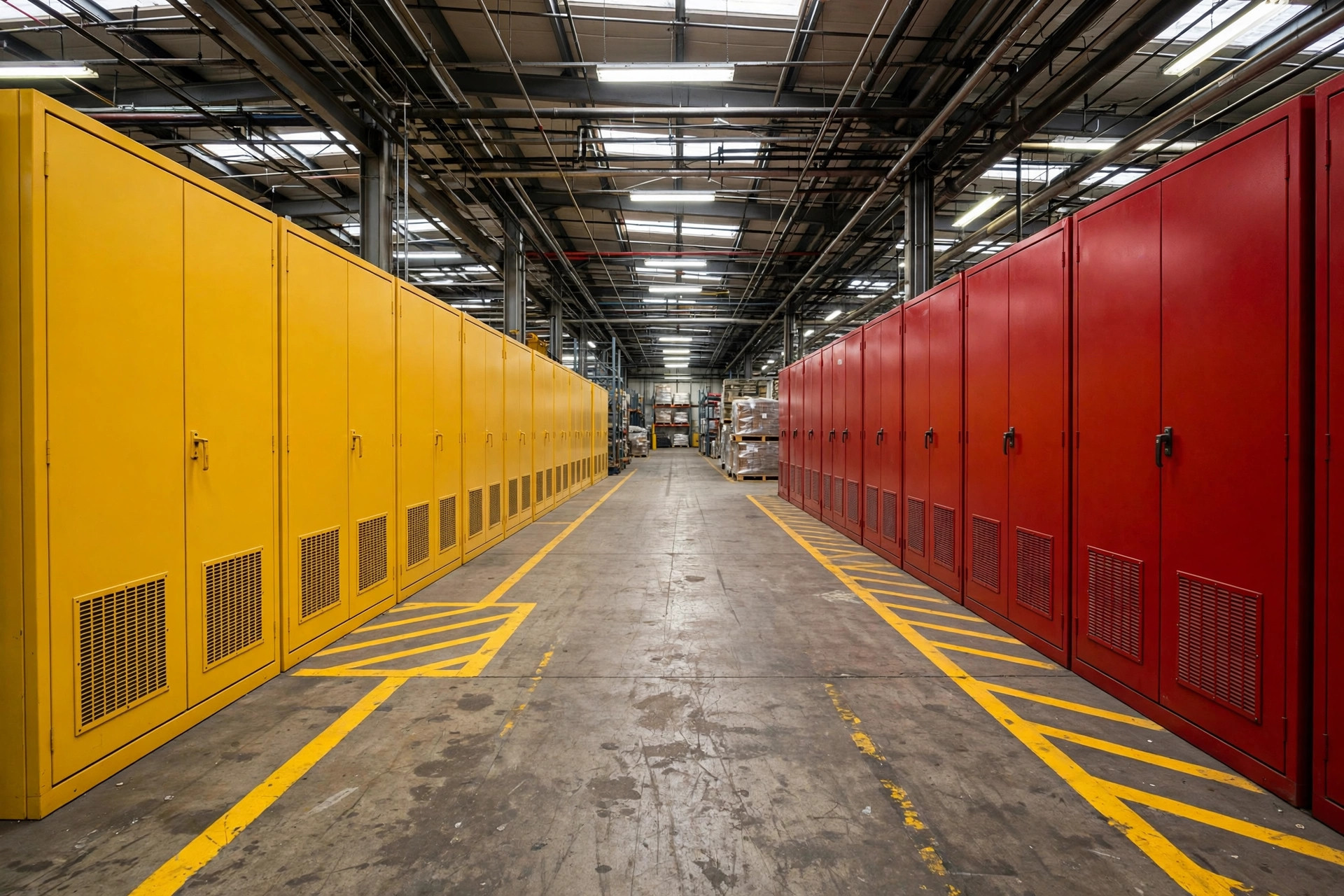
Here's my verdict up front: how much hazmat your warehouse can legally hold is not decided by your square footage. It's decided by the maximum allowable quantity — MAQ — of each control area in your building. When the fire marshal walks in for inspection, they're holding IFC Table 5003.1.1, not your lease agreement. One material class, one use type, one control area, one hard number. Exceed it, and you fail.
Back in the fall of 2021, a 3PL owner in California's Inland Empire called me about a big new contract: storing a batch of industrial cleaning solvent, Class IB flammable liquid. His warehouse was 50,000 square feet, mostly empty, and he figured "plenty of room, no problem." I told him to slow down. For Class IB/IC flammable liquids in the storage tier, the limit is 120 gallons per control area. His building was one big open bay — no fire walls, which meant the entire warehouse counted as a single control area. So: a 50,000-square-foot warehouse with a legal limit of 120 gallons. He needed more than twice that.
MAQ Is Calculated Per Control Area, Not Per Square Foot
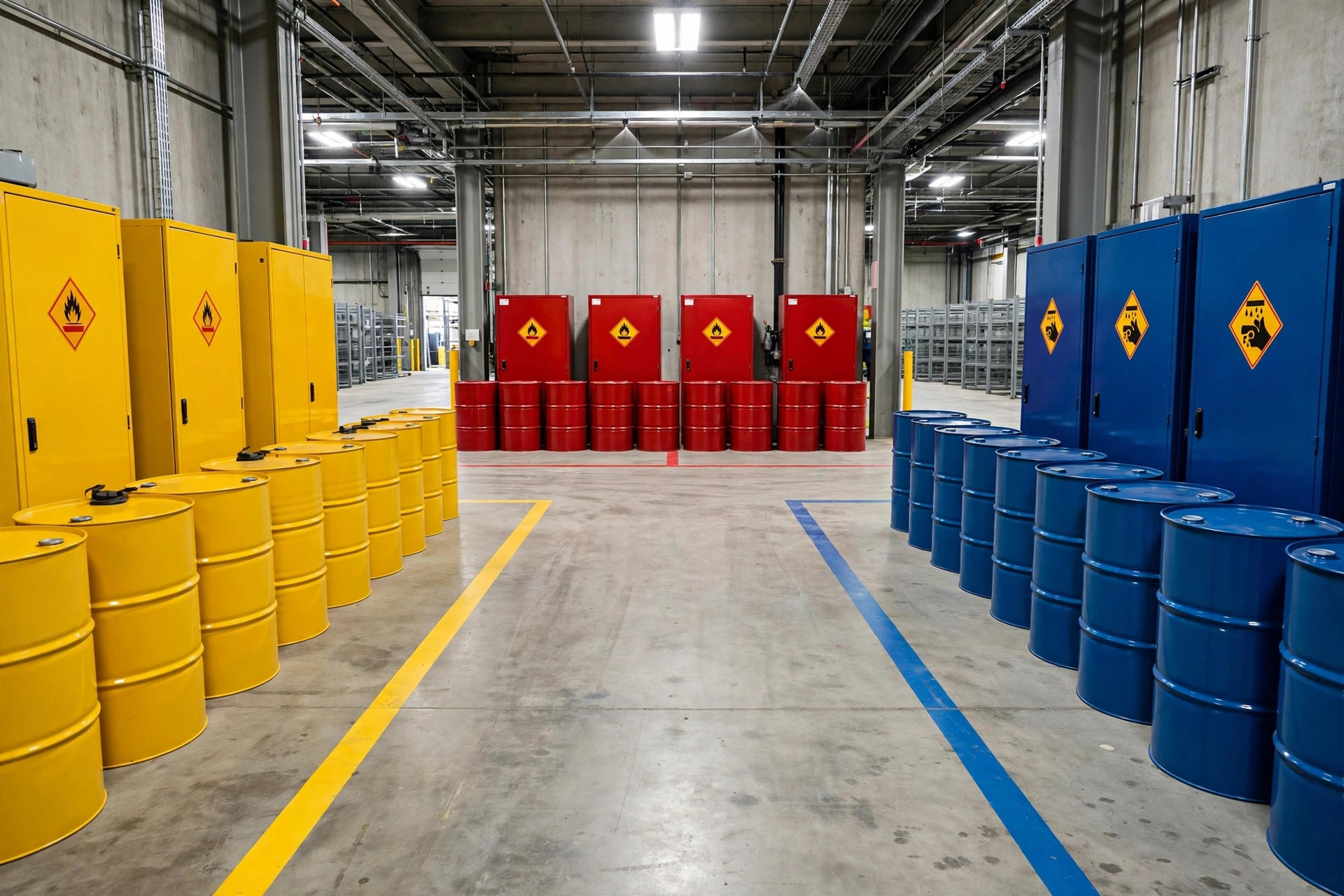
Here's the thing most people get backwards: it doesn't matter how big your warehouse is. It matters how many control areas you've carved out of it. A 100,000-square-foot open bay counts as one control area. Cut it into four fire-separated control areas and your legal storage capacity quadruples. That's why the fire department studies your control-area drawings, not your floor plan's square footage.
And plenty of people trip on step zero: they never properly classified what they're storing. The right move is to start with the hazard classification on the SDS, then find your row in IFC Table 5003.1.1. Get the classification wrong and everything downstream is wrong — Class IB and Class II flammable liquids don't share the same number.
The table splits everything into three use tiers, because how you handle the material changes the risk:
| Use tier | What it means | Limit |
|---|---|---|
| Storage | Stored, not touched | Highest — 120 gal/control area for Class IB/IC flammables |
| Use-closed | Handled inside closed piping or equipment | Lower than storage; check the table |
| Use-open | Repacking, open pouring | Lowest; check the table |
And there's one iron rule people always forget: within a single control area, storage plus use combined cannot exceed the storage-tier number. You can't do "120 in storage and 120 in use" and call it 240. That's over.
Where the Three Tiers Bite: A Story From Texas
I've seen too many operators fall into the second trap. In 2023, a Texas importer of electroplating chemicals had it all figured out: corrosive liquids, 500 gallons per control area in the storage tier, and his inventory fit comfortably. Then the business grew and he added a repack line inside the warehouse — which changed the use from storage to use-open. Add the repack volume to the stored volume and he blew straight past the combined cap. The fire re-inspection failed on the first visit, and the correction notice landed on his desk. The fix: move the repack operation into its own separately cut control area.
The part worth thinking about: nothing about the product changed. Nothing about the volume changed. Only the use changed — and the maximum allowable quantity changed with it. That's how most warehouses go over the limit. Not by sneaking in extra drums, but by letting the business evolve while the compliance paperwork stood still.
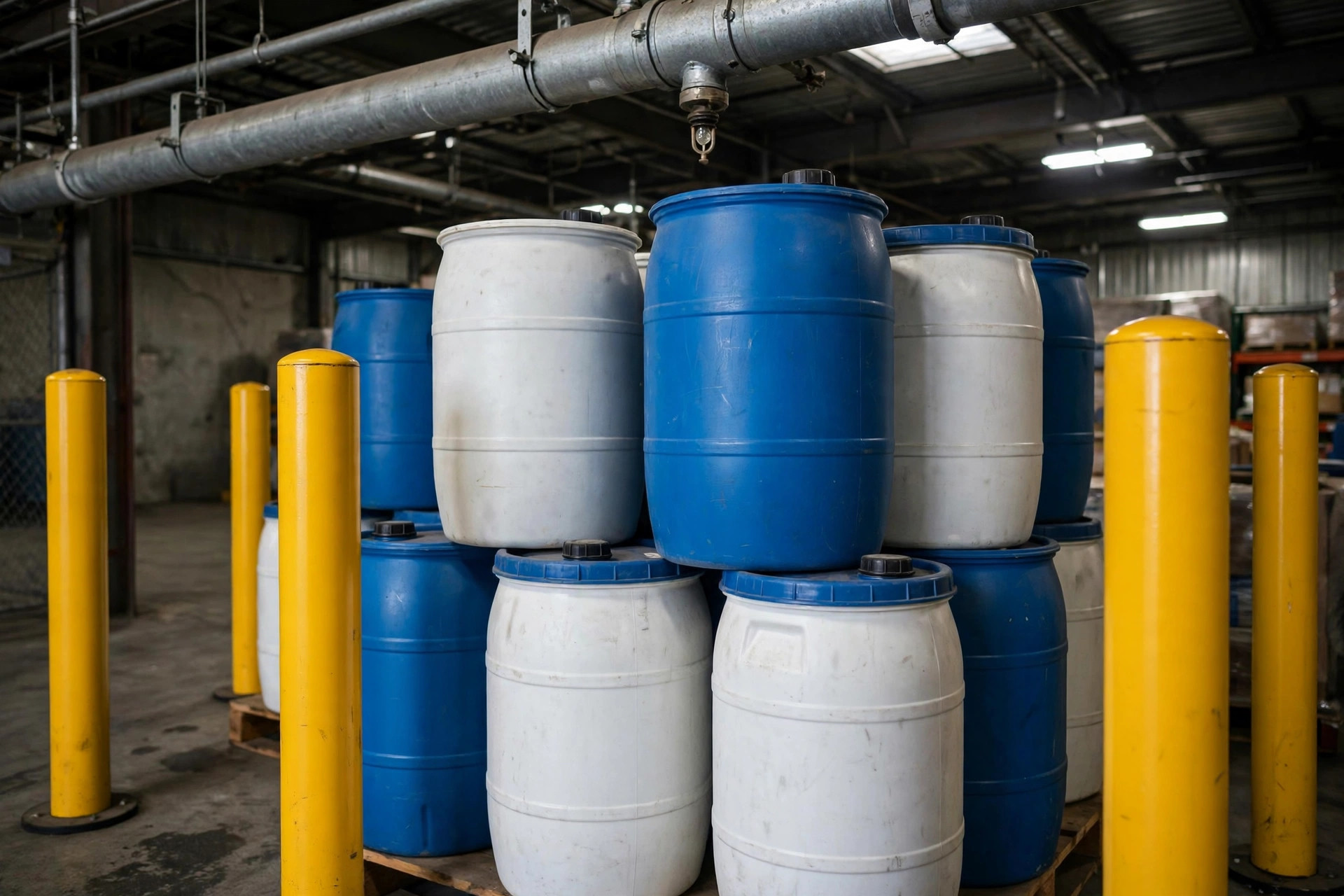
Three Ways to Raise Your Maximum Allowable Quantity — Each One Costs Money
Option one: add control areas. Every new fire wall buys you another control area, and each control area carries its own MAQ. The price is construction — a one-time capital hit — plus passing the fire re-inspection every year after. Get a fire protection engineer to draw the control-area plan and file it through plan check; that process takes time, so don't start when the freight is already at your door.
Option two: upgrade sprinklers. The IFC table allows a higher maximum allowable quantity for control areas with automatic sprinkler protection and similar safeguards. How much higher depends on which edition of the IFC your local fire department has adopted — don't guess. The side benefit: your property insurance rate usually drops a bit, which softens the blow.
Option three: accept less inventory and replenish more often. Zero construction cost, but inbound and outbound frequency goes up, and freight and labor costs follow. This fits when the business is still unproven — a bet that you'll deal with scale later.
There's a fourth option most people overlook: if hazmat is your core business, lease an H-occupancy building. The whole structure is designed for high-hazard use, and the MAQ ceiling is in a different league. So is the rent. That's the trade-off — the money for storing more always gets paid, just under a different line item.
One detail most people miss: many city fire departments regulate hazmat storage before you ever move a drum in. During plan check they review your control-area drawings and your quantity calculations — how many control areas, how much of each material class, all in black and white before operations start. Don't think you can stock up first and sort out the paperwork later. Getting caught means a correction order and moving freight back out the door, which costs far more than the construction would have.
So here's the math, laid bare: want to store more, pay for compliance. Don't want to pay, accept smaller inventory and more trips. There's no having it both ways. My advice to clients runs in reverse — figure out how many years this business line will run first. Winding down in a year or two? Take option three. In it for the long haul? The sprinklers and the fire walls are coming sooner or later; better to do it once and do it right.
One last thing: the next time someone asks "how much hazmat can your warehouse hold," don't quote square footage. Ask them back — how many control areas do you have? If they can't answer that, they're not passing the fire inspection.
By Lao Mi, Supply Chain Veteran (20 yrs)