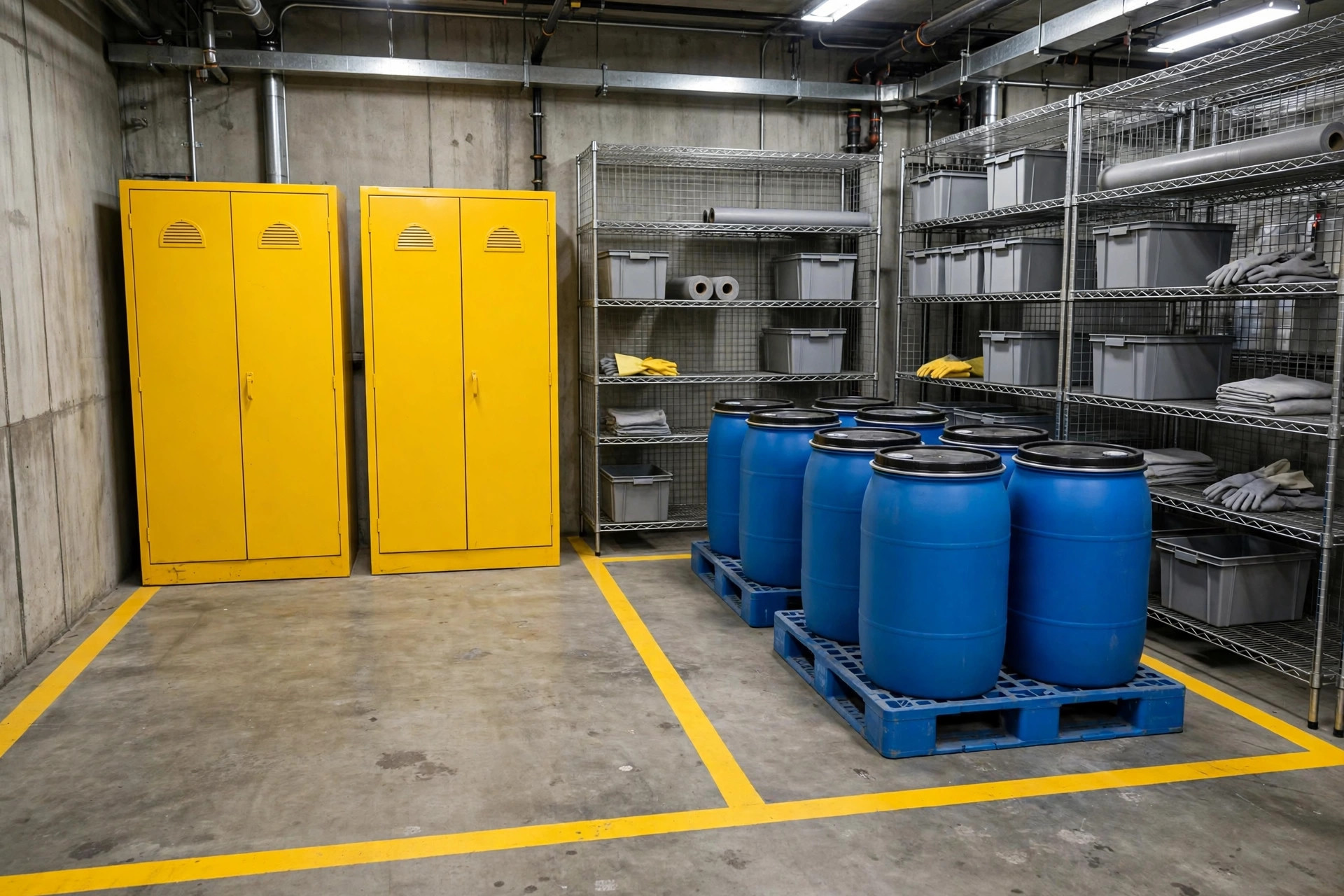
Tuesday, 6:50 a.m. Still dark outside. I walked into receiving and heard our veteran forklift driver, Mike, going at it with a new temp, Josh. Josh had taken a shortcut and dropped a fresh pallet of chemicals right into the hazmat zone, next to the oxidizer row. Mike went pale. "Do you know what's on that pallet? Acid. Acid next to oxidizers — you trying to get us all killed?" Here's the honest truth, folks: hazmat chemical compatibility incidents never happen because somebody wanted to cause trouble. They happen because somebody wanted to save five minutes.
How the Problem Starts: Peak Season Loosens Every Rule
Every peak season, same story at our warehouse. We're short-handed, temps cycle through in waves. The veterans tell the new guys "this can't go next to that," then get pulled away by the rush — and the new guy stacks it wrong.
The closest call we ever had was two autumns ago. A shipment of hydrochloric acid arrived, and two drums had loose caps — you could smell it. The day before, somebody had "temporarily" parked a few drums of bleach (sodium hypochlorite) in the next row. Hydrochloric acid plus bleach releases chlorine gas. I only fully understood that after reading the SDS later. That morning, Mike's nose caught it, we moved the whole row in a hurry, and got lucky. That day I learned: relying on memory and good intentions is a plan for a future incident.
Our first fix was embarrassingly naive: we printed the compatibility chart poster-size and stuck it on the hazmat zone wall. Know what happened? Forklift drivers stare at location numbers, not walls. Then we laminated wallet cards and hung them on every forklift key ring. Even worse — turn the key and the card flips to the back.
Why Chemical Segregation in the Warehouse Is a People Problem
Our EHS consultant, Dave, finally said the thing that changed everything: "That chart is written for auditors. You need something written for forklift drivers."
So here's what we actually do now. We call it the three-wall system.
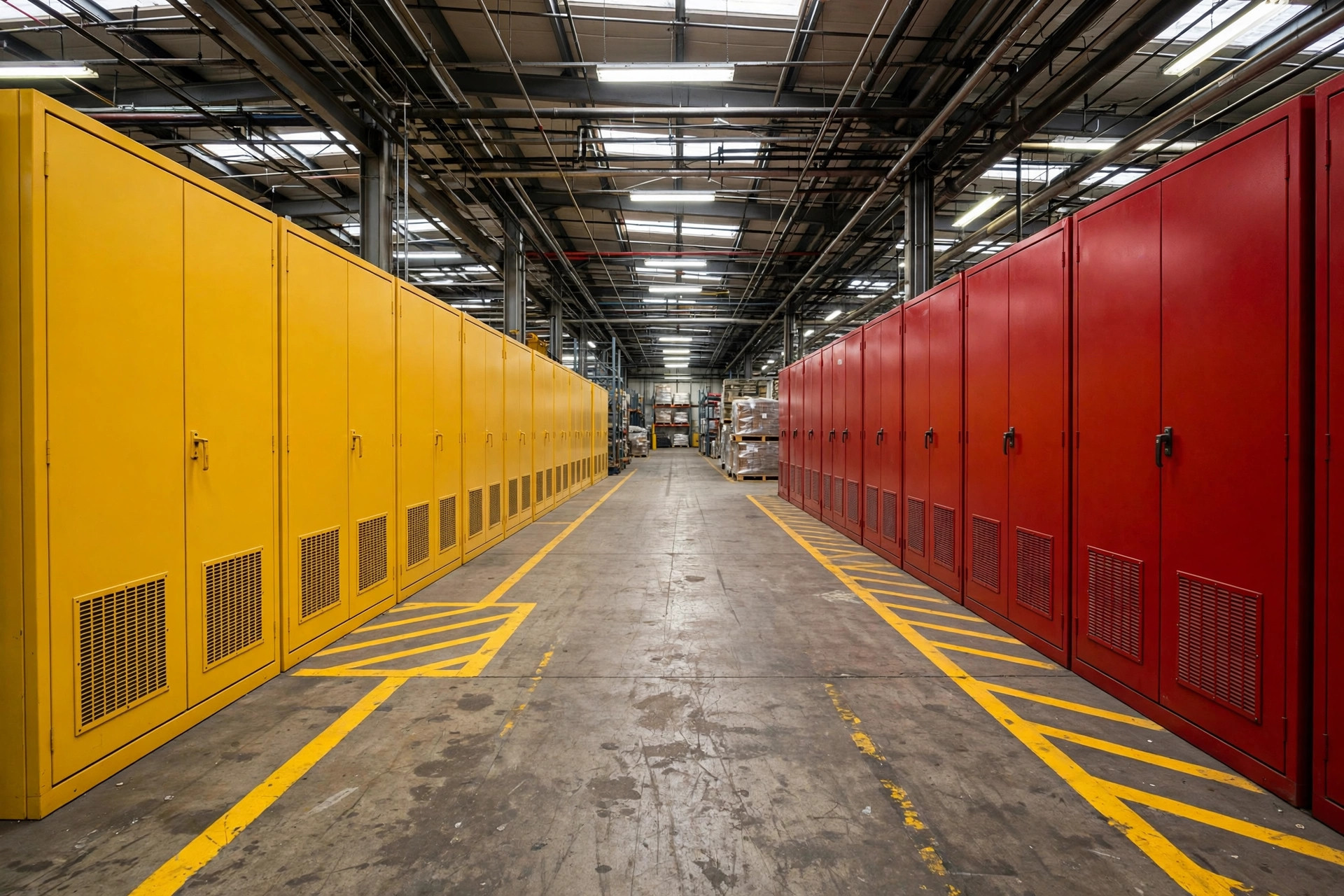
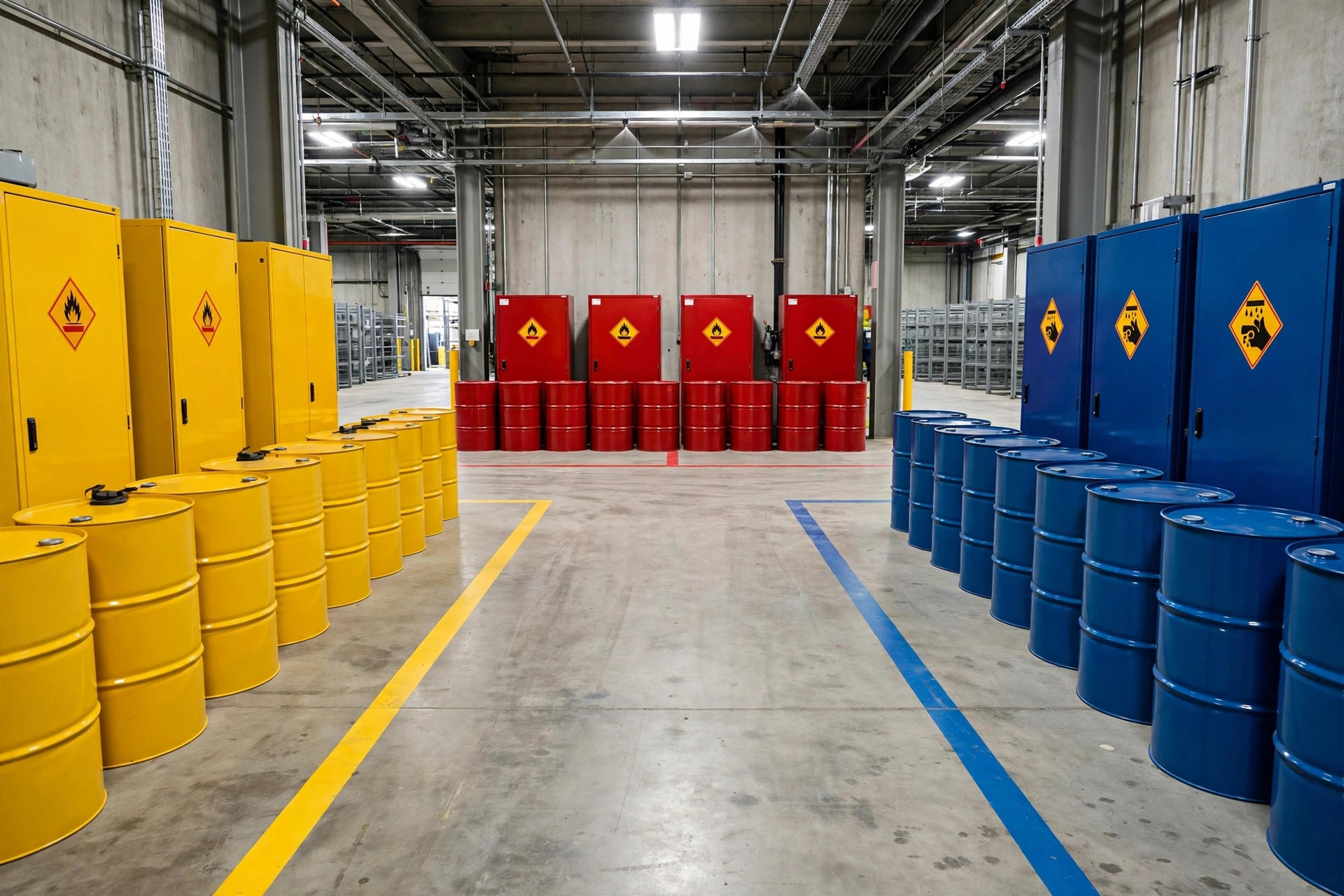
Wall one: color zones painted on the floor. Our hazmat area is split into five color zones now — acids in the white zone, bases in green, oxidizers in yellow, reducers in blue, flammables in red. Floor stripes in matching colors, safety cabinets bought in matching colors. Drivers don't need to read anything. They see the color, they know where the pallet goes.
Wall two: check the SDS at receiving, not your gut. OSHA's HazCom standard (29 CFR 1910.1200) requires every chemical's SDS to be readily accessible and every exposed employee to be trained. Our rule: for any new product, receiving pulls up SDS Sections 7 (handling and storage) and 10 (stability and reactivity), and posts the incompatibility lines to the team chat. Five minutes. Saves you from the big one.
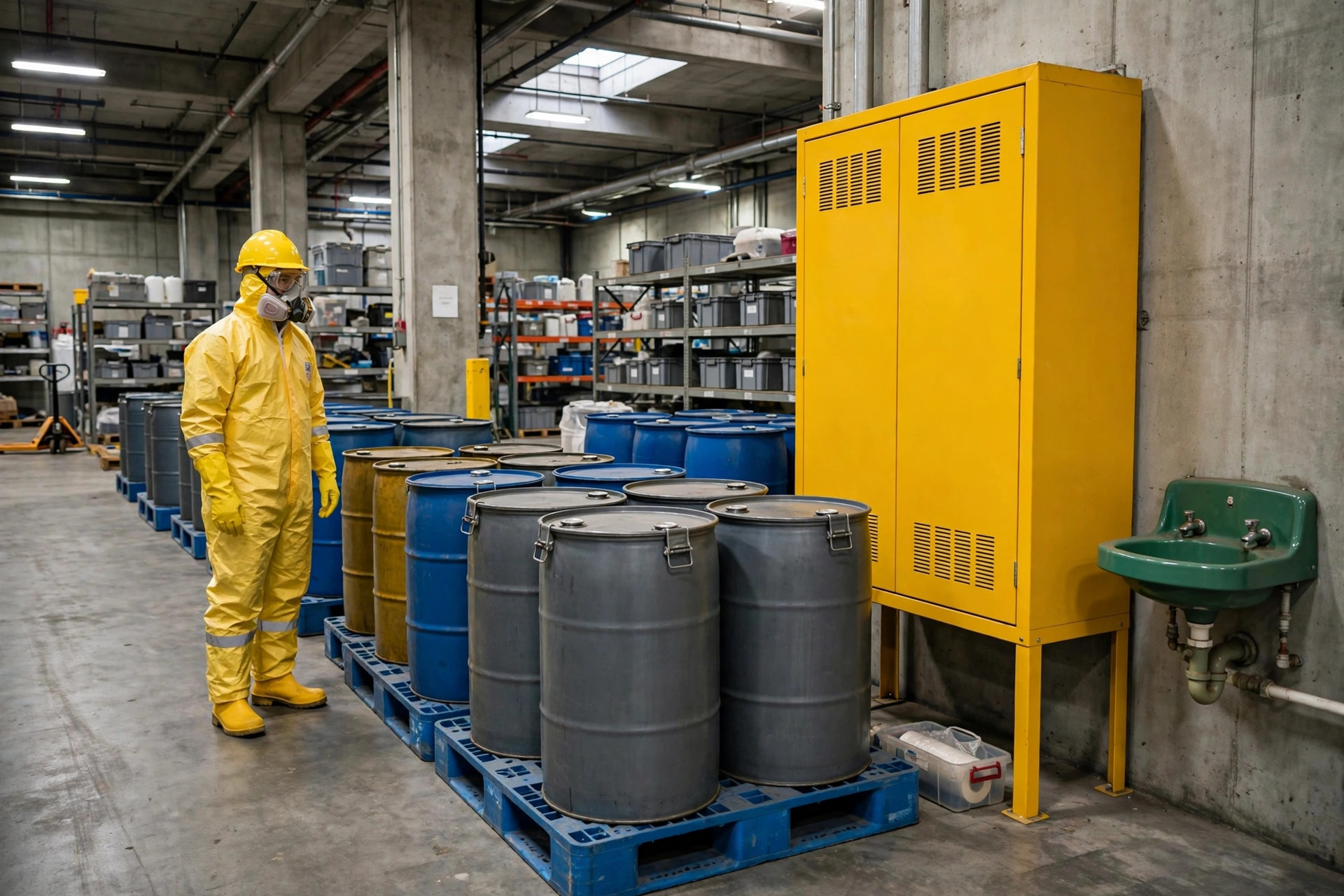
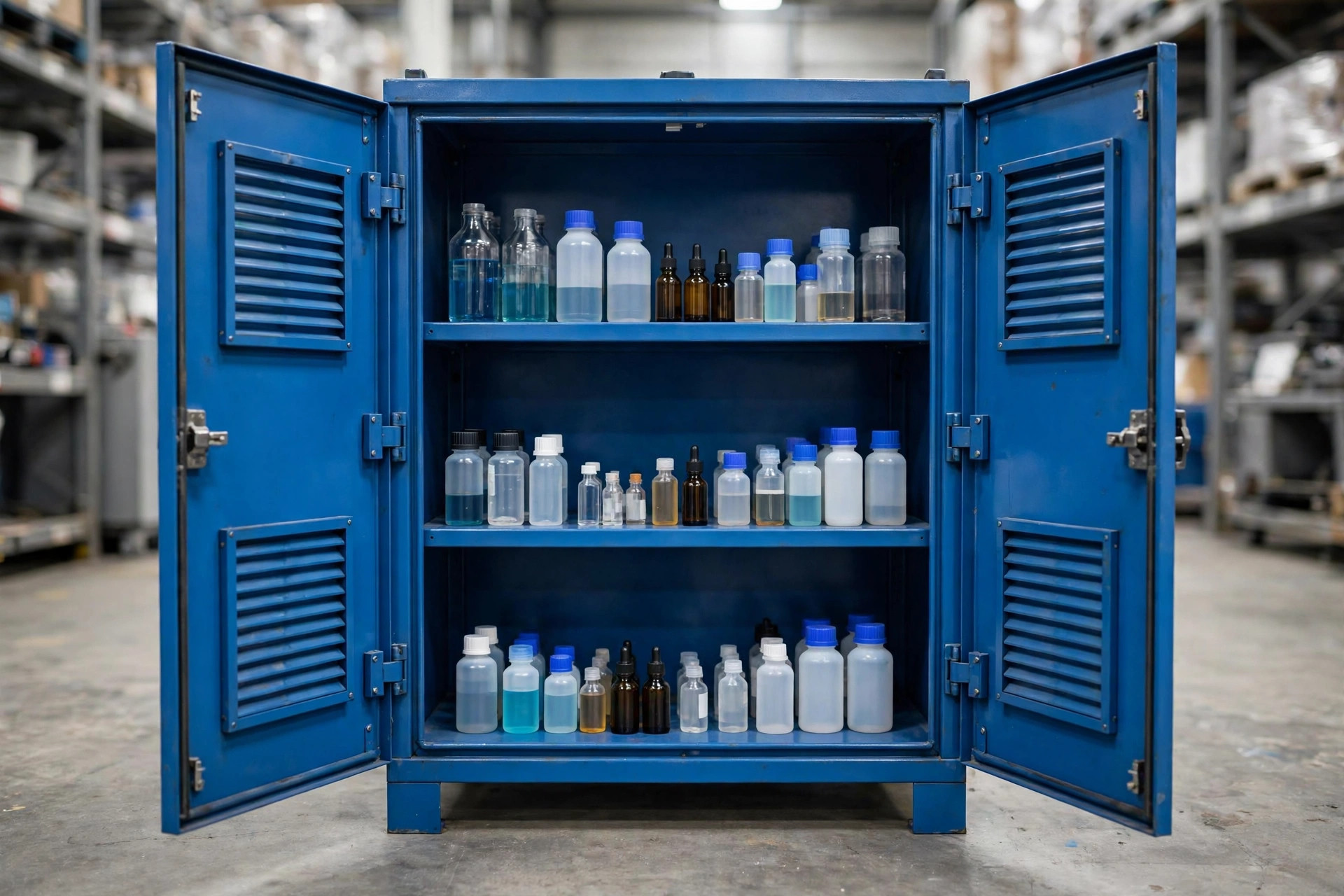
Wall three: big labels on cabinet doors, readable from the forklift seat. Every safety cabinet gets a full-page label: what's inside, what must never go next to it, who to call on a spill. Big type. Few words.
The Hazmat Chemical Compatibility Table We Actually Use
This is the cheat sheet taped inside every cabinet door in our warehouse. Acids, bases, oxidizers, reducers, flammables, water-reactives — can they sit together or not, at a glance.
| Acids | Bases | Oxidizers | Reducers | Flammables | Water-reactives | |
|---|---|---|---|---|---|---|
| Acids | — | ⚠ Separate | ⚠ Separate | ⚠ Separate | ⚠ Separate | ✗ Never |
| Bases | ⚠ | — | ⚠ Separate | ✓ OK | ⚠ Separate | ⚠ Separate |
| Oxidizers | ⚠ | ⚠ | — | ✗ Never | ✗ Never | ⚠ Separate |
| Reducers | ⚠ | ✓ | ✗ | — | ⚠ Separate | ✗ Never |
| Flammables | ⚠ | ⚠ | ✗ | ⚠ | — | ⚠ Separate |
| Water-reactives | ✗ | ⚠ | ⚠ | ✗ | ⚠ | — |
A few combinations to burn into memory:
- Hydrochloric acid + bleach (sodium hypochlorite) → chlorine gas. Never in the same zone. This is the exact hole we nearly fell into.
- Bleach + ammonia-based cleaners → chloramine gases. Same story, different poison.
- Oxidizers + flammables or organics is the classic fire combination. Always apart.
- Concentrated nitric acid is both a strong acid and a strong oxidizer. Store it alone, not lumped in with "the acids."
- Alkali metals like sodium and potassium react violently with water — keep them away from water sources, and don't park them directly under a sprinkler head.
And the honest caveat: this table is a field cheat sheet. It does not replace the SDS. For every specific chemical, the SDS Sections 7 and 10 plus OSHA and EPA published guidance are the final word. When in doubt, isolate first and ask questions later — never stack first.
The Money Math: Prevention Is Always the Cheaper Line Item
Let me run the numbers for you. Our three-wall system cost three things: floor striping and signage paint, a few hundred dollars; two extra color-coded safety cabinets, a few thousand dollars; a half-day training each quarter, which costs us labor hours.
Now, what does one mixing incident cost? Shutdown and cleanup, a licensed hazmat disposal contractor, and an OSHA visit with citations — a single serious citation would cover replacing every safety cabinet in our hazmat zone (check OSHA's website for current penalty amounts; they adjust for inflation). And that's before anyone gets hurt.
You don't need a spreadsheet for this one. Prevention money is always cheaper than incident money.
The Counterintuitive Part: More Zones Isn't Safer
Most people assume finer segregation equals safer storage. We tried it — nine zones at one point. Drivers hated hunting for the right zone, and during peak they'd just go "close enough" and drop pallets wherever. The finer the zones, the worse the compliance.
Five zones is the sweet spot we landed on: fine enough to separate the genuinely dangerous pairs, coarse enough that a driver never has to think. Anything finer gets handled by the SDS and the cabinet-door labels, not by floor zones.
And the big one: a compatibility chart on the wall is useless. It belongs in front of the forklift driver's eyes. Real hazmat chemical compatibility isn't a document, it's a habit built one receiving check at a time. Safety works when it lives close to the work and dies the closer it gets to the office.
What We Do Now, Every Day
New product receiving gets the "three checks": check SDS Sections 7 and 10, check that the GHS pictograms match the color zone, check the compatibility cheat sheet for conflicts. Photo it, post it to the team chat, done — there's a record.
Once a month, a 15-minute walkthrough: I take the shift crew through the hazmat zone, checking colors, labels, and anything "temporarily" misplaced. When we find something, we fix it on the spot — no write-ups, no yelling. Yell at people and next time they'll hide it.
New hires ride along with a veteran for a week. The guys Mike trained can now tell the acid zone from the base zone by smell. Sounds crude. That's how the floor actually teaches.
One last thing for my fellow warehouse folks: every mixing hole gets dug by somebody "saving five minutes." The five minutes you save today can turn into five months of trouble. Don't print the compatibility chart for the wall — print it, laminate it, and hang it where the forklift driver can actually see it. That's where it belongs.
By Chen Feng, Warehouse Operations Manager