Let me tell you something. Fifteen years behind the wheel, and I've backed my truck into more hazmat warehouses than I can count — a hundred, easy. The scariest thing I've seen in those buildings was never the cargo itself. It was cargo stacked with no breathing room at all: pallets shoved flat against walls, goods piled under light fixtures, drums hugging the columns. In China, fire inspectors have a name for the five gaps that are supposed to prevent exactly that — the "five clearances": stack-to-stack, stack-to-wall, stack-to-column, stack-to-ceiling, and stack-to-light. Here's how a truck driver learned to read them.
That Time in Taizhou, When You Couldn't Squeeze Between the Pallets and the Wall
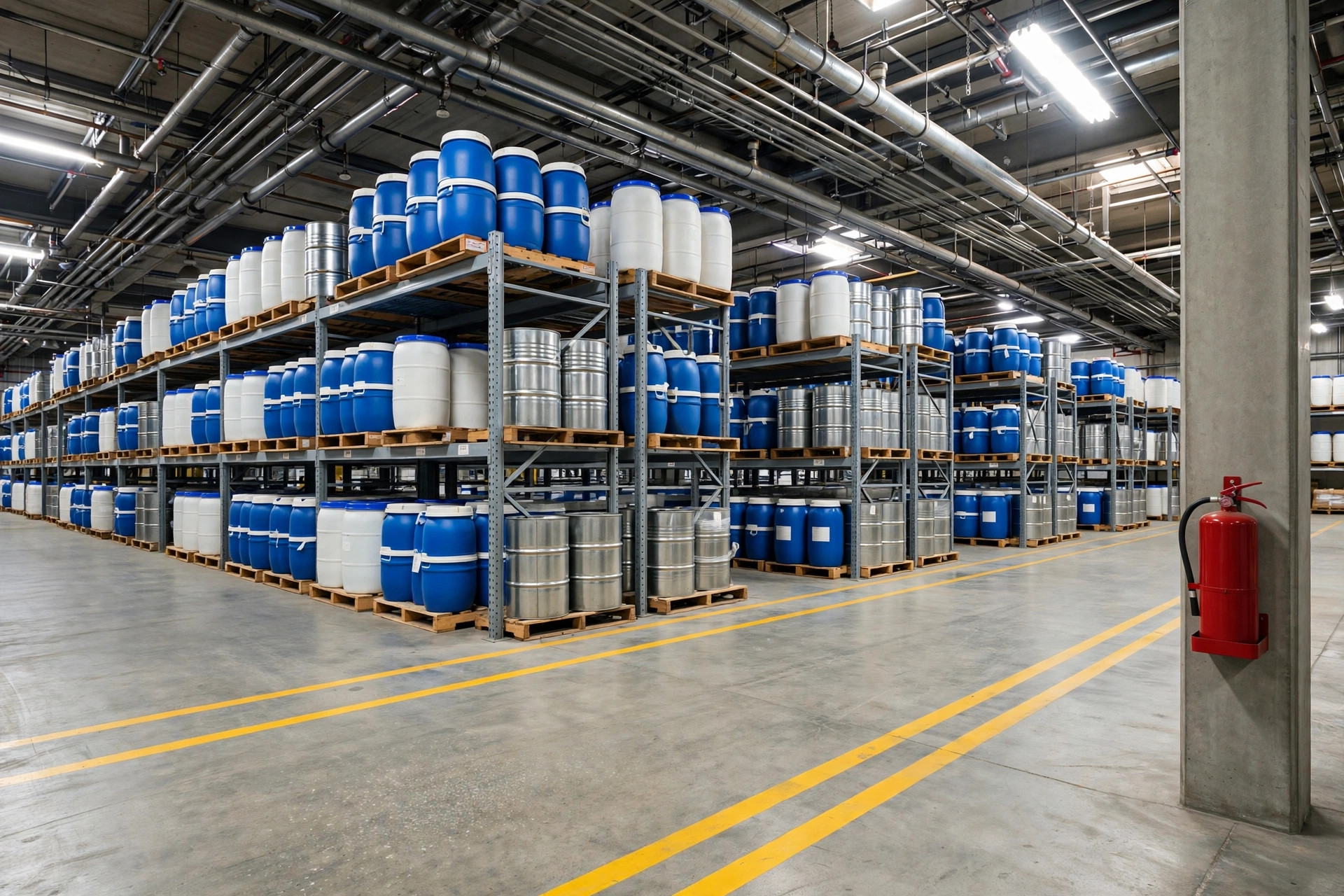
September 2024. I hauled a load of paint thinner down to a chemical park warehouse in Taizhou, Jiangsu. Rolled in at 6 a.m.; the guard told me the dock didn't open until eight. So I sat by the gate smoking and looking inside — and what I saw made me put the cigarette out. Blue plastic drums stacked pallet-against-pallet, the outermost row pressed flat against the wall, the aisle so narrow the forklift needed three-point turns to get through.
At two that afternoon, the safety inspectors showed up unannounced. Tape measures out, measuring every gap. Not enough stack clearance, no wall clearance at all. The fine: 30,000 yuan on the spot, three days to fix everything, no inbound allowed until they passed re-inspection. The warehouse manager's face went white. "We're out of space, driver," he told me. "If I don't stack against the wall, where does it go?"
That night the whole warehouse worked overtime, moving 200-plus drums one by one. The forklift driver was still at it at 2 a.m. When I rolled out the next morning, the manager told me through dark circles under his eyes: "That one night of moving wiped out half a month's margin."
What does that tell you? The five clearances look like wasted floor space on a normal day. On inspection day, they're money.
What It Really Means: The Five Clearances Were Paid for in Hard Lessons
Later I asked a friend in fire protection about it. He told me none of these five gaps were dreamed up in an office — every one of them exists because something burned:
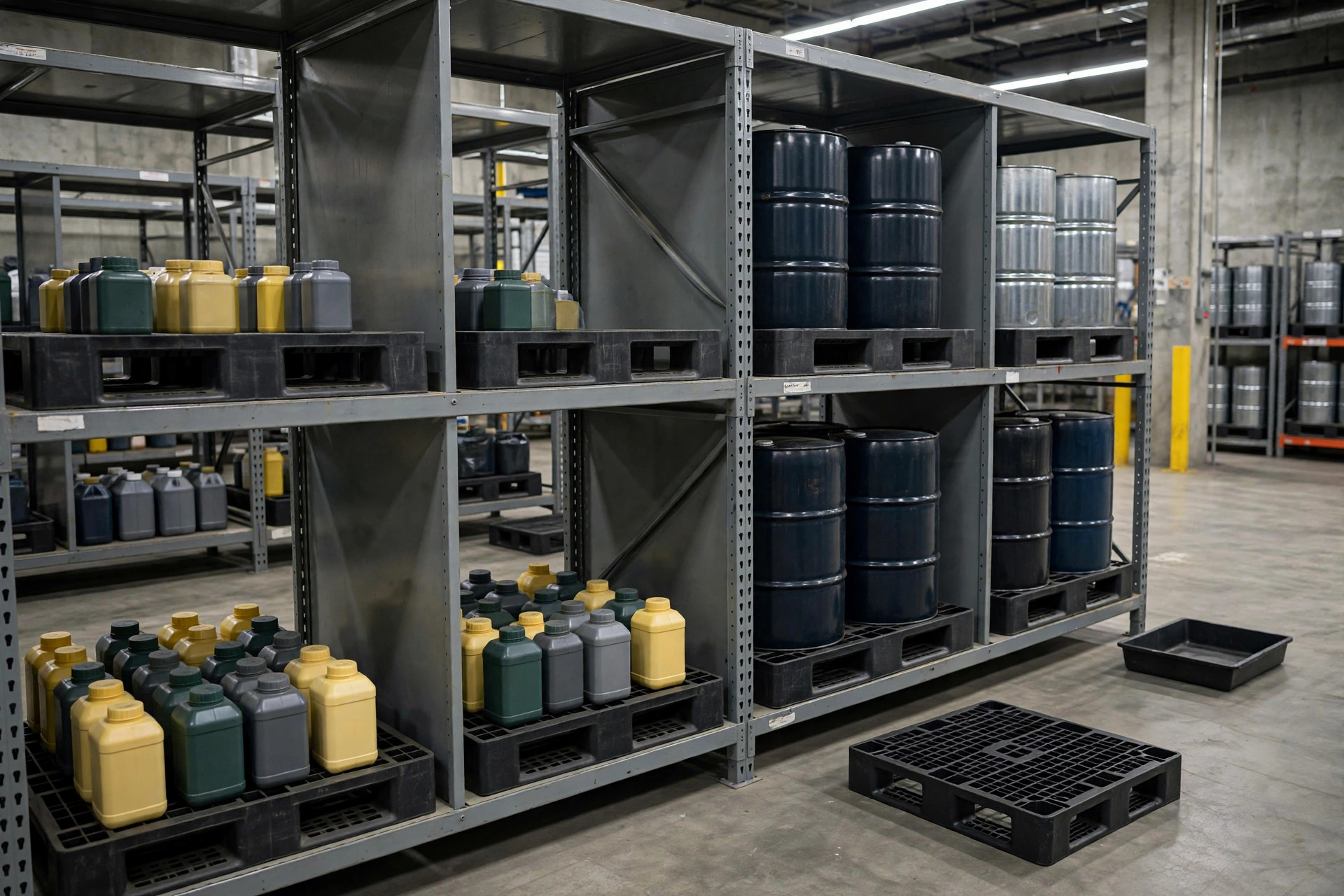
No gap between stacks, and when one pallet catches fire, the hoses can't get in — one burning stack takes three more with it. Goods pressed against the wall turn the base of the wall into a chimney that carries flames upward. Drums piled around a column mean the steel softens in a fire and the roof comes down. Goods stacked to the ceiling block the sprinklers — water lands on top of the pile while everything underneath keeps burning. And goods under light fixtures are the scariest of all: an old incandescent bulb runs hot enough to cook, baking cartons and plastic drums hour after hour like a slow timer.
So the five clearances aren't suggestions. They're rules bought with real losses. These days, when I back into a warehouse, the first thing I look at isn't how much cargo there is — it's whether those five gaps are there. A warehouse that keeps its clearances is a warehouse I'll unload in without worrying.
The Five-Clearance Checklist: One Tape Measure Is All You Need
Enough talk. Here's the practical part — print this table, stick it on the wall, and check against it with a tape measure. The distances below are the benchmarks commonly used in fire inspections; local fire and safety authorities may set different requirements, so always go by the latest local rules.
| Clearance | Common inspection benchmark | How to measure | Most common violation | What the fix costs |
|---|---|---|---|---|
| Stack-to-stack | At least 1 m between stacks | Tape between the two nearest points of adjacent stacks | Peak season: stacks merged, only a crack between them | Move stacks — two people, half a day |
| Stack-to-wall | At least 0.5 m from the wall | From stack edge to wall base, tape along the floor | Stacking flat against the wall "to save space" | Clear a lane along the wall, half a day |
| Stack-to-column | At least 0.3 m from columns | From stack edge to column surface | Using columns as "backrests," goods ringed around them | Free up the column perimeter, about 2 hours |
| Stack-to-ceiling | At least 0.5 m below roof and sprinkler heads | Tape or laser measure from goods top to sprinkler head | Stacking high until goods nearly touch the sprinklers | Lower the stacks — re-stacking, the most labor-intensive |
| Stack-to-light | At least 0.5 m below light fixtures | Look up, then tape from goods top to the fixture | Goods piled under lights — the most common, nobody looks up | Move goods from under lights; better yet, switch to cool-running fixtures |
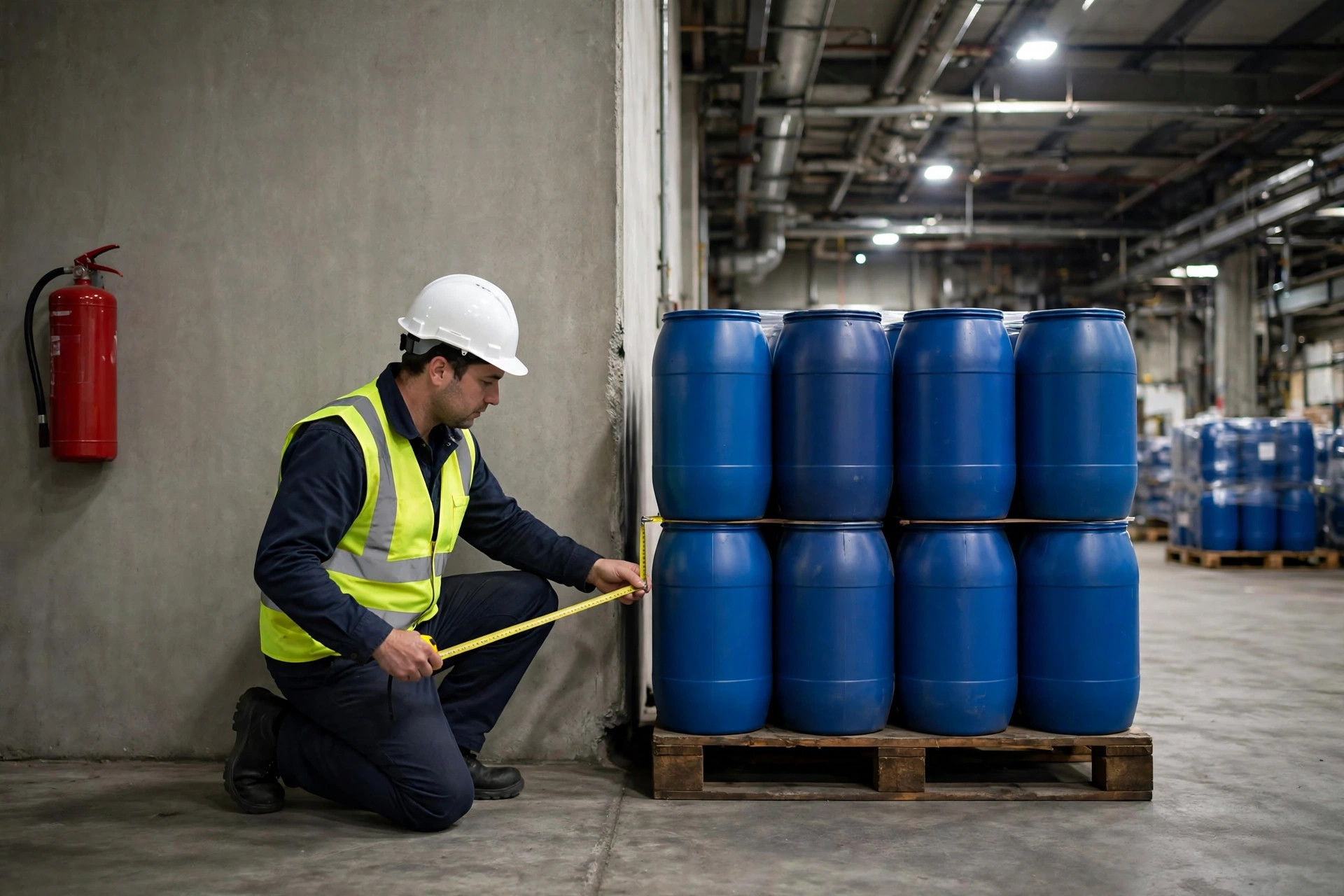
The Most Neglected of the Five Clearances Is the One Over Your Head
Here's something counterintuitive: of the five gaps, everyone watches wall clearance and stack clearance, because that's what inspectors measure most. The one nobody checks is the light clearance — because nobody looks up.
Winter 2023, a night delivery to a warehouse in Zibo, Shandong. Under the dock lights sat cartons of thinner, stacked to within a hand's width of the fixtures — old incandescent bulbs, still. I reached up; the bulb burned my fingers. The warehouse guy shrugged: "Always stored it like this. Never had a problem." I told him: "Brother, no fire so far isn't the same as safe. That's just luck."
A fixture burns ten-plus hours a day, baking everything below it. Cartons, plastic drums, woven bags — they all get brittle faster under heat. Do the math: what does one cool-running fixture cost? One fire costs the whole warehouse plus the fine — enough to buy ten thousand fixtures.
So my advice: when you check the five clearances, look up first. A warehouse that bothers to look up usually keeps the other four in shape too — sloppy management never starts with the ceiling.
Clearance Is Cash: Walk the Floor With a Tape Measure, Starting Tomorrow
One last practical thing — how to actually make this stick. Every hazmat warehouse should do a "tape-measure walk":
Every Monday morning before work starts, the warehouse lead grabs a 5-meter tape and walks the floor clockwise from the dock. Along the walls first — is there a foot of space between every stack and the wall? Between stacks — can a person walk through? Around each column — anything leaning on it? Then look up — anything stacked high under the lights or sprinklers?
Fix what you find the same day; never let it sit overnight. Snap three photos with your phone and keep them on file: before, after, and one wide shot. When the inspectors walk in, those photos buy you goodwill before they even unroll the tape.
And here's the math. A 5,000-square-meter hazmat warehouse gives up roughly 5–8% of its storage positions to stay clearance-compliant. Hurts to look at. But the fines I've seen start at 30,000 yuan as a matter of course and go well past 100,000 for serious cases — plus shutdown days for rectification, plus missed peak-season shipments and penalty clauses. The floor space you squeezed out? One fine wipes it out, and then some.
One word for cargo owners too: when you pick a hazmat warehouse, don't just chase the cheapest quote. Bring your own tape measure and walk it. A warehouse that fails the five clearances isn't worth it at any price — when something goes wrong, the cargo owner doesn't walk away clean either. What you save on rent won't cover a fraction of one fine.
Fifteen years on the road taught me one old saying: slow and steady keeps you alive. A truck that arrives safe beats a truck that arrives fast — and a warehouse that sleeps compliant beats a warehouse stuffed to the rafters.
By Shifu Zhao, Trucking Veteran (15 yrs)