Last month a customer asked me: "Xiao Ma, can your warehouse store a batch of aerosols? Small volume, long-term deal."
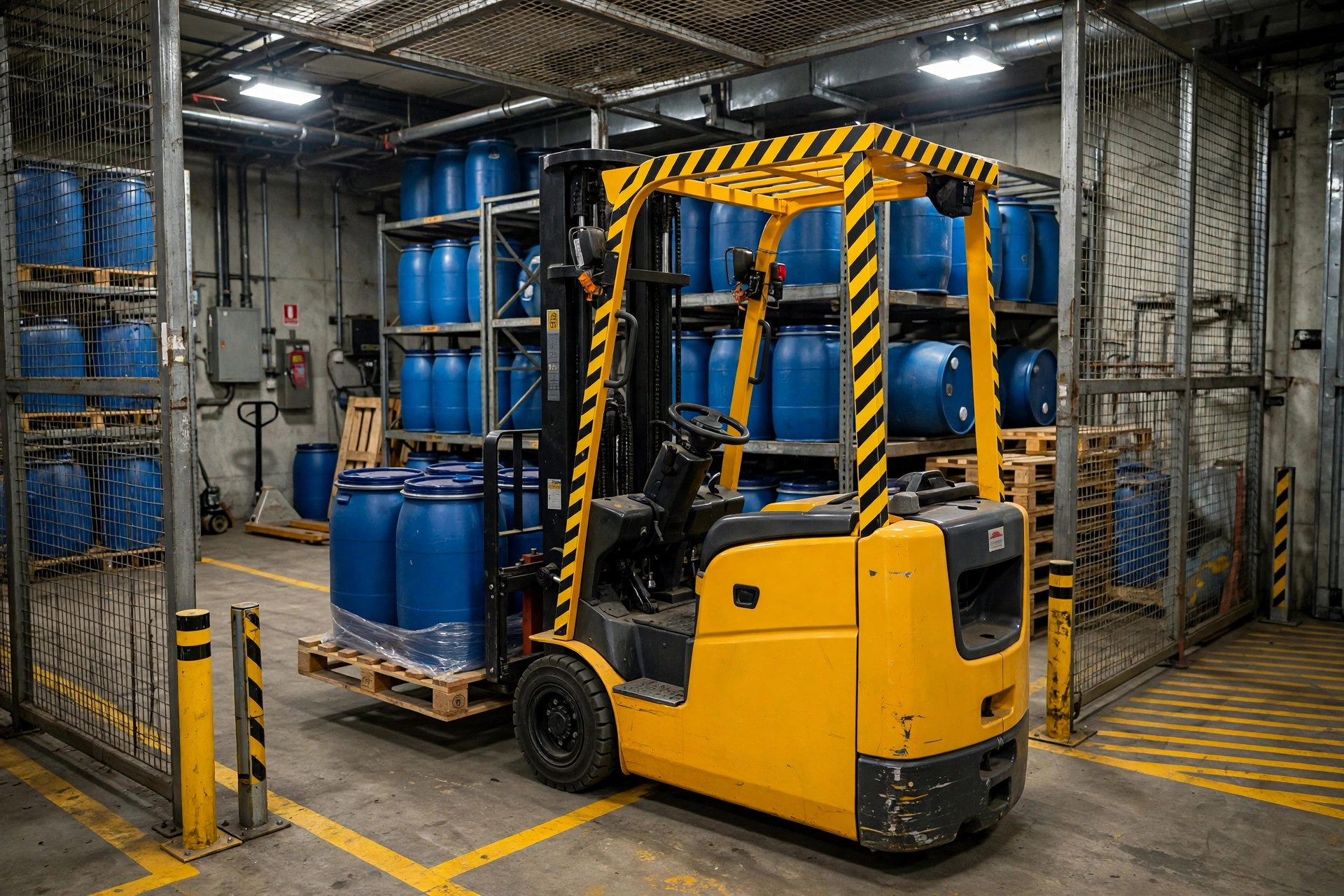
I said "let me check," while my heart was already bleeding. Aerosols mean flammable, flammable means a hazmat zone, and a hazmat zone means an explosion-proof forklift. My little warehouse cannot afford that kind of money — a new explosion-proof truck costs about two to three times what a standard electric forklift does. That's not buying equipment, that's adopting a very expensive pet.
But the margin on that deal looked genuinely sweet. Turn it down and you leave money on the table; take it and mess up compliance, and one OSHA citation could wipe out a small operation like mine. I spent a whole night running the numbers. Here is the ledger, opened up for fellow small-warehouse owners.
Do You Even Need an Explosion-Proof Forklift? Start There
Most people hear "hazmat" and their brain auto-completes "must buy explosion-proof forklift," followed by instant wallet pain. The regulation is actually more reasonable than that — it all comes down to how your hazmat area is classified.
OSHA 29 CFR 1910.178(c) spells it out: only in Class I, Division 1, Group D locations — places where flammable vapors exist under normal operating conditions — are you required to use trucks designated EX. What is EX? Under NFPA 505, the fire-safety standard for powered industrial trucks, EX is the top tier: every electrical fitting sealed up so not a single spark can escape.
Here is the part that matters: if your hazmat goods normally sit quietly inside sealed containers and would only leak in an accidental rupture, that is a Division 2 location. And in Division 2 areas, trucks designated DY, EE, or EX are all acceptable. EX is not mandatory.
In plain small-warehouse language: if you are storing full, sealed pallets of aerosols or flammable liquids, packaging intact, with decent ventilation, you are probably looking at Division 2. What you really need is solid management — spill response, ventilation, training — not a six-figure equipment swap. Buying EX for a Division 2 zone is just paying a stupidity tax.
One caveat: don't classify the zone yourself. Get your AHJ (the fire/safety authority having jurisdiction) and your insurer to walk the site and confirm it in writing. Regulations get tweaked; always go by the latest published rules, and never gamble this year's citation on a three-year-old memory.
Buy, Retrofit, Rent, or Go Manual: Pricing the Explosion-Proof Forklift Question
Once you know what you actually need, then you talk money. Here is my comparison table. Prices are 2026 US-market ballparks — get a live quote from your dealer before spending a dime:
| Option | Upfront cost | Ongoing cost | Compliance coverage | Who it's for | The trap |
|---|---|---|---|---|---|
| Buy an EX explosion-proof forklift | Highest — roughly 2-3x a standard electric truck | Servicing needs certified techs; parts are pricey and slow | Covers everything, Division 1 included | Big operations where hazmat is the core, daily business | In a small warehouse it might log 200 hours a year — depreciation will make you cry |
| Retrofit a standard forklift | Conversion plus re-certification — not cheap | Even harder to service afterward | Theoretically EX-level, but your AHJ may not accept it | You have an idle truck, time to wait, and a hard budget cap | Certification takes months, and a retrofit never carries the same weight as factory EX |
| Rent an explosion-proof truck | Deposit plus first month — lowest barrier | Monthly rent plus insurance and transport adds up fast | Depends on the designation of the rented unit — check before signing | Short projects of 3-6 months, seasonal spikes | Rent for a year and look back: you have paid for half a truck and own nothing |
| Manual handling + explosion-proof pallet jack | One explosion-proof pallet jack plus training — pocket change | Labor cost; collapses at volume | Only for Division 2, small volumes, short travel distances | A few dozen pallets a month | Volume spikes and the whole thing falls apart — plus injury risk |
See the pattern? The dividing line is not the equipment, it is the volume. My rule of thumb: if one person with a pallet jack can clear your hazmat zone in under two hours a day, stay away from EX trucks. If your crew is working overtime and still can't keep up, then come back and talk buy-versus-rent. Equipment serves people, not pride.
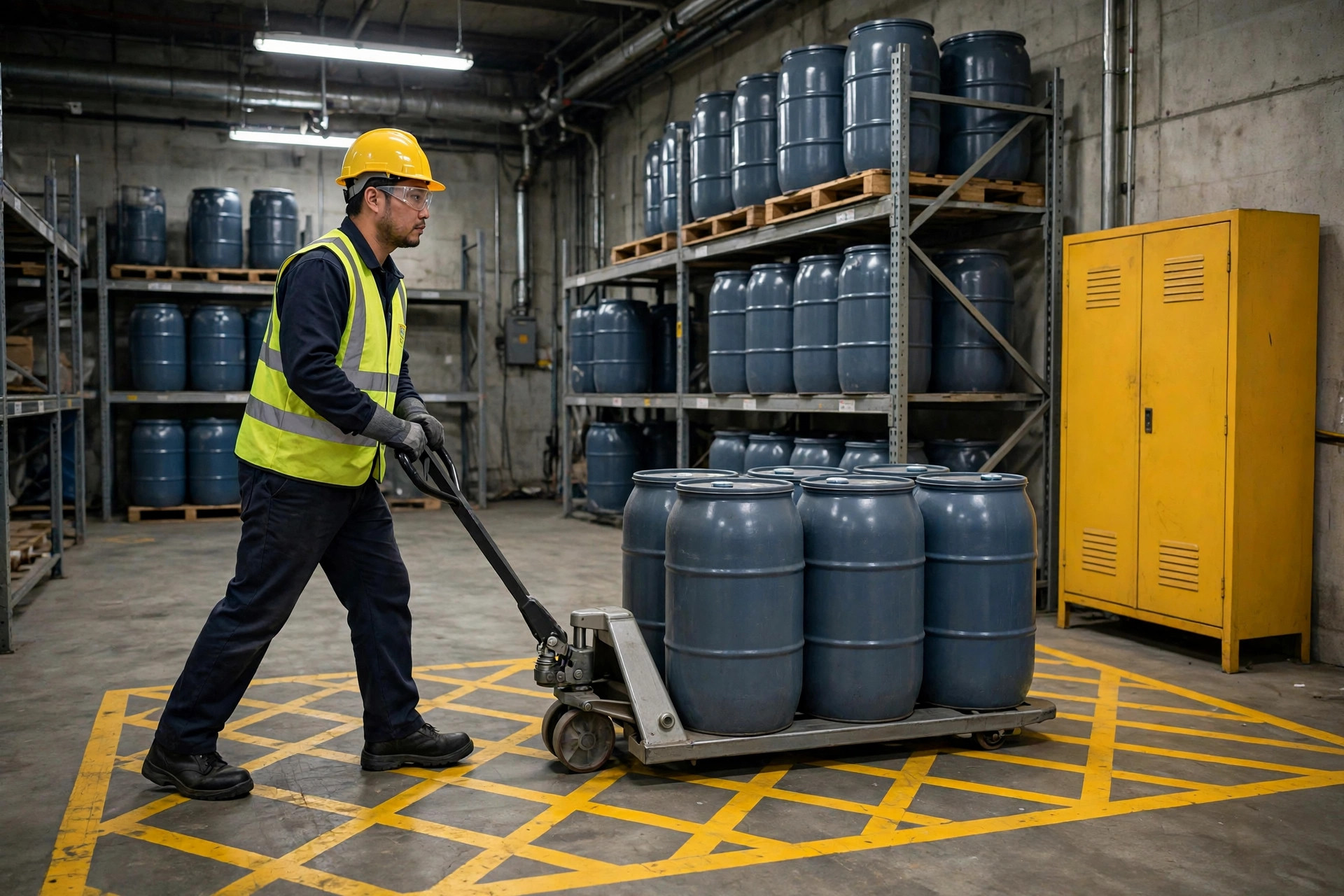
Our Workaround: Manual Plus a Pallet Jack, and Honestly? It Slaps
Back to my own warehouse. Early 2026, our 3,000 sqm facility near Ontario took on an industrial cleaning solvent (flammable liquid) customer — under 50 pallets a month. We didn't even clear the bar for renting.
Our approach was gloriously low-tech, and it worked:
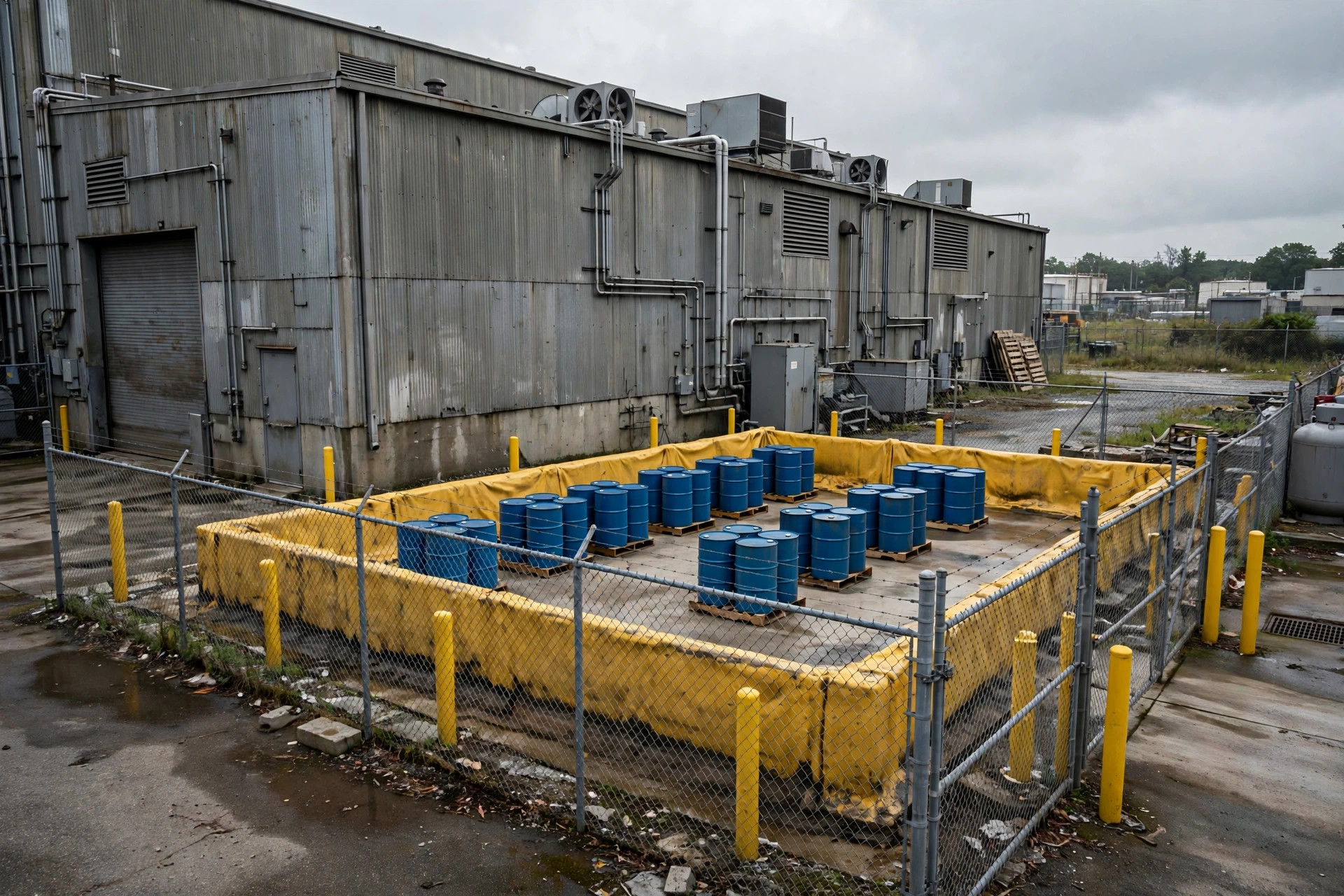
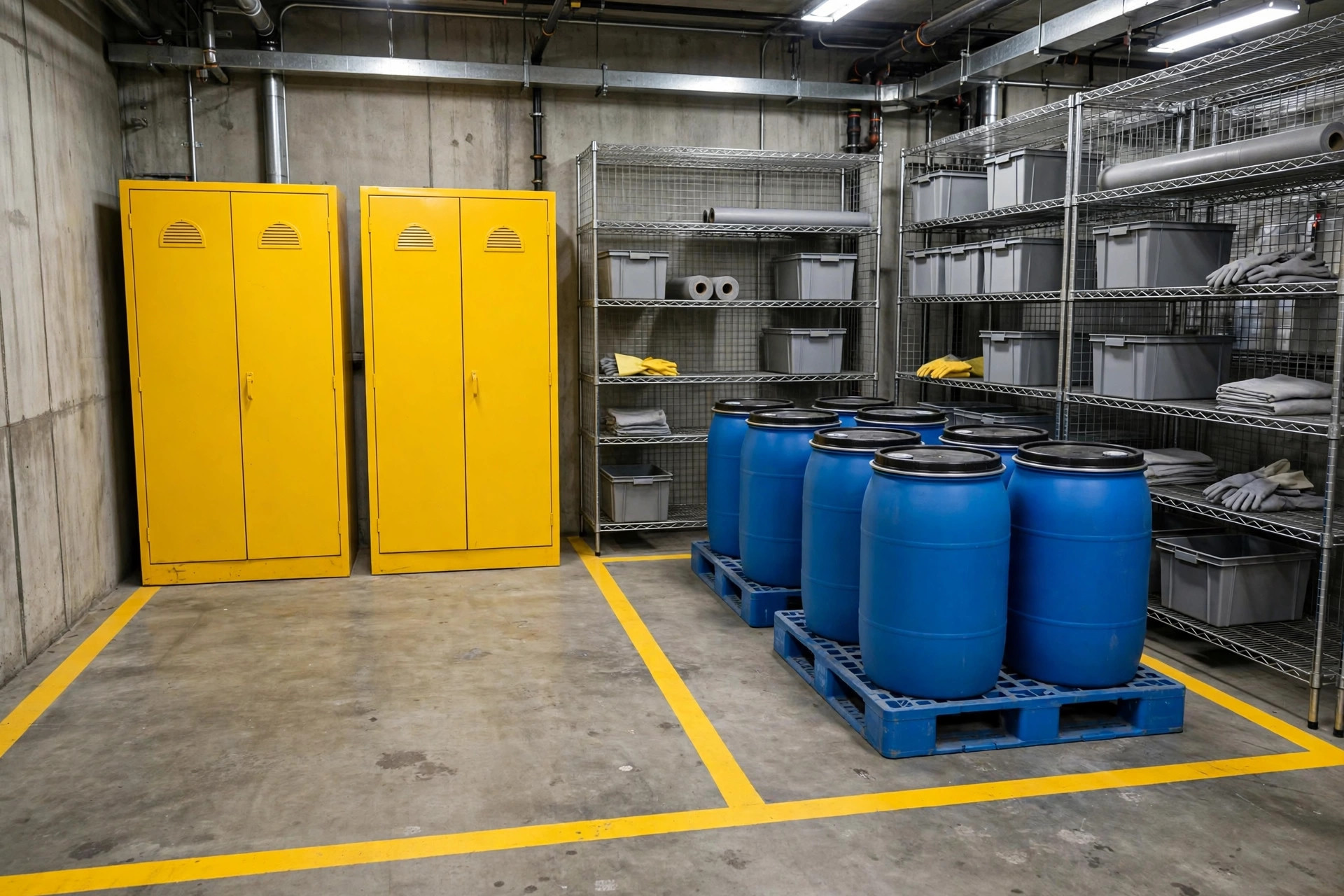
First, zone it off. We carved out about 200 sqm in a corner as a caged hazmat area, painted yellow lines, no casual entry. Forklifts? Not allowed past the line. Full stop.
Second, ventilate. Two industrial exhaust fans running 24/7 in that zone. When the AHJ visited, the ventilation scored us points — good mechanical ventilation weighs heavily in a Division 2 determination.
Third, sealed pallets only. The customer's goods arrived as sealed drums, full pallets in and out — we never cracked a lid. All movement was done with one explosion-proof hand pallet jack, two people, maybe an hour or two a day.
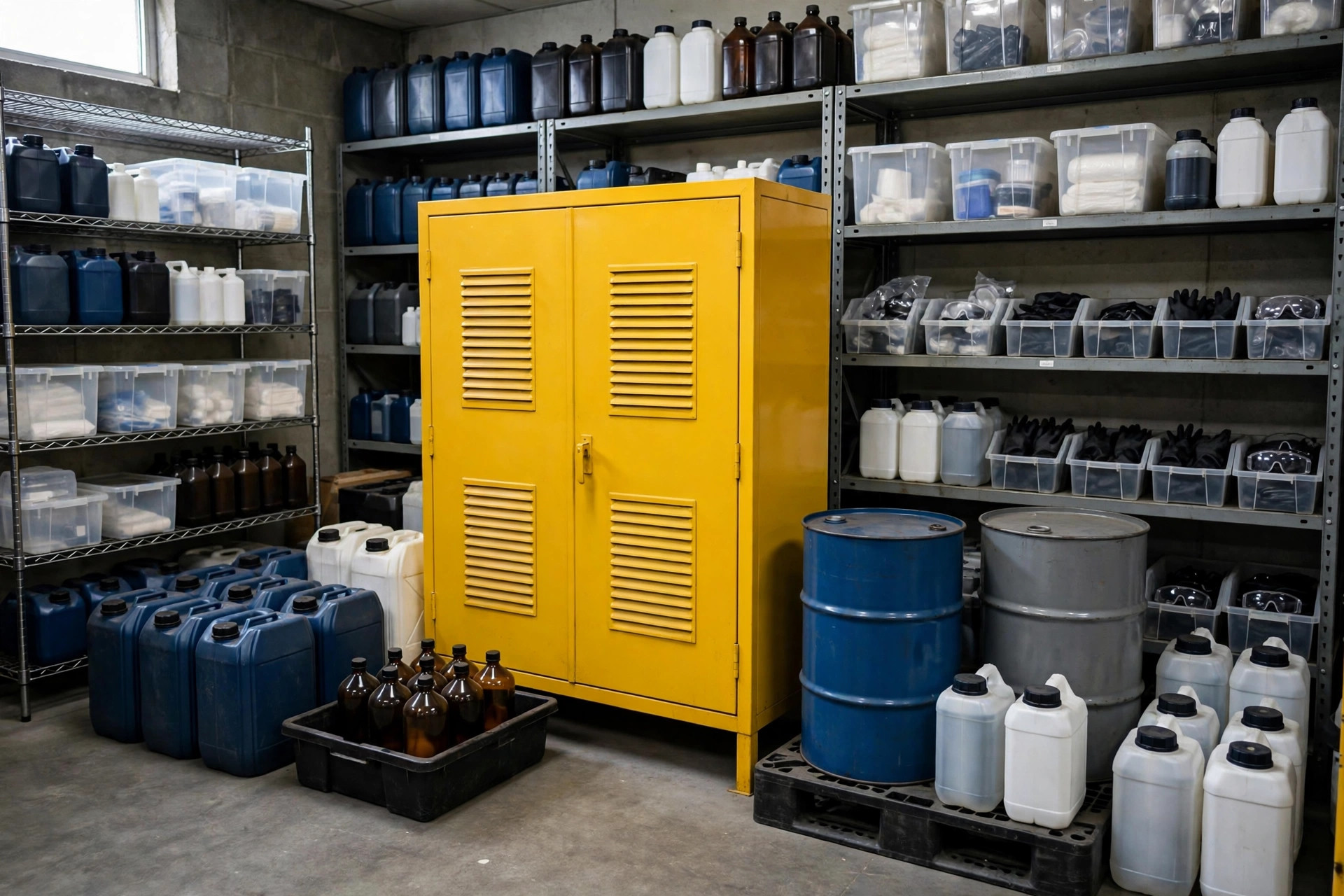
Fourth, train and prepare. One spill-response drill for the whole crew, plus a spill kit (absorbent pads, containment socks — the basics). Small money, big peace of mind.
The AHJ walked the site and confirmed Division 2 in writing. We spent essentially nothing on big equipment, and the margin stayed intact. The customer liked how professional it looked and later sent a second small account our way. Low-tech, high return. It slaps.
Advice for Fellow Small Operators: Volume First, Insurance Second, Wallet Last
Now the cautionary tale. In 2025, a friend of mine — Old Chen, runs a small 3PL in LA County — took an aerosol customer at around 200 pallets a month. He panicked at the word "aerosol," skipped the classification step, and rented an EX truck for peak season. Three months of rent, transport, and insurance ate nearly half the margin on that account. The real gut punch came at year-end: the AHJ reviewed his setup and classified the zone as Division 2 anyway. That rental money was pure waste.
Chen's lesson in one line: classify first, spend second. Never reverse the order.
And here is the counterintuitive one: sometimes the cheapest move is not taking the hazmat business at all. We ran the full P&L once — the insurance bump, the zone retrofit, the training, the emergency plan, plus the liability tail if something goes wrong — and it can easily cost more than the extra margin the deal brings. A small warehouse lives on cash flow, not on the bragging rights of "we can store anything." Before you sign, ask your insurer one question: "How much does my premium go up with this cargo?" That number talks people out of deals faster than any equipment quote.
So here is my playbook, in order: get the AHJ to classify your zone, Division 1 or Division 2. Then run the monthly pallet math — can manual labor handle it? Then ask the insurer about the premium bump. Only then compare buy, retrofit, rent, or manual. Follow that sequence and you will most likely discover what I did: this shrine is one a small warehouse neither can afford nor needs to worship.
Small warehouses have their own way of surviving. Big companies have EHS departments and budgets for full EX fleets. We don't. What we have is a calculator, and the good sense not to spend money we don't have to impress people we don't need to impress — and honestly, that is sometimes worth more than the equipment.
By Xiao Ma, Small Warehouse Owner