Last October, I nearly lost a ten-ton-a-month deal over a hazmat business license.
A long-time customer called: "Ma, can you store some paint thinner for us? Not much, maybe ten-plus tons a month." My mouth was already opening — 3,000 square meters of warehouse sitting half empty, money falling from the sky. A friend who works in industrial safety physically stopped me: "Where's your license? You'd dare store that without one?"
I'll be honest: back then, my understanding of a hazmat business license was "one of those things only big companies need." We're a small warehouse. Cartons, daily goods, hardware — hazmat felt like another planet. Turns out, in China, if you store hazardous chemicals as a business — big warehouse or small — that license is the front door. Without it, you can't even quote. Get caught, and you're shut down on the spot.
We lost that thinner deal, obviously — and it shoved me onto this road. Below is the unfiltered version: costs, timeline, and the traps nobody warns you about.
The hazmat business license comes in two flavors: storage vs. no storage
First, the concept that decides everything — hazmat operation splits into two types:
With-storage operation: you have a warehouse, and the goods physically sit with you. This is the one we got — and the hardest one, because the moment the drums are on your floor, the safety liability is 100% yours.
Without-storage operation: pure trading. The paperwork passes through you; the goods never enter your building. Easier to get, because you never actually hold the risk.
When we picked categories, my safety friend gave me our house rule: "Small warehouses stay away from highly toxic chemicals and explosive precursors. The margins look juicy, but the special requirements — two-person double-lock custody, public-security filings, round-the-clock staffing — your headcount and your margins can't absorb them."
We settled on the boring stuff customers actually ask for: common solvents and coating-related chemicals. Here's the counterintuitive part: more categories on your license is not better. Every extra category means a stricter site inspection and higher retrofit costs. The small-warehouse way: get licensed for the must-have categories first, expand later.
Who issues it and what you need: the paperwork is less scary than it looks
The issuing authority is the local emergency management bureau: submit documents → review → on-site inspection → license issued. Four steps on paper; each one can stall you.
Our document list (based on what our local bureau asked for at the time — always check the latest local requirements):
- Business license (with hazmat operation in the business scope)
- Safety management rules and post operating procedures
- Emergency response plan (filed with the authorities)
- Safety qualification certificates for the principal and safety managers — note: a real person has to sit the exam. We sent our warehouse supervisor; the whole thing took over a month
- Proof of the storage site: property deed or lease agreement
- Evidence the facility meets safety standards (fire-inspection related)
- A safety assessment report — you can't write this one yourself; a qualified third-party agency must produce it, and it's one of the biggest line items in the "tens of thousands" we spent. The most rigid cost in the whole process: no way around it.
The site inspection: the devil lives in the details
We filed the paperwork ourselves; it got bounced back twice for corrections. Once the documents passed, the on-site inspection came next.
Two inspectors spent a full morning walking our warehouse, eyes like X-rays. Here's the self-check list we used before they arrived:

Pre-inspection checklist:
- Fire extinguishers: enough of them, gauges in the green, within validity, sensibly placed
- Hydrants and sprinklers: water actually comes out, access not blocked
- Explosion-proof electrics: lights and switches in the hazmat zone must be explosion-proof (we replaced three fixtures — a few thousand yuan)
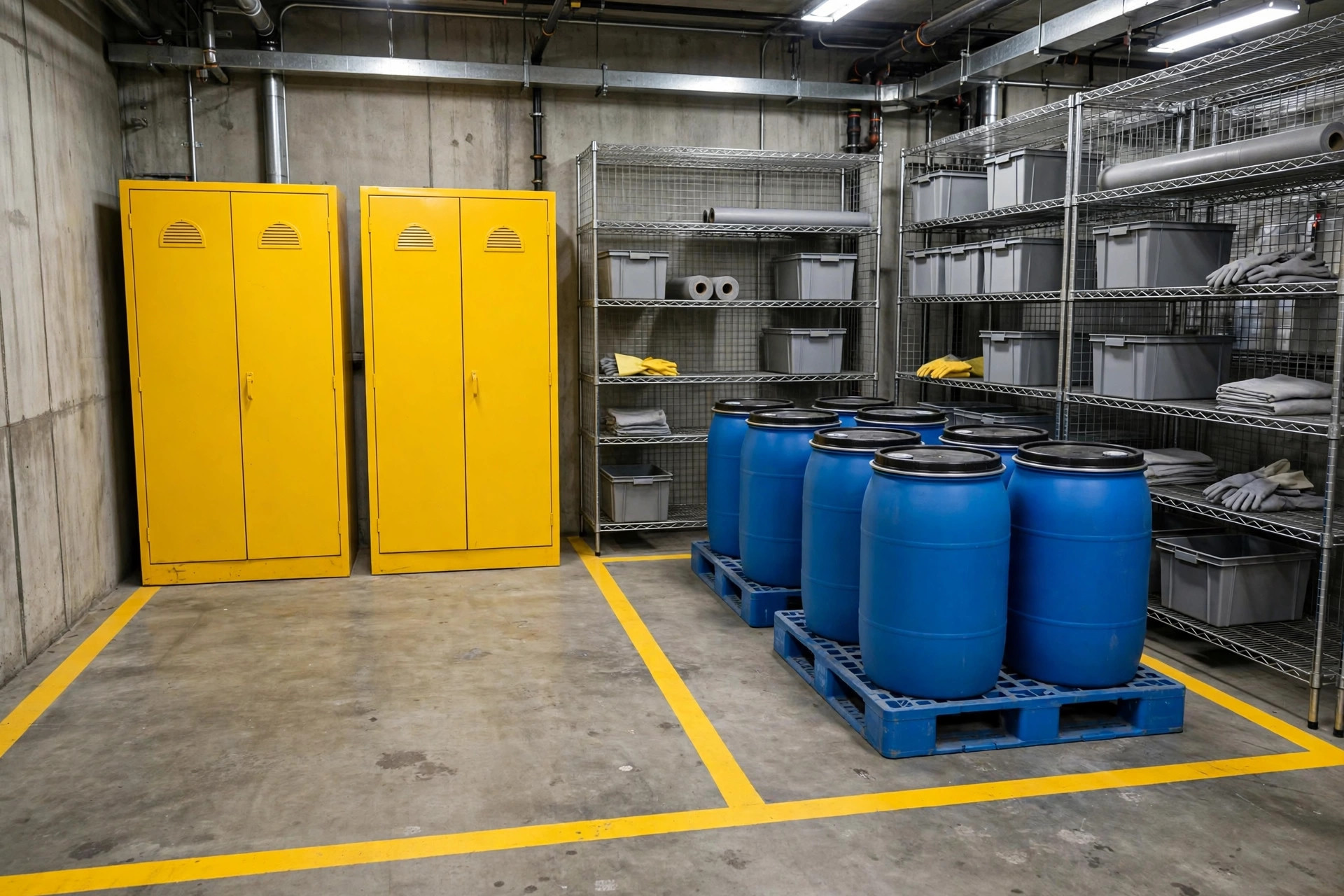
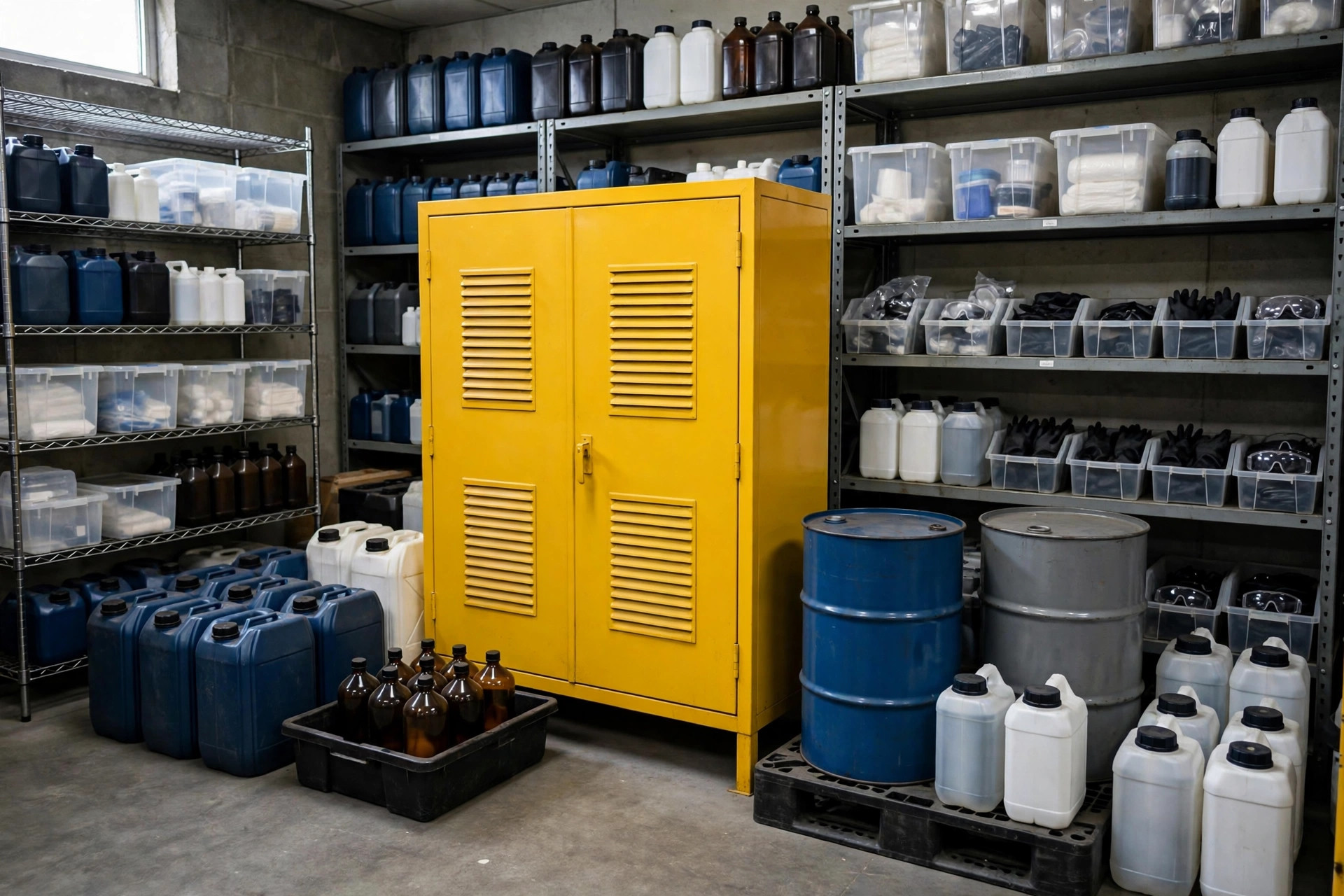
- Spill kit: absorbent pads, collection drums, respirators — all present
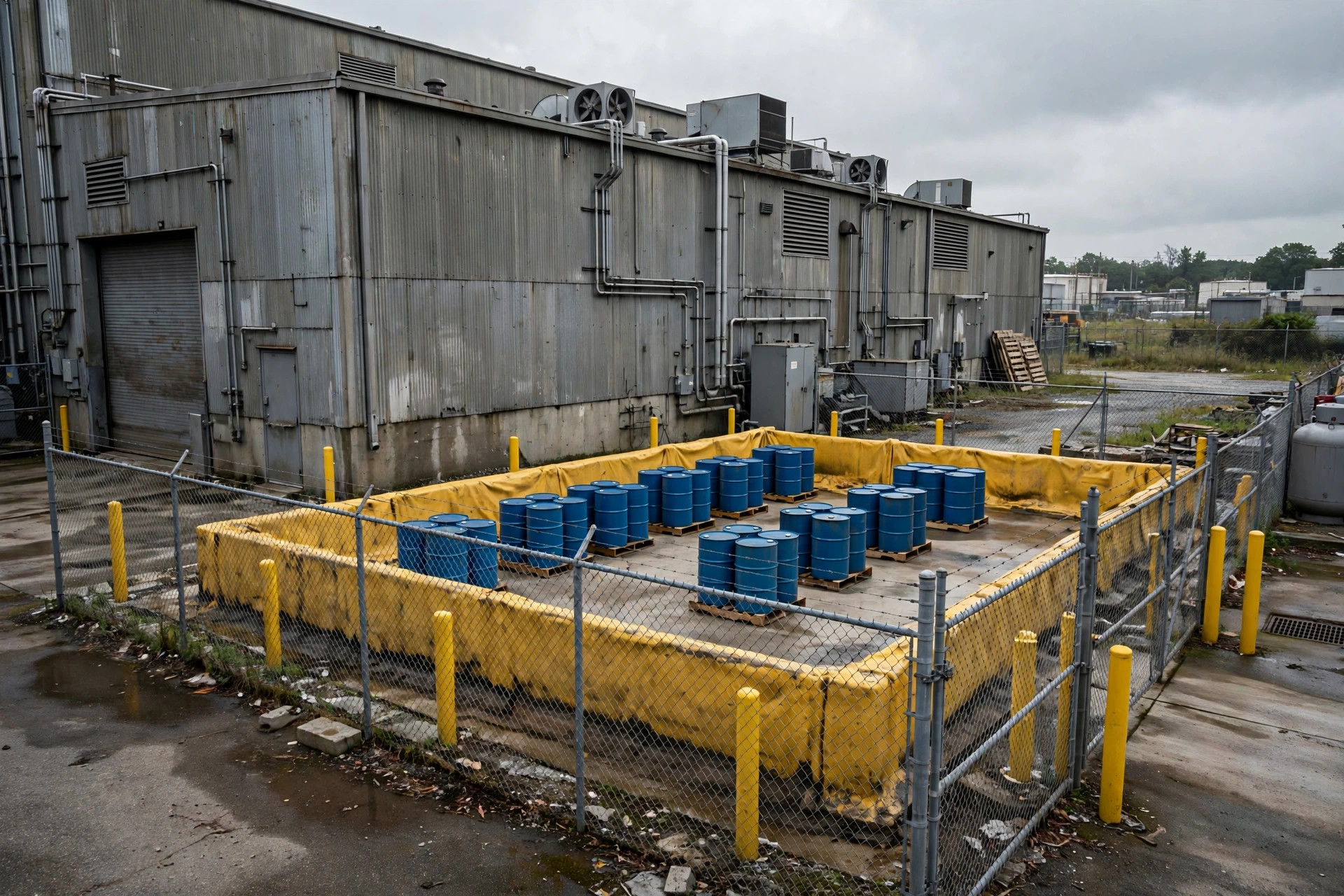
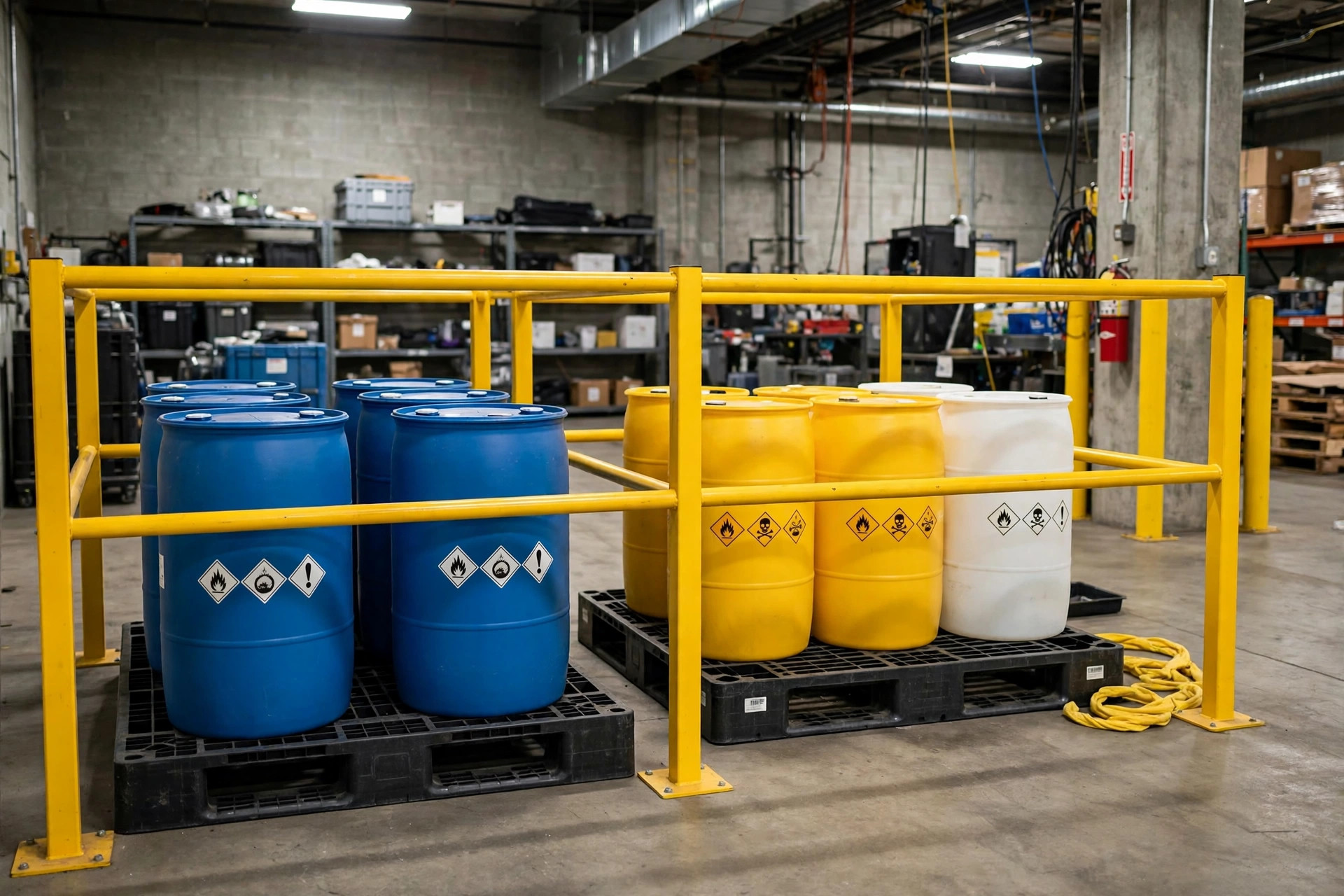
- Segregation: hazmat in its own physically separated zone, impermeable floor, away from general goods
- Signage: warning placards, safety data sheets posted on the wall
- Monitoring and alarms: combustible-gas detectors, tested and linked
- In/out ledgers: records that actually reconcile — don't fumble for them on the spot
We got dinged on something stupid: one extinguisher's gauge needle was flirting with the red zone, and the inspector asked for that month's inspection log. The row was blank — our keeper had been swamped and skipped it. One corrective item, on the record. After that we taped the inspection sheet right next to each extinguisher: whoever walks by, checks.
Hazmat business license costs: DIY vs. hiring an agent
Bottom line: we spent tens of thousands of yuan all in, over two to three months. The breakdown, in magnitudes:
| Item | DIY | Hiring an agent |
|---|---|---|
| Agent service fee | 0 | Tens of thousands (varies by region and category count) |
| Safety assessment report | Tens of thousands (rigid, unavoidable) | Tens of thousands (agents bundle it, but you pay either way) |
| Staff certification | A few thousand (exam fees + lost workdays) | A few thousand (a real person still sits the exam — no outsourcing that) |
| Fire/explosion-proof retrofit | Low tens of thousands (depends on your building) | Low tens of thousands (hard cost, same whoever does it) |
| Time | 2–4 months, several trips | 1–3 months, less hassle, more money |
| Rework risk | Documents likely bounced for corrections | Agents know the drill, higher first-pass rate |
We went "semi-DIY": prepared the documents ourselves, but paid a few thousand to a retired safety-bureau veteran as an on-call advisor at the critical checkpoints. Best money we spent — he spotted that our emergency plan was missing a "sensitive surroundings" section, which inspectors would absolutely have flagged.
Don't forget hidden costs: during those two to three months I lost at least one day a week running around — fuel, missed work, dinners with the advisor. A small owner's time is a cost too.
The part nobody tells you: the license is where the spending starts
The day the license arrived, I celebrated. The first annual inspection then taught me the real structure: the first application is the final exam; annual inspections are the monthly quizzes; the three-year renewal is the college entrance exam.
- Safety training every year — with records, sign-in sheets, and test papers. Miss one and it counts against you.
- Monthly hazard-inspection logs. No backfilling — inspectors can tell when the handwriting and dates don't line up.
- Staff safety certificates need re-examination; start three months before expiry.
- The license lasts three years; renewal looks a lot like the first application, with updated documents.
We nearly tripped in year two on training records — the training happened, but the sign-in sheet went missing, and we had to pull surveillance screenshots to prove people showed up. Since then, everything gets scanned and archived: paper plus digital, belt and suspenders.
One trade-off I owe fellow small operators: some categories look high-margin until you amortize the compliance cost. A customer once asked us to store a controlled solvent. Tempting margin — until we did the math: upgraded storage conditions, an upgraded alarm system, one more certified staffer. The extra annual compliance cost exceeded the profit. Big companies can take that business because volume dilutes the cost. For a small warehouse, taking it is self-harm. Saying no isn't shameful.
Advice for the rest of us
- Line up customer intent before you apply. Don't get licensed for business that doesn't exist. We moved only after two steady customers verbally committed to ten-plus tons a month.
- Subtract categories. Start with the lowest-risk, most-demanded ones. Expand after the license is running.
- Semi-DIY is the sweet spot. Full DIY means endless document ping-pong; full agent means painful fees. A knowledgeable advisor per visit is the best value.
- Do a dress rehearsal. Paying a veteran to walk through once costs far less than failing and reworking.
- The license is a starting line, not a finish line. Put training, inspections, and renewals on a fixed calendar.
The honest truth: we small warehouses can't burn money like big companies — no standing safety department. But small has advantages: a small building retrofits fast, a small team trains easily, and when the boss watches personally, execution doesn't slip. Our license took two to three months and tens of thousands of yuan. The steady hazmat storage revenue has paid that back many times over.
Small warehouses have their own way of surviving. The licensing road looks scary. Walk it step by step, and it's walkable.
By Xiao Ma, Small Warehouse Owner