Let me tell you about the fall of 2024. I was waiting to load at a 3PL warehouse outside Ontario, California, and the wait stretched past two hours. The guard at the gate got to talking. He said don't let the new building fool you — last year a forklift rack collision clipped one upright, it looked like nothing but a scuff of paint, and three weeks later half that row came down with three levels of product on the floor. He wouldn't tell me what it cost. He just shook his head and said it would have bought two new forklifts.
I've been driving trucks for fifteen years, and I have seen this story play out more times than I can count. Forklift rack collision damage prevention in a warehouse almost never starts with a collapse. It starts with a small bump nobody reports. The driver backs out, keeps working, and the rack carries one more dent that nobody writes down. According to OSHA, forklifts kill around 85 workers a year in the United States and seriously injure close to 34,900 more. Those numbers sound far away until you walk a warehouse floor and look at the bottom of the uprights. Nearly every one of them has been kissed by a fork or a mast at some point.
The quiet bump that brought down a row three months later
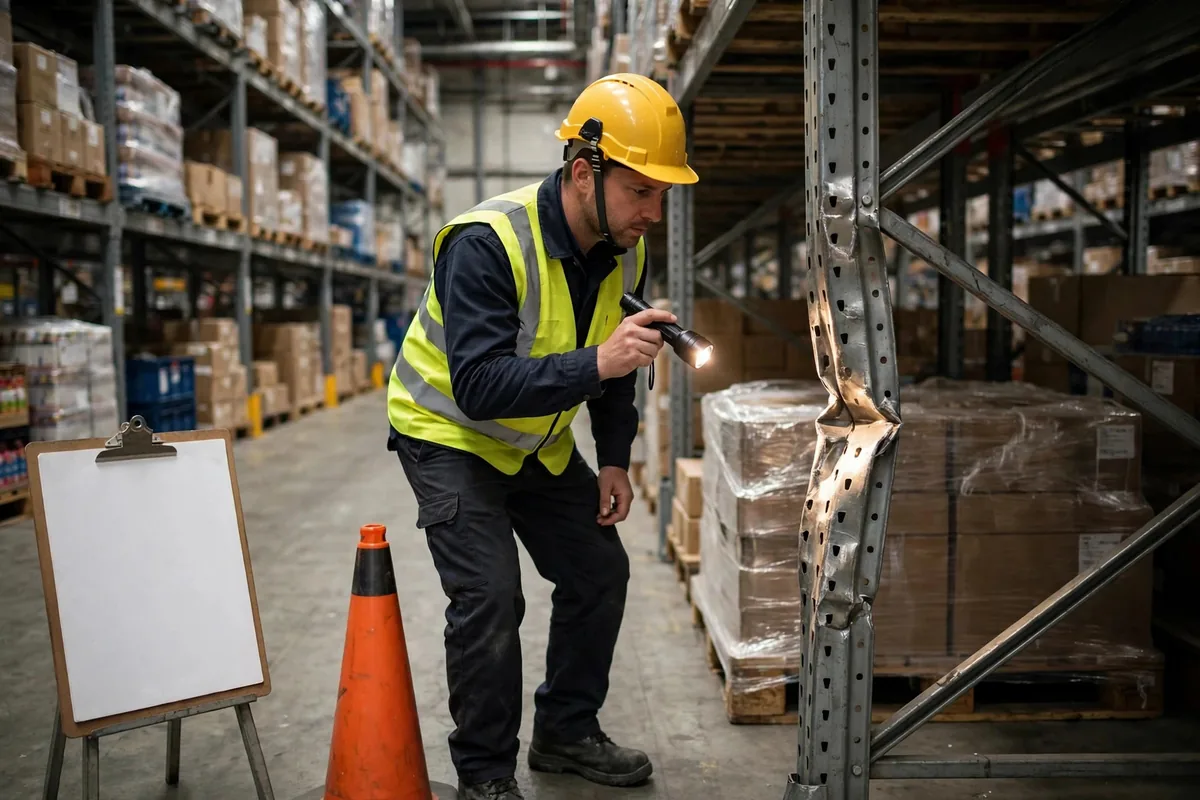
In the winter of 2019 I was picking up a load at an older warehouse near Dallas. I watched it happen. A young driver was reversing down a narrow aisle, and the back of his forklift swept into an upright. It wasn't a big sound — a dull thud. He got down, looked at the dented steel and the chipped paint, decided the rack was still standing, and drove off. The supervisor was at the other end of the building and never saw it. Nobody wrote it down.
Two months later, that row of racking started leaning. The connection between the beam and the upright had loosened, and when the crew put pallets up top, they sat crooked. The warehouse finally called in an inspector, who told them the upright had been compromised since the day of the hit and was no longer rated for its load. They had to move everything off that row, replace the upright, and shut the aisle down for four days. Four days with a dead aisle, in the middle of a busy season.
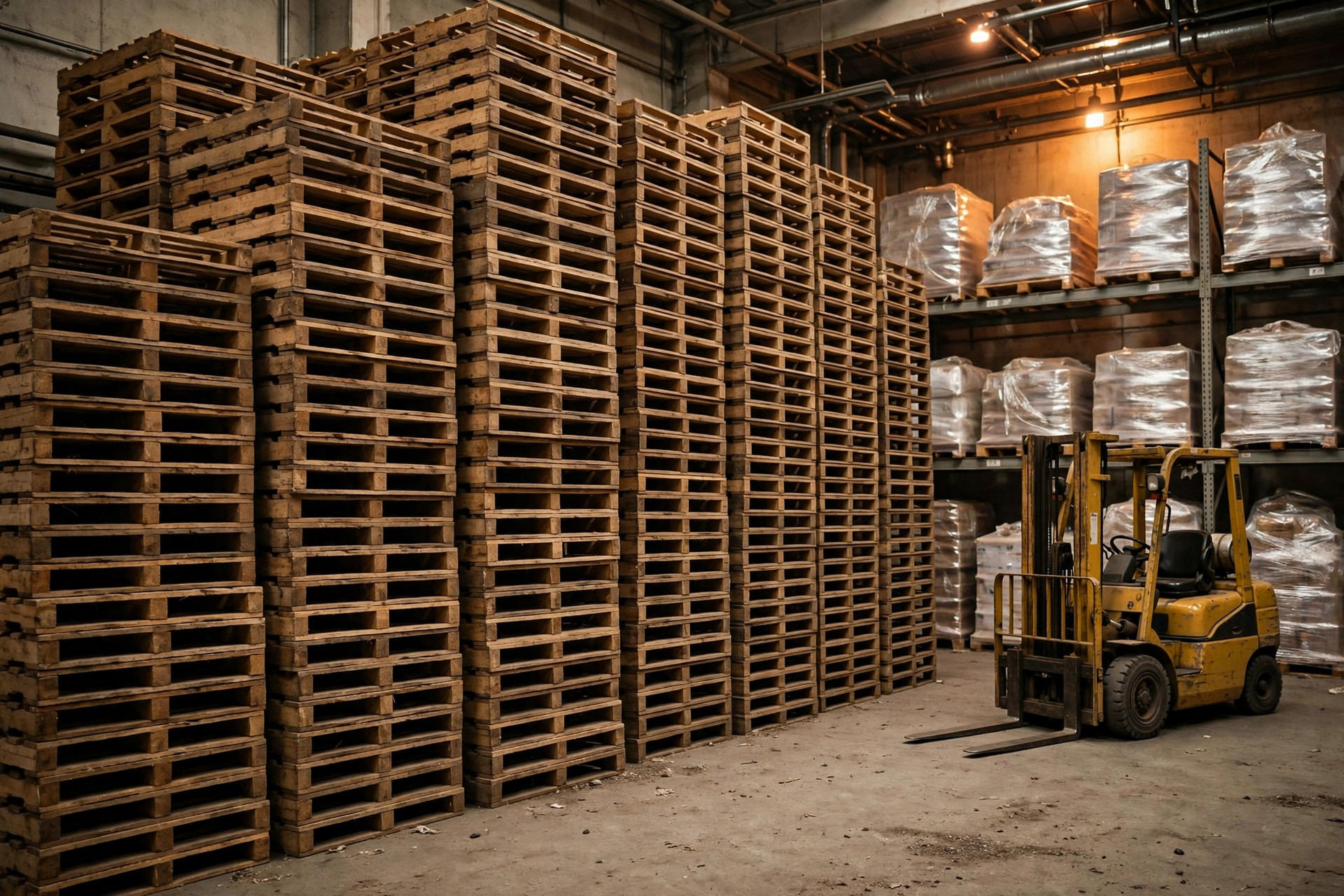
That is the thing about a forklift hitting a rack. The hit itself is usually the cheapest part. Industry sources put forklift impacts behind roughly 90 percent of all pallet rack damage, and I believe it, because in every warehouse I have ever backed a trailer into, the uprights tell the same story. The only difference is whether anyone is keeping track.
What one forklift rack collision really costs
A lot of people hear "one bump" and think "one upright." That's not how the bill works. The table below is a hypothetical example for a mid-size warehouse, built from repair-price ranges published by racking suppliers and from what I have seen on the floor. It is an illustrative scenario, not a quote, but it shows how the numbers stack up:
| Cost item | Hypothetical example |
|---|---|
| Replace one upright and a beam | $1,500–$4,000 |
| Damaged palletized product | $2,000–$5,000 |
| Two days of lost output in that aisle | $3,000–$8,000 |
| Inspection of the full row | $800–$1,500 |
| Total | Roughly $7,300–$18,500 |
And that is when nothing collapses. When a full rack section goes down, industry estimates put a single collision at around $10,000 on average once you count the rack, the product, and the downtime — and that figure still leaves out injuries. OSHA estimates that around 70 percent of forklift accidents could be prevented with proper training, inspection, and safe operating procedures. The trouble is that "could be prevented" and "actually prevented" are two different things. Every warehouse I visit has certified drivers and a speed-limit sign on the wall. Then peak season arrives, the orders pile up, and the pedal goes to the floor.
Guardrails: the cheapest forklift rack collision prevention in the building
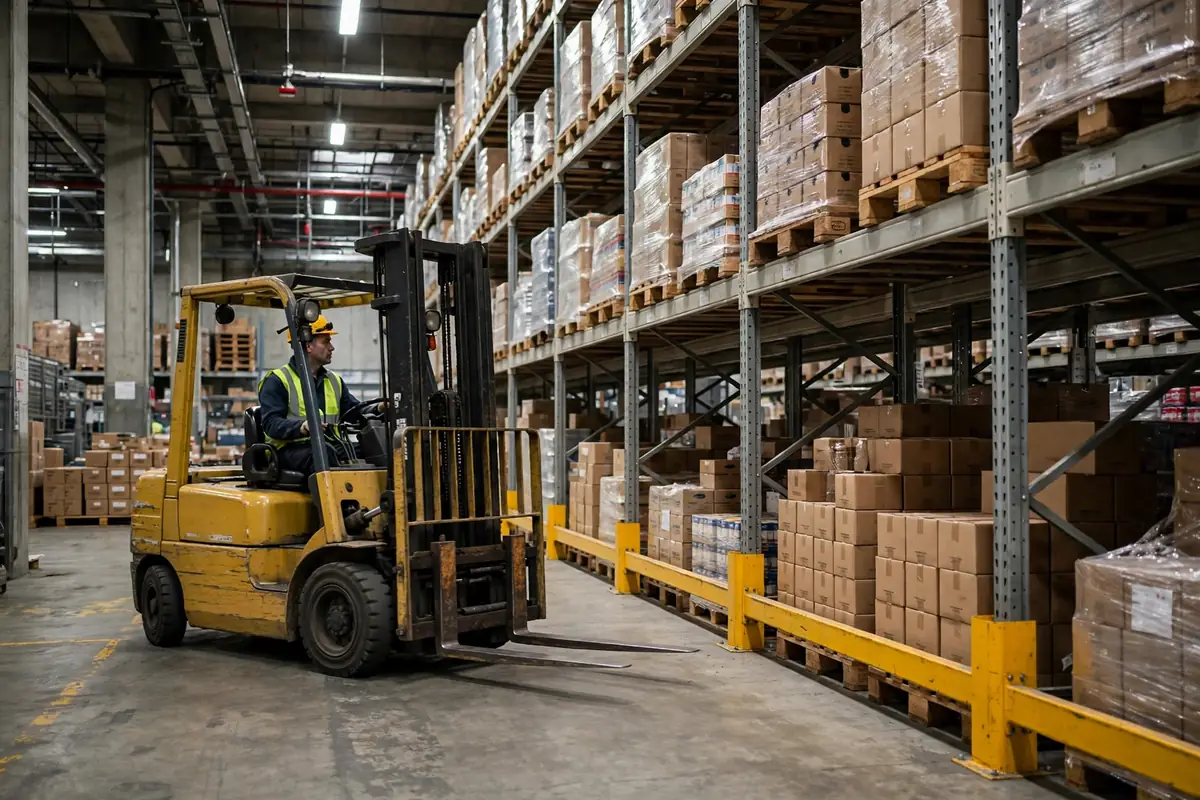
Here is the part that goes against common sense: the guardrail is not a cost. It is the cheapest insurance a warehouse can buy. I have seen two kinds of warehouses. In one, every upright wears a steel protector and every aisle end has a yellow-and-black guardrail. A forklift hits the rail, the rail bends, the rack is fine, and a few hundred dollars replaces the rail. In the other kind, the uprights are bare, and drivers use them as guides when they turn corners, brushing them a little every week.
A single upright protector costs less than any single line in the table above. Yet plenty of owners won't install them, because "our drivers are good." Good drivers get tired. Good drivers get rushed. New drivers don't know the aisles yet. A guardrail doesn't protect against bad driving. It protects against one distracted second.
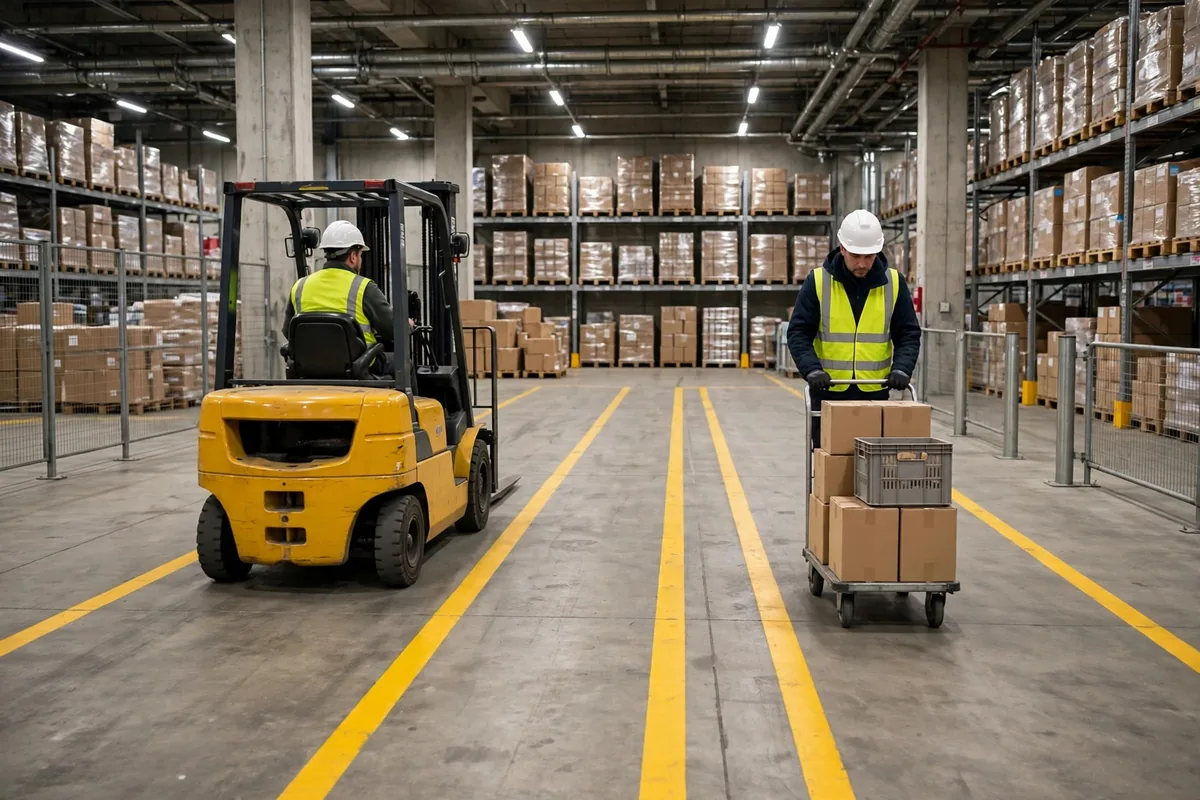
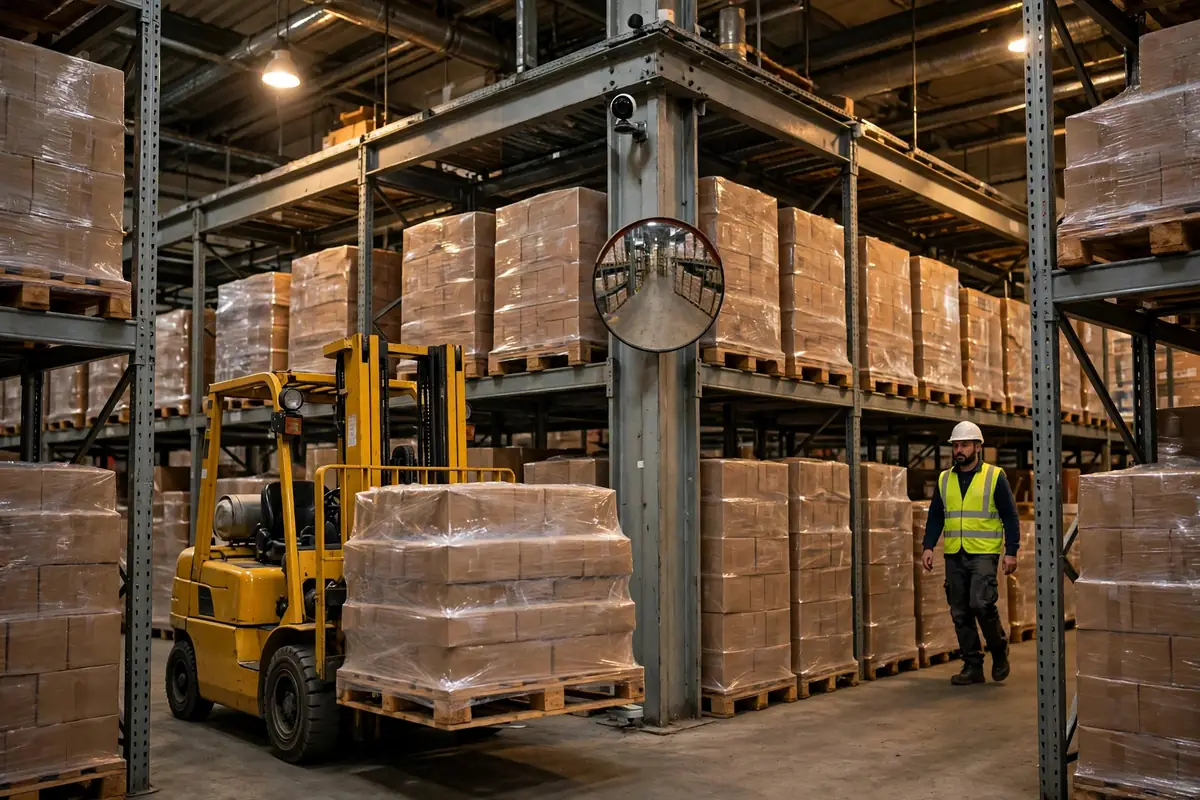
Speed limits work the same way. Many warehouses cap forklifts at around 8 kilometers per hour, and drivers hate it. They say it kills productivity. After fifteen years of watching this from the dock door, I'll say the opposite: the speed limit doesn't cost time, it saves it. Double the speed and the force of an impact more than doubles. The ten seconds you save down an aisle get wiped out by one hit, plus days of cleanup. If you want real speed, fix the blind corners, put up convex mirrors, and paint a separate pedestrian lane. That buys more throughput than a faster forklift ever will.
Insurance pays when you have a paper trail
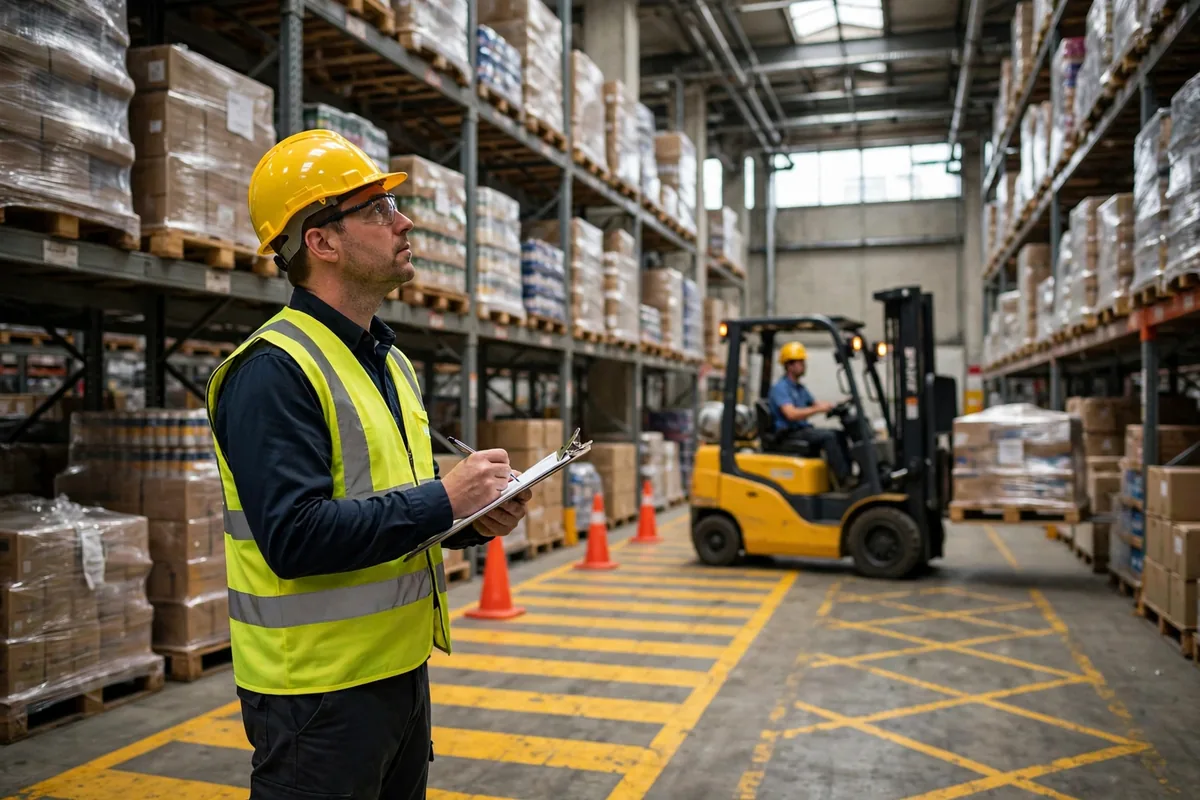
The third bill is insurance, and this is where I see the most wishful thinking. Owners assume that because they pay premiums, a collision is covered. What I have learned from the warehouse managers I talk to is that a claim lives or dies on the paper trail. The insurer wants to see inspection records, impact logs, training records, and repair orders. If you have none of that and you call the damage an accident, don't be surprised when the payout gets argued down.
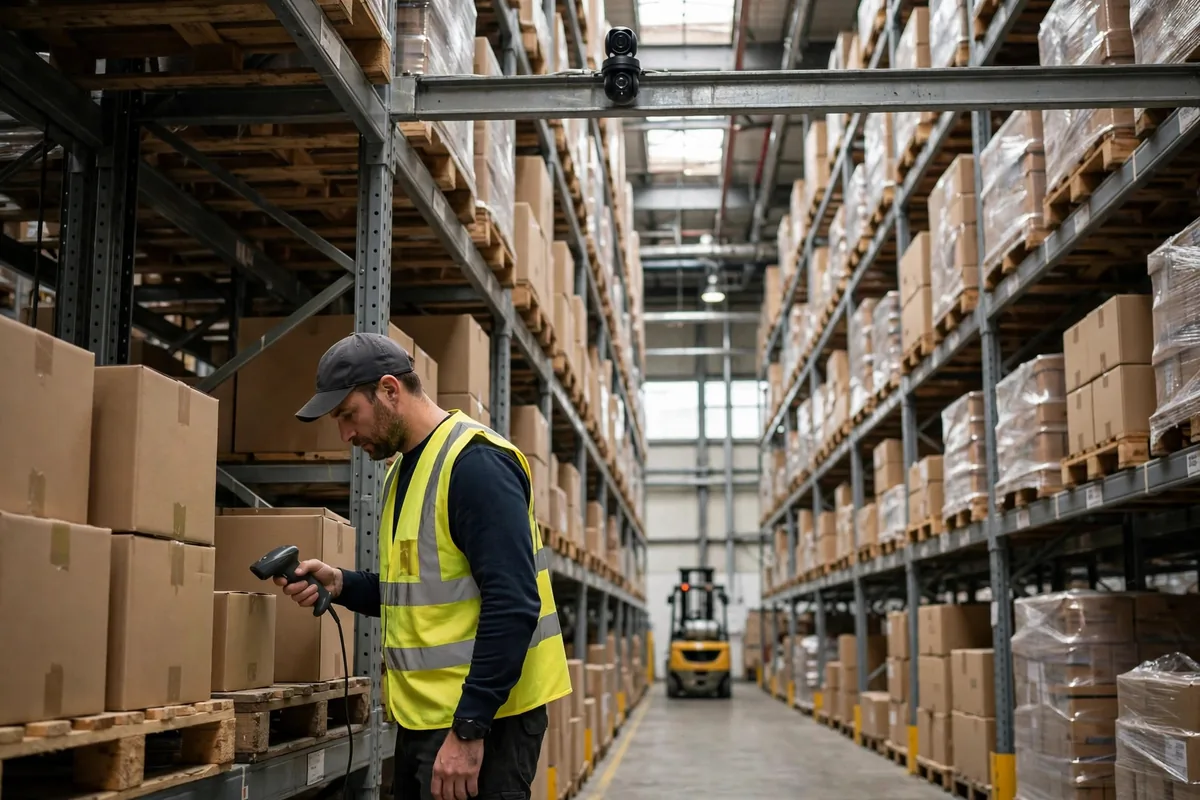
I know a 3PL owner who made one hard rule: every impact, no matter how light, gets logged the same day, with a photo. The drivers grumbled for the first month. Within half a year, impacts dropped — because drivers knew a bump would be written down, and they drove more carefully. And when a serious hit finally happened, the claim went through smoothly, because the logbook, the inspection sheets, and the repair invoices were all sitting there on the table. He told me that paperwork costs almost nothing, and it pays for itself the first time you avoid an argument with an insurer.
I have also seen the other side. A warehouse with no impact log and no inspection record for three years had a row come down, and the insurer found old damage on the uprights and cut the payout. The owner was furious, but honestly, the insurer wasn't wrong.
So here is my advice, in plain language, for shippers and warehouse operators alike. First, put protectors on every upright and guardrails at every aisle end. That money is not optional; skipping it is gambling with the rack. Second, set a speed limit and enforce it, even in peak season, and spend the effort on mirrors and pedestrian separation instead. Third, log every impact, even the ones that look like nothing, and keep your inspection records. That log tells you which upright is about to fail, and it is the document your insurer will ask for.
There's an old saying where I come from: ignore the small hole and you'll pay for the big one. A rack looks solid until it isn't. The damage adds up quietly, one unreported bump at a time. Guardrails, a speed limit, and a logbook cost very little. What they buy is a good night's sleep.
By Shifu Zhao, Trucking Veteran (15 yrs)