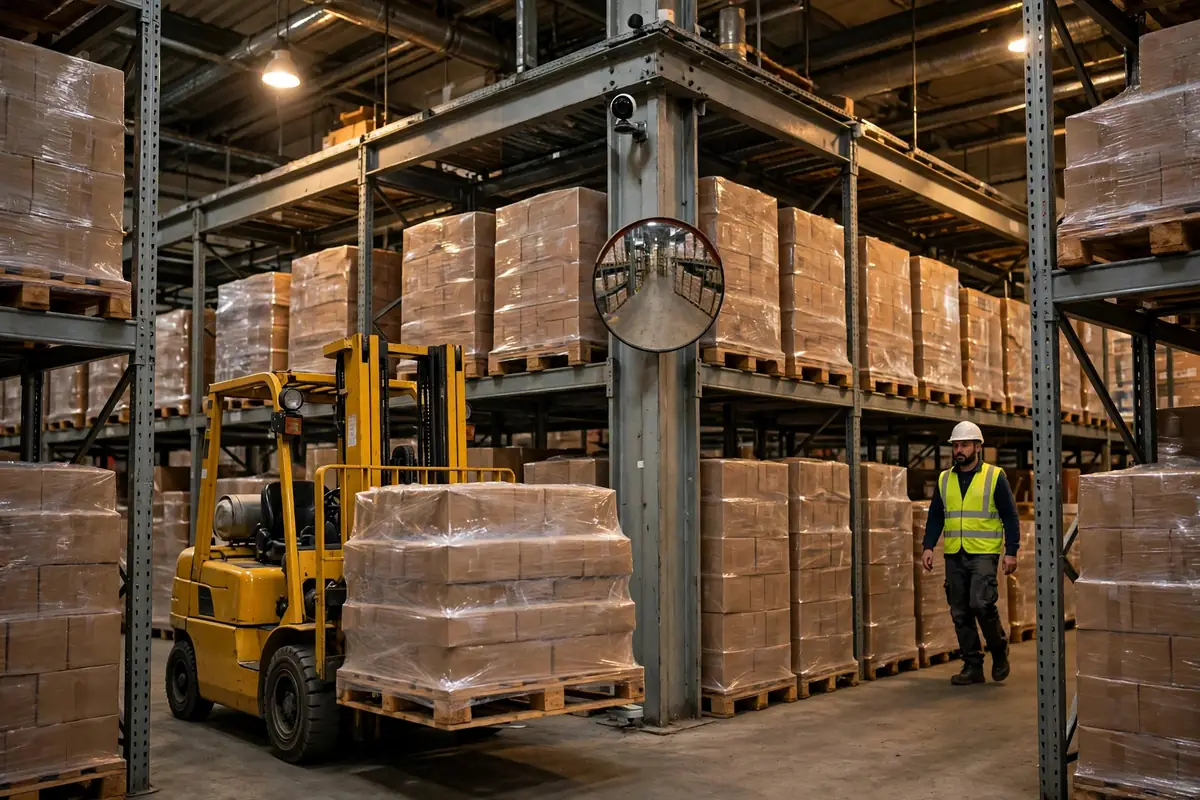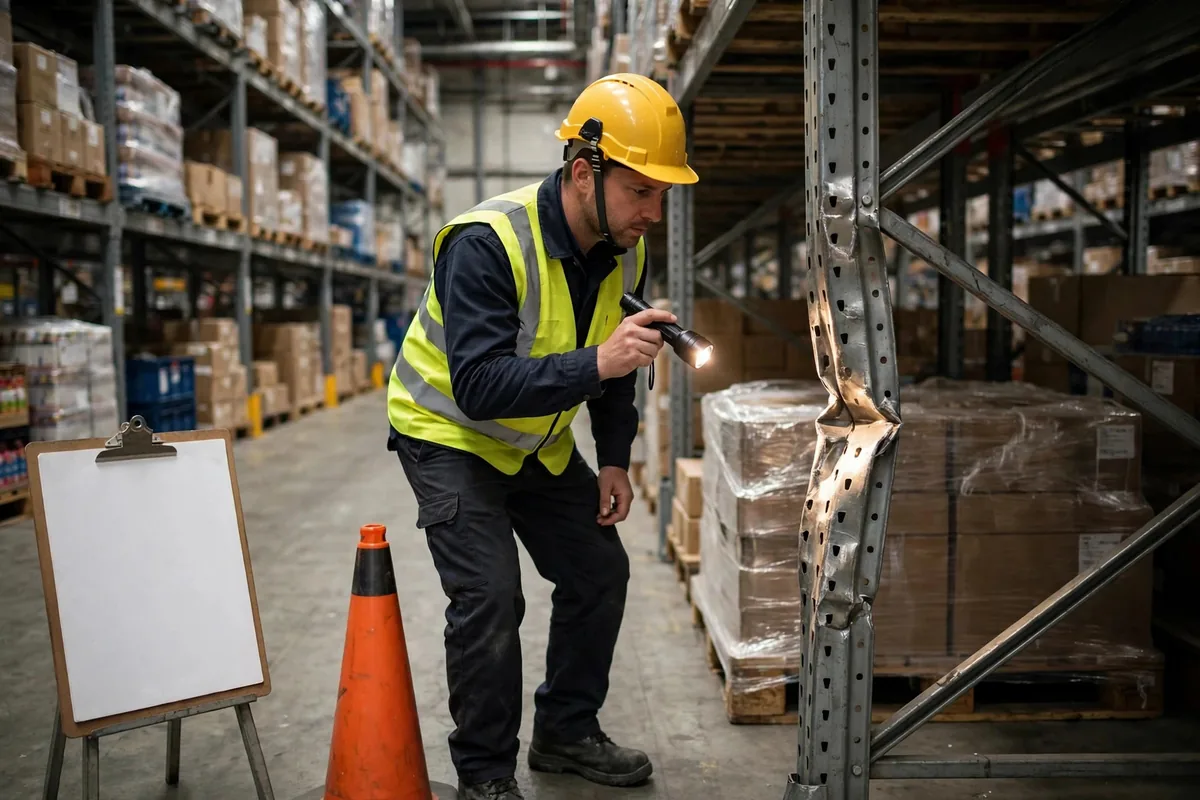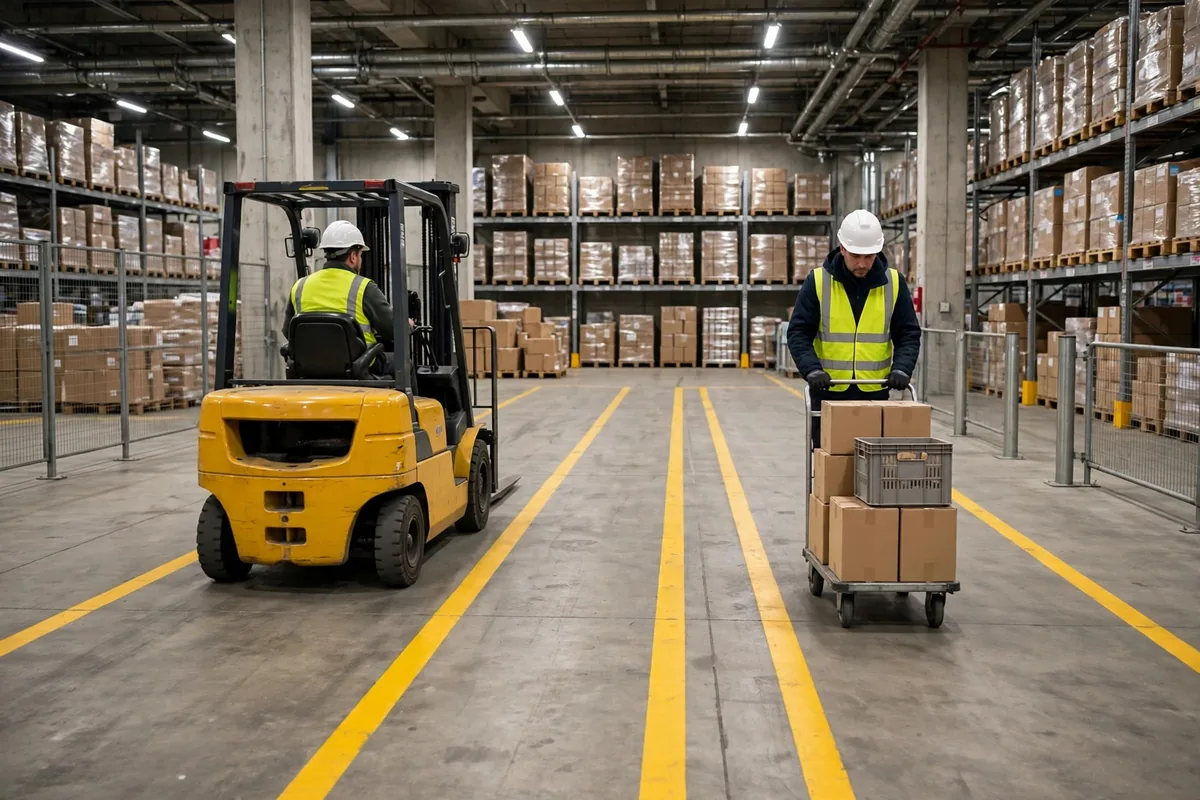
Warehouse worker fatigue monitoring has moved from a research topic to a purchasing decision: during peak season, pickers and forklift drivers are pushed toward the edge of what a shift can safely hold, while a single lapse in attention can cost more than a full year of monitoring. The difficulty is that detecting fatigue is not the same as removing it. A camera can register a slowing blink rate, but it cannot tell a manager how much longer a worker who has just finished six consecutive night shifts can safely continue.
The pattern: accidents rarely happen at the point of greatest tiredness
Fatigue-related incidents in warehouses follow a pattern that is easy to miss. They seldom occur at the start of a shift, when energy is highest, and they seldom occur at the moment a worker feels unable to go on and stops voluntarily. They cluster instead in the middle ground, where a worker still feels capable of continuing while reaction time and judgment have already begun to decline. For a picker, that stage shows up as picking the wrong item or missing a barcode scan; for a forklift driver, as taking a corner without slowing enough. What makes this stage dangerous is familiarity: experienced workers are often the ones involved, because long familiarity with a process can mask the early signals of fatigue. Monitoring earns its value by placing an external signal ahead of the point where self-assessment stops working, yet if an alarm brings no replacement and no roster change, the system records an accident approaching rather than an accident prevented.
Warehouse worker fatigue monitoring: two technical routes
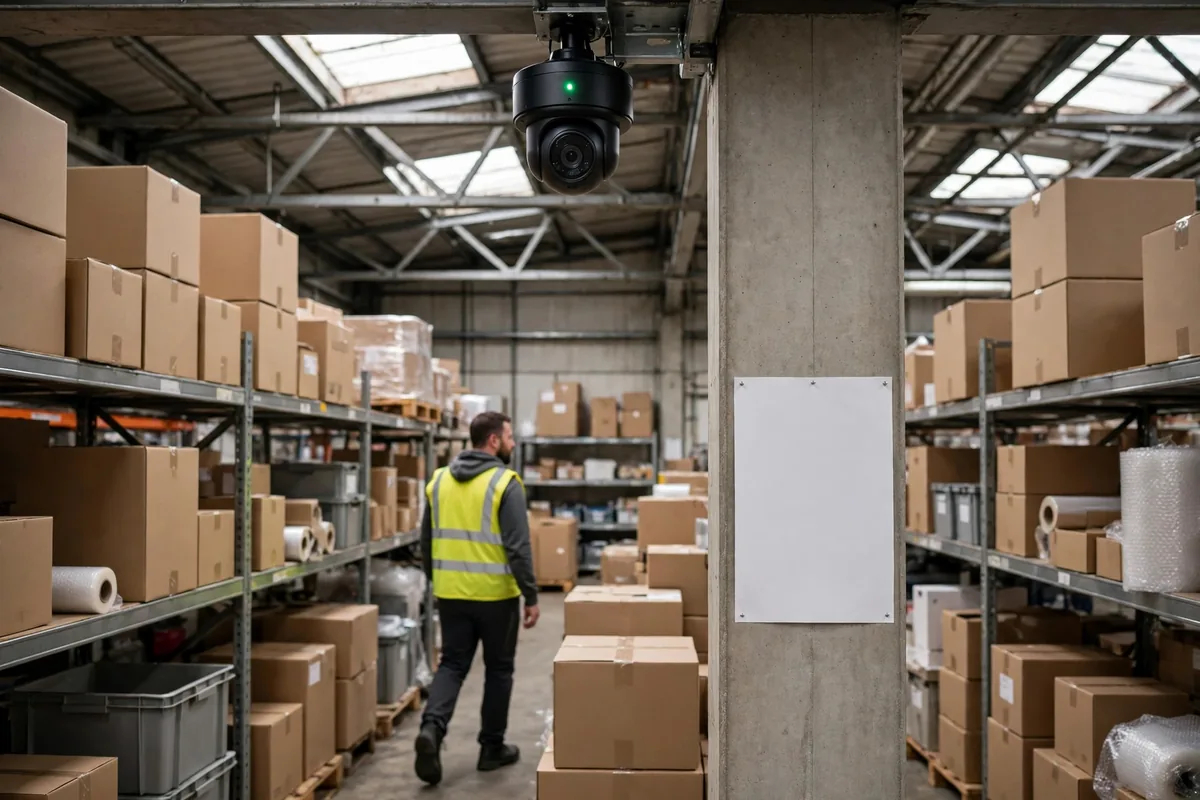
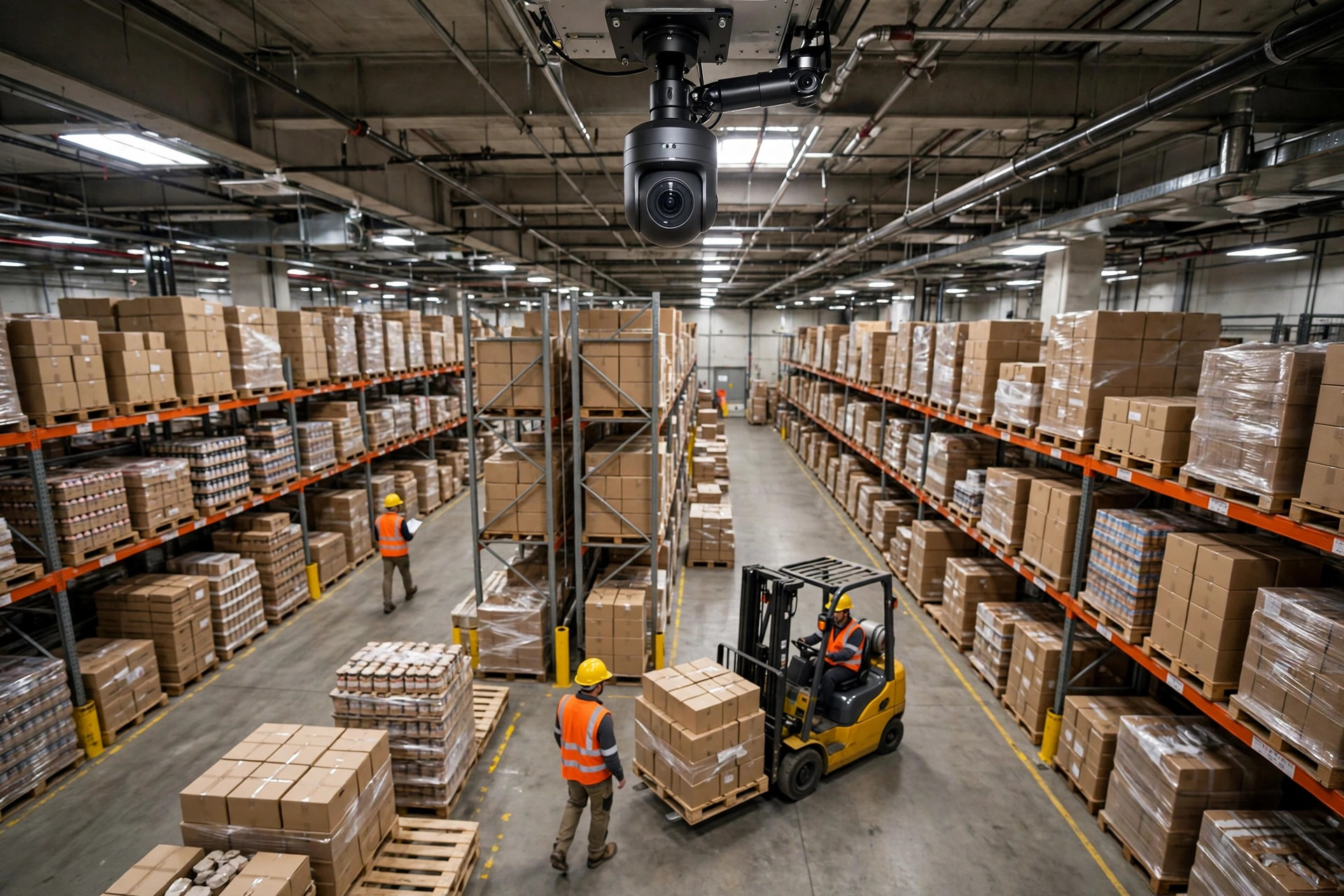
Current warehouse worker fatigue monitoring follows two distinct technical routes. AI cameras analyse visible signals such as facial posture, blink frequency, yawning, and sustained downward gaze. Their advantage is that nothing needs to be worn, and one installation can cover a zone such as a forklift cab or a picking aisle entrance. Their weakness comes from vision itself: changing light, face masks, helmet brims, and side-on angles all affect recognition, and a picker turning repeatedly between racks offers the camera only intermittent fragments of a face.
Wearables work in the opposite direction. Instead of watching the face, they read the body directly, through heart-rate variability, skin temperature, movement, and gait. The data are more continuous, so a full shift can produce a relatively complete picture of how fatigue develops. The cost is that the device must be worn for the whole shift. The more durable problem is acceptance: a device that records bodily data without pause can leave workers feeling watched, yet that feeling decides whether the system keeps running for months or is quietly abandoned within weeks.
Hypothetical scenario one: an e-commerce warehouse in peak season
Consider a hypothetical scenario set during a peak promotional period in 2026, in an e-commerce warehouse with pickers working two shifts and the night shift running from 8 p.m. to 4 a.m. Suppose AI cameras along the picking aisles trigger an alarm after three detections of prolonged eye closure, sent to the team leader's handheld terminal. In this hypothetical calculation, the system raises 27 alarms between 1 a.m. and 3 a.m. on the third night, of which the team leader acts on 11, while the remaining 16 are logged without intervention because nobody can be spared. These figures are an illustrative assumption, not real statistics, and they expose a structural contradiction: monitoring alarms most insistently at exactly the moment when the floor has the least spare capacity to respond, so the alarm degrades from an instruction into a record. A picker with a naturally high blink rate is also flagged repeatedly, and after several false alarms the team leader leaves a later genuine alarm unanswered for more than ten minutes.
Warehouse worker fatigue monitoring and the false-alarm trap
Many people assume that when safety is involved, sensitivity should be set as high as possible, and that a thousand false alarms are preferable to one missed event. That instinct holds in a laboratory. On a warehouse floor it meets a counterintuitive result: sensitivity set too high produces so many false alarms that workers and managers gradually learn to ignore them, and the effective sensitivity of the system falls rather than rises. What decides whether a system succeeds is not whether a single detection is correct, but whether every alarm receives a timely response, and whether the worker alerted feels helped rather than watched.
The trade-off between false alarms and missed detections also depends on the role. For a forklift driver, a missed detection costs far more than a false alarm, because a loss of control can injure people and bring down racking, while a brief false stop stays acceptable. For a picker, the balance reverses: frequent false alarms interrupt the picking rhythm, and after a dozen interruptions in one shift, workers begin looking for ways to avoid the camera or leave a wearable device aside. Applying one threshold to both roles may look even-handed, but it ignores the structure of the risk. A workable framework sets thresholds by role risk and records every alarm's response, so that after several months a manager can judge whether the threshold is right instead of adjusting it by feel.
Comparing the routes: cameras, wearables, and rostering
| Dimension | AI cameras | Wearable devices | Roster and rest optimisation |
|---|---|---|---|
| What is monitored | Face, blinking, gaze | Heart rate, movement, temperature | Shift length, night shifts |
| Coverage | By zone, no device | By person, worn | Whole workforce |
| Main weakness | Angle, light, occlusion | Acceptance, charging, upkeep | Slow, needs spare labour |
| Timeliness | Fast at the event | Early on trends | Preventive, no live alarm |
| How workers experience it | Feels watched | Feels monitored | Least resistance |
| Cost structure | Upfront installation | Devices plus upkeep | Labour-led |
Cameras are good at catching sudden lapses, wearables are good at showing how fatigue builds across a shift, and rostering reduces the fatigue itself.
Hypothetical scenario two: a forklift driver on his fourth night
Consider a second hypothetical scenario, set on the fourth night of four consecutive night shifts in November 2026, in a regional distribution warehouse, where a forklift driver is flagged at around 3 a.m. because a wearable device shows his fatigue score rising steadily. The system offers two options: replace him immediately for a thirty-minute rest, or move him from high-bay work to ground-level transfers only. The floor chooses the second, because no relief driver is available. It reflects a constraint found in many warehouses: a monitoring system can reveal a risk, but it cannot conjure a spare worker. The question a buyer should actually ask is not how accurate the camera is, but whether anyone has the people, the authority, and the time to intervene after an alarm.
The safety math: how to calculate the return without fooling yourself
Take a hypothetical calculation for a mid-sized warehouse, covering 40 pickers and 12 forklift drivers. Suppose an AI camera deployment costs $25,000 in its first year, while a wearable deployment costs $21,000, plus about $4,000 a year for device loss and replacement. Suppose this warehouse has averaged about $35,000 a year in direct losses linked to fatigue-related errors. That figure is a setting for the hypothetical calculation, not industry data. If monitoring plus intervention cuts such losses by 30 percent, the annual saving is about $10,500, and the payback period is roughly two years. If the reduction is only 10 percent, the payback stretches beyond six years, and the case for the investment weakens considerably. The decisive variable is not the equipment price but the percentage of loss reduced, and that percentage depends almost entirely on whether intervention keeps pace with detection.
Privacy and worker acceptance belong in the same calculation, though they never appear on a quotation. How long facial images are stored, who can review them, and whether heart-rate data will feed into performance reviews are questions that need written rules shared with workers before deployment. One workable approach is to separate monitoring data from performance data completely, so that a fatigue alarm is used only for safety intervention and never enters any assessment or ranking.
Looking ahead, monitoring is moving from single-device purchasing toward combined solutions: cameras for immediate alerts in high-risk roles, wearables for trends among priority groups, and rostering to reduce consecutive high-intensity shifts at the source. A cautious starting point is a small pilot in the two highest-risk settings, forklift work and night picking, run for two to three months, judged on the alarm response rate, the false-alarm rate, and the change in errors after intervention.
By Dr. Chen, Supply Chain Researcher