Start with one number: for a five-truck fleet, the purchase price is usually less than half of what you will spend over five years. The rest hides in maintenance, downtime, residual value, and contract fine print. The forklift lease vs buy warehouse question is never really “which is cheaper.” It is “does your usage pattern match your payment method?”
I have watched too many warehouses decide this one on gut feel. Someone says leasing feels safer. Someone else says buying is always cheaper because you own the asset. Both are wrong often enough to be expensive. The only honest way to decide is to lay out the total cost of ownership, then check it against how hard your trucks actually work.
Buy, Lease, or Finance Lease: The TCO Table First
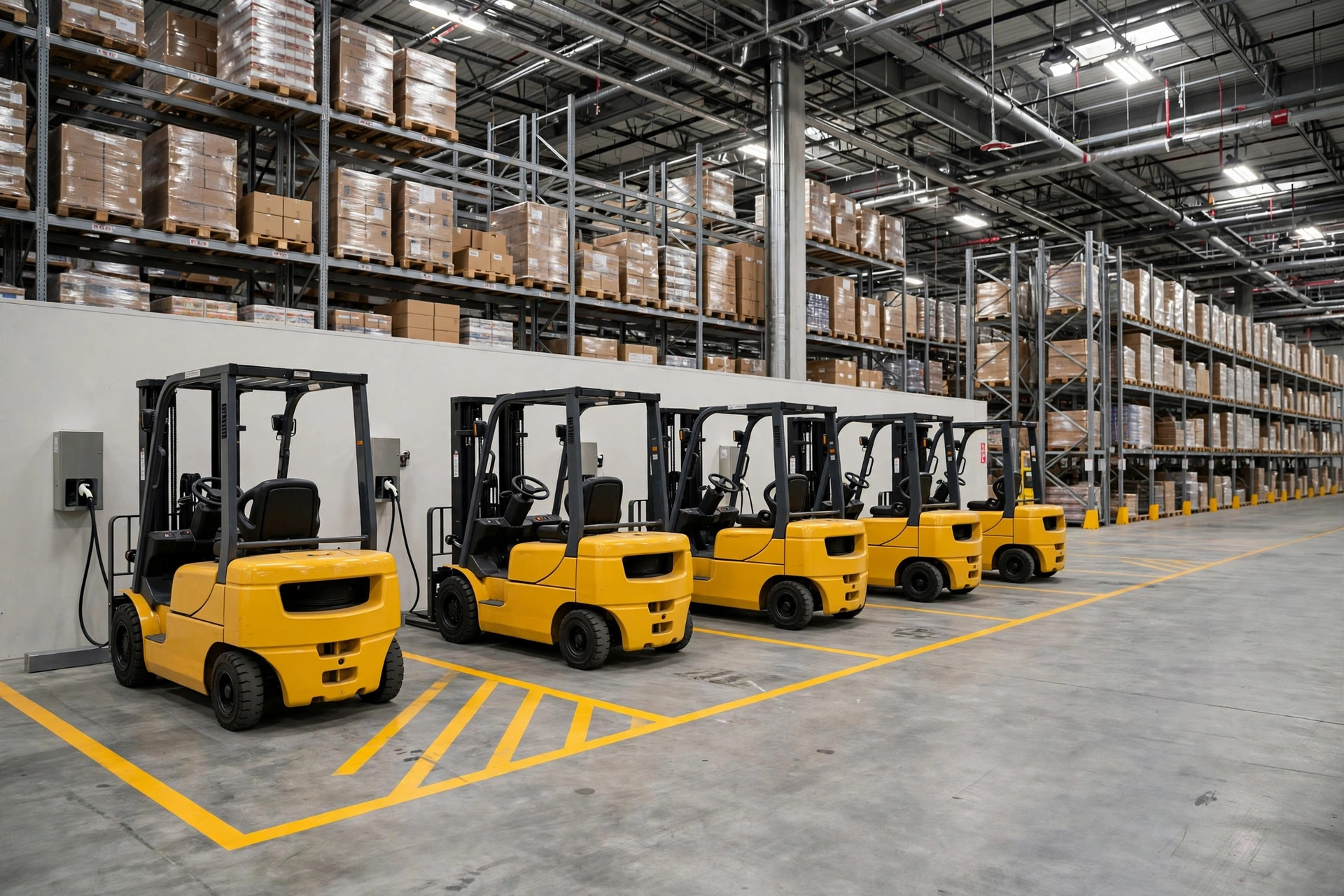
There are three common ways to put forklifts in a warehouse: buy outright, lease long-term (often called a full-service or operating lease), or finance lease (lease-to-own). The monthly check looks very different from the five-year bill.
| Cost item | Buy outright | Long-term lease | Finance lease | |---|---|---| | Upfront cash | Large, one-time | Small, deposit and first month | Small to moderate | | Monthly payment | None after purchase | Fixed monthly, usually includes maintenance | Fixed monthly, maintenance often separate | | Maintenance and repairs | Owner pays all | Often bundled, within usage limits | Owner pays, unless a service contract is added | | Downtime cost | Owner absorbs it | Shared, depends on contract response terms | Owner absorbs it | | End of term | You own a used asset with residual value | Return the truck, or renew | Own the truck after the final payment | | Flexibility | Low, selling used trucks takes time | High, fleet can scale up or down at renewal | Low to medium |
The figures above are directional ranges, not quotes. Prices vary widely by truck class, capacity, battery type, and region. Treat any number a salesperson gives you as a starting point, and confirm against the dealer’s latest quote before you sign.
Two Warehouses, Opposite Answers
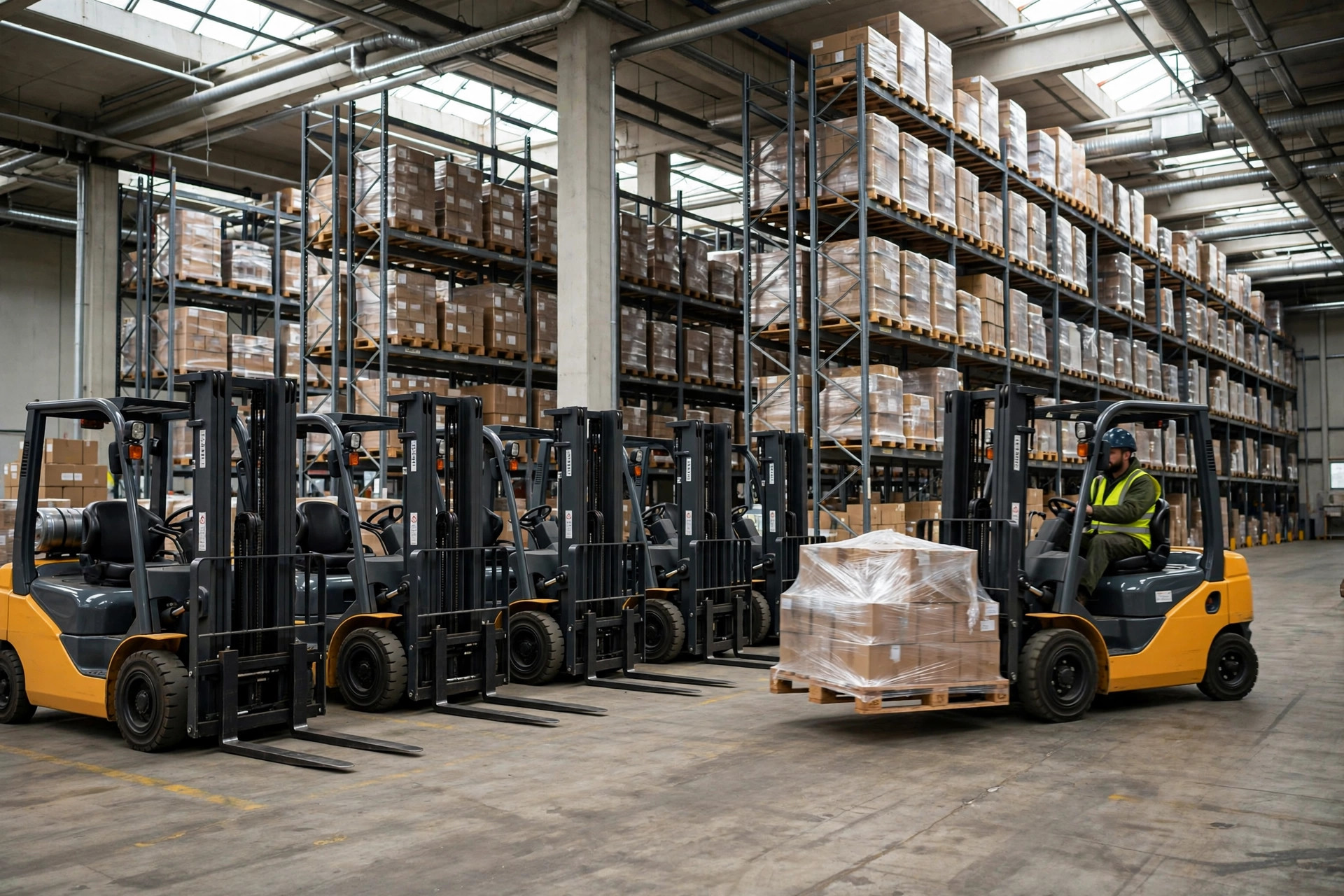
In 2023, a 3PL warehouse in California’s Inland Empire ran six forklifts across two shifts, handling e-commerce returns. The trucks were moving nearly all day. The operations manager had leased them, thinking the bundled maintenance would keep costs predictable. It did, until the fleet crossed the contract’s annual hour allowance. Overage charges kicked in, and the “predictable” lease bill jumped by roughly a fifth in the second year. When they ran the numbers, buying would have been cheaper by the third year, because at that utilization the trucks were being used hard enough to justify ownership.
Contrast that with a small private warehouse in Nevada in 2024. Three forklifts, one shift, under five hours of real driving per truck per day. The owner bought all three outright because buying felt like the thrifty choice. Then one truck sat idle for weeks during a slow season, capital locked up in steel that was not earning anything. A lease would have cost more per month on paper, but it would have let him return a truck when volume dropped. Buying was the wrong answer there, not because the trucks were bad, but because the usage was too light and too uneven to justify owning.
Same question, opposite answers. The difference was not the price list. It was the workload.
Forklift Lease vs Buy: The Dividing Line Is Utilization and Fleet Size
Here is the rule I use. If a truck runs more than about 1,500 to 2,000 hours a year, ownership starts to win, because the fixed cost of buying spreads across a lot of productive hours. Below roughly 1,000 hours a year, leasing usually wins, because you are paying for availability, not for an asset you barely use. Between those bands, the answer depends on the contract terms and your cash position.
Fleet size matters too. A fleet of ten or more trucks gives you bargaining power and justifies an in-house or contracted maintenance setup. A fleet of two or three does not. Small fleets also suffer more from downtime: when one truck out of three goes down, you lose a third of your capacity. A lease with a guaranteed loaner or fast response clause can be worth more than the monthly premium suggests.
Cash flow is the third leg. Buying ties up capital that could go to racking, labor, or inventory. That is not an argument against buying. It is a reminder to price the capital. If buying means delaying a racking project that would raise throughput, the cheap truck just cost you real money.
Forklift Lease vs Buy: The Four Fees Hiding in the Contract
This is where leases quietly get expensive.
First, excess-hour fees. Most leases include an annual hour allowance. Go over it, and you pay per extra hour. Warehouses that add a second shift mid-contract are the ones that get caught.
Second, early termination fees. If you signed for five years and need out in year three, the penalty can wipe out everything you saved. Read the termination clause before you read the monthly rate.
Third, damage definitions. What counts as normal wear versus chargeable damage is defined in the contract, and the definitions are rarely generous. Take photos at delivery and at every service visit.
Fourth, end-of-term handling. Returning a leased truck can come with inspection, cleaning, and transport charges. A finance lease avoids the return, but it also means you own an aging truck with falling residual value. Neither outcome is free.
Three Questions That Settle It
Forget the sales pitch. Answer these three questions with your own numbers.
One: how many hours will each truck actually run per year, measured, not guessed? Pull it from your shift records or your fleet telematics if you have it.
Two: what does one hour of downtime cost you? If a truck down means orders late, that number belongs in the comparison. If it just means a driver sweeps the floor for an hour, it does not.
Three: what is the total five-year cost of each option, including maintenance, overage, termination risk, and residual value? The option with the lowest five-year total wins. Not the lowest monthly payment. Not the one that feels safest.
Run those three numbers and the answer usually stops being a debate. When I did this exercise for the Inland Empire warehouse, buying won by a clear margin once utilization crossed the break-even band. When I did it for the Nevada warehouse, leasing won by a similar margin, because the trucks sat idle too often to justify owning. Both decisions were right. Both were just arithmetic.
Plug in your own hours, your own downtime cost, and your own five-year totals. Whichever option comes out lower by at least ten percent is your answer. If the gap is smaller than that, pick the option that gives you more flexibility, because the numbers are too close to argue about.
By Lao Zhou, Logistics Cost Analyst