One forklift: buy or lease? Over five years, the difference starts at $10,000 per unit — and for a 12-truck fleet, it buys you a Tesla.
If you've googled forklift buy vs lease cost, you've probably been confused by two dealer quotes: one says "$32,000 purchase," the other says "$950/month, all-inclusive." Neither number lies. Neither tells the truth, either. The truth lives in the five-year TCO. Let's calculate it once and for all.
The $170,000 Lesson: 12 Forklifts, Five Years
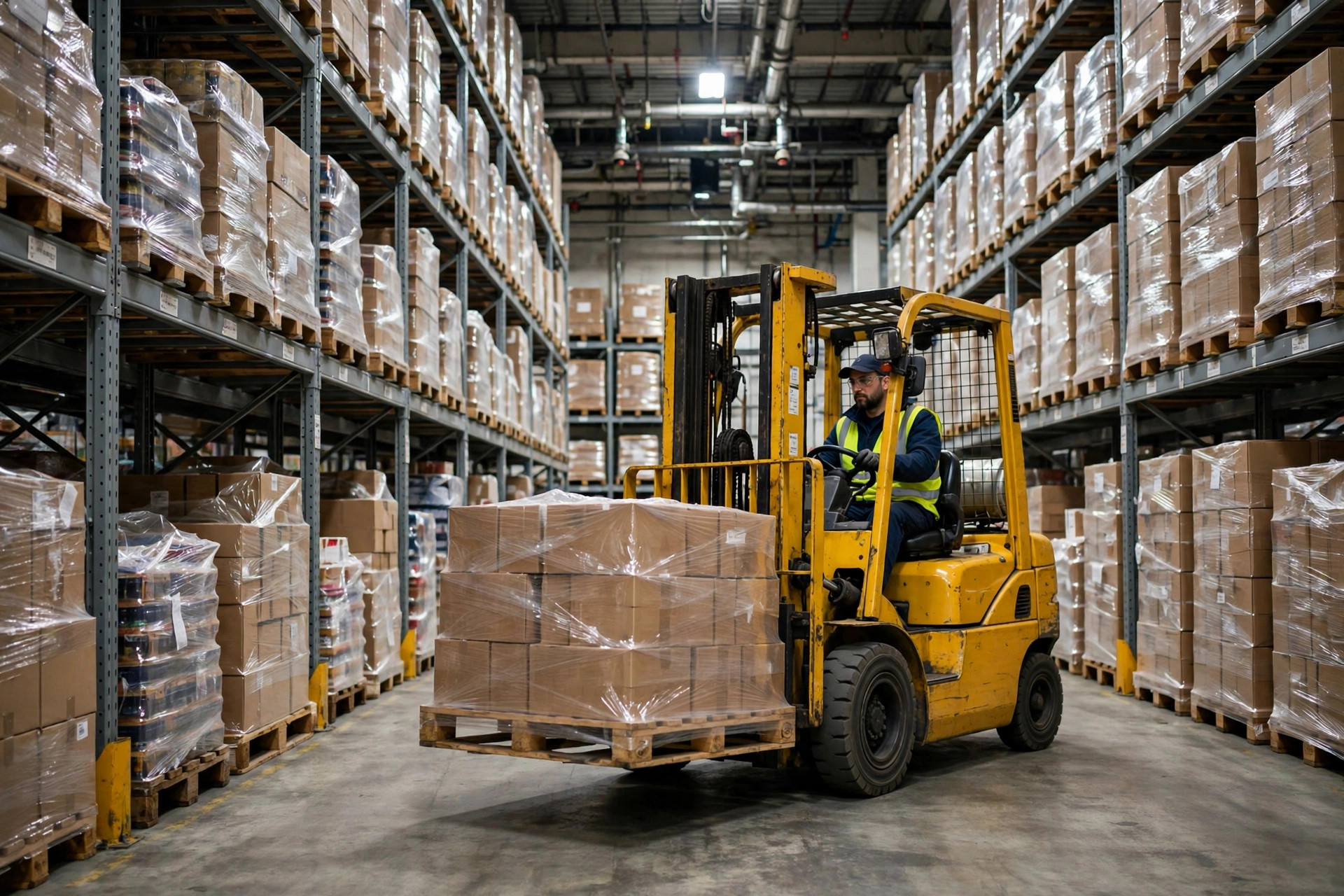
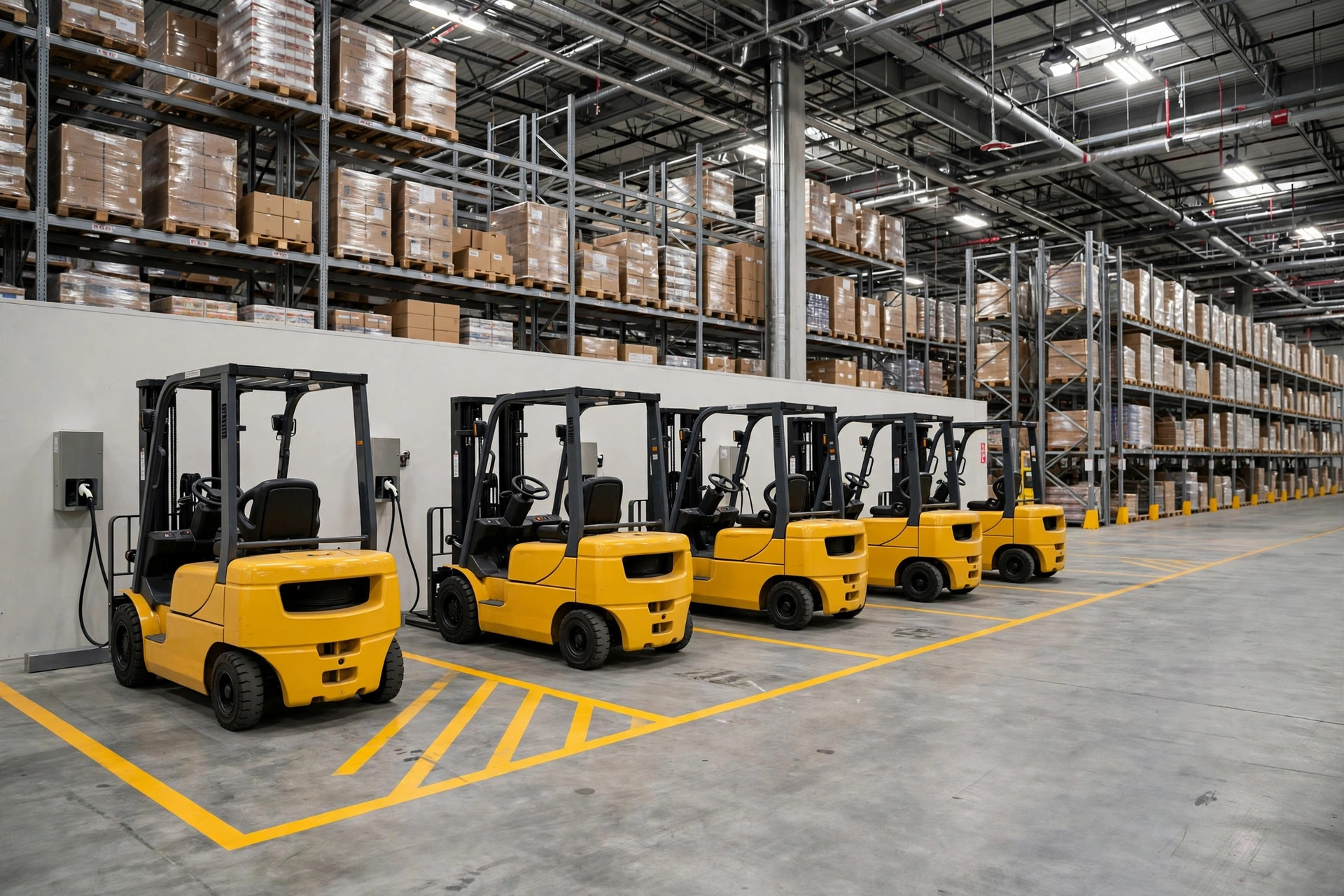
Fall 2023. A 3PL apparel fulfillment warehouse in California's Inland Empire needed 12 electric 5,000-lb forklifts. The dealer offered two options: buy outright at $32,000 per unit (market range at the time: $28,000–$38,000), $384,000 total; or a full-service lease at $950/unit/month, $684,000 over five years.
The owner's math was simple: 684,000 − 384,000 = $300,000. "Only a fool leases." He bought all 12.
The five-year review, early 2028: purchase $384,000 + full-service maintenance $144,000 (12 units × $200/month × 60 months) + 6 lead-acid battery replacements at $36,000 (the double-shift trucks killed their batteries in just over three years, ~$6,000 each) + tires and wear parts at $40,000+. Total: $604,000. Resale recovered $90,000. Net spend: about $510,000.
The kicker: in 2026 business dipped and 4 trucks sat idle for eight straight months, depreciating in a corner, earning nothing.
Versus leasing, buying saved roughly $170,000 — nowhere near the $300,000 the owner imagined. And that $170,000 came at the cost of $384,000 in tied-up cash, residual-value risk carried alone, and four trucks gathering dust. His words: "The day I bought, I felt clever. The day I sold, I felt robbed."
So stop comparing purchase prices. Compare TCO.
The Five Pieces of Forklift TCO
A forklift's total cost of ownership has exactly five pieces. Miss one and the math is wrong:
- Acquisition or lease payments. New electrics run $28,000–$38,000 per unit in the US market; full-service leases run $800–$1,100/month. Get current dealer quotes — anything outside these ranges is either a stripped-down spec or a rip-off.
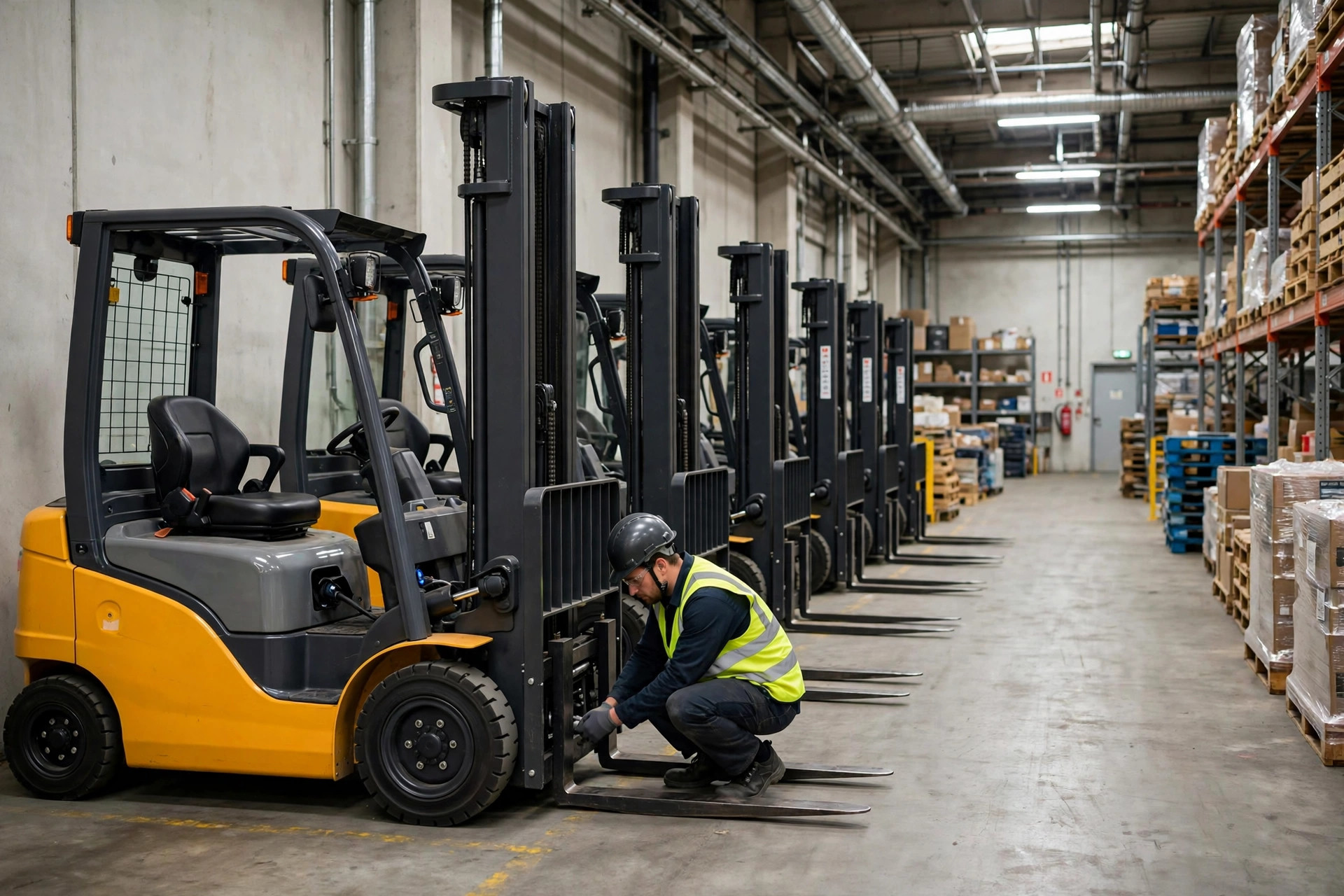
- Maintenance. Full-service plans run $150–$300/unit/month, labor and standard parts included. Fleets of 10+ units can usually negotiate 15–20% off.
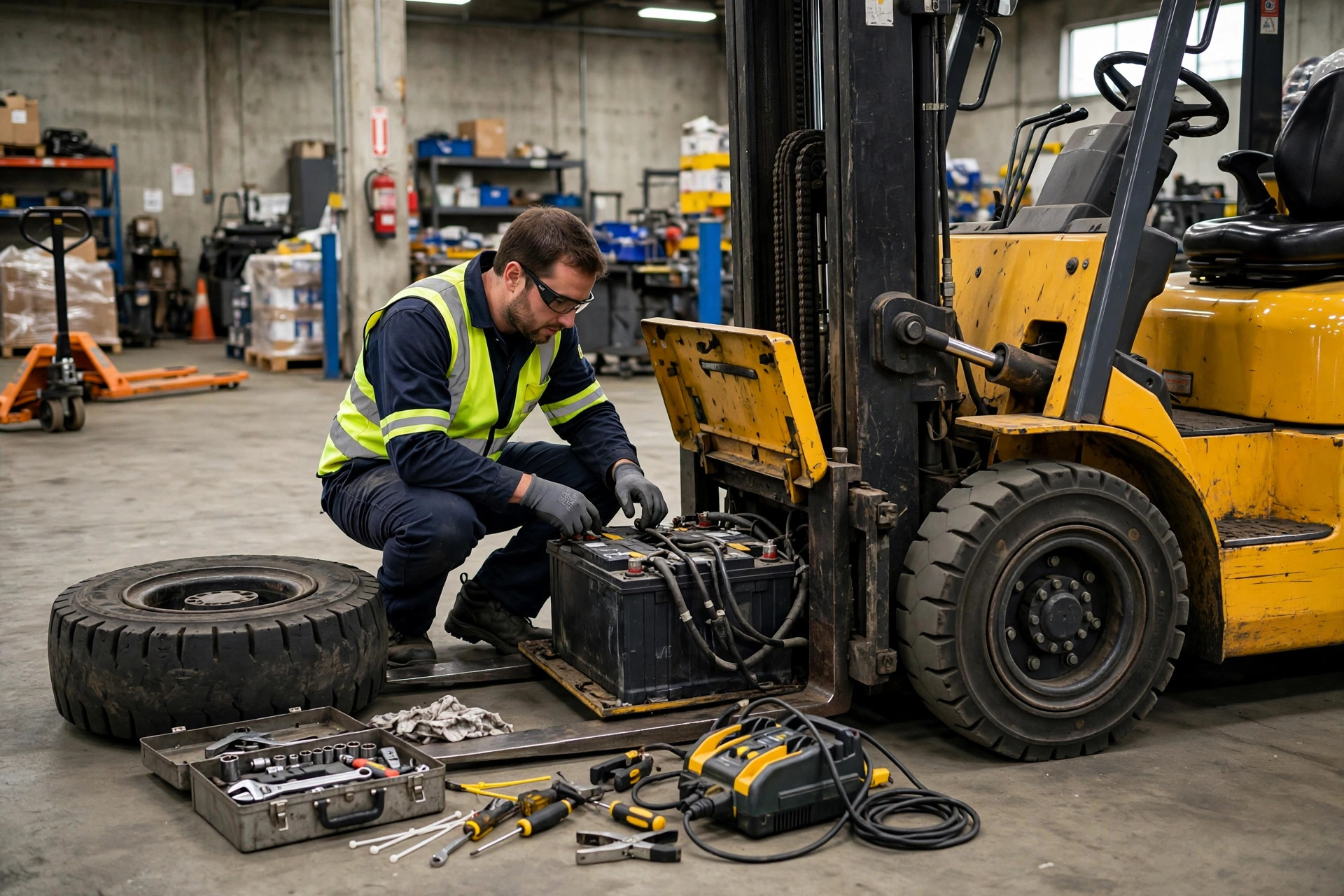
- Batteries and tires. Lead-acid replacement: $5,000–$8,000 per battery, roughly 1,500 charge cycles of life. Solid tires: $200–$400 each. The most underestimated line in TCO.
- Cost of capital. Tied-up cash or interest. $384,000 parked in forklifts at a 6% cost of capital quietly costs five figures over five years.
- Residual value. Five-year-old trucks fetch roughly 25–35% of purchase price on the used market. If you can't defend this number, buying loses a chunk of its edge.
Buy vs Lease: The Five-Year TCO Table
Assumptions up front — a comparison table without stated assumptions is a scam. One electric forklift, single shift (~2,000 hours/year), 60 months.
| Cost item (USD) | Outright buy | Full-service lease | Finance lease (60 mo) |
|---|---|---|---|
| Purchase / down payment | 32,000 (range 28,000–38,000) | 0 | 0 |
| Monthly payment | 0 | 950/mo, all-inclusive | ~626/mo + 10% balloon |
| 60-month payments | 0 | 57,000 | ~40,760 (incl. balloon) |
| Maintenance (60 mo) | 12,000 | 0 (included) | 12,000 |
| Battery replacement | 6,000 | 0 (included) | 6,000 |
| Tires / wear parts | 4,000 | 0 (included) | 4,000 |
| Cost of capital | 4,800 (at 6%, rough) | 0 | 0 (interest in payments) |
| Residual recovery | −9,600 (30% of purchase) | 0 | −9,600 |
| 60-month TCO | ~49,200 | ~57,000 | ~53,200 |
| Monthly equivalent | ~820 | 950 | ~887 |
Sources: purchase price, lease rates, and maintenance from public US dealer quote ranges; finance-lease rate in the 6–8% band; residual at 30%. Adjust with your dealer's latest quotes — anything outside these ranges, add or subtract yourself.
The verdict is blunt: buying is cheapest, but only by about $7,800 per unit over five years — at the cost of $32,000 cash up front and residual risk on your own books. The finance lease sits in between: easier monthly payments, roughly $4,000 more than buying outright over five years.
The Counterintuitive Part: Leasing Costs More, but Cash Flow Wins
The table says buy wins. Yet more than half the operators I know lease. Counterintuitive? Not really — because there is no "cash flow" row in the TCO table.
$384,000 sunk into 12 forklifts guts a mid-size 3PL. The lease option costs $11,400/month and runs about $94,000 more over five years — and that $94,000 buys three things: no $384,000 cash outlay; residual risk sits with the dealer; and you can return trucks when business dips. Those four idle trucks? On a lease, eight months would have saved roughly $30,000.
Second counterintuitive truth: the harder you run it, the more you should buy; the lighter the use, the more you should lease. Single shift at 2,000 hours/year is the dividing line. At double shift (4,000 hours), lease "hour caps" start biting — $3–$5 per hour over 2,000/year is standard, which adds five figures a year, and buying wins. Running three shifts on a full-service lease is a donation to the dealer.
Third: a used truck plus a full-service maintenance plan may be the value king. A three-year-old electric forklift costs roughly 45–55% of new; pair it with full-service maintenance and five-year TCO can land 20% below leasing. The catch: you need to know trucks and how to inspect one — if you can't read battery health, stay away from used.
Seasonal Operations: Leasing Is the Only Answer
2024, Dallas: an e-commerce fulfillment warehouse shipping holiday gifts. Six trucks cover the baseline; September through December needs fourteen. Instead of buying eight new trucks, they signed four-month short-term leases at about $1,100/unit/month — short-term runs 15–20% above long-term rates, a market norm. Four months cost roughly $35,000; the trucks went back in January.
Buying eight would have meant $256,000 in purchases, then eight months of idle depreciation eating cash in a corner of the warehouse. This one doesn't need precise math — the direction alone wins: for volatile volume, every dollar of idle truck is wasted money.
forklift buy vs lease cost: Read These Four Lines Before You Sign
Buy or lease, these four contract lines are where money is saved — or lost:
- Annual hour caps and overage rates. Check the cap first, then the per-hour penalty. For peak-season triple-shift operations, this one line can swing five figures.
- Early-return and termination penalties. Can you return trucks if business shrinks, and how many months' rent is the penalty? This decides what the lease's flexibility is actually worth.
- Residual and balloon terms. On a finance lease, negotiate the balloon below 10%, or get the dealer to write in a guaranteed buyback price — move residual risk off your books whenever you can.
- What's actually in "full-service." Does full-service include batteries? Tires? Plenty of "full-service" plans exclude batteries — and you discover it as a $6,000 surprise at replacement time.
The Calculable Conclusion
No gut feelings. Use the formula:
Decision rule: Planned use ≥ 4 years, ≥ 2,000 hours/year, healthy cash position → buy. Use ≤ 3 years, volatile volume, tight cash → lease. Stuck in between → finance lease.
Break-even: On the numbers above, outright buy vs. full-service lease breaks even around month 36–42. Negotiate residual well and control maintenance, and it pulls in to just past month 30; lose control of maintenance and it drags toward month 48. In plain English: if you'll run the truck a full four years, buy; if the business might change within three, lease.
Final word: there's no standard answer to forklift buy vs lease cost — only an answer with the math done. Plug your warehouse's annual hours, cash position, and volume volatility into the table above, and the answer writes itself.
By Lao Zhou, Logistics Cost Analyst