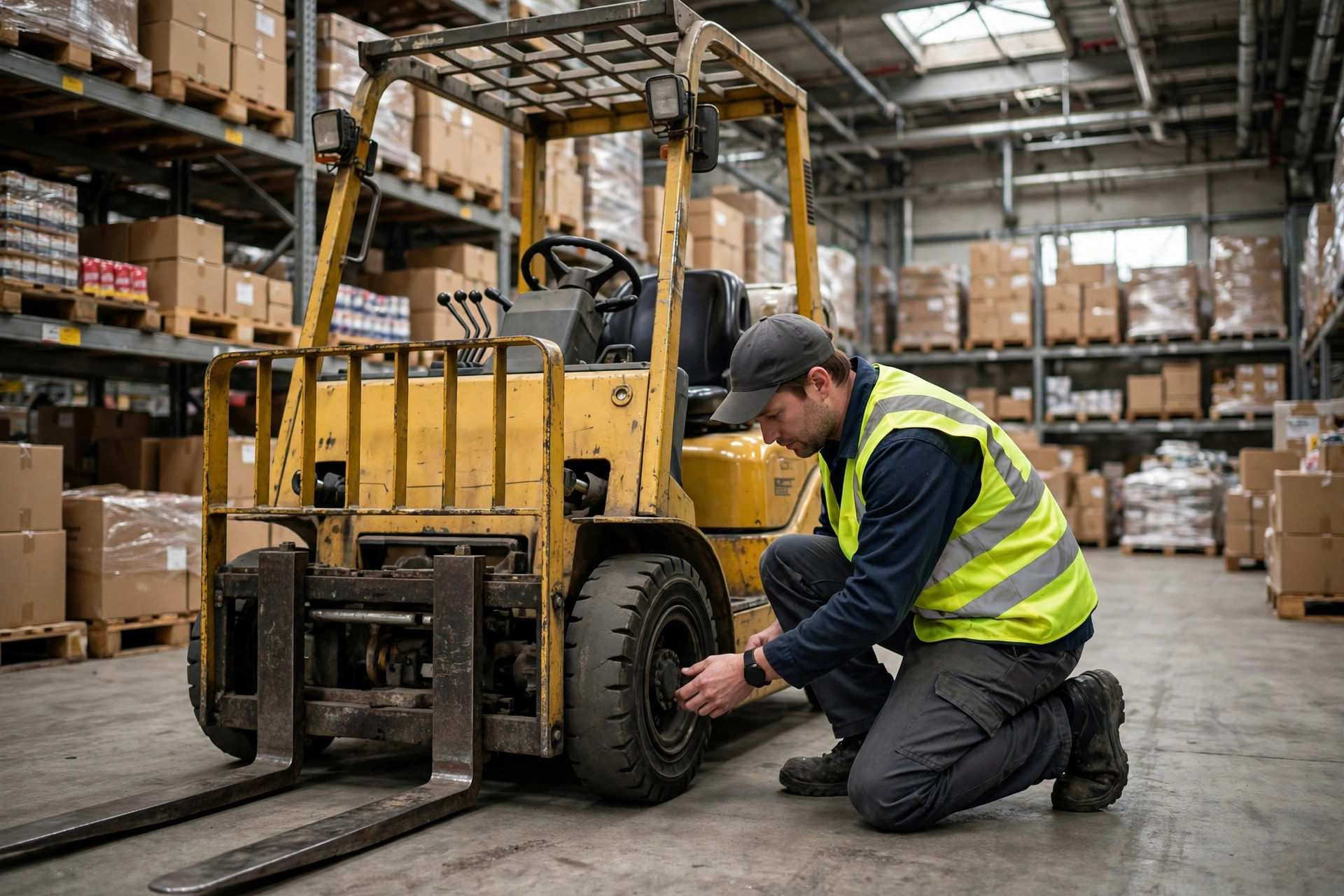
Let me tell you something about how often to water forklift batteries. After fifteen years on the road, I've seen forklifts die every way you can imagine — blown tires, leaking hydraulics, you name it. But the one that really opened my eyes was a forklift that died because somebody watered its battery wrong. Too much water, too little water — either way, you're out a few thousand dollars, plus a whole line of people standing around doing nothing.
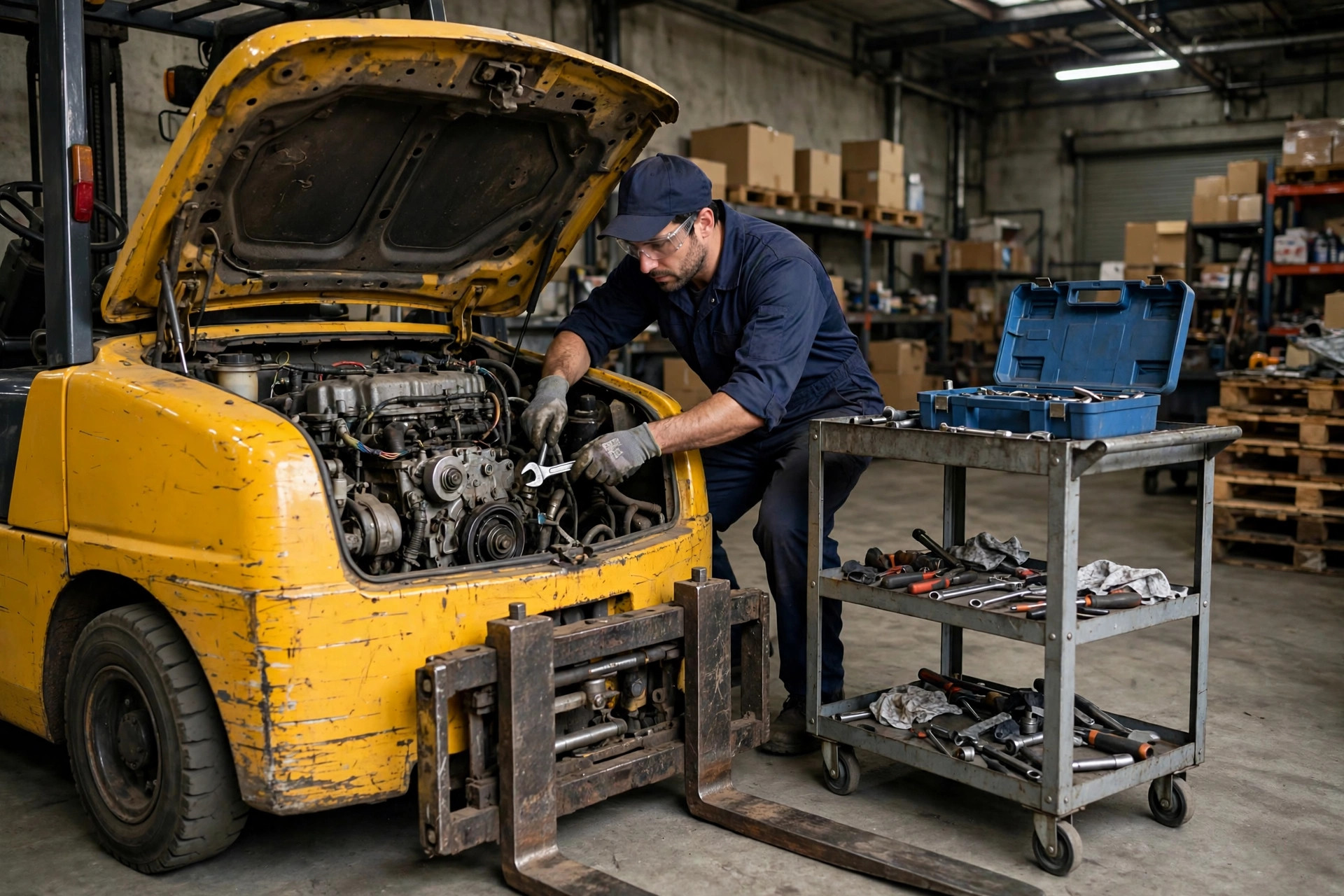
This was October 2024. I was picking up a load at a 3PL warehouse outside Ontario, California. Around three in the afternoon, my truck was sitting at the dock waiting to load when the forklift next to me just gave up. It picked up a pallet, lifted it halfway, shuddered, and froze. The driver climbed down scratching his head: "It was fine this morning. Charged it full last night. How's it dead by afternoon?" The maintenance guy popped the battery cover, shined a flashlight in, and shook his head. The electrolyte level had dropped way down. Plates were exposed, turned white — textbook sulfation from running dry.
The supervisor told me later that battery was less than three years old. A lead-acid forklift battery, taken care of, runs about five years. Once the plates sulfate, lead sulfate crystals coat them, they won't take a charge anymore, and the lost capacity never comes back. Dead early. A replacement set runs a few thousand dollars. And the kicker: that afternoon's load never got on my truck. I sat at that dock most of the afternoon, three trucks queued up behind me. The shipper ate detention and rescheduling costs on top of it — all because nobody remembered to give the battery a drink.
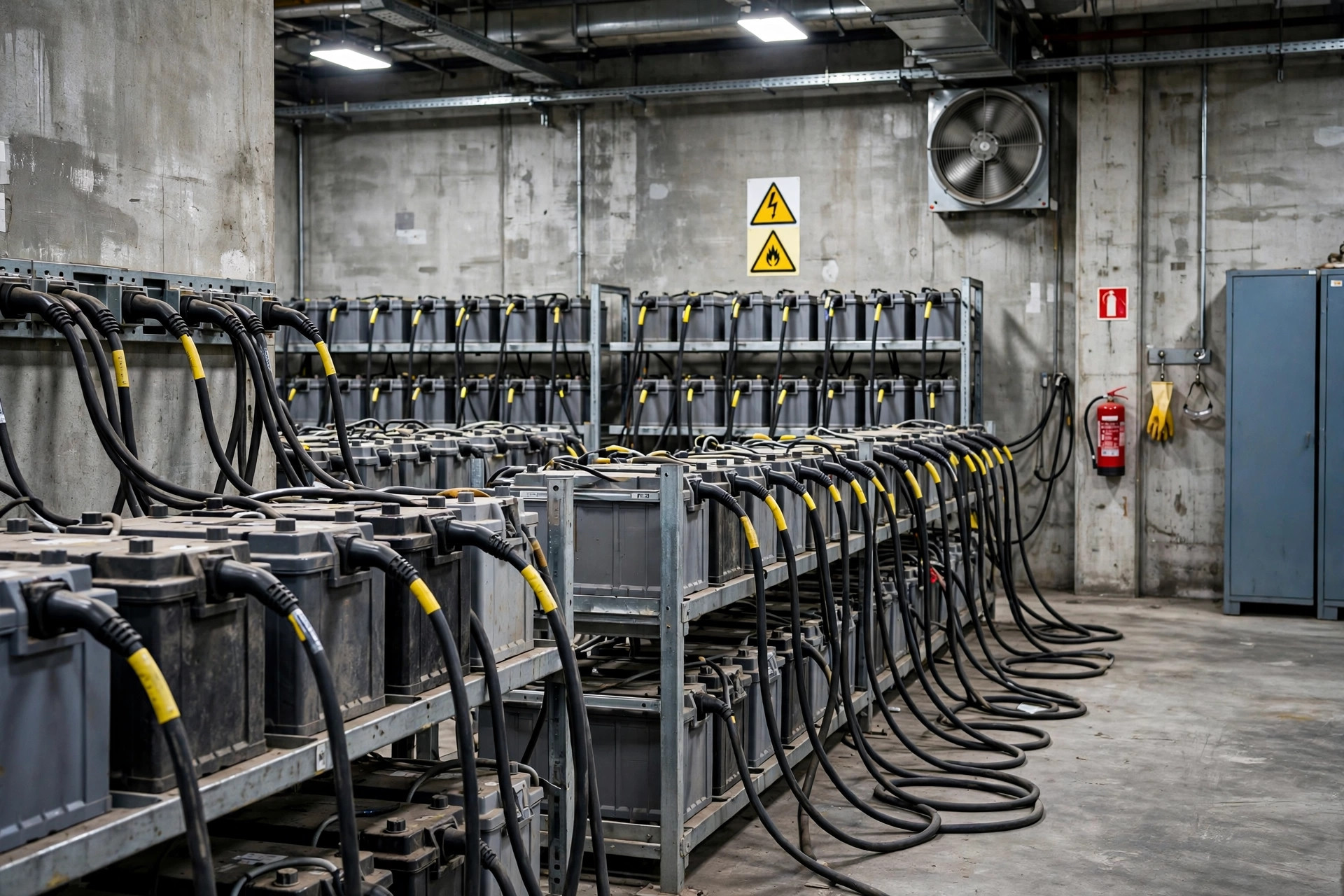
You think that's a one-off? Let me tell you about the opposite problem, which honestly made me angrier. Summer 2023, a warehouse in Fontana. There was a driver there, real eager kid. He'd heard batteries need water, so before every charge he'd go down the line with a jug and top every cell to the brim. His logic: more water beats less water, right? Wrong. During charging, the electrolyte heats up and the level rises. Acid boiled right out of the vent caps, ran down into the battery case, ate the terminals, and dripped onto the concrete floor — left a big white burn mark. One time it nearly dripped onto a pallet of customer freight underneath. That would've been a disaster.
The supervisor ran the numbers afterward: acid cleanup, new terminals, floor repair — cost more than years' worth of distilled water. The kid was crushed. "I was just trying to do a good job!" The supervisor's answer stuck with me: "Hard work in the wrong direction costs more than laziness."
How Often to Water Forklift Batteries: Water After Charging, Never Before
So what's the lesson? There's one iron rule for forklift battery watering: water only after a full charge, never before charging.
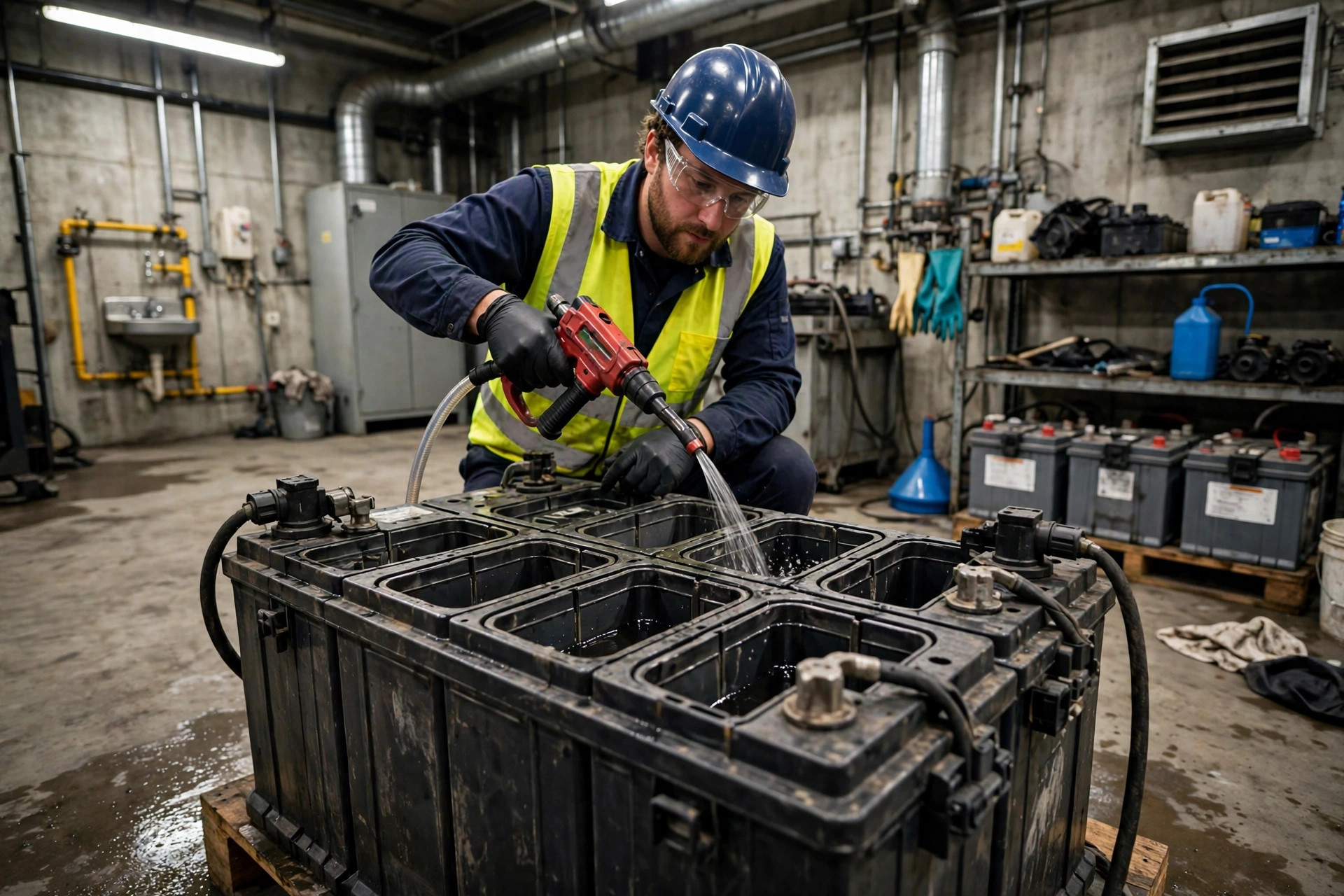
Here's why, in plain English. Charging heats the electrolyte, and the level rises. If you fill the cells before charging, the rising level pushes acid out the vents — that's exactly the trap the Fontana kid walked into. After a full charge, the level is stable. That's when you top it up, to about a quarter inch (roughly 6 mm) above the plates, leaving room for expansion. That's the whole secret.
Quick comparison so you can see it at a glance:
| Water before charging | Water after full charge | |
|---|---|---|
| Level behavior | Rises as electrolyte heats up | Stable |
| Risk | Acid boil-over — corrodes terminals, floors, freight | Practically zero overflow risk |
| Verdict | Don't do it | This is the right way |
What kind of water matters too: distilled or deionized water only. Tap water has minerals that plate out on the plates and slowly poison the battery. I've seen drivers top off straight from a hose because it's handy. Break that habit. A jug of distilled water costs a few bucks. The battery costs a few thousand. You do the math.
A Forklift Battery Watering Schedule You Can Tape to the Wall
Knowing "water after charging" isn't enough — you need a rhythm. Here's a schedule. Print it, tape it to the charging-area wall, follow it:
Weekly: Check the level. Pop the caps, look in. Plates exposed? Note it, then top up after the next full charge.
After every full charge: Check and water. This is the big one. Fill to about a quarter inch above the plates — never to the brim. That air gap is there for expansion.
Monthly: Run an equalization charge. That's a deliberate slight overcharge that brings lagging cells back in line so none of them stay chronically undercharged. Overcharging gasses more and evaporates water, so the level will drop after equalizing — that's normal, just top it up. Plenty of shops do the equalization and forget the watering. The two go together; half the job is worse than none.
Quarterly: Inspect terminals for corrosion and the case for leaks. White powdery buildup? Wipe it with baking-soda solution. Wear gloves — it's acidic.
Here's the counterintuitive part: batteries drink more in summer and less in winter. Heat speeds evaporation; cold slows it. Don't run the schedule on autopilot — adjust with the season. After all these years, I've noticed the warehouses that treat equipment like a living thing get more years out of a battery than the ones that run it like a dead checklist.
Who Waters the Battery? Write It Down First
Here's what fifteen years of pulling into warehouses has taught me: most problems come down to "I thought it was somebody else's job." Battery watering is no different. Drivers think it's maintenance's job. Maintenance thinks it's the warehouse supervisor's job. The supervisor thinks the driver, who's with the truck all day, obviously handles it. Nobody handles it. The battery dies of thirst.
My advice is simple: drivers drive; one named person owns the batteries. Could be the equipment tech, could be the shift lead — pick a name and put it in the job description. Then hang a watering log in the charging area. Keep it dead simple:
| Date | Battery ID | Level after charge | Water added | Watered by | Equalized |
|---|---|---|---|---|---|
| OK / Low | ✓ / — |
That sheet does two things. First, it forces the habit — nobody leaves a wall chart blank without feeling guilty. Second, when a battery dies, you flip back through the log and you know instantly: ran dry, overfilled, or nobody touched it. No finger-pointing needed.
One last bit of arithmetic. A lead-acid forklift battery: a few thousand dollars, five years of life, which works out to tens of dollars a month. Kill it two years early from sulfation and you're throwing away over a thousand dollars a year — before you count the downtime and the angry shipper. A jug of distilled water: a few bucks. A log sheet: free. A fifth-grader could do this math, yet warehouses get it wrong every single year.
There's an old saying where I come from: diligence is a virtue, but only when it's pointed in the right direction. Remember six words — water only after charging — and it's worth more than a brand-new battery.
By Shifu Zhao, Trucking Veteran (15 yrs)