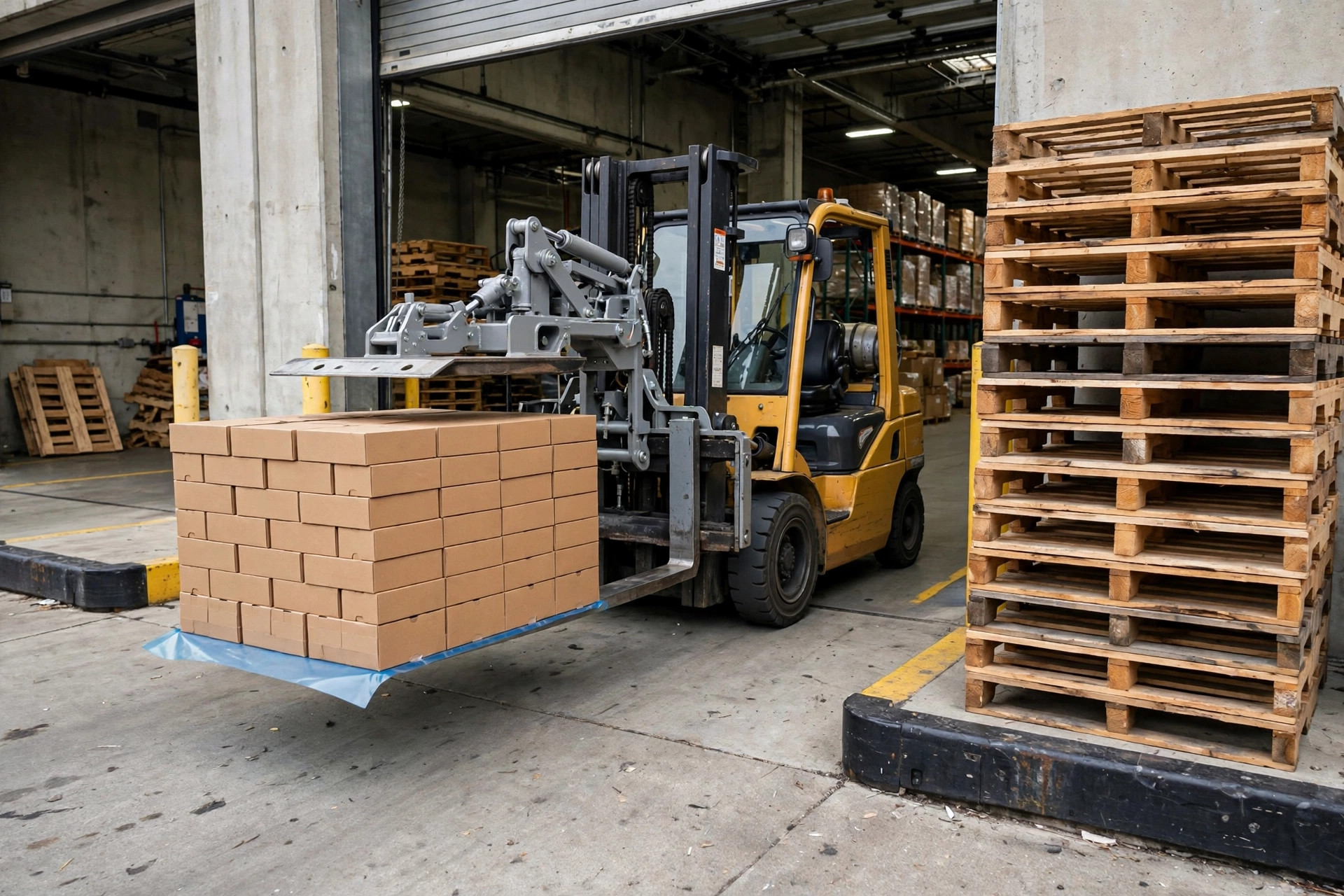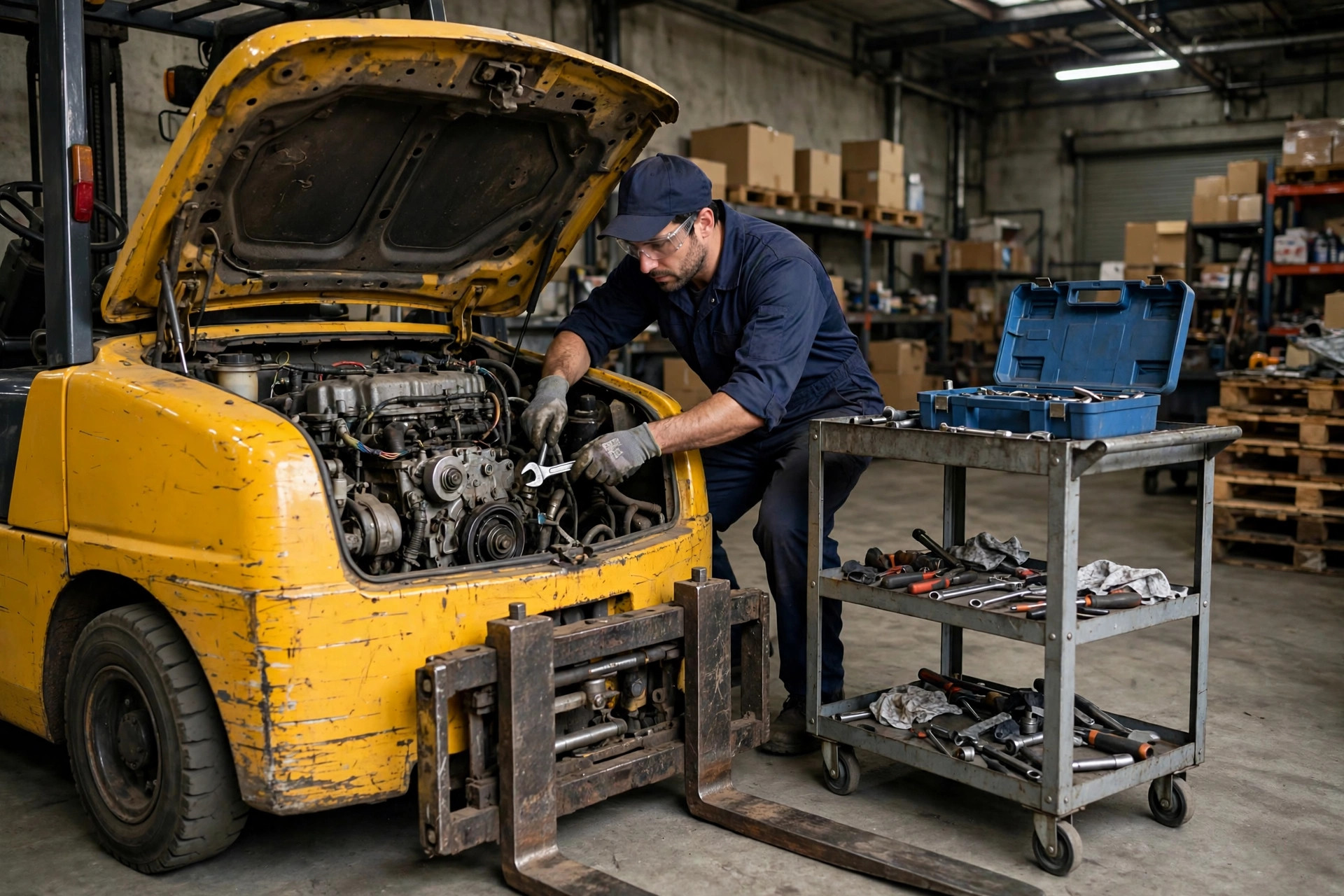
Three forklifts. One goes down, and half my warehouse stops.
That's not drama — that's just reality. I run a 3,000-square-meter warehouse with exactly three forklifts: two diesel workhorses for heavy lifting and one electric rider for the high-bay aisles. Last June, our oldest diesel truck (pushing 9,000 hours on the clock) died during peak shipping season. Transmission rebuild. Nine days. With one truck gone, the other two ran double shifts, and our night drivers were practically sleeping in the seats. On-time shipments dropped 12 points that month, and one longtime customer moved half of next month's orders elsewhere. That was the week I learned the small-warehouse rule: we can't afford "fix it when it breaks." We can only afford "maintain it before it breaks."
Here's the scrappy maintenance system we've built over two years — written for warehouses that, like mine, run on a handful of trucks and a thin budget.
Our Service Schedule: What Happens at 250, 500, 1,000, and 2,000 Hours
Big companies have maintenance manuals thick enough to stop a door. We have one A3 sheet taped next to the forklift key cabinet. Our intervals run on operating hours (the hour meter, not the calendar), because small-warehouse usage is lumpy — 14 hours a day in peak season, 5 in the slow months. Calendar-based schedules lie.
Every 250 hours (roughly every 1–2 months): driver does it, takes 30 minutes
This is the daily-plus-periodic check, and the drivers do it themselves — costs us nothing:
- Engine oil, coolant, and hydraulic fluid levels — the "three fluids"
- Tire pressure and wear; note it when the tread hits the wear marker
- Forks, chains, and mast — any odd noises or sticking on the lift
- Lights, horn, reverse beeper, seatbelt
- Battery (on the electric truck): electrolyte level, terminal corrosion
Done? Check the box, sign your name. Our rule: whoever drives, inspects — the checklist lives with the keys, no inspection, no keys. Drivers grumbled for the first two months, then it became habit. Nobody wants a truck dying mid-shift and earning themselves overtime.
Every 500 hours (roughly every 3–4 months): oil and filters, mobile tech comes to us
Engine oil, oil filter, and air filter — the trio, all at once. A mobile technician comes on-site; parts plus labor run about $110–$170 per diesel truck (the electric one is cheaper — mostly battery and motor brush checks). While he's there, he torques every bolt and adjusts chain tension.
Every 1,000 hours (about twice a year): minor service, half a day
Everything from the 500-hour service, plus: transmission fluid, hydraulic filter, brake inspection, tire rotation, mast roller clearance adjustment. Takes half a day, so we schedule it for a weekend or a slow weekday, planned a week ahead — never touching shipping days.
Every 2,000 hours (about once a year): major service, full day
All fluids and all filters (engine, transmission, hydraulic, coolant), chain elongation measurement (over 3% stretch means replacement — that's a safety red line), tires as needed, full electrical check. For this one we drive the trucks to the dealer's shop, get it done in a day, and ask the tech for a written "health report" — so we know what's likely to fail next year before it fails.
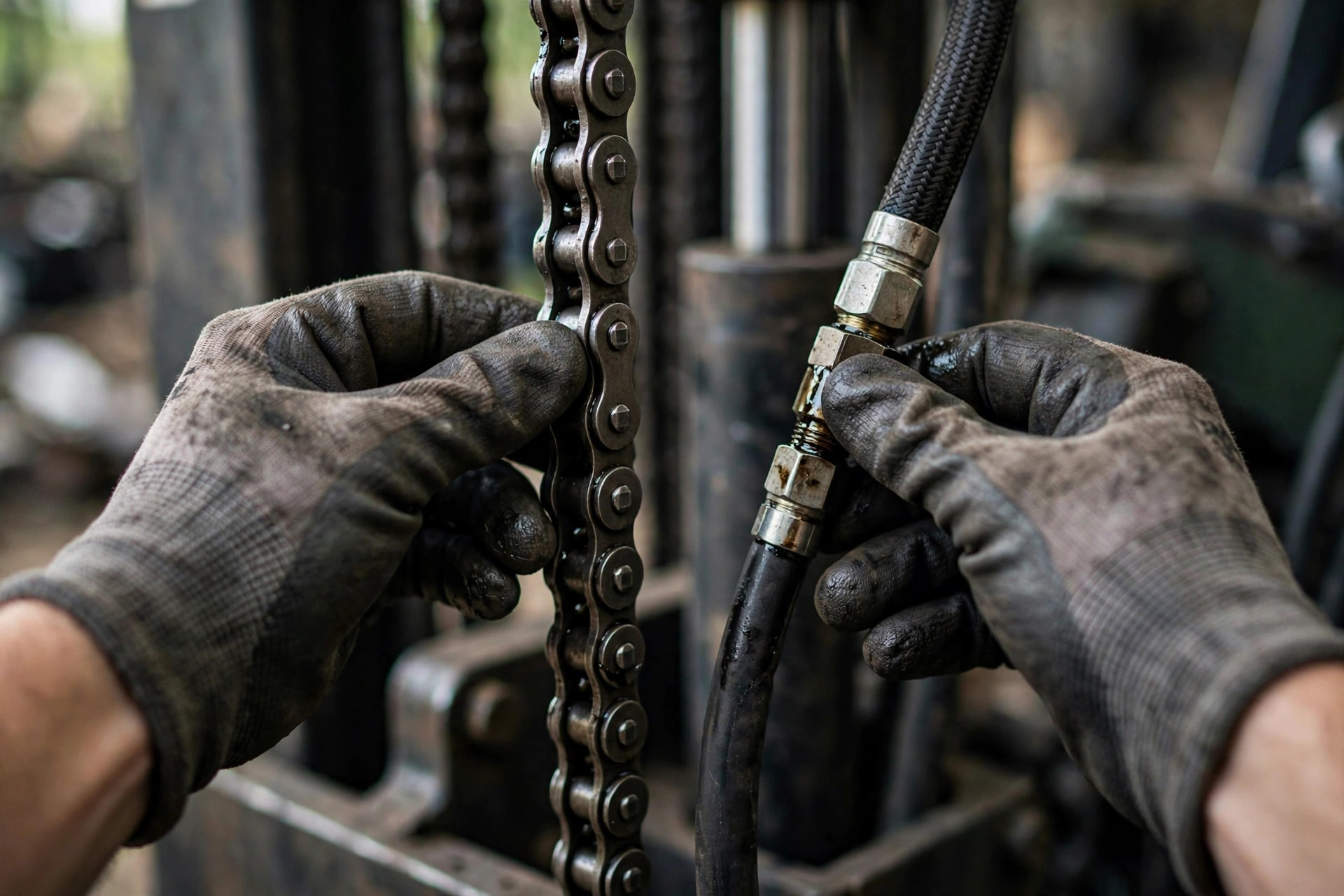
Two years on this schedule, and we haven't had another nine-day breakdown. The biggest single repair since was a chain replacement ($530) — done on schedule, zero shipping impact.
The Math: What a Year of Maintenance Costs vs. What One Breakdown Costs
Small-warehouse owners don't respond to "you should." We respond to numbers. Here are our real 2025 figures — two diesel trucks plus one electric, roughly 6,000 combined hours a year:
| Item | Annual cost (USD) |
|---|---|
| 250-hour checks (drivers do it) | $0 (baked into wages) |
| 500-hour oil/filter changes, 2 diesel trucks × 2 rounds | ~$1,100 |
| 1,000-hour minor services × 3 trucks | ~$1,250 |
| 2,000-hour major services × 3 trucks | ~$2,100 |
| Misc. replacements (bulbs, belts, 2 tires) | ~$850 |
| Total | ~$5,300 |
$5,300 sounds like real money. Now the other side — the transmission failure of June 2024:
- Transmission rebuild: $3,600
- Renting a used forklift for 9 days: $620
- Overtime for 9 days of two-truck heroics: ~$1,100
- Lost margin from the customer who moved orders away: ~$5,500 that month
Direct plus indirect: pushing $11,000 — more than double a full year of preventive maintenance. And that doesn't count the trust damage. That customer still hasn't fully restored their order volume.
Here's the counterintuitive part: most people treat maintenance as a cost to minimize. We learned it's insurance with absurdly good odds — and the odds are better for small warehouses than big ones. A big fleet has redundancy; one dead truck gets covered by a spare, so their maintenance can be "good enough." We have no redundancy. One dead truck is half our capacity gone. The fewer trucks you have, the higher the return on preventive maintenance. That's the fundamental difference between us and the big guys.
Outsource vs. In-House Mechanic: We Tried Both
This was our longest-running debate, and we have scar tissue from both sides. We ran an in-house mechanic for eight months. Verdict: outsource, and do the daily checks yourself.
| Outsource to dealer / service company | In-house mechanic | |
|---|---|---|
| Direct cost | Pay per visit, ~$5,300/year total | $3,500–$4,500/month salary + benefits = $45k+/year |
| Response time | 4-hour on-site in our service agreement | Already on-site, instant |
| Skill depth | Dealer techs fix this brand all day; they've seen every weird failure | One person — still calls outside help for transmission/electronics |
| Tools | They bring their own | We'd have to buy lifts and diagnostic gear — thousands more |
| Slow season | No work, no bill | Slow season, full paycheck |
Our in-house mechanic (hired late 2023, $4,000/month) spent maybe three days a month actually fixing forklifts. The other 70% of his time? Welding racks, fixing pallets, unclogging drains — he'd become our all-purpose handyman. After eight months we did the math and switched to outsourcing: an annual agreement with the dealer covering all 500/1,000/2,000-hour services, 4-hour emergency response in writing, 10% off parts.
The small-warehouse answer: do the 250-hour checks yourself (free, and it builds driver ownership), outsource everything at 500 hours and above. Don't copy the big companies' in-house maintenance teams — with 50 trucks, three mechanics spread thin is fine; with 3 trucks, one mechanic is just burning money. "We small warehouses can't burn money like that" — a sentence that stays true for every equipment decision.
The Cheapest Tool That Works: One Sheet of Paper
We've tried Excel. We've tried a phone app. Both died within weeks — nobody opened the spreadsheet, and the drivers abandoned the app in three days.
What survived: one A3 sheet. Three columns (one per truck), four rows (the 250/500/1,000/2,000 intervals). After each service: check the box, sign, write the hour-meter reading. It's taped where the keys hang. I glance at it at month-end and instantly know which truck is due.
Why paper beats software for us: a system is built for 30 trucks. We have three. Excel's problem is invisibility; the app's problem is friction. Paper's advantage is physical visibility — it's taped to the thing you touch every morning. You can't forget it if you tried. Primitive, but two years with zero major breakdowns is the only review that matters.
One backup rule: I photograph the sheet every quarter. Paper gets lost, paper gets soaked in hydraulic fluid (happened October 2024 — thank god for the photo).
Four Things I'd Tell Any Small Warehouse
- Steal the schedule: 250 hours self-check, 500 oil change, 1,000 minor, 2,000 major. Hours, not months. Use it as-is.
- Add up last year's repair bill first: rebuilds, downtime, rentals, overtime, lost orders — everything. Compare it to ~$5k a year in maintenance. The numbers will make the decision for you.
- Don't cheap out on the outsource partner: go with the original dealer or a reputable shop, and get the 4-hour response in the written agreement. The roadside guy is 20% cheaper but the parts might be knockoffs — don't gamble on transmissions.
- Put the checklist with the keys: good process design is about convenience, not willpower. Don't test human nature.
A three-truck warehouse doesn't win on fancy equipment. It wins on never breaking down. Big companies have redundancy; we don't — so our maintenance has to be better than theirs. That's not hustle culture, that's survival. Small warehouses have their own way of living: spend little, get a lot done, keep every truck rolling.
By Xiao Ma, Small Warehouse Owner