Let me give you the verdict up front: whether to fill a concrete floor control joint comes down to joint width and forklift weight. A joint under 6mm with small trucks running slow? Leave it alone. A joint wider than 10mm with heavy forklifts crossing it all day? Not filling it is a tax on your tires and your cargo. There is no romance in this decision — it is all arithmetic.
I have seen too many people treat control joints as a finish detail. At warehouse handover the joints look clean and flat, everyone nods, and then three years later the drivers complain about back pain, tires are being replaced too often, and cases on the pallets are arriving with chipped corners. All of it traces back to the joints. By then, closing a lane for two days of joint work will make the warehouse manager's face darker than the cracks.
A control joint is a saw-cut line, usually on a 3-to-4-meter grid, that tells the concrete where to shrink and crack instead of cracking randomly. Fresh cuts are typically 3–5mm; after a year of thermal cycling they open up to 6–12mm. I once measured the same joint in an Inland Empire warehouse with calipers — summer 110°F, winter 40°F — and the seasonal swing was 3mm. Remember this: joints are alive.
The Decision Comes Down to Width and Truck Class
I have used the same decision framework for a decade:
| Joint width | Forklift situation | Recommendation |
|---|---|---|
| ≤6mm | Any truck | Fine unfilled, just arris the edges |
| 6–10mm | Cushion tires, slow speed | Optional, depends on cargo value |
| 6–10mm | Pneumatic tires, heavy loads | Fill them |
| >10mm | Any truck | Fill them, sooner rather than later |
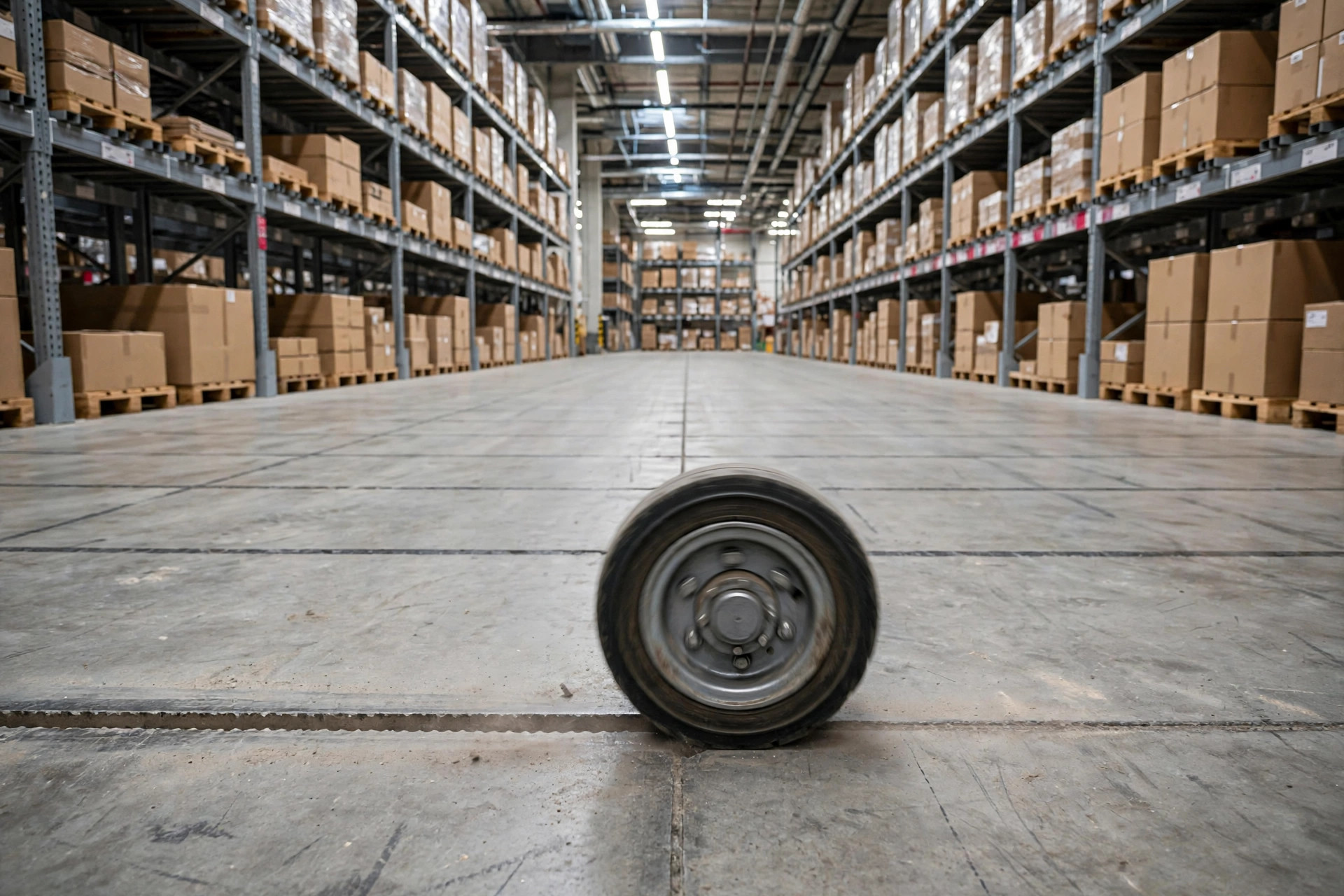
Why is width the hard metric? Because tires have a contact width. A typical counterbalance forklift's front tire footprint is about 150–200mm. Over a 5mm joint, the tire flashes across — the jolt is negligible. Over a 12mm joint, the tire edge drops into the gap and pops back out. Every crossing is a small impact, and the impacts compound in three places: accelerated tire wear, premature steer-wheel bearing failure, and cargo shaken off the pallet.
The Warehouse Where Tires Died Young
In 2019, a 3PL client in Los Angeles County — 80,000 square feet, 18 forklifts, control joints running 10–14mm wide, never filled — hired me for a cost analysis because their tire budget was bleeding.
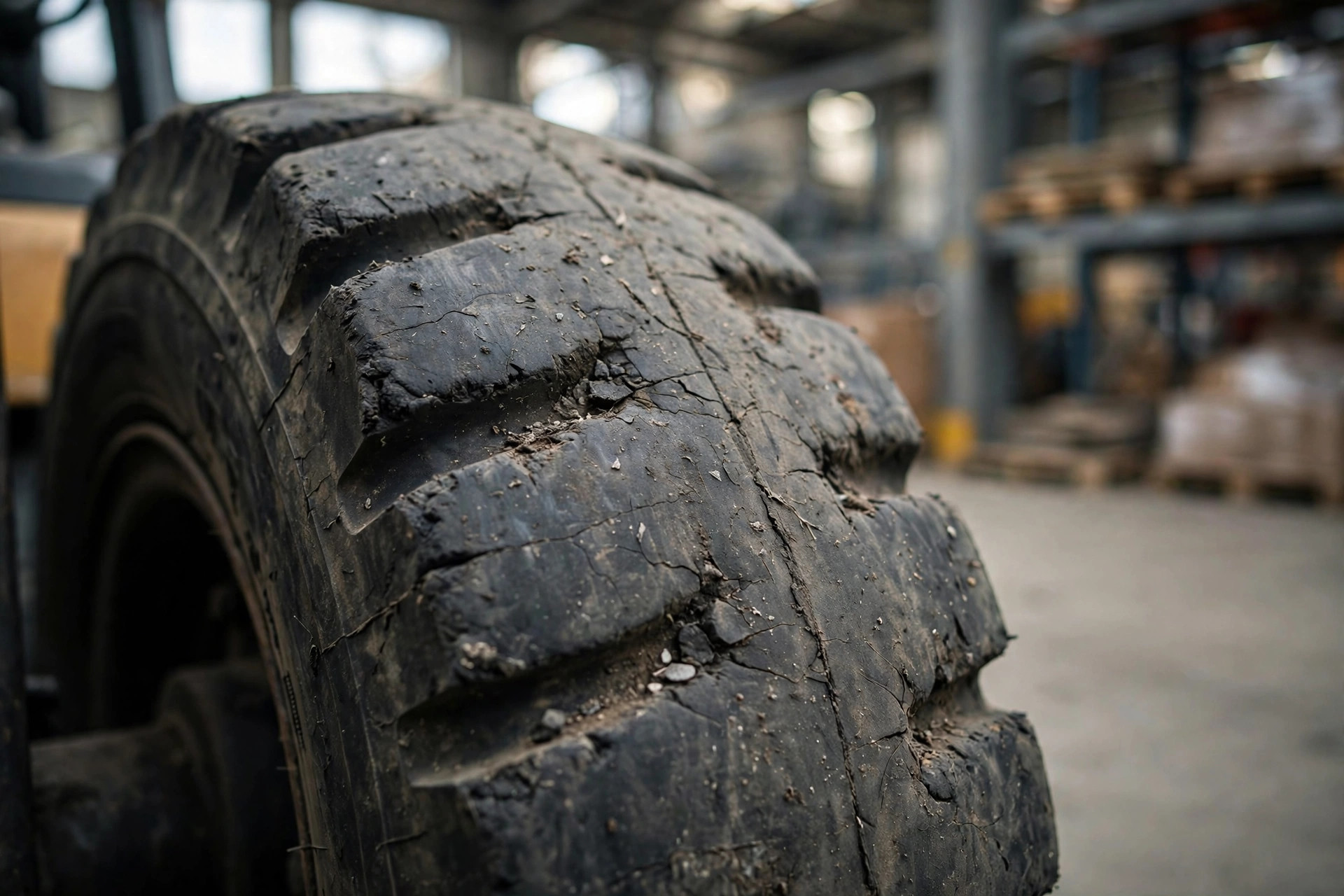
The numbers told the story. In a comparable facility, cushion tires last roughly 3,000–4,000 hours. Their fleet averaged 2,200 hours per replacement. At about $1,200 per axle set with labor, 18 trucks burned through an extra set each year — over $20,000 a year in excess tire cost. That was not the whole bill: they replaced steer-wheel bearings at twice the industry average frequency over those three years.
The expensive part was cargo damage. Where joints were widest, drivers had developed the habit of crossing at an angle to dodge the jolt — and the angled fork entry chipped more than 20 cases a month. The client's own math: roughly $90,000 in hidden joint-related cost over three years. Filling the entire warehouse had been quoted at $28,000 at the time. Frankly, not filling cost them more than twice the price of the job — plus three years of daily jolts.
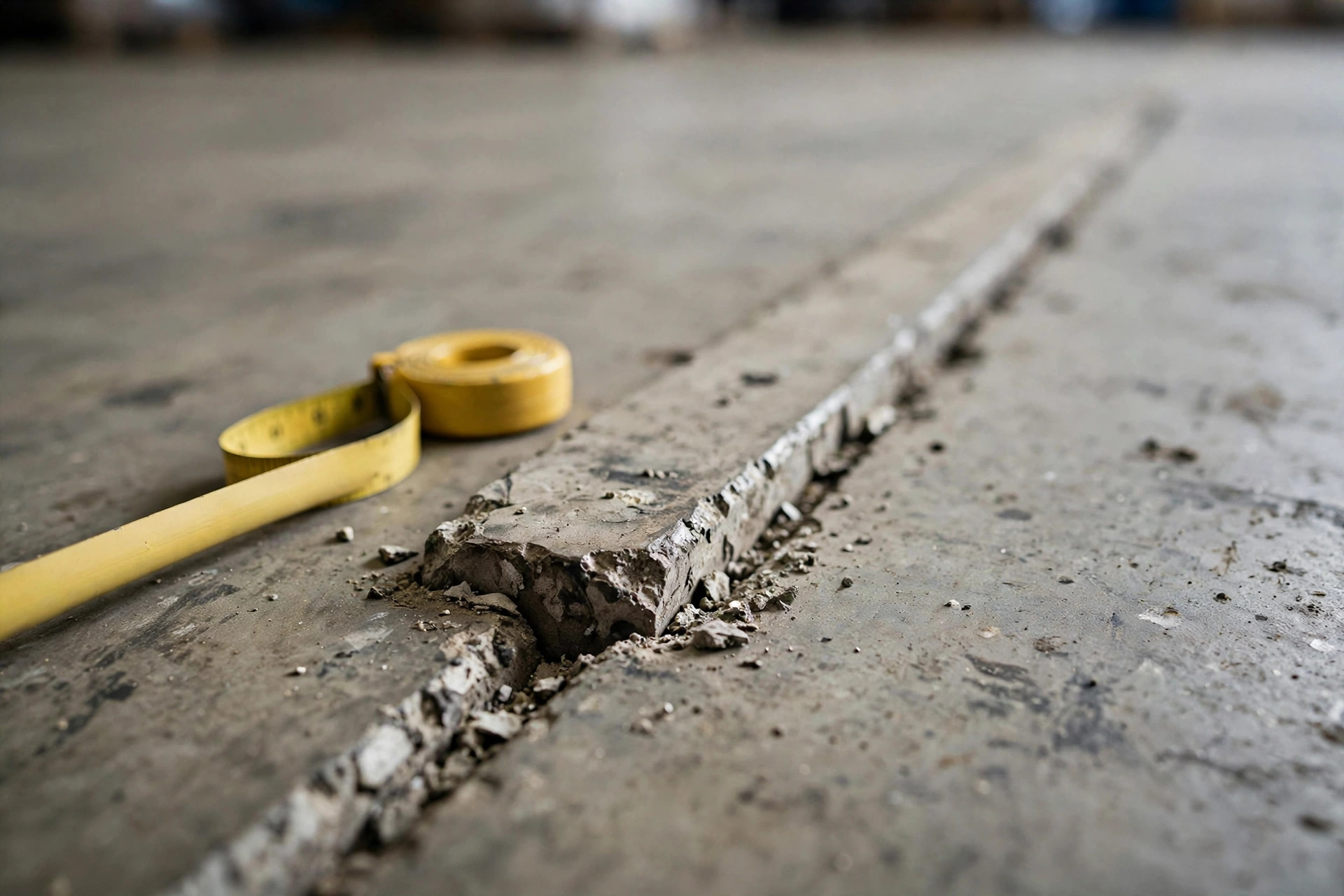
The reverse lesson came in 2022, at a new Las Vegas facility that had filled every joint at construction — with rigid epoxy. The first winter, the concrete contracted, the joints reopened, and the filler tore down the middle. The tire traffic ground the shards into the joints, where they became new trip points for the tires. The client called me: "The filled joints ride worse than the unfilled ones?" The lesson: filler must move with the joint. Rigid filler on a living joint is wasted work.
Three Ways to Fill, and the Material Is Everything
There are really three options, ranked by how they hold up in the field:
- Polyurethane sealant — the best elasticity, moves with the joint, my default recommendation. Downside: 5–8 year service life, then re-fill. The joint faces must be bone dry at installation.
- Semi-rigid epoxy — good load support for heavy-traffic lanes, but pick an elastic formulation. Pure rigid epoxy is the Las Vegas mistake.
- Arissing only (no filler) — grind a small 45-degree chamfer on both joint edges so tires glide instead of dropping in. Cheapest option, fine for new slabs with joints under 6mm, but it buys time rather than solving the problem.
Timing matters as much as material: do not fill on the day construction finishes. Let the slab go through one full summer–winter cycle so the joints stabilize, or fresh joints will tear the new filler. Clean the joints out — pressure-wash the dust — and never install on a wet day.
Now the trade-off math. Polyurethane filling runs roughly $3–5 per square meter (confirm current pricing with your contractor), so a 7,000-square-meter warehouse lands around $20,000–30,000, re-done every 5–8 years. The no-fill math, from my case above: tire life at 70% of normal, bearings dying early, cargo damage, driver complaints — over $20,000 a year just in tires. Once your joints pass 10mm, filling wins every time.
Here is the counterintuitive part: filler laid too high rides worse than no filler at all. The fill should sit 1–2mm below the floor surface. An overfilled "speed bump" at every joint batters tires on every pass. I have inspected at least three warehouses with filler proud by 3mm, where drivers said the ride was worse than before the job. At handover, run a straightedge along every filled joint — anything more than 2mm proud goes back for rework. Non-negotiable.
One last word of advice: control joints are like food stuck in your teeth — you never see them, but they affect you every single day. Spend two extra days on the joints during construction, and you save yourself five years of headaches. If your facility already has joints wider than 10mm, do not wait — fill them lane by lane in the slow season. This is a maintenance bill that cannot be avoided. You will pay it one way or another.
By Lao Mi, Supply Chain Veteran (20 yrs)