Here is my verdict up front: your first AMR deployment should not start on the hardest line in the building. Pick the wrong line and the robot ends up parked in a corner gathering dust, and the post-mortem will blame the machine when the real mistake was the choice of line. The equipment was fine. The line was not.
Last fall I visited a 3PL warehouse in Ontario, about 60,000 square feet, running roughly 8,000 orders a day. They put their first AMR on the picking line: more than 2,000 SKUs, random order lines, routes that changed four or five times a day. By week four the problems were obvious. At peak hours the AMR queued at the aisle entrance while pickers walked around it, and its daily throughput sat below 60 percent of the rated figure. Nothing was broken. The process had collapsed first. The same warehouse later moved that same unit to the replenishment line, running fixed points only, and within two months its utilization was back to a healthy level. Same robot, different line, two completely different outcomes.
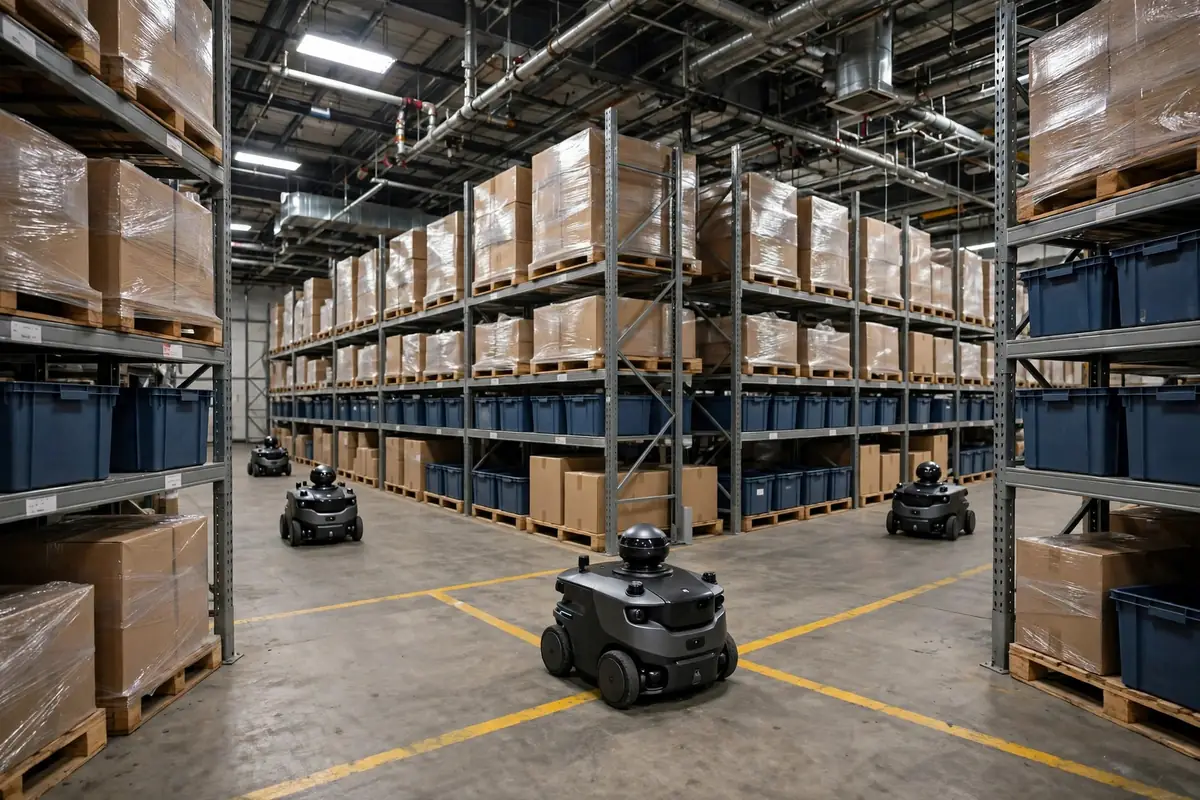
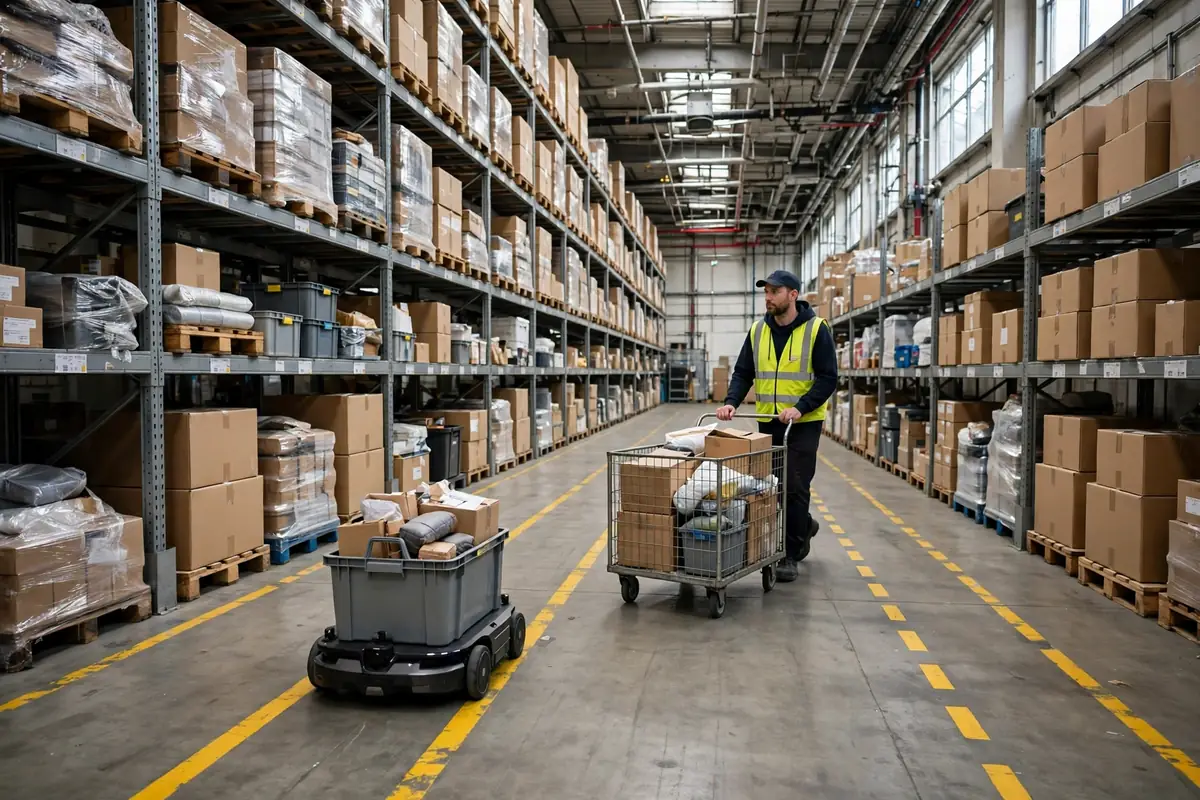
Another warehouse I worked with, an e-commerce operation selling home goods, took the opposite path. Their first unit never touched picking. It ran finished-goods transport, from the packing area to the outbound staging zone, a one-way trip of about 80 meters, more than 60 round trips a day. The route was so simple the map barely needed updating, and it ran three months without a single fault. It took over most of what two people had been doing on the night shift. The owner told me later that he was glad the first unit was not ambitious. Running the most boring line first was what convinced the whole warehouse that the machine could actually do real work.
Think of it like learning to drive: you do not start on the freeway. You start in an empty parking lot and get a feel for the pedals. The job of the first unit is not to impress anyone. It is to prove three things: that your map is accurate, that your process is stable, and that the robot will stop and wait for a human when nobody is watching it at night. Until those three are proven, talking about scale is just talk.
Which Line Gets the First AMR Deployment: The Dividing Line
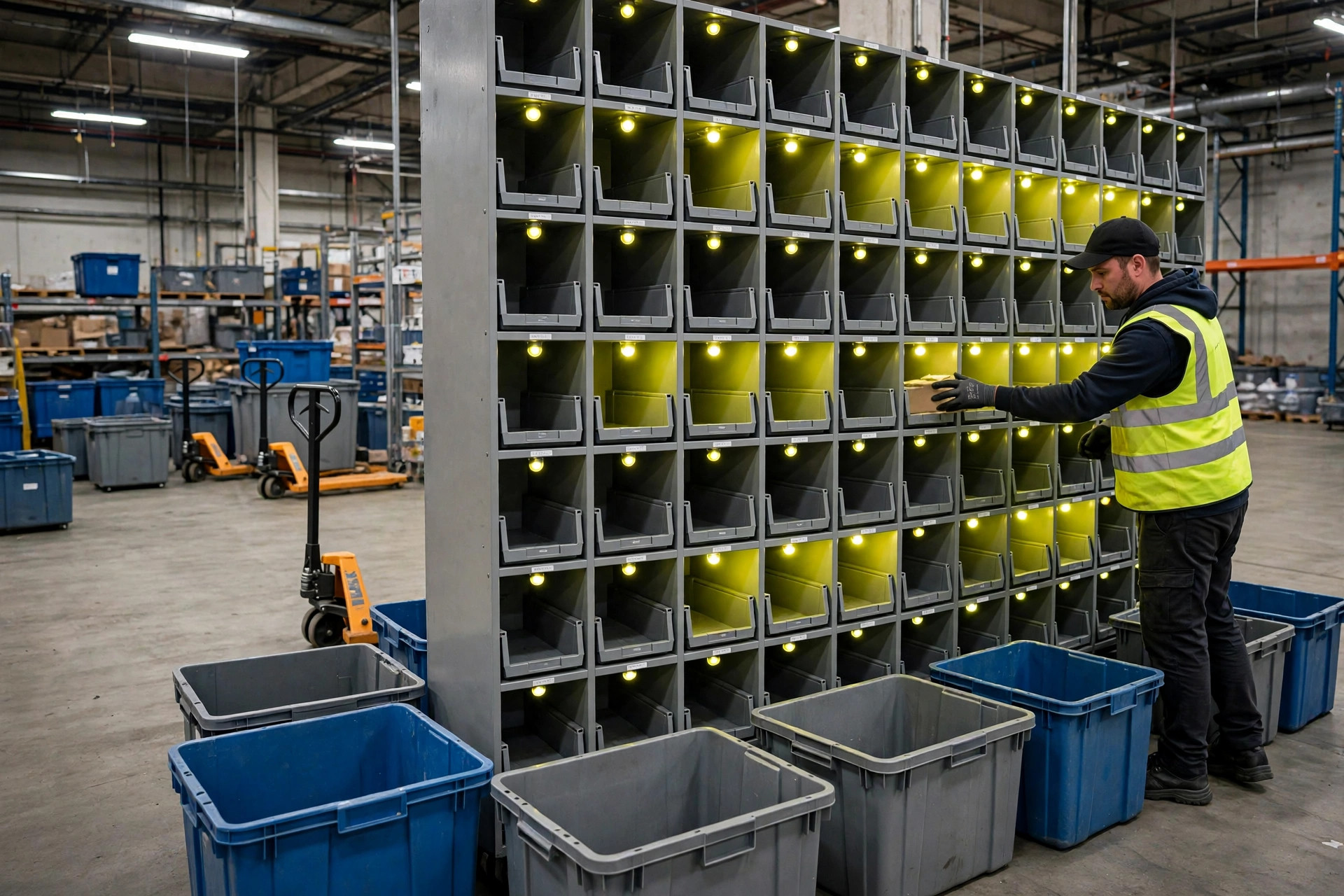
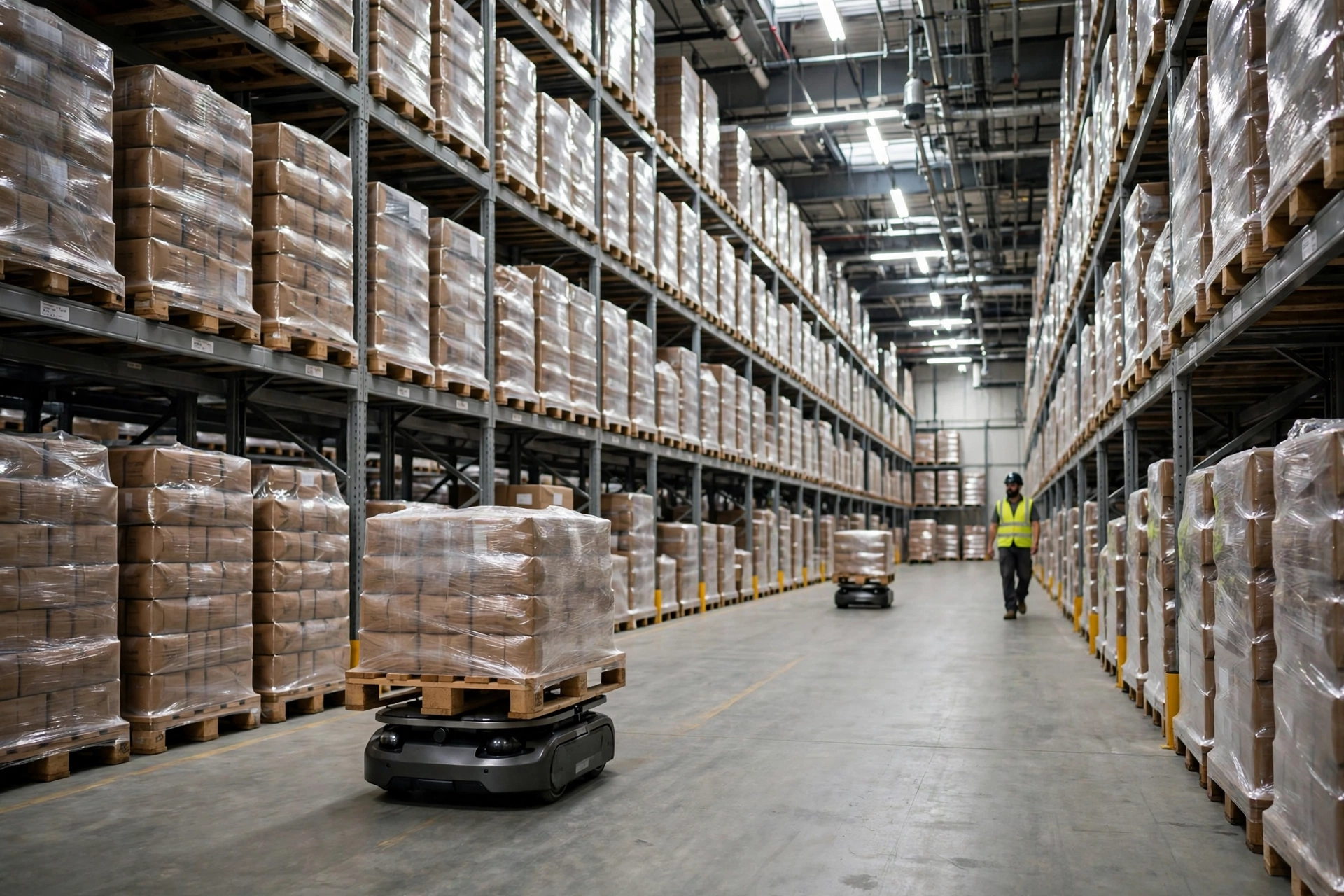
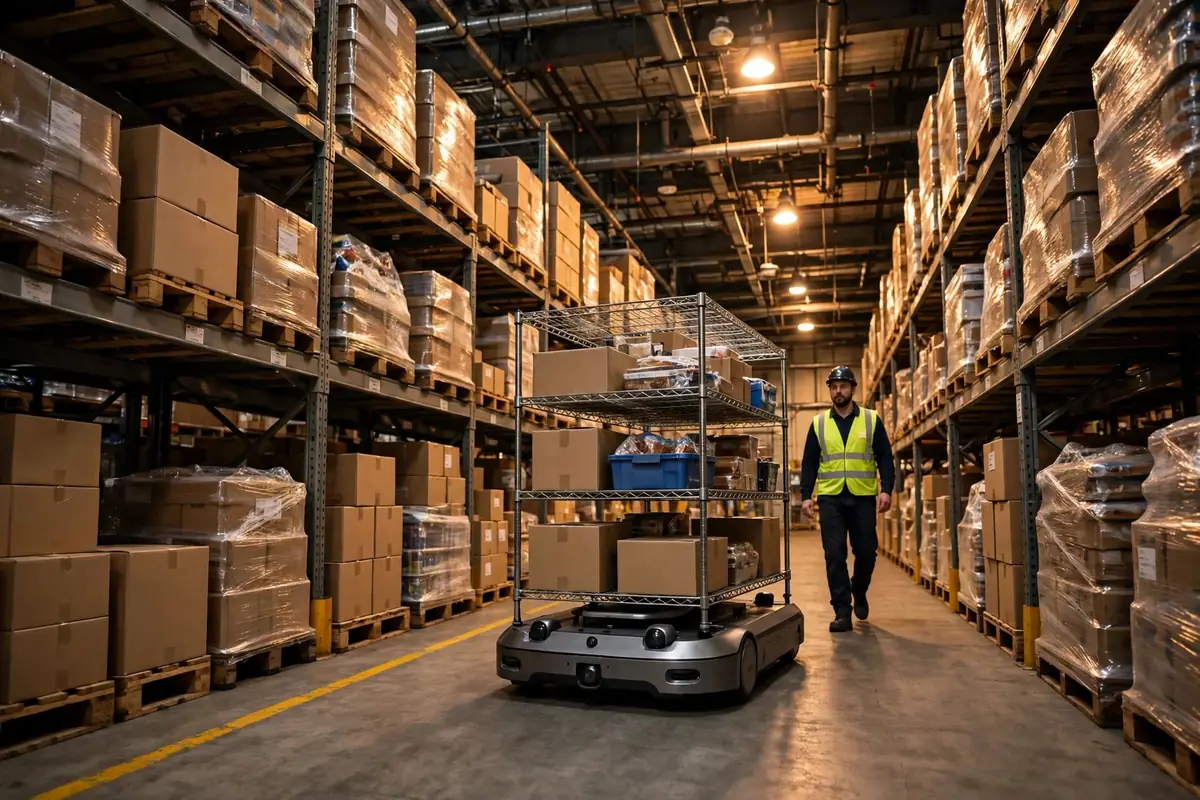
Replenishment, picking, and finished-goods transport place completely different demands on an AMR. Replenishment is the most regular work there is: from the storage area to the picking area, fixed points, stable loads, a route that barely changes during the day. Finished-goods transport comes next: a long one-way run from packing to outbound staging, simple route, and a good place for an AMR to eat up long empty travel. Picking is the hardest: random orders, jumping pick points, people and machines sharing the same aisles, and the highest demands on the scheduling logic and on floor management.
My dividing line is one thing: how regular the work is. If the pick points are fixed, the load is stable, and the route changes fewer than three times a day, that line goes first. If orders are random and pick points move every day, wait for the second or third unit. Where the work is irregular, the AMR's strengths never get a chance to show, and its weaknesses show up first. Choosing a line is not about picking the most impressive one. It is about picking the one least likely to fail.
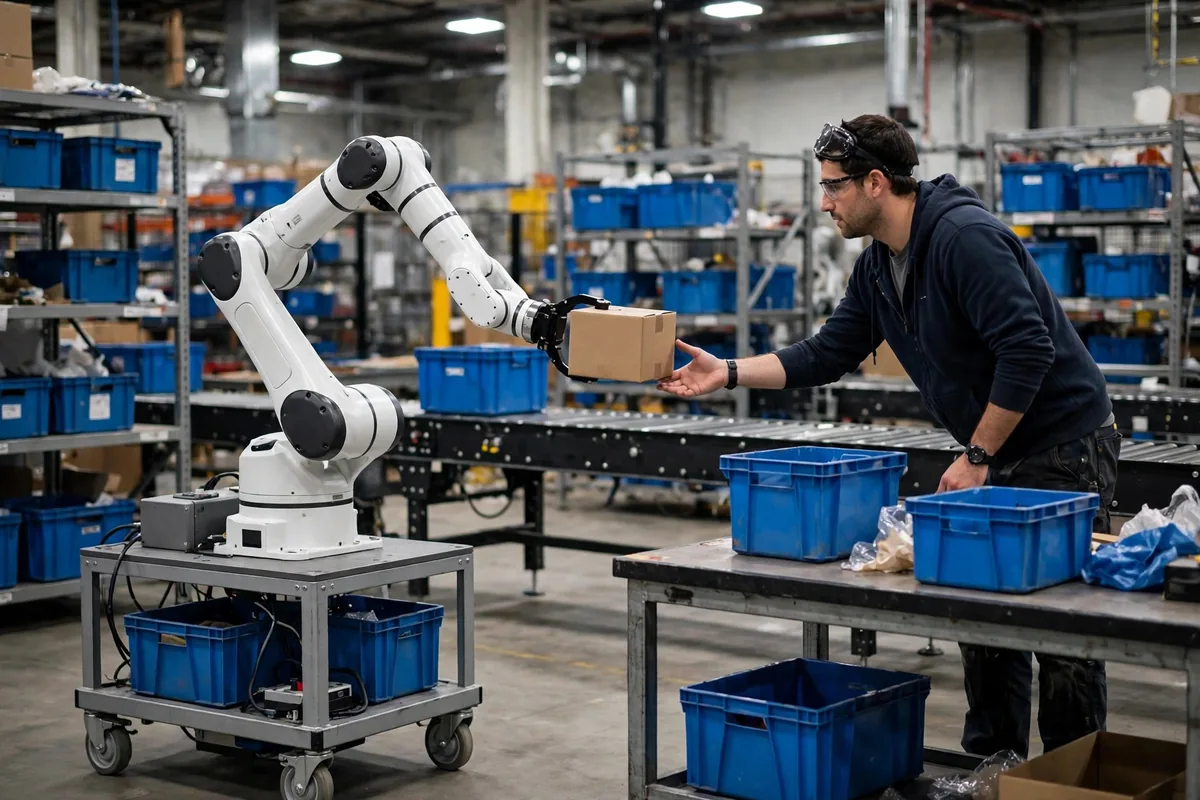
There is also a false requirement I want to shoot down: a lot of warehouses buy their first AMR to "replace the forklift." It sounds bold, but it compares two machines that do different jobs. A forklift does heavy loads, lifting, and exception handling. An AMR does repetitive, regular, long-distance moves. What the first unit really replaces is not the forklift. It replaces the kilometers a person walks back and forth pushing a cart empty. If you have not done that math, do not talk about replacing anything.
Once the line is chosen, set the acceptance criteria, or two months of pilot will end with nobody able to say whether it worked. My pilot checklist for a client has exactly three numbers: daily utilization, on-time task completion rate, and the number of human interventions per week. Utilization tells you whether the unit is really working, completion rate tells you whether the process is stable, and interventions tell you whether the floor still needs someone watching it. Review all three every two weeks. Only when all three are good do you talk about adding units. If any one of them is off, fix it before buying more.
The ROI Math for Your First AMR Deployment
Do not judge an AMR by its price tag alone. Do the ROI math on three items: labor hours saved, empty travel eliminated, and overtime avoided. The math is crude, but it works. Take a replenishment line as an example: 40 replenishment trips a day, 12 minutes of round-trip walking per trip by hand. Hand those trips to one AMR running two shifts a day, and the monthly hours saved are enough to sketch out a rough payback range. The numbers do not need to be precise to the decimal point. If the order of magnitude is right, the decision will not be wrong.
| Line type | Task regularity | Load per trip | Route complexity | Recommended order | | Replenishment | High | Stable | Low | First unit, first choice | | Finished-goods transport | Medium-high | Stable | Low | Second in line | | Picking | Low | Varies a lot | High | Wait until the process is stable |
I deliberately left payback months out of the table, because payback depends directly on your shifts, your order volume, and your labor cost. Copying somebody else's payback figure is how you get the wrong answer. Run the three-line math on your own numbers, then compare prices. That is the correct way to use ROI.
The counterintuitive part is this: the ROI of the first unit often does not come from saving labor at all. It comes from saving overtime. Skipping one night shift in peak season is worth far more than saving two headcounts in a quiet month. And there is one cost that is easy to miss: the hidden costs. Map surveying, floor levelling, Wi-Fi coverage, and charging-pile wiring together often account for twenty to thirty percent of the total first-unit investment, and they are not always itemized on the quote. Estimate the construction work for each line when you choose: replenishment needs the least, picking needs the most. That is one more practical reason replenishment goes first.
The Maintenance Trap After Go-Live
The biggest trap for a first unit does not appear on go-live day. It appears in month three. Maps need updating as slotting changes, sensors need regular cleaning, and somebody has to keep clutter away from the charging pile. Many warehouses launch with a big fanfare, and three months later nobody has updated the map, the robot starts taking detours and throwing errors, and somebody pushes it into a corner. That is not a quality problem. It is a maintenance job with no owner.
My rule is simple: on day one, write the maintenance duties into the shift roster. Who cleans the sensors, who updates the map, who reads the run logs once a week. Three jobs, written down, not left to goodwill. An AMR is not a machine you buy and forget. It is an employee who never calls in sick, and it still needs someone to look after it. Many warehouses delay their second unit for a long time, and the reason is rarely budget. It is that nobody ever took ownership of maintaining the first one.
Which line your first AMR runs on is, in the end, a question of sequence: run the most regular line first, get the process, the map, and the maintenance routine working, and only then take on the hard lines. Whether the money was well spent comes down to one number: three months after go-live, has the unit's daily utilization held steady.
By Da Liu, Automation Engineer