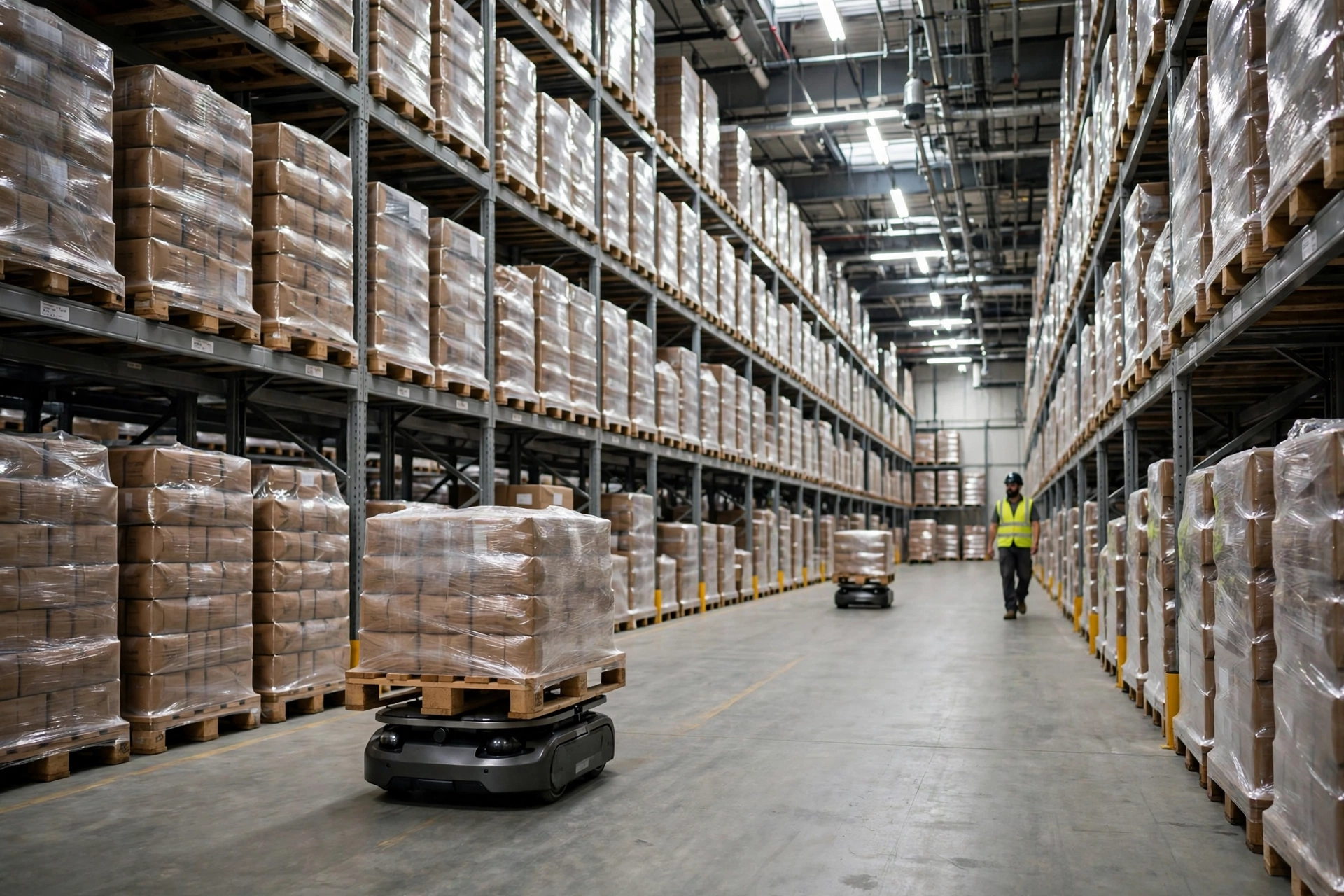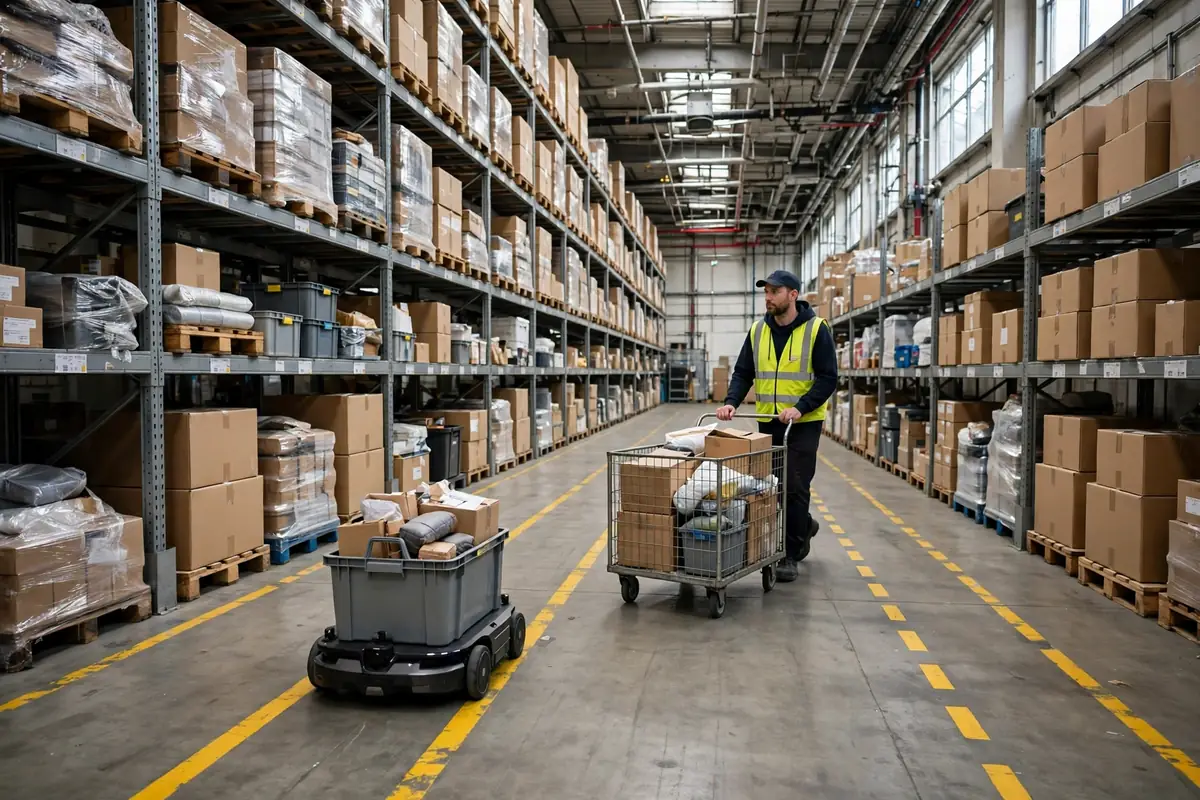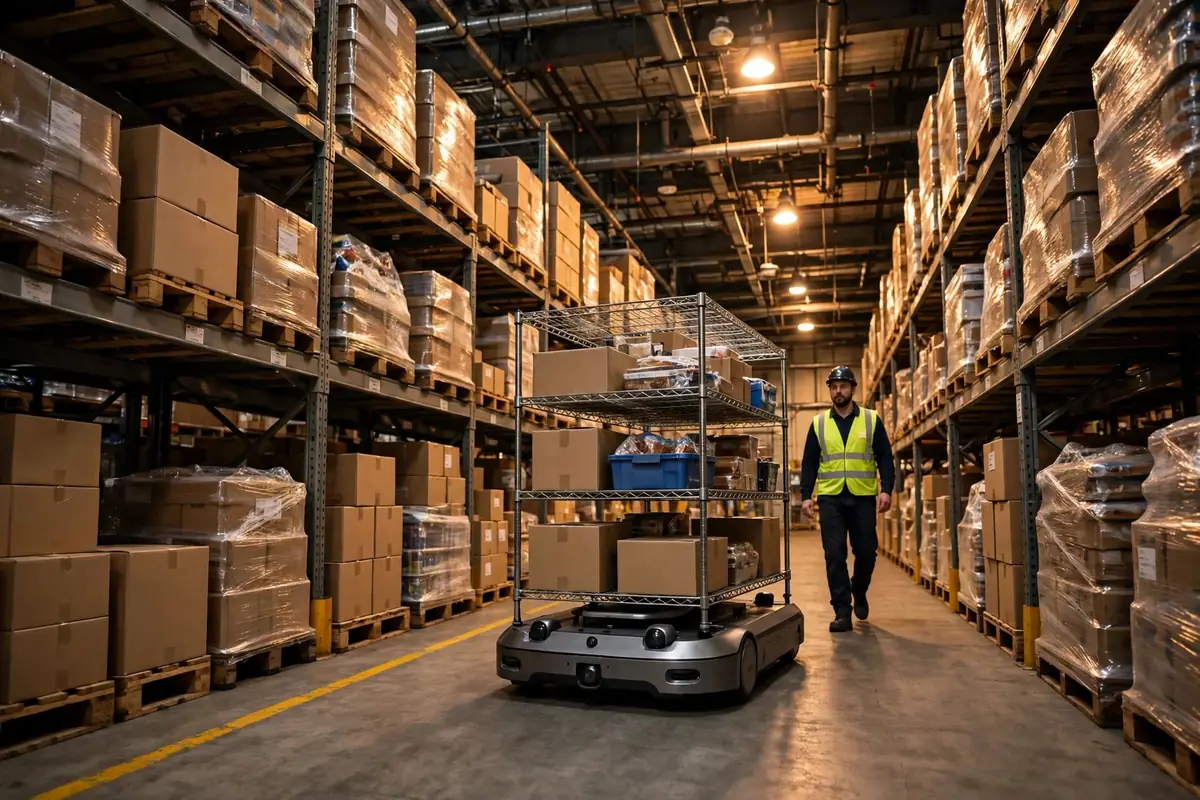
Here is my verdict up front: your first AMR should start on replenishment, not on the picking peak. A pilot is not a showcase. It is a controlled run on the steadiest line you have, where people and machine learn to work together without the whole building watching. I have watched too many warehouses take delivery of their first AMR, throw it onto the toughest picking line on day one, and then spend six months blaming the robot when the line keeps stopping. The robot was fine. The line was the wrong choice.
Every option here has two sides. Put the robot on picking and the upside is obvious: big volume, visible labor savings, a slide for the boss that writes itself. The downside is just as visible: picking volume swings hard, exceptions pile up, people and machines share the same aisles, and one small robot fault holds up the entire line. Put it on replenishment and the upside looks boring: replenishment is backstage work nobody applauds. But the route is fixed, volume is steady, and a fault does not stop shipments. A pilot needs steady, not exciting.
Your First AMR Belongs on Replenishment, Not Picking
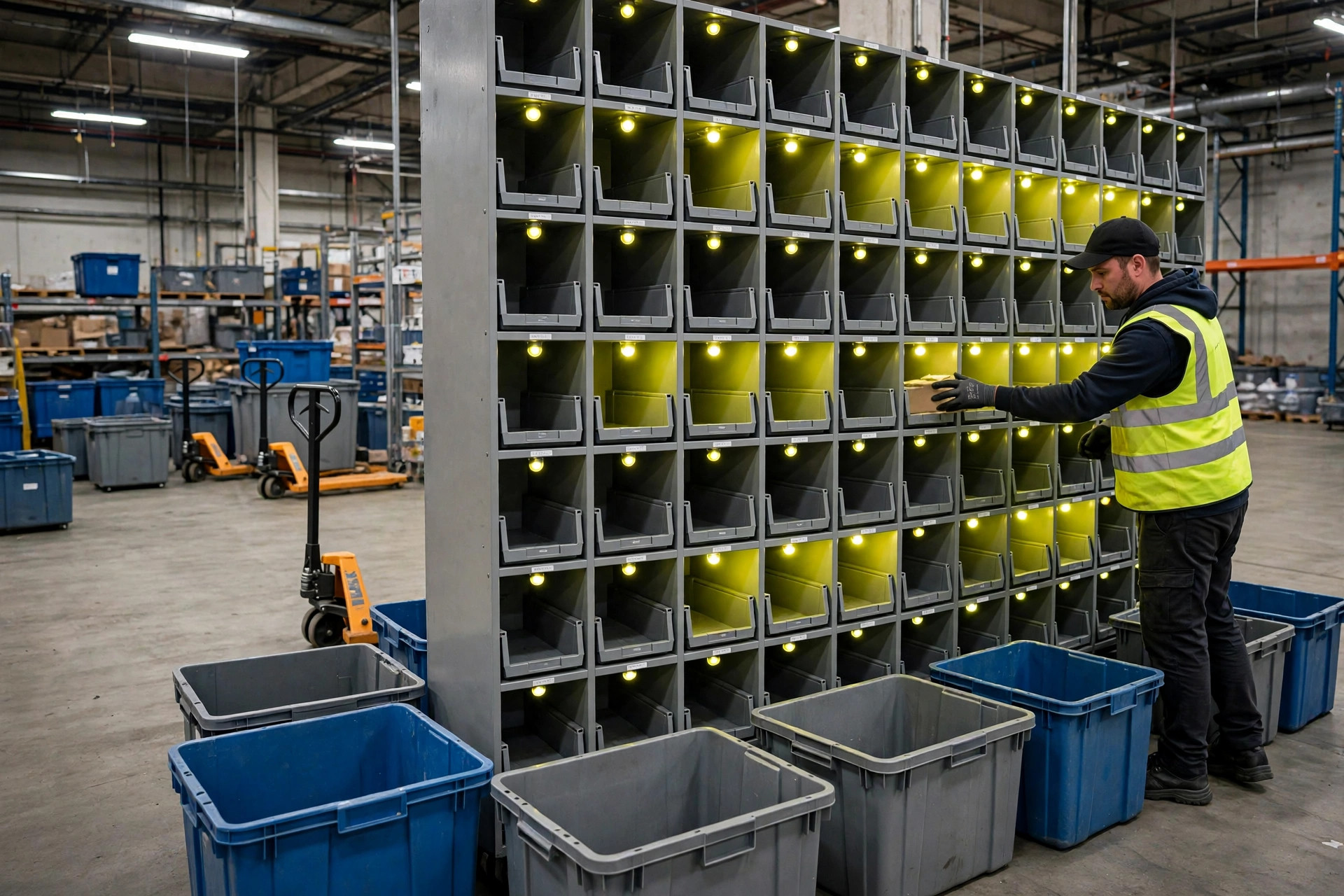
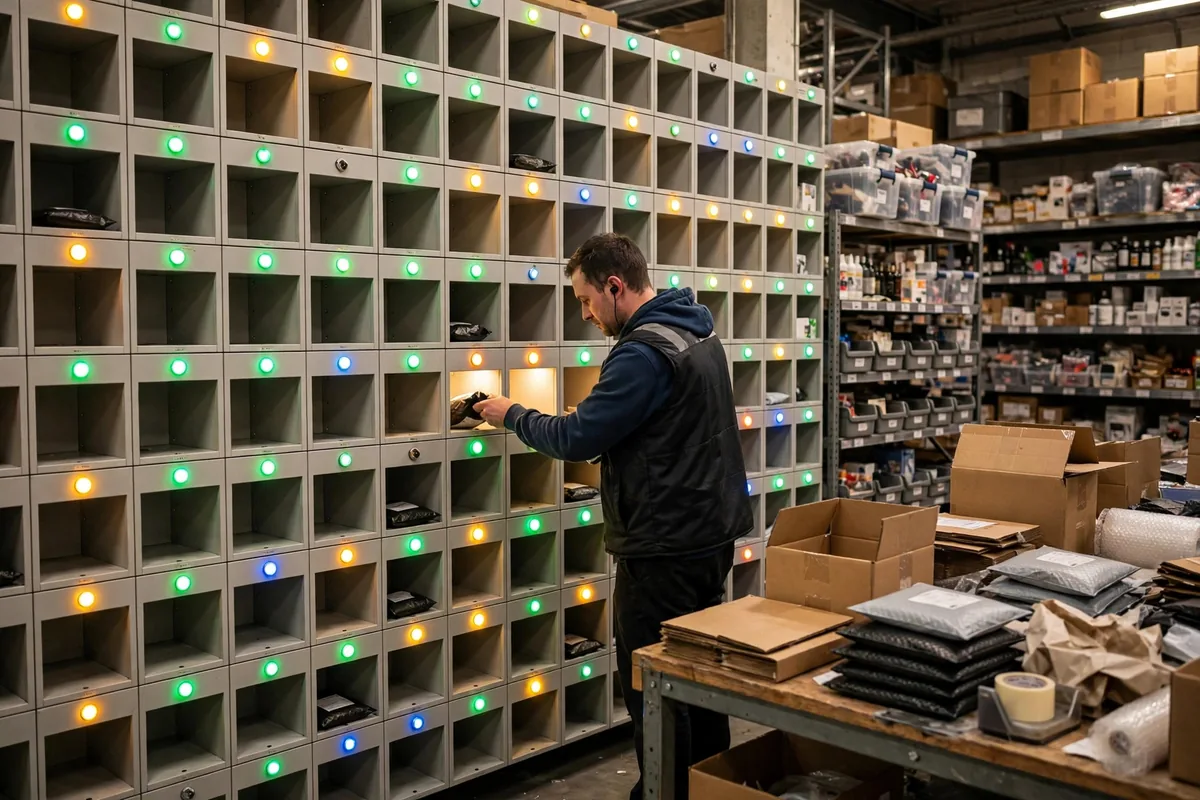
A few years ago I visited a third-party warehouse near Ontario, California, roughly 80,000 square feet, pushing more than 6,000 orders a day in peak season. The owner had just bought his first AMR and sent it straight to picking, full of confidence. Week one looked fine. Week two, a promotion surge hit, pickers stacked totes along the aisle to keep up, the robot's lidar was half-blocked, and the unit sat spinning in place while the whole picking line waited more than 40 minutes. That one jam cost over 2,000 dollars in overtime. The owner wanted to send the robot back. I walked the floor and the problem was clear: the machine was not broken, the line was. Picking is the messiest place in any warehouse. Using it as a pilot is like handing a new driver the keys on their first day and sending them onto the freeway.
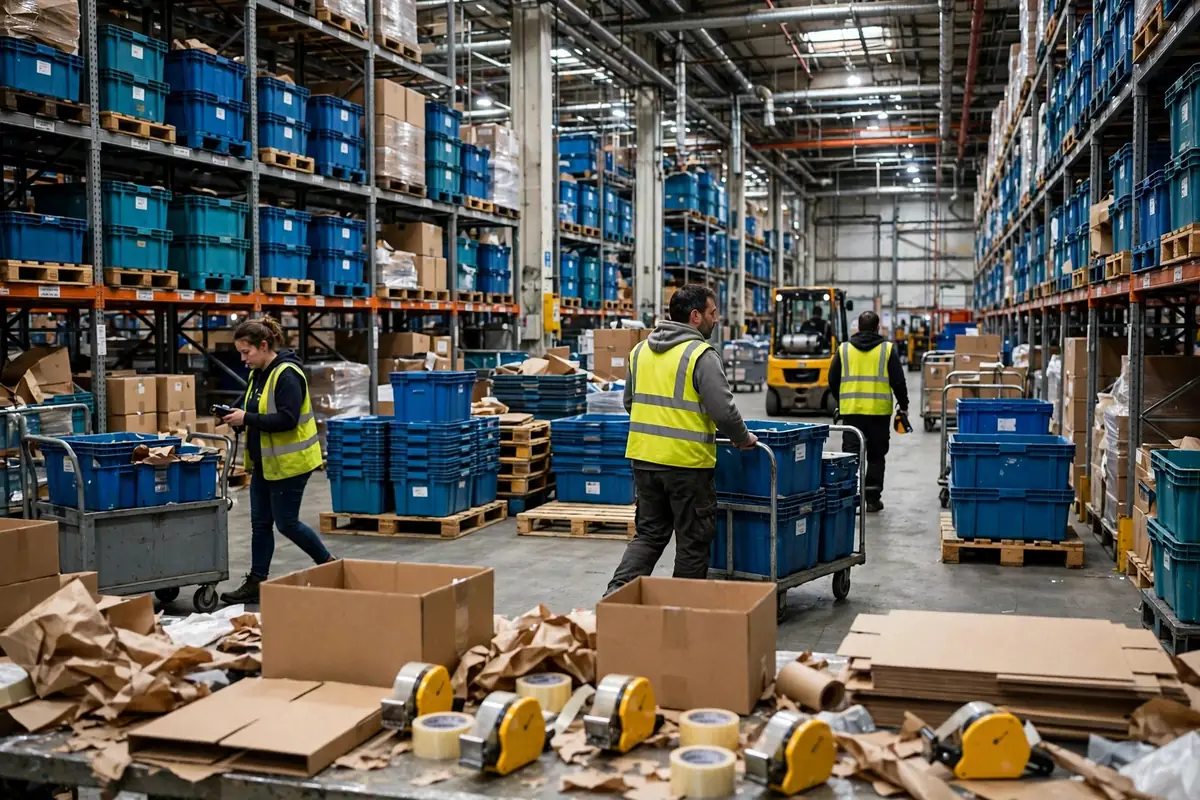
We moved that same robot to replenishment instead: fixed route, two aisles, from high-bay storage to the pick face. Two months in, it had not blocked a line once. The replenishment worker stopped pushing a cart back and forth all day and started waiting at the pick face for the goods to arrive. Only then did the owner admit the money had not been wasted.
Four Numbers Decide Whether a Line Is Pilot-Ready
Do not pick a line by gut feel. I score every candidate line on four numbers, and it has to pass all four:
| Test | What passing looks like | Why it matters | | Daily volume swing | Busy days under double the quiet days | Wild swings make pilot data unreadable | | Route complexity | Two aisles or fewer, few turns | Simple routes mean the robot rarely gets lost | | Exception frequency | Fewer than 5 exceptions a day | Too many exceptions turn a pilot into firefighting | | Cost of a stoppage | Half an hour down does not delay shipping | A pilot will have faults; they must not hit the ship line |
Of the four, the cost of a stoppage gets ignored most often. People pick a line for its upside and forget that a pilot will break down. A breakdown is not the disaster. A breakdown that lands on the shipping line is. Replenishment can sit still for half an hour while the pick face runs on safety stock. Picking cannot sit still for half an hour without pushing the carrier cutoff.
A quick worked example makes the trade-off concrete. Hypothetical example: one AMR rated for a 200-kilogram payload, with a published top speed of 1.5 meters per second. The replenishment route is 60 meters each way, so a round trip is 120 meters, which takes 80 seconds of driving, plus about 30 seconds for loading and stops: 110 seconds a trip, roughly 32 trips an hour. At 8 cases per trip and 15 kilograms per case, each load is 120 kilograms, inside the 200-kilogram limit. That is about 256 cases an hour, more than 2,000 cases across an 8-hour shift. The number is not dramatic. What matters is that it repeats every single day, rain or shine. A pilot needs numbers you can reproduce, not numbers you have to hope for.
How to Judge Whether Your First AMR Pilot Actually Passed
Running is not passing. I hold a pilot to three tests. One, thirty straight days without a line stop: small faults are allowed, but any stop longer than 15 minutes counts as an incident, and more than 2 in a month means the pilot failed. Two, the saved labor has to land somewhere real: the replenishment worker's freed hours should show up in picking and checking, not in standing around watching the robot. Three, the crew actually wants to use it: pickers call the robot over for replenishment instead of walking around it. The third test is the hardest to measure and the most honest. Workers vote with their feet faster than any report can.
Where First AMR Pilots Usually Die
There are three classic traps, and warehouses step into them every year. The first is the floor. An AMR does not fear heavy loads, it fears an uneven floor: cracked concrete, damaged epoxy, loose stretch wrap. Any of those can slow the robot or trip an alarm. Fix the pilot route's floor before the robot arrives, and do not try to save that money. The second is the network. The robot talks to the system over Wi-Fi, and a dead zone in a warehouse corner means a robot that goes silent the moment it drives in. Walk the route with a phone before go-live, and add an access point anywhere the signal drops below two bars. The third is expectations. One robot will not fix the whole building's productivity. One robot can prove exactly one thing: that this route, this process, and this crew can run together. Prove that, then talk about adding robots. Skip the proof and ten robots just multiply the chaos by ten.
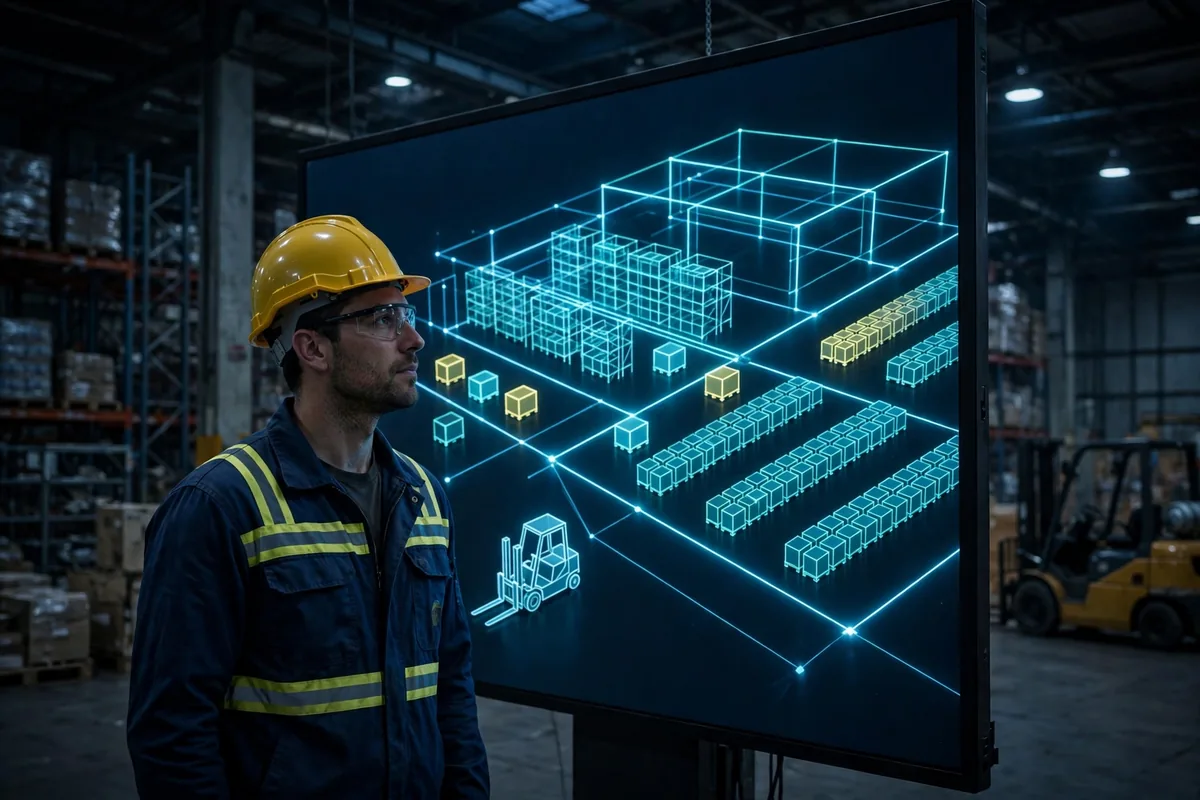
Here is the counterintuitive part: the best money you spend on your first AMR is not on the robot itself. It is the three months of labor and patience you spend on the pilot. Let the machine earn its keep on the most unremarkable line in the building first. Once it runs steady, the data exists, the crew trusts it, and the budget for the second and tenth robot gets approved without a fight. If it never runs steady, no report will save it.
So which line will your first AMR run first?
By Lao Mi, Supply Chain Veteran (20 yrs)