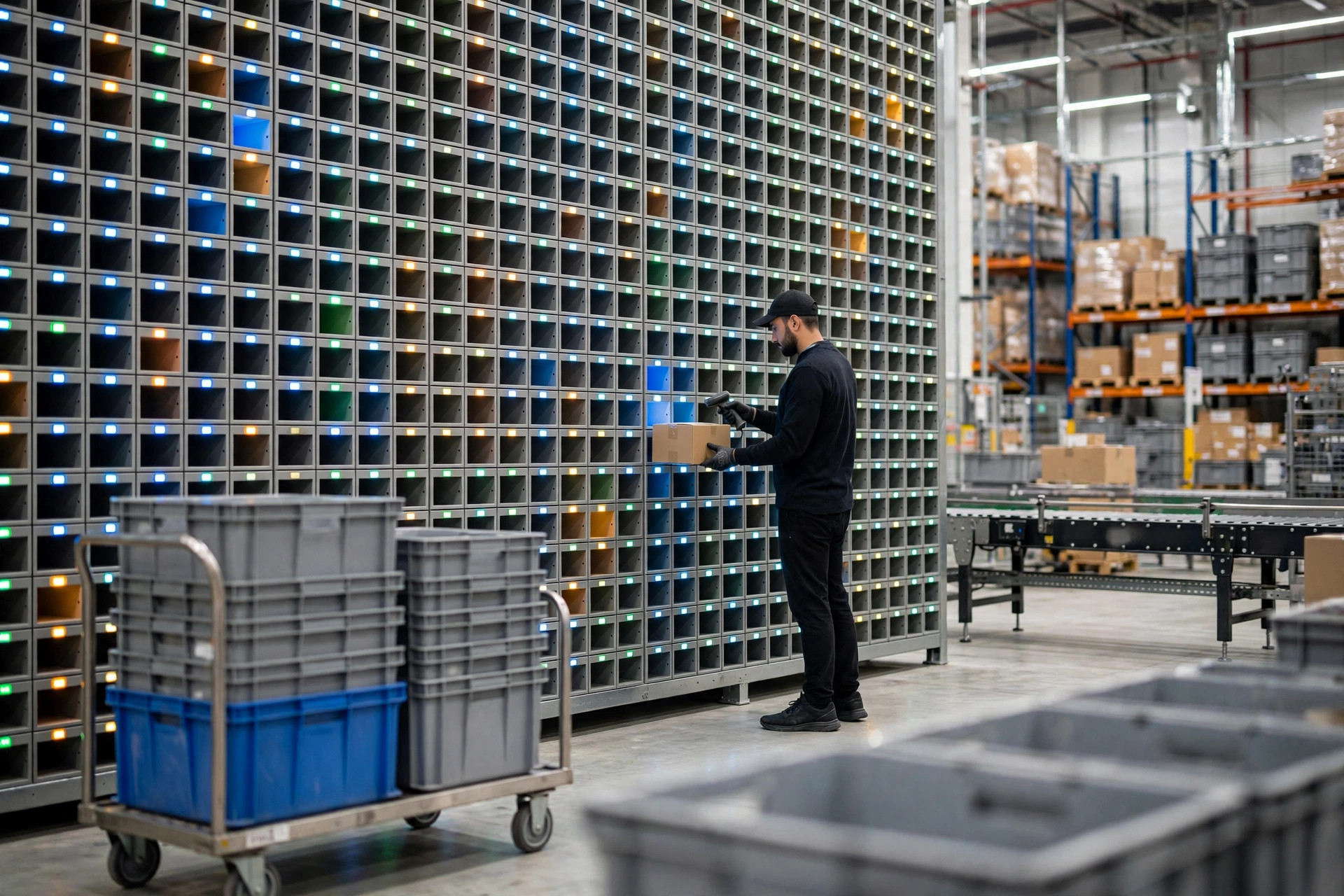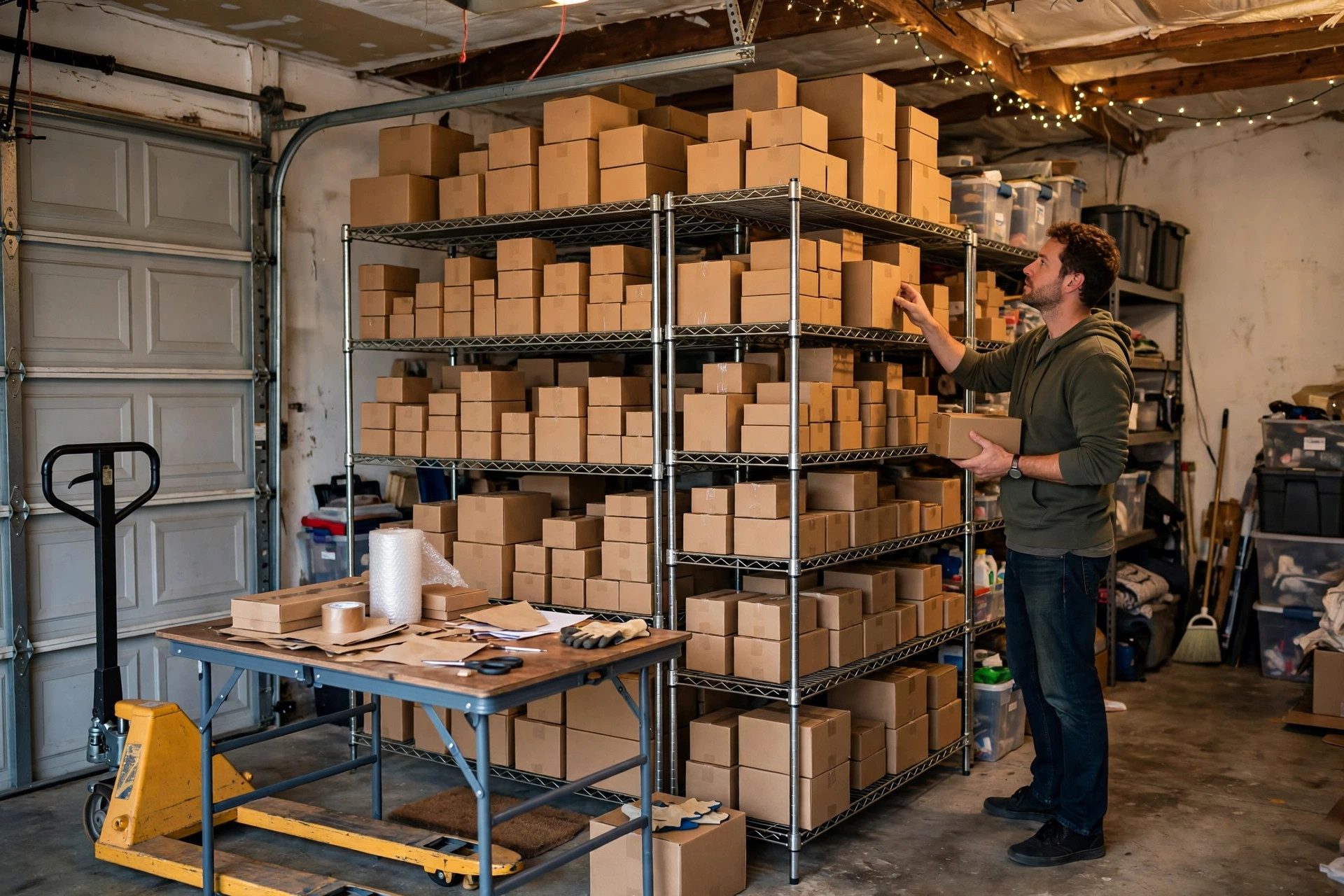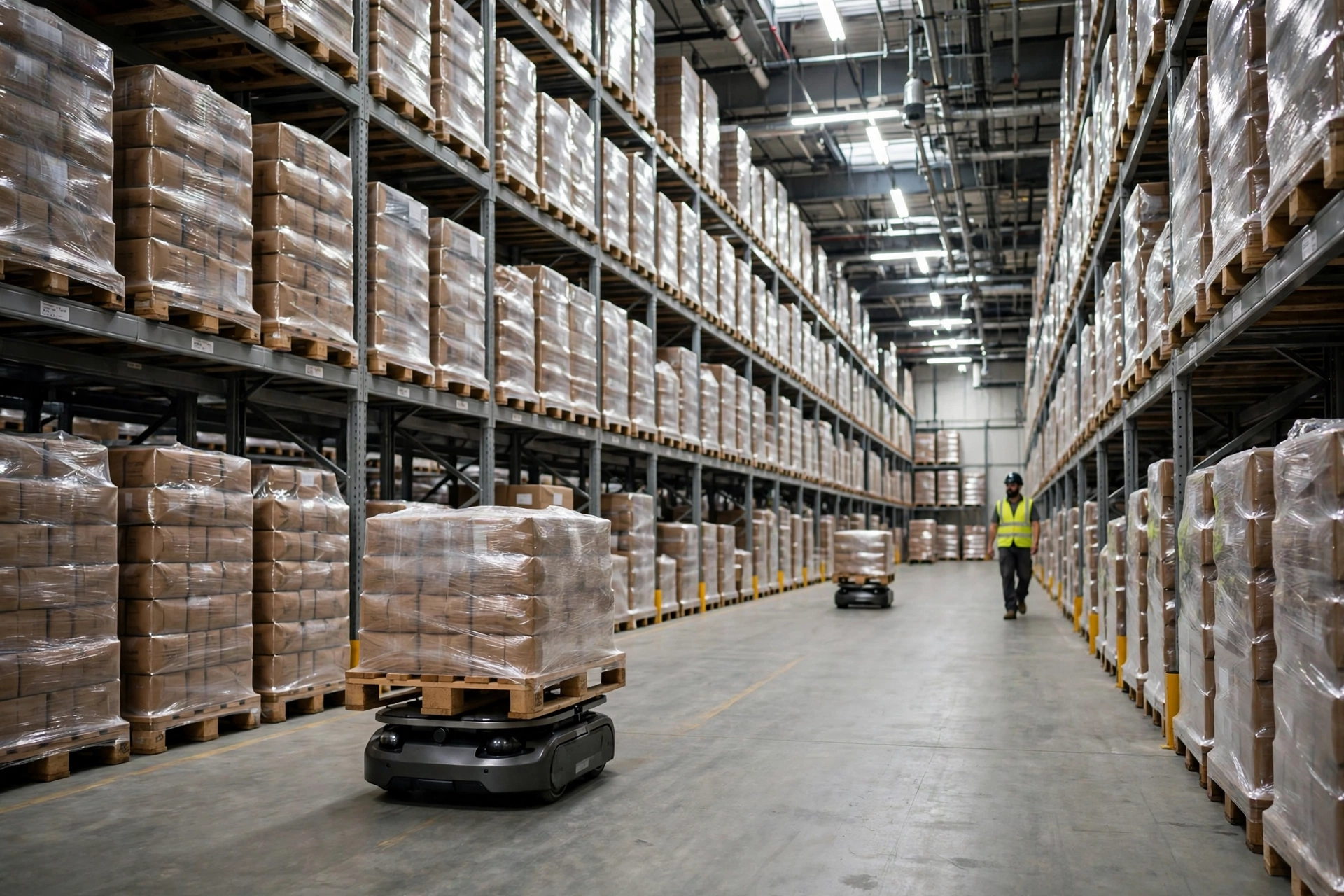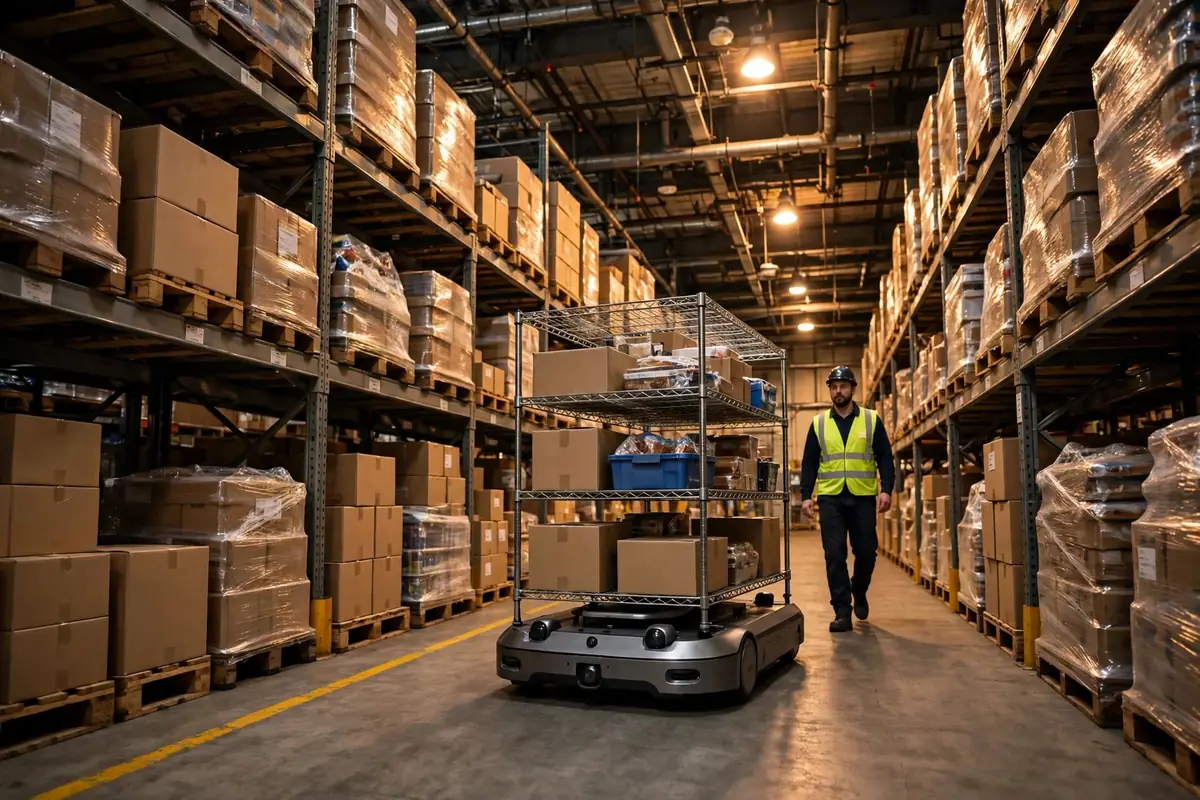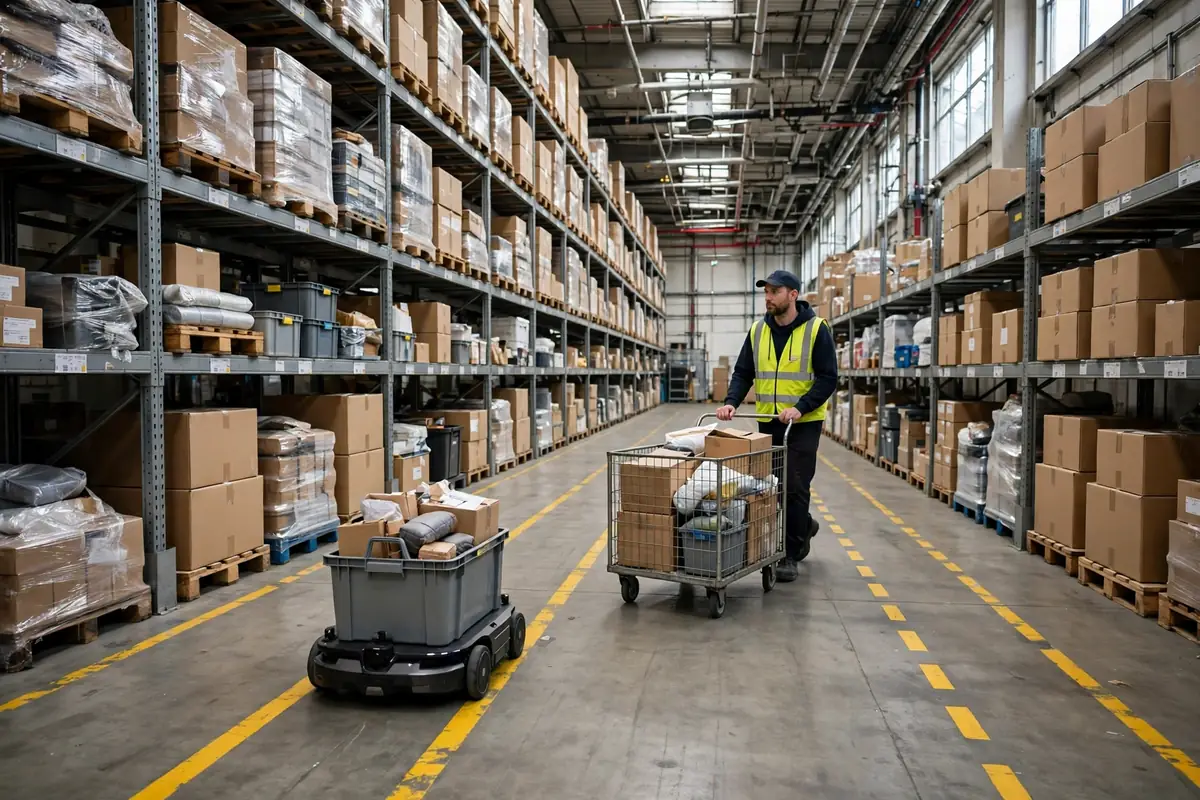
Our little warehouse cannot afford to burn that kind of money. That is what AMR mixed traffic safety looks like when you cannot buy your way out of it. A 3,000-square-meter site, six people, two AMRs, one forklift, all squeezed into a handful of aisles. In the first month after the robots arrived, my first job every morning was standing at the aisle entrance like a crossing guard, terrified one of them would hit someone. Then it almost happened. A robot came around a corner loaded with a pallet, and Xiao Chen the picker came around the same corner carrying a carton. One person, one machine, face to face in the middle of the aisle. The carton nearly flew out of his hands. That day I learned the truth about AMR mixed traffic safety: it does not depend on how smart the robot is. It depends on whether you gave it rules.
Let me start with our predicament. Our aisles were designed for people, not robots. They are narrow, and with stock piled on both sides there is nowhere to dodge when a robot and a person meet head-on. The big-warehouse answer is to clear people out, fence off a robot-only zone, and install light curtains everywhere. When that quote arrived, I showed the vendor the door. Not because I do not care about safety, but because that package cost six months of payroll. Small warehouses have their own way of surviving, and safety is no exception.
AMR Mixed Traffic Safety Starts with Rules: Right of Way Beats Sensors
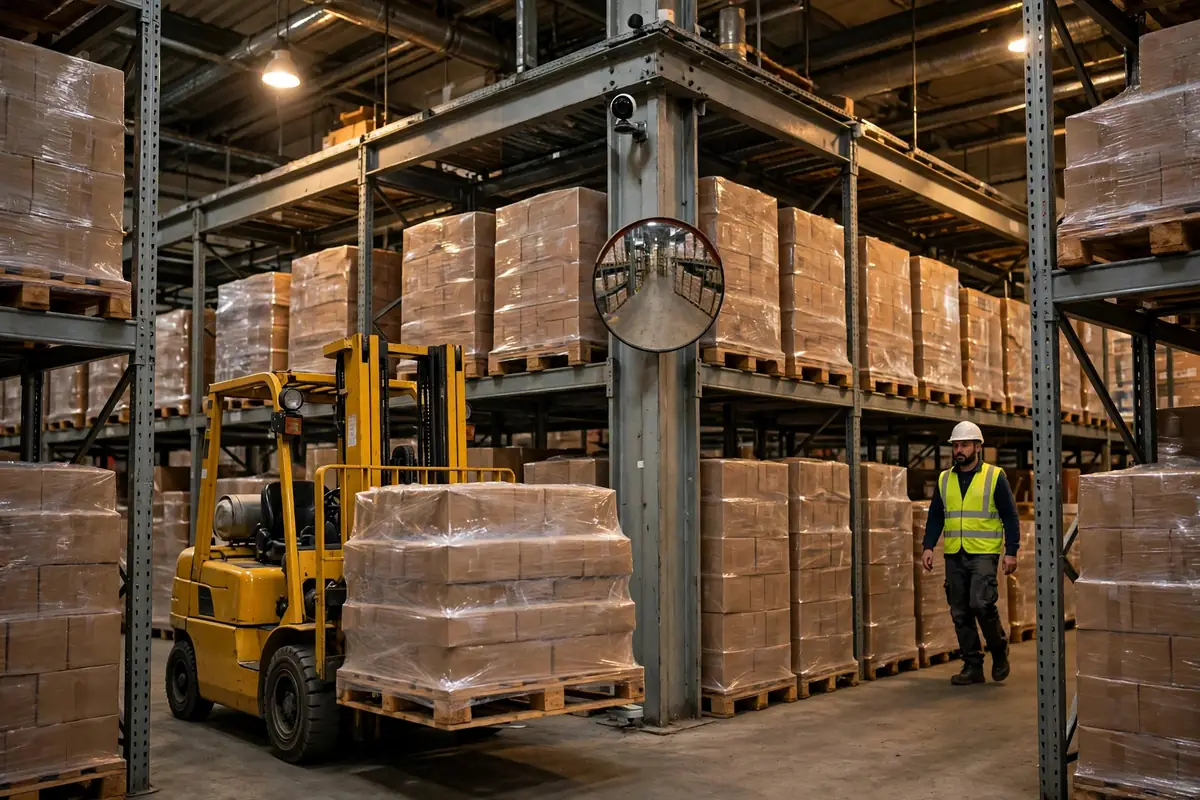
Cheap fix number one: turn the main aisle into a one-way loop. It used to be two-way, anyone could go either way, and a head-on meeting between a robot and a person was only a matter of time. Now robots run clockwise and people walk counter-clockwise, so head-on encounters simply stopped happening. We stuck reflective strips on the corners and mounted convex mirrors that cost a few dozen dollars, so forklift drivers can see around the bend before turning. Zero real cost, and the effect was immediate.
Cheap fix number two: passing points and speed zones. We widened two spots in the aisle and painted them yellow. Robots slow down automatically at a passing point, and people get priority there. At the picking-area entrance we painted a speed zone, so a robot entering it has to slow to roughly walking pace. The warehouse door and the corners are the most dangerous spots, so the speed zones go exactly there. Limiting speed everywhere means limiting it nowhere — and it kills productivity too.
Cheap fix number three: pedestrians always have priority, written into the rules and posted on the wall. No matter how urgent the robot's job is, it waits for people. When a picker is carrying a carton or a forklift is working, the robot stops and waits. It sounds old-fashioned, but it works better than anything else. When people know they have priority, they stop rushing, and when they stop rushing, they stop darting around — and half the accidents disappear with them.
Then there is new-hire training. On a picker's first day, before any real work, we spend half an hour walking the aisles together: which lane the robots use, which corner means stop and check the mirror, where the passing points are, and where to step when you hear the robot's beep. We drew it all on one poster in the break room, and a picture beats a rulebook — new hires remember it after one look. Robots never get tired. People do, and tired people zone out. When they zone out, muscle memory is all that is left.
AMR Mixed Traffic Safety on a Budget: Never Spend 300,000 on a 3,000 Job
On sensors, my attitude is simple: spend where it counts, skip where it does not. The safety laser scanner that comes with the AMR is the baseline. Before buying any robot, ask whether it has personnel detection and an emergency stop, and what safety level those functions are rated to — do not just take the sales pitch. Reflective tape on the floor, bumper strips on the corners, a speed bump at the aisle entrance: these cost a few hundred dollars and prevent crashes just as well as expensive gear.
Here is a real lesson from next door. The numbers below are an illustrative example: in March 2026, a fellow small warehouse had an AMR rear-end a manual forklift in an aisle. The pallet's goods spilled everywhere; luckily nobody was hurt. The investigation found the cause: the forklift was reversing into the aisle, and its tail sat exactly in the blind spot of the robot's laser scanner. The fix was embarrassingly cheap: stick a reflective plate on the forklift's tail, and add a rule that reversing is banned in the aisle — forward only. Expensive equipment has blind spots. Cheap rules do not.
Another trick is staggering the schedule. All our AMR replenishment runs happen in the half hour before the shift starts and during lunch, when pickers are not in the aisles. During the busy daytime hours, robots only run fixed routes and take no ad-hoc jobs. Staggering the peak cuts person-robot encounters by a huge margin, and productivity does not drop, because the robots do their running while people are resting.
| Cheap fix | What it costs | What it prevents | | One-way loop plus mirrors | A few hundred dollars | Head-on collisions | | Passing points plus speed zones | The cost of floor paint | High-speed meetings at corners and doors | | Pedestrians-first rule | Nothing | People panicking and darting around | | Staggered replenishment runs | Nothing | Crowded aisles at peak hours |
AMR Mixed Traffic Safety and the Three Standards You Should Know
Small warehouse owners need to know a little about standards too, or vendors can tell you anything and you just have to nod. Internationally, the rulebook is ISO 3691-4, current edition 2023, covering driverless industrial trucks and their systems. Its Annex A deals with preparing the operating zone: the aisle needs clearance on both sides, at least 0.5 meters wide and 2.1 meters high — in plain words, people and robots need somewhere to escape to. In the United States the counterpart is ANSI/ITSDF B56.5, current edition 2024, covering the same ground, with speed limits for hazard zones and restricted areas. The US also has the ANSI/A3 R15.08 series in three parts: Part 1 covers the robot itself, Part 2 covers how integrators install the system in your warehouse, and Part 3, published in 2026, covers what users like us must do day to day to keep it safe.
Here is the counterintuitive part: the more complete the standards are, the clearer it becomes that the robot alone is not enough. ISO 3691-4 spends a whole annex on site preparation, because no sensor can save an aisle that was never prepared. Narrow aisles, no clearance, no passing points — put ten radars on the robot and it still will not help. Fix the site first, then talk about sensors. That is the right order.
Four pieces of advice for fellow small-warehouse owners. First, make the aisle a one-way loop — the highest-value move you can make. Second, paint passing points and speed zones only at the most dangerous spots, and do not overdo it. Third, ask about the safety rating before buying any robot, and switch vendors if they cannot answer clearly. Fourth, write pedestrians-first into the rules, post it on the wall, and repeat it every day. Safety has a small-warehouse way of working, and you do not have to live by a big company's quote.
By Xiao Ma, Small Warehouse Owner