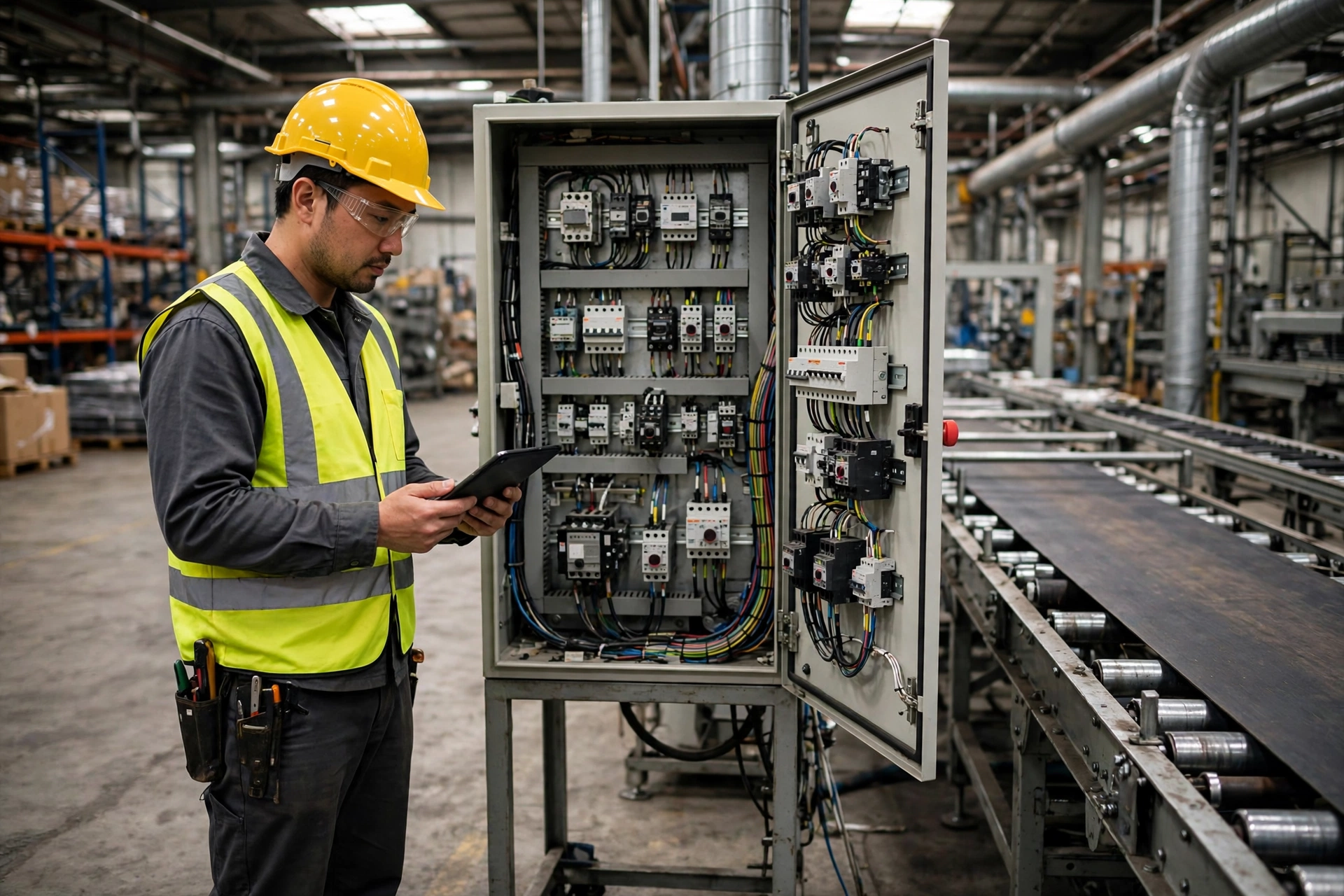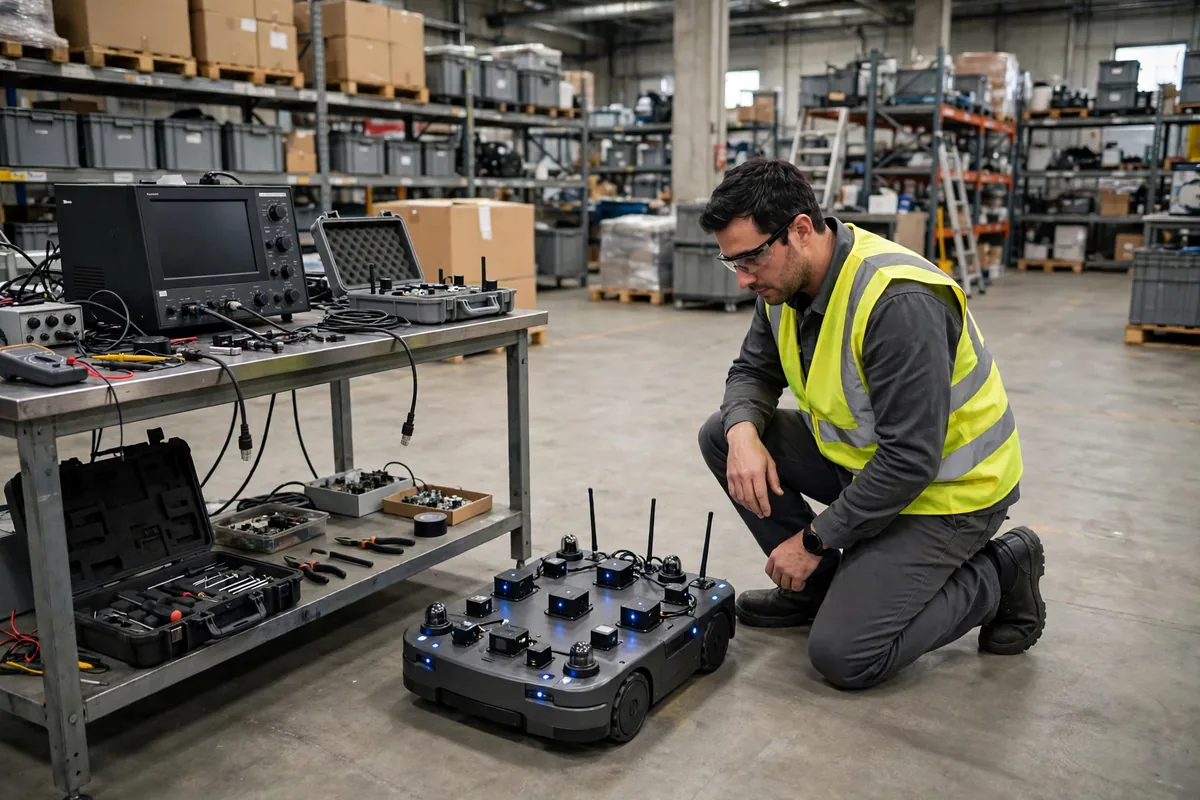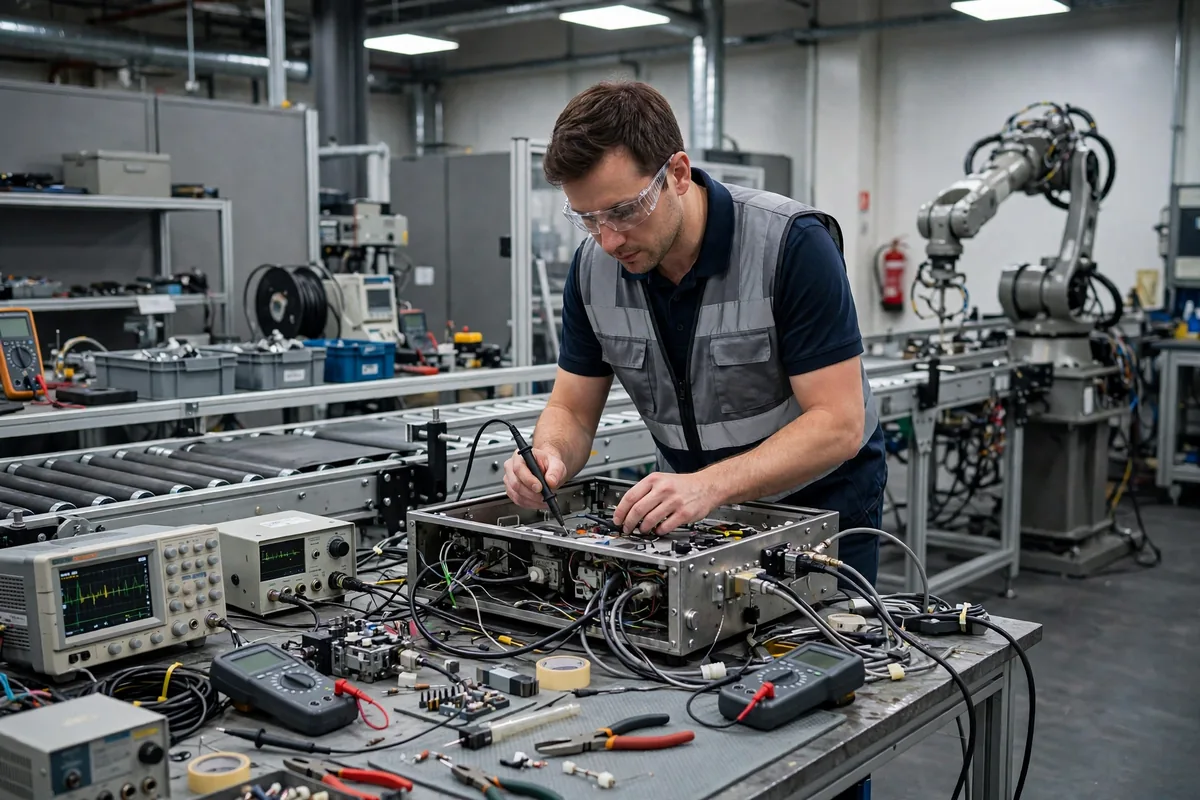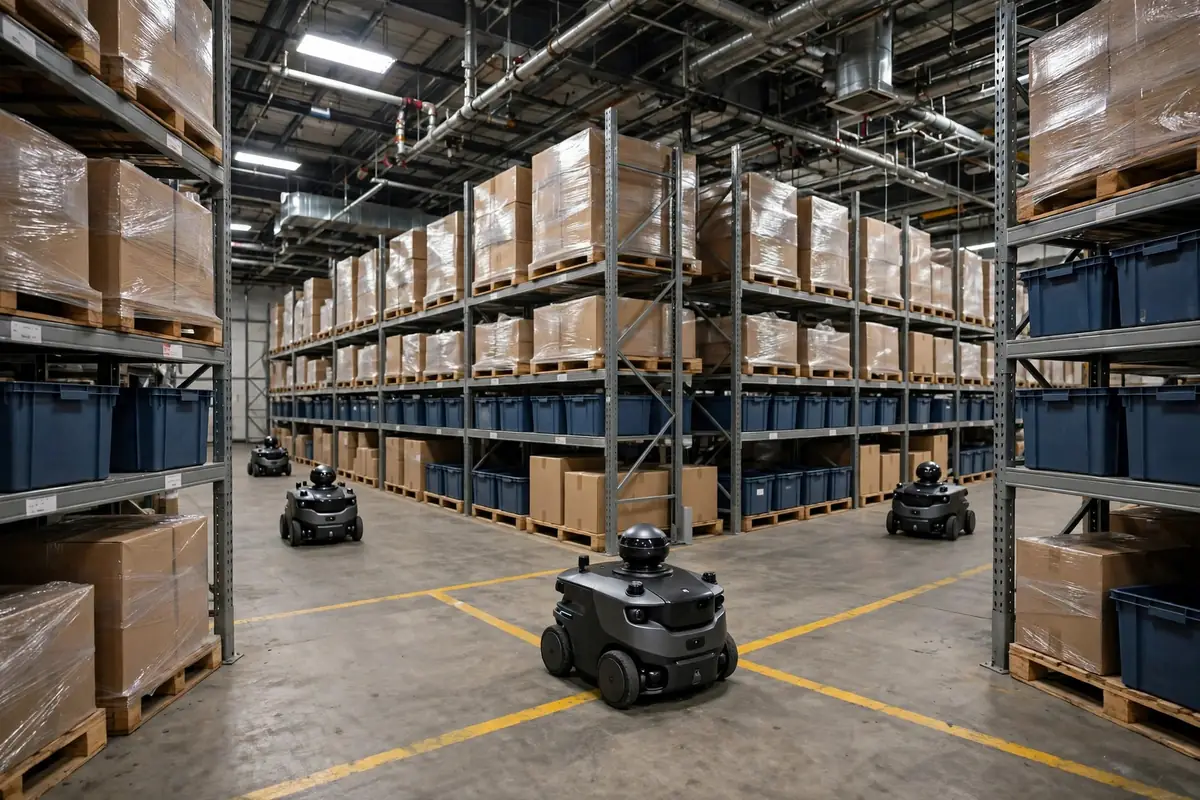
Let's start with the principle: under FCC Part 15, the moment an AGV carries a module that deliberately transmits a radio signal, the FCC no longer sees an ordinary machine. It sees an intentional radiator. The distinction sounds like wordplay, but it decides which authorization path you take, what it costs, and how long you wait. Think of it this way: the FCC doesn't care how much your AGV can carry. It cares what the vehicle puts into the air.
FCC Part 15 governs radio frequency devices sold in the United States, and it splits them into two kinds. The first is the intentional radiator: Wi-Fi, Bluetooth, LoRa, cellular modules, remote controls — things built to transmit. The second is the unintentional radiator: computers, motor controllers, power supplies, which leak a little RF energy as a byproduct of doing their real job. An AGV is both at once: the motors and control boards are unintentional radiators, and the Wi-Fi module on the roof is an intentional one. Get that split right and you are halfway down the correct path.
FCC Part 15: Figure Out Which Kind of Device You Are
An intentional radiator takes the Certification path: testing at an FCC-recognized accredited lab, then a grant issued by a Telecommunication Certification Body, and the device carries an FCC ID on its label. An unintentional radiator usually takes the SDoC route — Supplier's Declaration of Conformity. It still has to be tested at an accredited lab, but there is no TCB grant and no FCC ID. Responsibility lands on a U.S.-based responsible party, typically the importer or distributor. A device with both kinds of circuitry takes both paths, each for its own part: Certification for the radio, SDoC for the digital circuitry.
We had a client building AGVs with an off-the-shelf Wi-Fi module that already carried its own FCC certification and FCC ID. The project team assumed the whole vehicle needed a fresh round of radio certification and had budgeted and scheduled for exactly that. I told them the module's certified radio didn't need retesting — the vehicle only needed SDoC testing for its digital circuitry. In effect, someone had already walked the Certification road for them, and they only had to walk the remaining half. What that judgment saved wasn't just the test fee. It was two months on the schedule.
The opposite case was a client building warehouse environmental sensors with a custom LoRa radio board they had designed themselves. The team figured the board was small and low-power, so certification probably wasn't needed. That idea is wrong: low power doesn't mean no certification. An intentional radiator needs Certification regardless of power. The first round of radiated emissions testing failed — the antenna trace ran too close to a power line. They rerouted the layout, added shielding, and passed on the second round. A small board doesn't mean small interference. Antennas don't negotiate. They obey physics.
The Pre-Certified Module Shortcut — and How Not to Blow It
Using a pre-certified radio module is the most practical shortcut in FCC Part 15, provided you follow the conditions in full. The antenna model, transmit power, and power supply have to match the conditions under which the module was certified. Swap the antenna or change the radio parameters and the module's certification no longer covers you. The finished product's label has to state that it contains the module's FCC ID, so a regulator can trace the number back to the module's grant.
This table compares the two paths, so you can pick the right one on day one of the project:
| Item | Certification (FCC ID) | SDoC (supplier declaration) |
|---|---|---|
| Applies to | Intentional radiators: Wi-Fi, Bluetooth, LoRa, anything that transmits on purpose | Unintentional radiators: digital circuits, motor controllers, anything that radiates as a byproduct |
| Testing | Accredited lab report | Accredited lab report |
| Grant | TCB issues a grant; device gets an FCC ID | No grant, no FCC ID |
| Responsible party | The grantee is responsible for compliance | A U.S.-based responsible party is responsible |
| Common trap | Changing the antenna voids the certification | Assuming no testing is needed — testing is still required |
The easiest trap in that table is the last row: SDoC does not mean skipping the test. People hear the word "declaration" and assume a self-written statement is enough. The testing still happens, the report still has to exist — the only difference is that no TCB grant is issued. You have to keep the full SDoC file yourself. If a regulator asks for it and you can't produce it, that's the same as never having done it.
There is one hard rule: no marketing before authorization. The FCC's rules are explicit — a radio frequency device may not be marketed until it is authorized, whether it's a complete machine or a module, no matter how urgent the order is. Prototypes can be tested internally and shown to customers, but they can't be sold as products. Shipping uncertified equipment early to hit a deadline is the most expensive gamble in the certification world. Fines and recalls cost far more than the certification ever would.
After FCC Part 15 Approval, Don't Forget the Label
The grant is issued, the tests pass, and one last formality remains: labeling. A device with an FCC ID carries that number on its label. A device under SDoC carries a compliance statement declaring that it complies with Part 15 of the FCC Rules, that it must not cause harmful interference, and that it must accept any interference it receives. A finished product using a certified module states "Contains FCC ID" followed by the module's number. Labeling looks small, but customs officers and sales channels check it rigorously, and marketplaces ask for the same paperwork at listing time.
I won't quote a price or a timeline, because both vary with device complexity — go by the lab's quote. What I can say is this: put the test schedule into the project plan, not into the week before shipment. Certification hates a tight schedule more than anything. Change the hardware by one revision and the radio test may need to be repeated. Swap one antenna model and the certification may need to be redone. Freeze the radio design before you freeze the hardware — that is the cheapest day in the whole certification process.
Whether the money is worth it comes down to one number: is your radio bought or built? Buy a pre-certified module and the radio certification cost is close to zero — all that's left is the host device's SDoC testing. Build your own radio and certification is a full investment: testing, rework, retesting, every round included. Ask yourself that question at project kickoff and the certification budget becomes a real number. With wireless, decide early and certification is cheap. Decide late and certification sends you the bill for the lesson.
By Da Liu, Automation Engineer