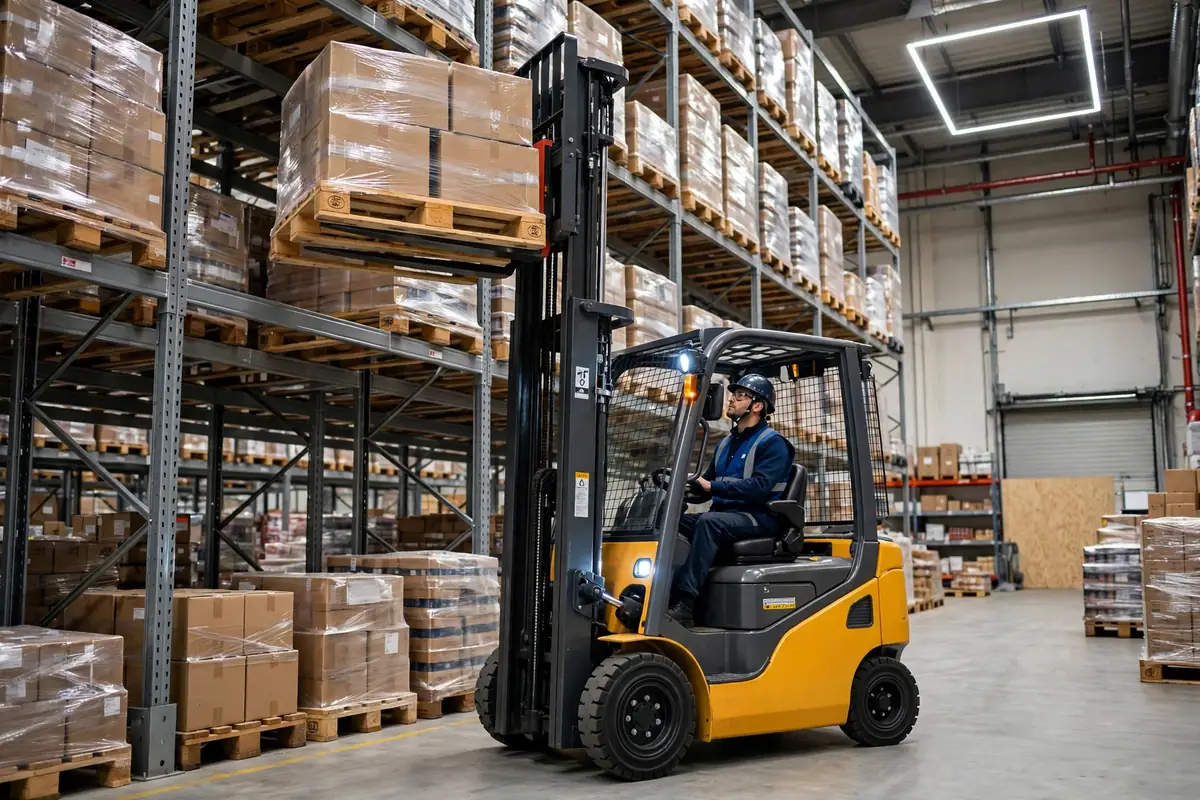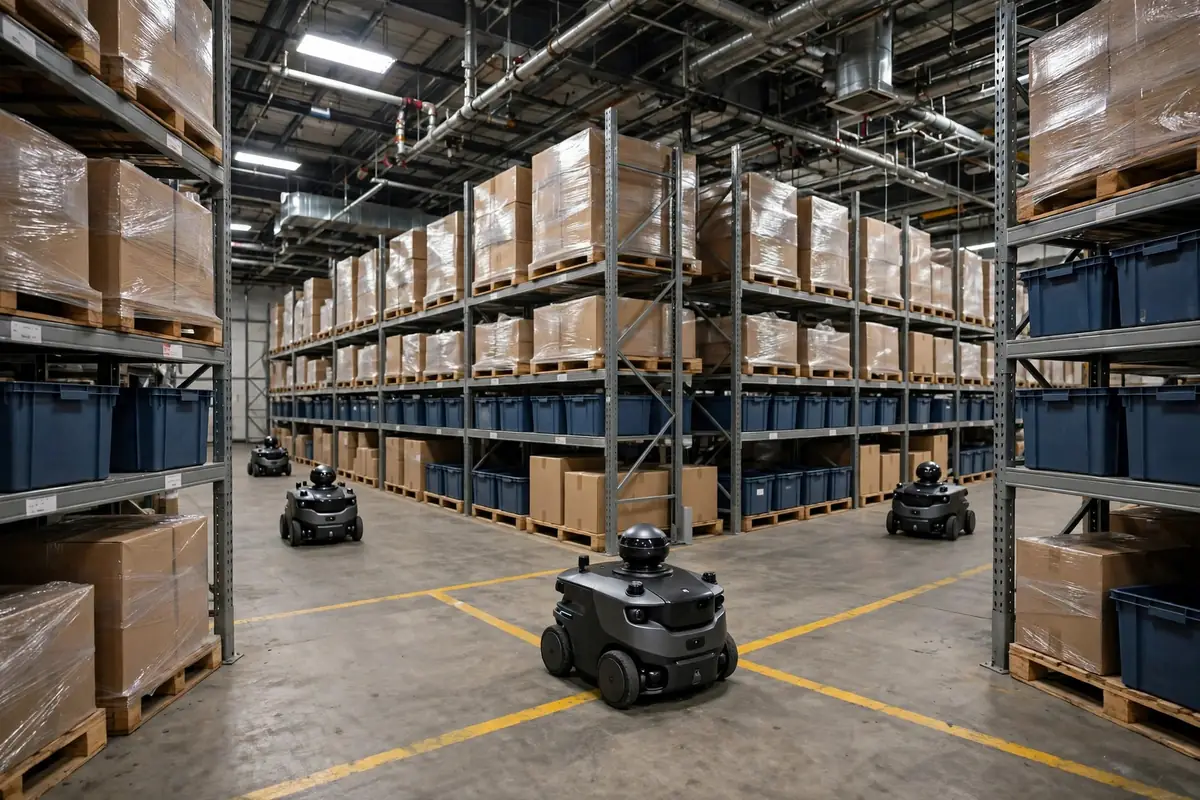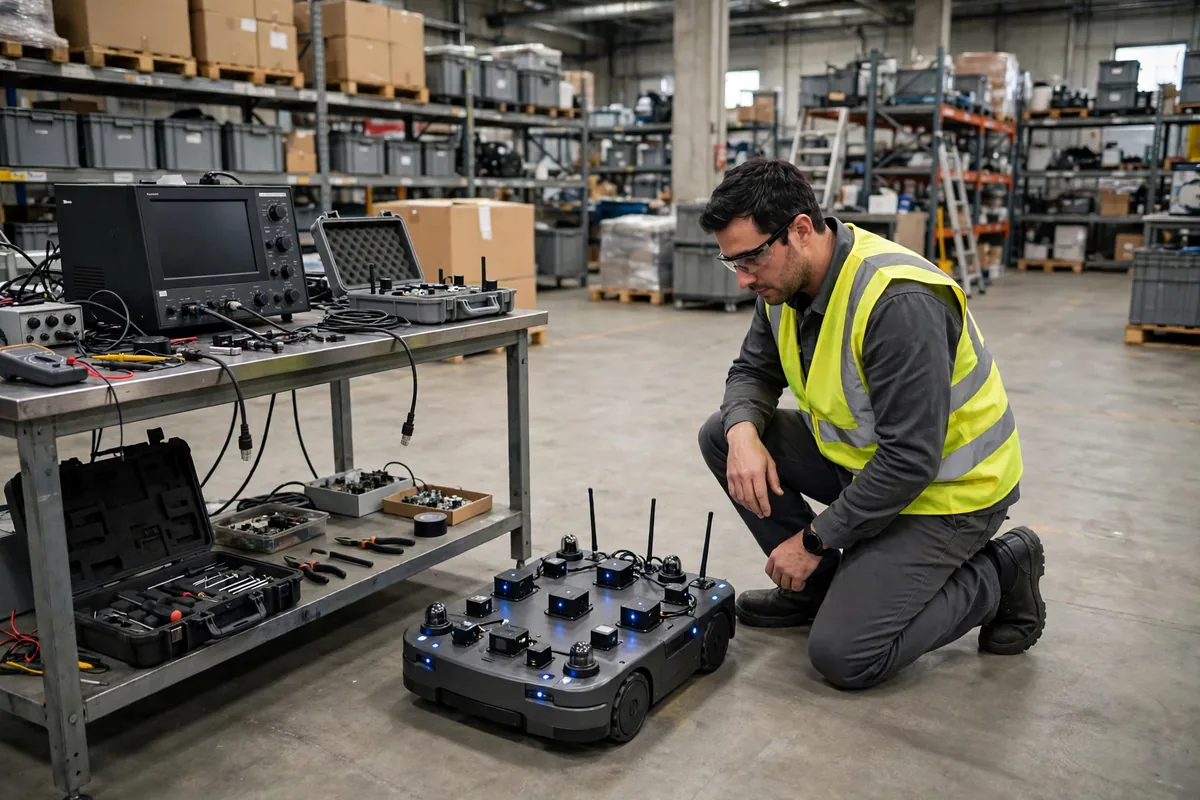
The moment an AGV powers up, it starts talking. Wi-Fi talks to the fleet scheduler, Bluetooth talks to the sensors, and some units use UWB to figure out exactly where they are. Talking is not the problem. The problem is that the radio spectrum is shared, and your equipment must not shout over everyone else, while nobody guarantees nobody will shout over you. FCC Part 15 for AGVs and wireless sensors is the traffic code for all unlicensed radio devices in the United States. If your warehouse equipment has a radio in it and you want to sell it in the US, there is no way around this rulebook. Think of it this way: whether your device radiates radio energy on purpose decides which path you take, how much you pay, and how long you wait.
FCC Part 15 starts with one question: which kind of radiator are you?
The first dividing line in Part 15 has nothing to do with the size of the device. It is about whether the device is designed to emit radio energy. Get this classification wrong and everything downstream goes wrong with it.
An intentional radiator is a device designed to radiate radio energy. The Wi-Fi module on an AGV, its Bluetooth radio, a UWB positioning tag, an RFID reader: all intentional radiators. They fall under Part 15 Subpart C and require Certification. An FCC-recognized laboratory tests the device, and a Telecommunications Certification Body, a TCB, reviews the submission and issues an FCC ID. That ID is the device's identity card, in a grantee-code plus product-code format, listed in the FCC's public Equipment Authorization database.
An unintentional radiator generates radio energy as a byproduct of doing its job. The motor driver on an AGV, the clock circuits on its main board, the switching power supply, the digital logic in a sensor: all unintentional radiators. They fall under Part 15 Subpart B and take the SDoC path, the Supplier's Declaration of Conformity. You still test at an accredited lab to prove emissions stay under the limits, but there is no TCB review, no FCC ID, and no filing. You test, you declare, and you keep the report on file.
A complete AGV is usually both at once: the vehicle body is an unintentional radiator and the radio module on board is an intentional radiator. The two paths have to be walked separately, and one certificate cannot stand in for the other. The most common misunderstanding I see is a team assuming one round of testing covers the whole machine, only to discover at launch that the radio module was never certified.
Two hard rules are worth memorizing. The first is Section 15.203 on antennas: the antenna must be permanently attached or use a unique connector, precisely so a user cannot casually swap in a higher-gain antenna and push emissions over the limit. The second is the operating status of Part 15 devices: they operate on a non-interference basis, with zero protection from licensed services. If your device causes harmful interference to an authorized user, you must cease operation. Compliance guarantees you will not disturb others. It does not guarantee others will not disturb you.
| Device type | Examples | Rule | Authorization path |
|---|---|---|---|
| Intentional radiator | Wi-Fi, Bluetooth, UWB, RFID reader | Subpart C | Certification, FCC ID |
| Unintentional radiator | Motor driver, main board, power supply | Subpart B | SDoC self-declaration |
| Purely mechanical part | Bracket, fork with no circuitry | Not applicable | No authorization needed |
FCC Part 15 certification: the gates you actually go through
The process itself is straightforward. What makes it expensive is that every step can send you back to the start. The standard Certification path runs in five steps: prepare the sample, lab testing, test report, TCB review, and grant. The lab measures radiated and conducted emissions using the test methods referenced in Section 15.31. The most cited rule inside Subpart C is Section 15.247, which governs spread-spectrum and digitally modulated devices in the 902–928 MHz, 2400–2483.5 MHz, and 5725–5850 MHz ISM bands, the frequencies where Wi-Fi, Bluetooth, and most IoT devices live.
On cost and schedule, the publicly documented reference figures are: the SDoC path typically runs $800–$5,000 and takes 1–4 weeks; transmitter-only Certification runs on the order of $3,500, and a full transmitter-plus-receiver package around $5,000. Treat those as reference figures and confirm against the latest lab quotes, because prices vary widely by lab and test scope. The real money is usually not the test fee. It is the rework. Fail once, and you redesign the board, retest, and rejoin the queue. Losing a month this way is normal.
The classic rework story is the antenna swap. An AGV maker certified a prototype with the module's stock antenna, then the product manager decided coverage was not good enough and had hardware swap in a higher-gain external antenna. Radiated emissions blew straight past the limit. Six weeks of rework followed: back to the original antenna, retune the matching network, rejoin the test queue. The lesson is simple. Certification tests the exact sample you submitted. Every radio-related part on that sample, the antenna, the feed line, the shield can, is frozen once testing starts. Change one and you are effectively retesting.
Pre-certified modules: the cheapest shortcut, with a catch
For most warehouse equipment makers, the smartest move is not to design a radio from scratch but to use a pre-certified module. Modules like the ESP32-WROOM or the nRF52840 carry their own FCC ID, which means the intentional radio emissions are already certified. The host device then only needs Part 15 Subpart B unintentional emissions testing through the SDoC path. You save the cost and schedule of a full transmitter Certification, and the trade-off is a narrower choice of parts and a radio layout that must follow the module maker's integration guide.
But this shortcut has a catch that has bitten plenty of teams: the module grant covers the radio, not the host. A wireless sensor maker used a pre-certified Bluetooth module and assumed the host needed no testing at all. At SDoC testing, the assembled unit failed conducted emissions. The culprit was the power supply. Noise from the switching supply rode out along the power cable and exceeded the limit. They reworked the power filtering and passed. The module grant saves you the transmitter Certification. It does not save you the host test.
The warehouse floor adds three more traps. First is the metal environment. Racking, high-bay shelving, and steel structures are everywhere, and radio signals reflect and pile up, so a device that passed in the lab can interfere with its neighbors on site. Second is density. Dozens of AGVs online in one hall with sloppy channel planning means packet loss climbs, and the fleet scheduler starts alarming. Third is revision. Swap a metal enclosure, change the power supply design, move an antenna, and the original grant may no longer apply. After any such change you have to re-evaluate, and when in doubt, retest.
The table below compares the three routes. Costs are publicly documented reference figures and a hypothetical worked example, shown only to illustrate relative magnitude. Confirm against the latest lab quotes.
| Route | When it fits | Cost reference | Schedule reference | Risk |
|---|---|---|---|---|
| Own radio design, full Certification | Special band or performance needs | Transmitter Certification from about $3,500 | 6–10 weeks | Highest rework cost |
| Pre-certified module plus host SDoC | Most AGVs and sensors | SDoC about $800–$5,000 | 1–4 weeks | Host testing can still fail |
| SDoC only, betting the radio is fine | "It should be okay" | Lowest | Shortest | Delisting and fines if caught |
So is the money worth it? Look at one number: Certification cost as a share of the unit price. An AGV sells for tens of thousands of dollars. A few thousand dollars of Certification is under one percent of that. A rework that delays shipment by a month costs a whole batch of deliveries and the customer's trust. The real math on FCC Part 15 certification is not what it costs. It is what skipping it costs you.
By Da Liu, Automation Engineer