AGV safety certification in the US is not a single stamp. It is a stack of three separate proofs, and missing any one of them can leave a fleet that cleared customs sitting idle in your warehouse. I have watched that happen more than once, and the pattern is always the same: the purchase order looked clean, the European paperwork looked impressive, and nobody asked what the American warehouse, the insurer, and the safety manager would each demand on day one.
Here is my blunt verdict up front. A CE mark does not get an AGV into an American warehouse. It has no legal standing in the United States, and OSHA guidance is explicit that products bearing only non-NRTL marks, including the CE mark, do not meet its approval requirements. That cuts two ways. The test data behind a CE file is often useful, and a good lab can reuse it to shorten the American evaluation. But the mark itself buys you nothing at the warehouse door. If you plan the project around it, you are planning to stop.
AGV Safety Certification in the US Is Three Certificates, Not One
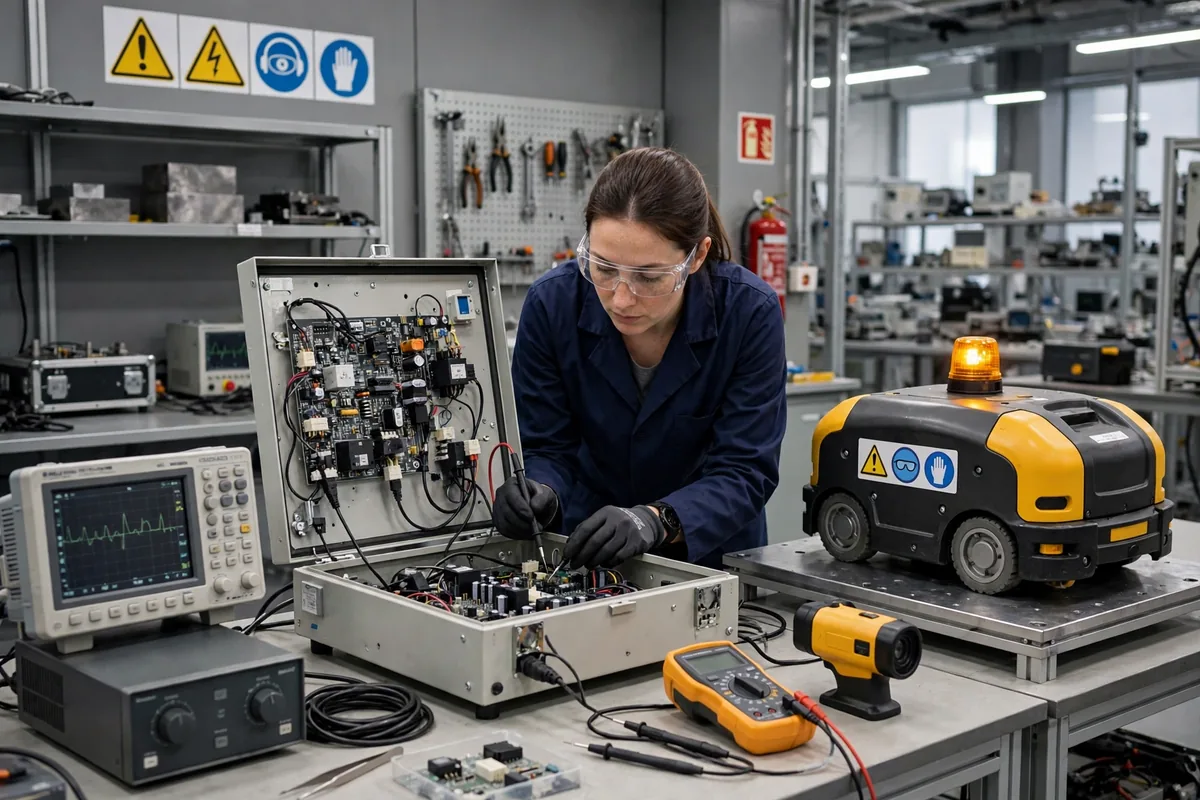
The first is electrical safety for the vehicle itself, and the standard that matters is UL 3100, the Standard for Automated Mobile Platforms. It covers the battery system, charging, motors, protection against electric shock, and fire — the whole electrical system, not just one component. UL issued the first UL 3100 certification to Dematic on April 25, 2018, which tells you how young this regime is. The current edition dates to May 26, 2021. A typical certification run takes 3 to 6 months, including preliminary evaluation, construction review, testing, reporting, and the first factory audit. That is the lab's published range, not a sales promise, so build your schedule around the long end.
The second is system safety, governed by ANSI/ITSDF B56.5. The current edition is B56.5-2024, the Safety Standard for Guided Industrial Vehicles. Where UL 3100 asks whether the truck can catch fire, B56.5 asks whether it can share a building with people without hurting them: detection, braking, speed control, warning devices, emergency stops, guidepath clearance, and who is responsible for what. Two numbers from that standard are worth memorizing. Minimum guidepath clearance is 19.7 inches on both sides. Maximum speed in a hazard zone is 2.6 mph, and in a restricted area it drops to 0.6 mph. If those speeds sound painfully slow, that is the point. American warehouses mix people and driverless trucks, and the standard prices that risk in miles per hour.
The third is radio authorization under FCC Part 15. An AGV that talks to a fleet manager over Wi-Fi or Bluetooth is an intentional radiator, and it needs certification and an FCC ID issued through a Telecommunication Certification Body. A device that only uses digital logic internally, without deliberately transmitting, can usually travel the lighter Supplier's Declaration of Conformity route. Do not mix the two up, and do not swap antennas casually. The authorization covers the radio-plus-antenna combination that was tested. Change the antenna and you may have changed the certified configuration.
Underneath all three sits OSHA, and this is where newcomers get confused. OSHA has no standard written specifically for AGVs. It enforces the powered industrial truck standard, 29 CFR 1910.178, together with the General Duty Clause, Section 5(a)(1), which obliges an employer to provide a workplace free from recognized hazards. No AGV-specific rule does not mean no enforcement. It means the inspector judges your installation by forklift rules, your risk assessment, your training records, and your site safeguards — and asks where the paperwork is.
There is also the question of whose mark counts. OSHA recognizes Nationally Recognized Testing Laboratories, and the marks they issue — UL, ETL, CSA, TÜV — carry equal weight when the lab is recognized for that standard and scope. Insisting on UL by name because a customer asked for it is a commercial preference, not a legal requirement. The legal requirement is an NRTL mark for the right standard, from a lab recognized for it.
Two Jobs Where the Paperwork Was Right and the Fleet Still Stopped
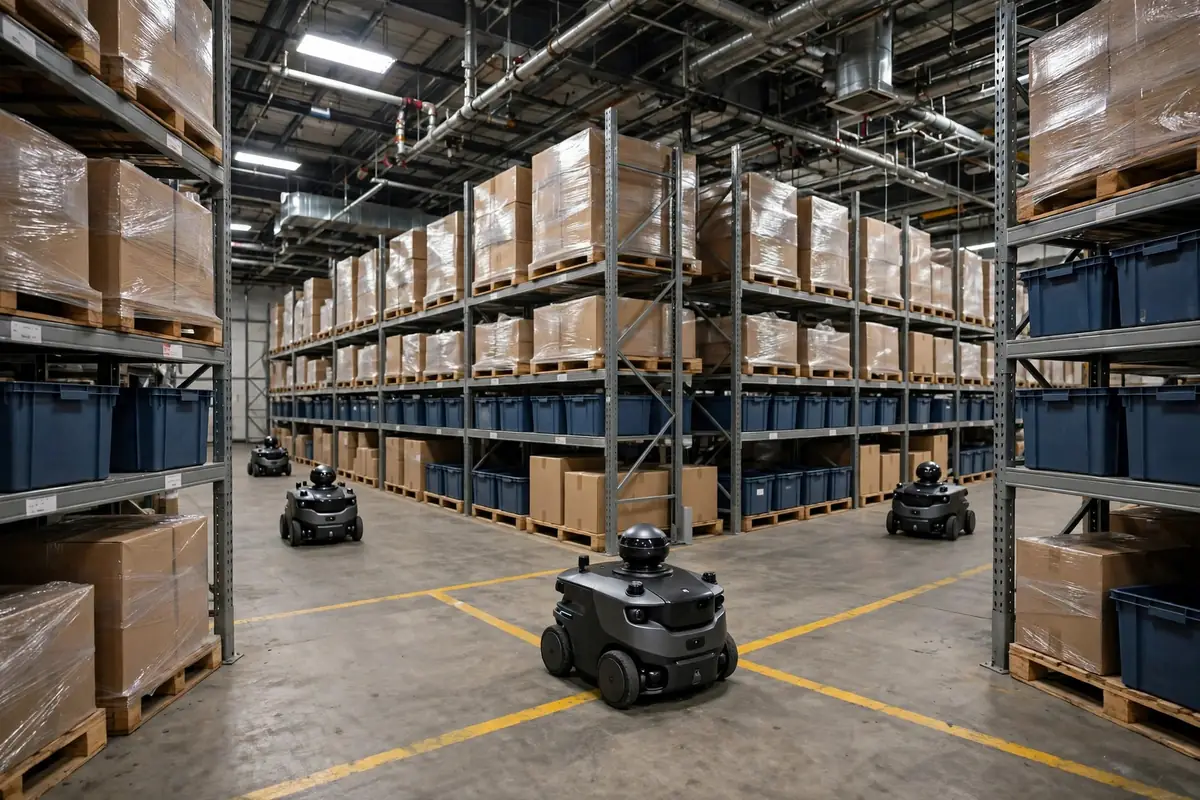
In the fall of 2024 I walked into a cold-storage operation in New Jersey that had just taken delivery of nine driverless forklifts. The vendor's file was thick: European test reports, an ISO 3691-4:2020 conformity file, a polished commissioning plan. The site's insurer asked one question — where is the NRTL listing? — and the room went quiet. The trucks sat in a staging lane for three weeks while the project team scrambled. The fix was not a single test. The battery packs had to be swapped for a listed variant, the chargers were evaluated separately, and the aisles had to be remeasured because the guidepath clearance on two turns fell short of the 19.7-inch figure. Three weeks of manual forklift cover cost more than the testing would have. Nobody on that project was careless. They were simply certified for the wrong market.
The second job taught me the opposite lesson, and it still surprises people. In 2023 a Texas distribution center had its fleet certified, listed, and running — and then lost a week to a battery change. The operations team had sourced a cheaper lithium pack with the same voltage and capacity on paper and swapped it in during a maintenance window. On paper it was a like-for-like replacement. In certification terms it was a different energy system inside a certified vehicle, and the site's safety file no longer matched the truck. The fleet ran at reduced speed under supervision until the new pack was evaluated, and the savings on the purchase price evaporated in a week of overtime. The counterintuitive truth is that the cheapest part of a certification project is usually the lab fee. The expensive part is redesign, rework, and downtime — and a single unapproved component swap can trigger all three.
Here is the judgment I keep coming back to: early certification does not guarantee a fast launch. The fastest-certified fleet I ever saw spent the longest time in site acceptance, because the vehicle passed and the building failed. Reflective racking confused a laser scanner at one dock door. A charging bay sat too close to a pedestrian crossing. An emergency-stop reset procedure existed on paper but nobody on the night shift had practiced it. The truck was compliant. The system was not.
The Math: What AGV Safety Certification Really Costs
The table below is an illustrative example with hypothetical figures. It is not a quote. Its purpose is to force the trade-off into the open before you sign.
| Route | Upfront cost | Time to run | Risk |
|---|---|---|---|
| FCC only, plus self-declaration | Lowest | Fastest | Highest — safety review and insurance likely to block |
| UL 3100 vehicle certification | Medium | Medium — allow 3 to 6 months | Medium — the truck passes, the site still needs its own check |
| UL 3100 plus B56.5 site acceptance | Highest | Slowest | Lowest — warehouse, insurer, and customer review all clear |
Run the total cost, not the lab fee. Illustrative example: take a 10-truck project and assume certification and rework cost a noticeable sum per truck. That number looks painful in a budget meeting. Now compare it with three weeks of stopped automation: manual cover, delayed orders, overtime, and a customer asking why a certified fleet is parked. The downtime bill is usually the larger one. Certification is a cost, and it is also insurance. Skipping it saves the small money and gambles the big money.
Three rules have served me well, and I offer them as advice rather than slogans. Put the standards and editions in the contract — UL 3100 and ANSI/ITSDF B56.5-2024 by name and year, not "meets US standards." List the battery, the charger, and the antenna as separate line items, because a vehicle certificate does not automatically cover each one. And reserve separate time and budget for site acceptance: clearance, detection blind spots, emergency-stop reset, and training records. Fail any one of those four and the fleet does not run.
Would you rather spend an extra month on paper, or an extra fortnight watching parked trucks? That is the real question, and every AGV project heading for the US answers it one way or another.
By Lao Mi, Supply Chain Veteran (20 yrs)