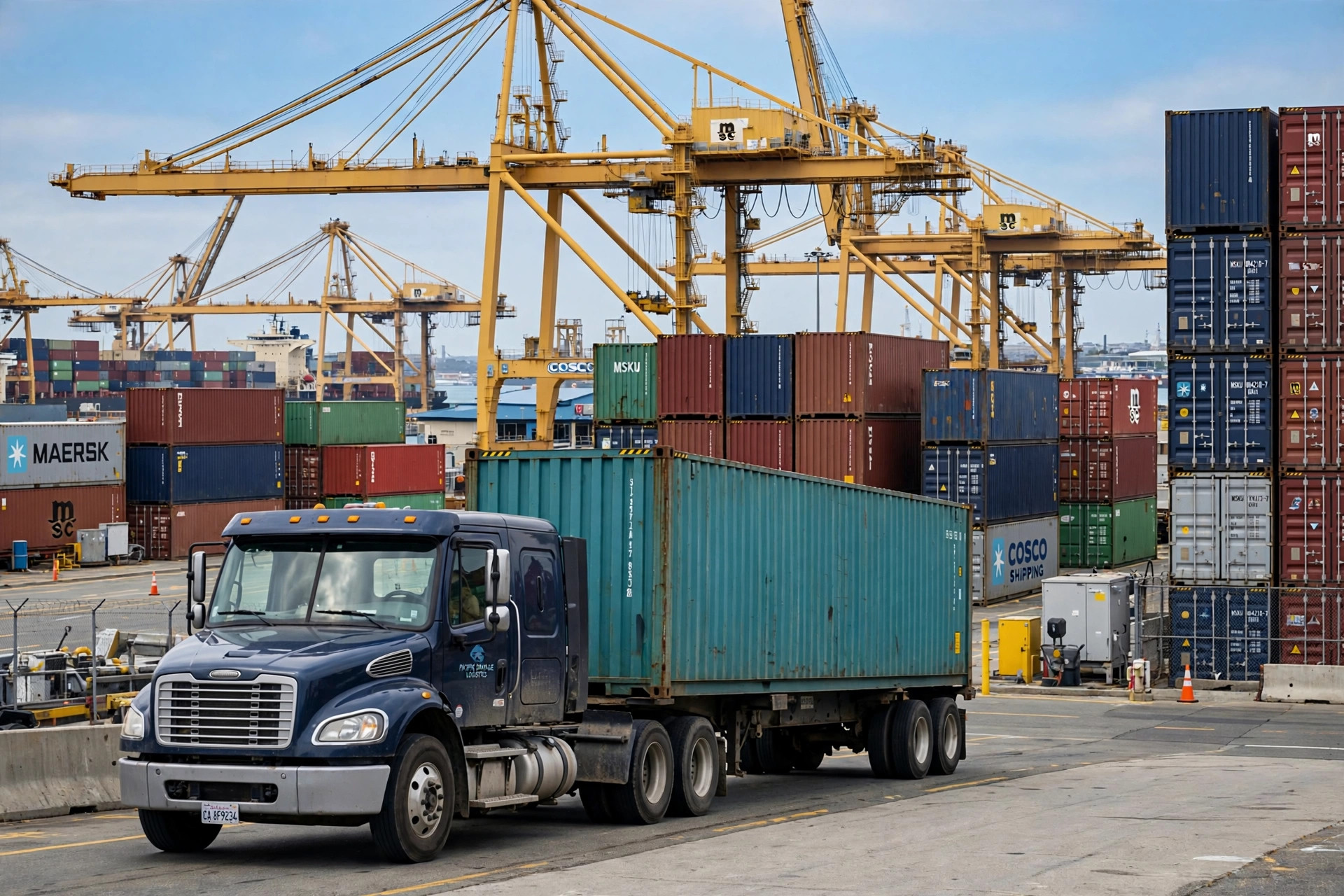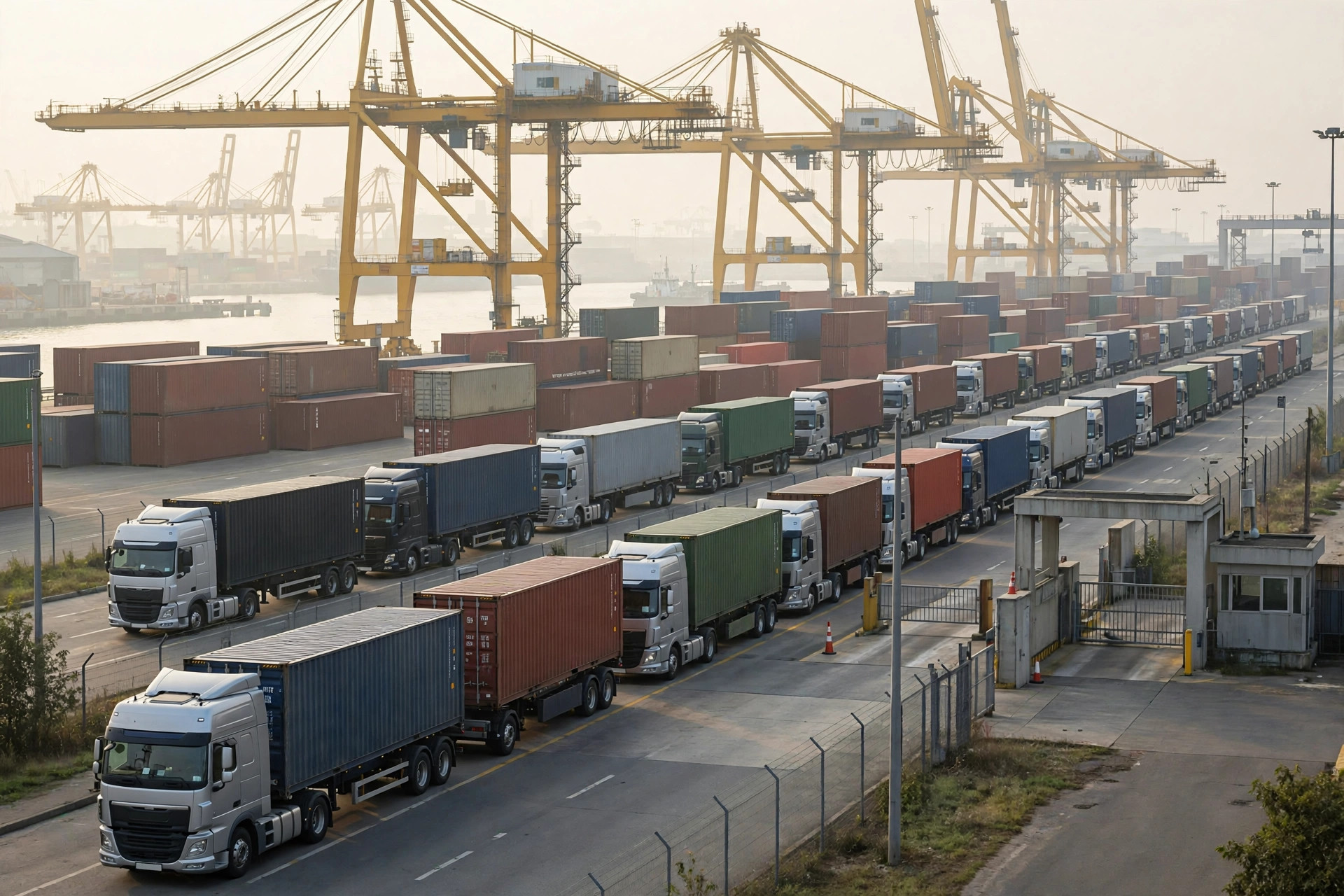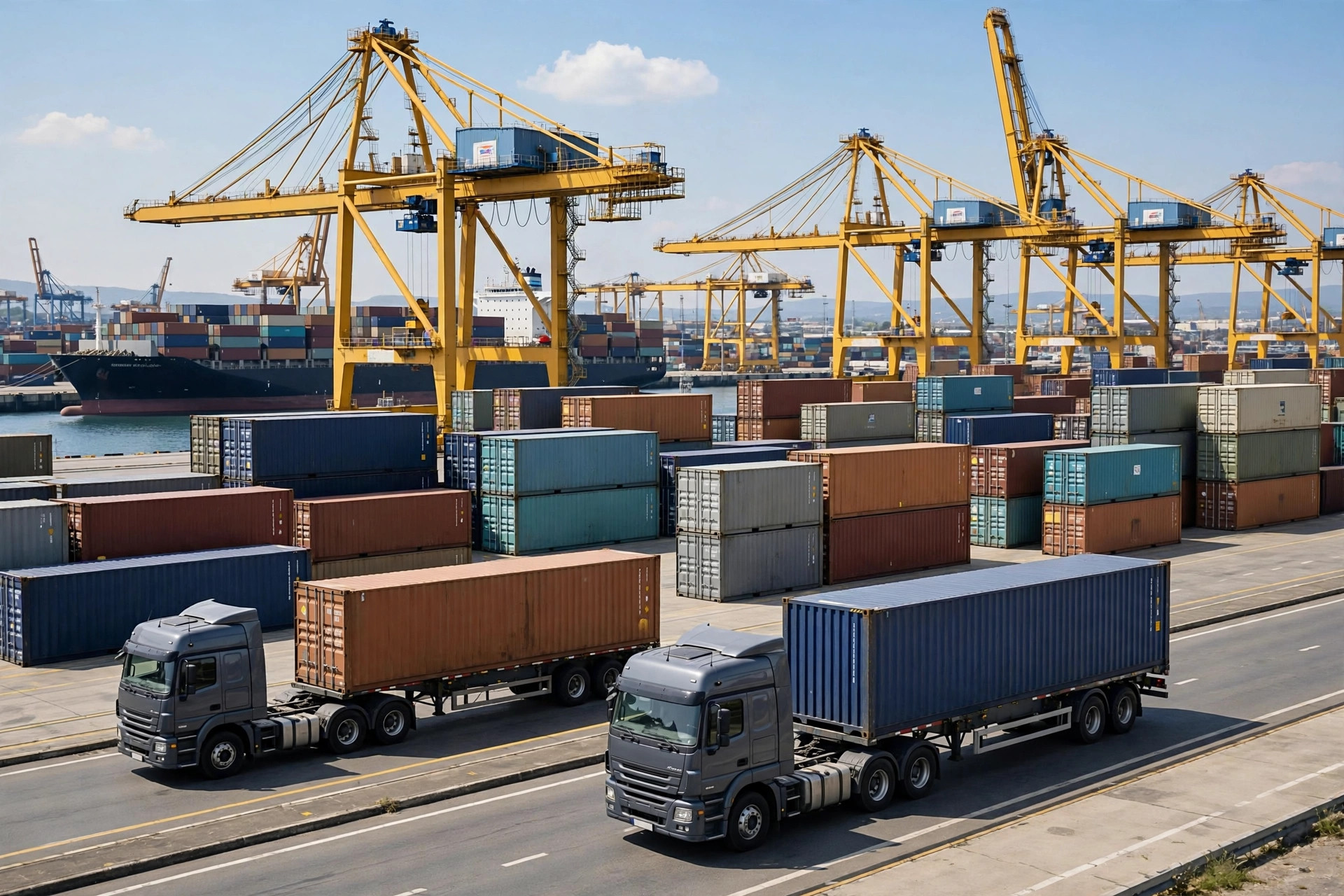
Let me tell you something. A while back I was sitting in line at the Port of Long Beach, waiting my turn for container pickup, when I watched the driver ahead of me get turned away at the gate. He had his bill of lading printed out, sweat on his forehead, arguing with the guard — and the guard just kept repeating one thing: no release, no gate. The steamship line hadn't released his box. Three hours of phone calls later, the guy bobtailed out empty — burned a tank of diesel and blew up the rest of his day's schedule.
Fifteen years behind the wheel, and I can tell you this: the delivery order release is where most drayage jobs go sideways. It's not that people don't know about it. It's that everybody thinks "I'll deal with it once the freight lands." Trust me — by then it's too late. So let me walk you through how container pickup really works at a US terminal, plain and simple. Shippers and warehouse folks, listen up — this'll save you real money.
The Delivery Order Release in Six Steps
A lot of people think picking up a container means driving to the terminal and hooking a box. Wrong. On the import side in the US, there's a whole chain of paperwork in front of that, and if the steamship line hasn't said yes, the terminal won't even let you through the gate. The industry calls this "exchanging the delivery order" — the DO release — and that DO is your permission slip.
Step one: booking confirmed, bill of lading issued. The cargo sails from China, the line issues the B/L, and that number becomes the root of everything that follows. Lose track of it and you're dead in the water.
Step two: ocean freight and destination charges paid in full. Whatever balance is owed on the freight, plus the terminal handling charges on this end — settle it. No money, no release. That's the iron rule.
Step three: pay the DO fee, and the line releases the delivery order. The release fee is its own line item, and every carrier charges differently — check each line's current rate schedule. Only when the money lands does the carrier flip your container to "released" in the system.
Step four: take the DO and book a terminal appointment. These days the DO is electronic. Once the line releases it, it shows up in the system, and you use it to grab a pickup window in the terminal's appointment system. Heads-up: some systems take a few hours to sync after the release. Don't cut it close or you'll make a wasted trip.
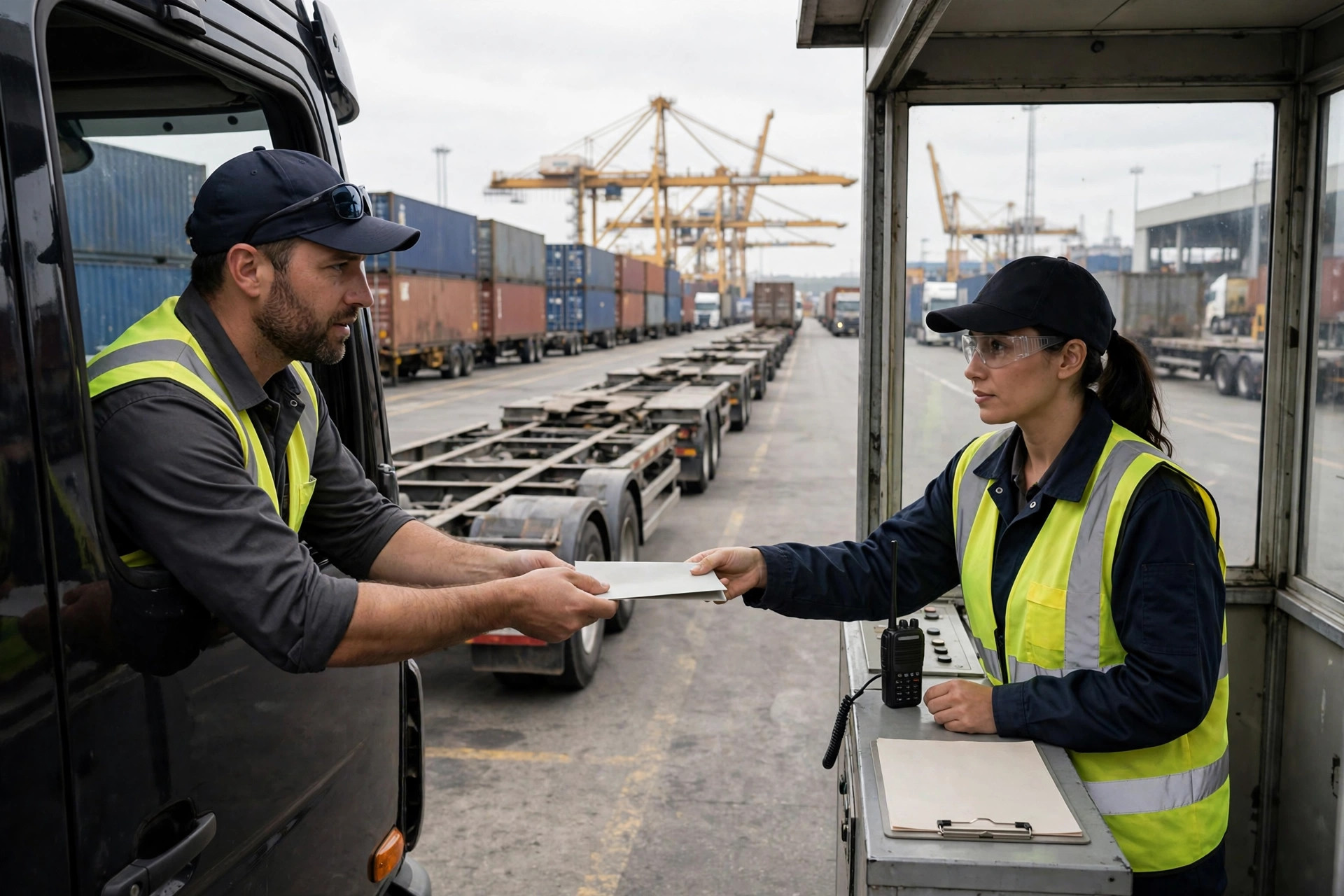
Step five: show up on time, clear the gate, pick the box. The gate checks that your DO and your appointment are both valid before waving you in to hunt down your container. Like the driver at the start of this story — no DO, and his appointment didn't mean a thing.
Step six: plan your empty return before you even hook the container. Where the empty goes back, and when — have that figured out ahead of time, or the box sitting on your chassis an extra day can start costing you.
Last fall I saw this play out on a 40-footer from Ningbo into Los Angeles. The shipper had wired the ocean freight to his forwarder well in advance, but the forwarder sat on the money for two days before passing it to the line. The line releases only when the cash lands, so the DO came three days late. Meanwhile, free time started ticking the day the box hit the terminal. By the time the release came through, most of the free days were already burned. The shipper screamed at the forwarder, the forwarder said "but I paid," the line said "we release on receipt." Three parties arguing — and the shipper's own free time going up in smoke. Tell me that's not a crying shame.
Free Time: The Countdown Nobody Warns You About
The delivery order itself isn't hard. What kills you is the clock. Once the box is discharged, the line gives you a few days of free storage — free time — usually 3 to 5 days, though it varies by carrier and terminal, so go by each one's current rate schedule. Past that, demurrage kicks in by the day: tens to over a hundred dollars a day, and a lot of tariffs are tiered — the longer the box sits, the higher the daily rate climbs.
Here's another true story. A buddy of mine imports furniture. Two 40-footers landed on a Friday. He figured the terminal wasn't really working the weekend anyway, so he'd pick up Monday — "what's two days?" Turns out free time runs on calendar days. Weekends count. By Monday his free time was gone and demurrage had already started. Two boxes, three or four extra days, several hundred dollars evaporated. He told me, "If I'd known, I'd have worked late Friday and pulled them." Let me tell you — "I thought" is the most expensive phrase in this business.
Do the math and it gets obvious. One 40-footer, 4 days of free time, and you pull it on day 8 — that's 4 days over. At tens to over a hundred bucks a day, that's several hundred dollars down the drain; double it for two boxes and you're past a thousand. Meanwhile, getting the delivery order done early and booking the pickup appointment costs almost nothing — a few phone calls, a couple days of watching the timeline. A schoolkid could do this math. And yet every year, people walk straight into it.
Now here's the part nobody tells you: the terminal doesn't mind you being late. Demurrage is revenue for the terminal and the line — every extra day your box sits there, they collect. So don't expect anyone to "remind" you that your free time is about to expire. Nobody will. The only person who should be in a hurry is the shipper. That free-time countdown starts running the day the box becomes available, whether your DO paperwork is done or not.
Straight Talk for Shippers and Warehouses
First, for shippers. One: start the delivery order release before the vessel even berths. Get the ocean freight and the DO fee settled early — don't wait until the ship docks to wire money. International wires take a day or two, and by the time the funds land, you've already burned two days of free time. Two: pin your forwarder down in writing — who handles the release, and by what date the DO must be in hand. A lot of forwarders only move when you chase them. No chase, no action. Three: in peak season, terminal appointments are gold. The moment the DO drops, book your window. You can always reschedule an early booking; you can't conjure a slot that doesn't exist.
Now for warehouses. Match your pickup pace to your receiving capacity. Don't book eight pulls in a day when your dock can only unload four. Boxes queued up at your door still cost money, and drivers kept waiting charge detention. And confirm the empty-return location and timing with your drayman up front — plan the empty return when you plan the pickup, not when you're staring at an empty box asking "where does this thing go back to?"
There's an old saying back home: the early bird gets the worm, the late one gets the panic. The delivery order is the same — get it early and you've got a real shot at pulling the box inside free time; sit on it and the countdown burns anyway, and every day it burns is your own money.
By Shifu Zhao, Trucking Veteran (15 yrs)