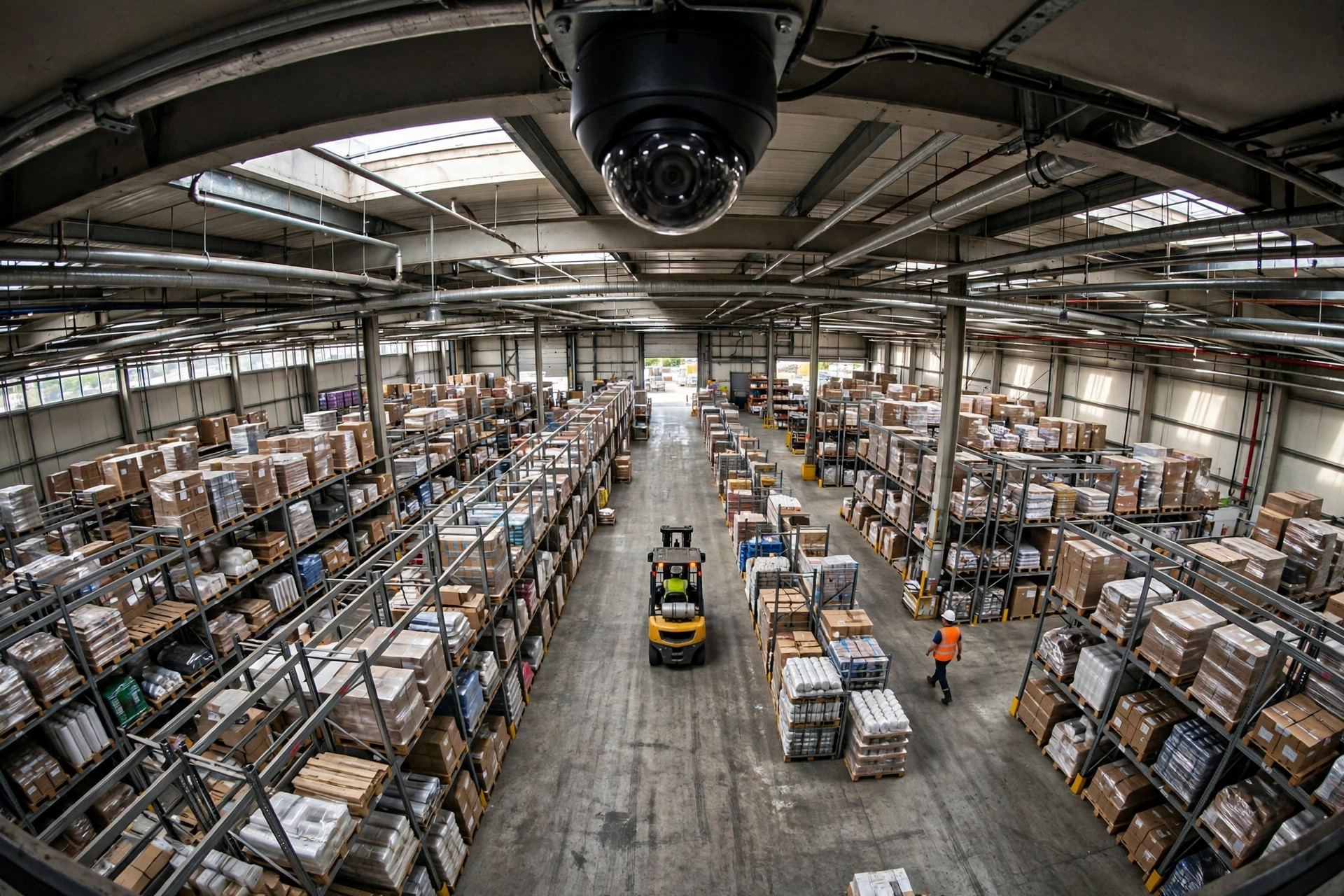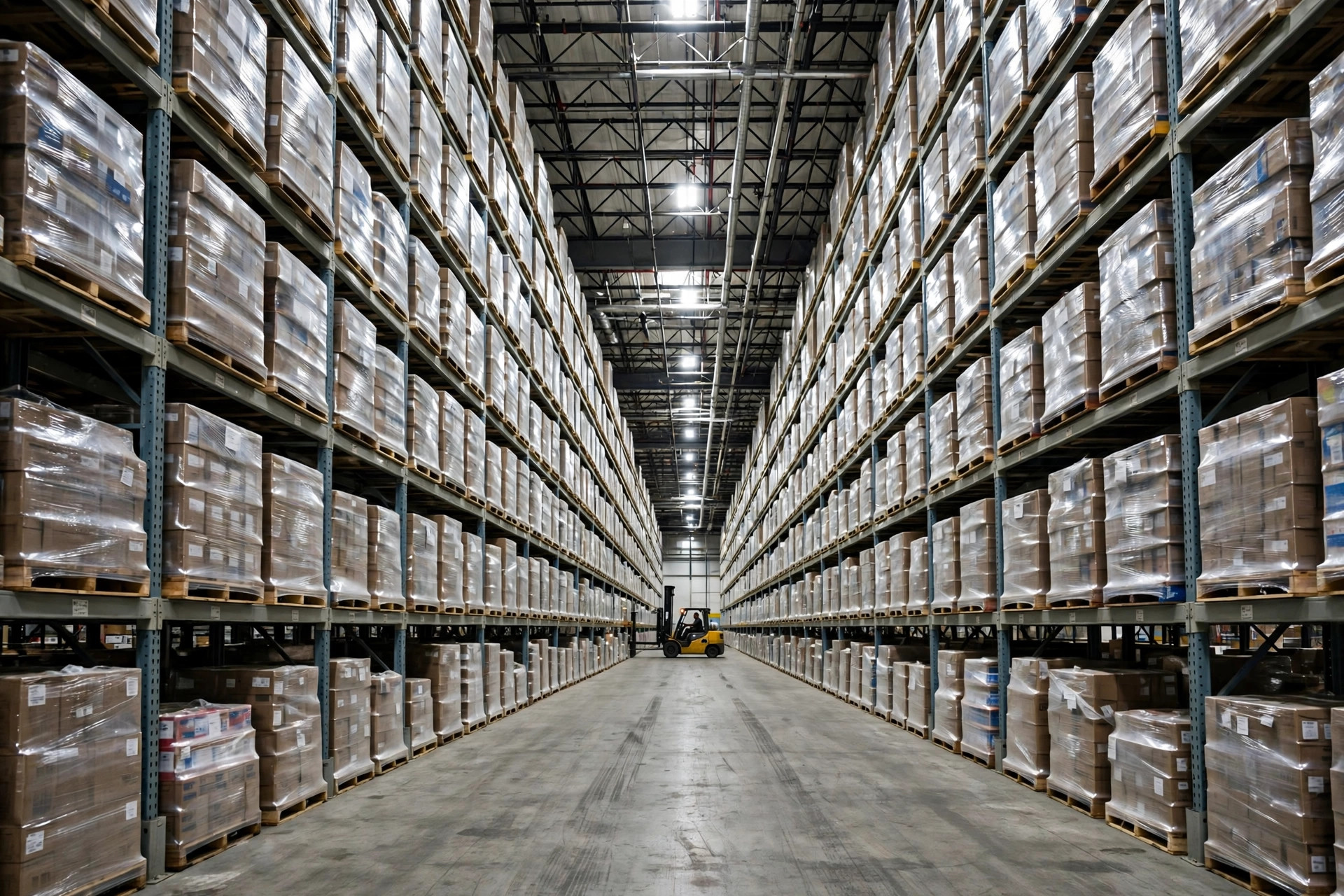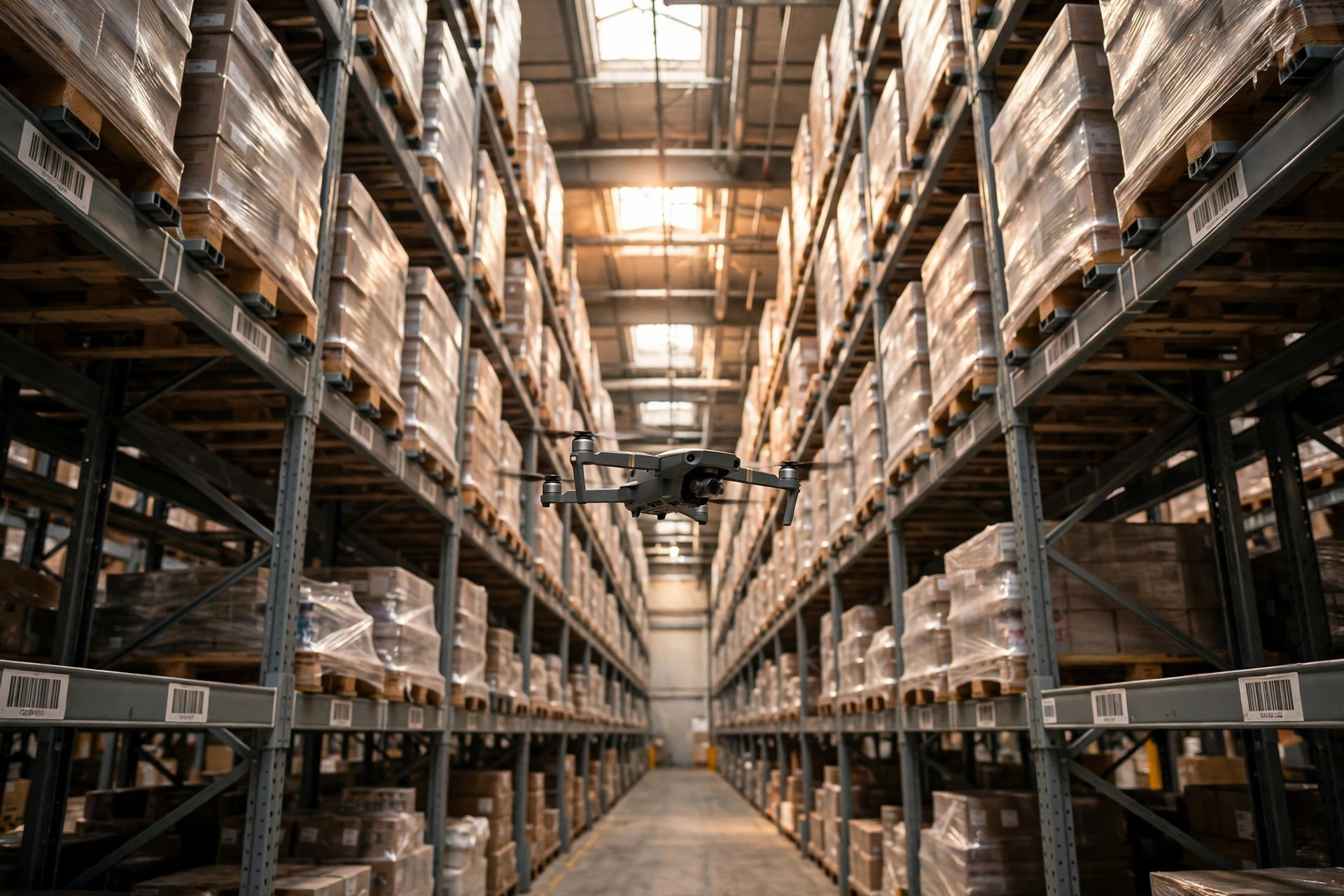
I was sitting in my cab outside a 3PL warehouse in Fontana this past March, two hours into a delayed unload, when I saw something that made me get out of the truck. Down one of the high-bay aisles, a little quadcopter was buzzing its way up the racking, level by level, while a kid with a tablet watched location numbers turn green. That was my first live look at drone warehouse inventory counting, and I ended up standing there for half an hour like a rookie at an airshow.
Fifteen years of hauling freight into warehouses, and count day was always the same miserable scene: half the aisles coned off, a forklift pressed into service as a man-lift, guys climbing to the top levels with handheld scanners, and two days later a stack of discrepancies nobody could explain. If a flying camera can fix that, I wanted to understand how — so I asked around, talked to the kid flying it, and visited two more operations running them.
How Drone Warehouse Inventory Counting Actually Works
Here's the plain-English version. The drone does three jobs: fly, look, and log.
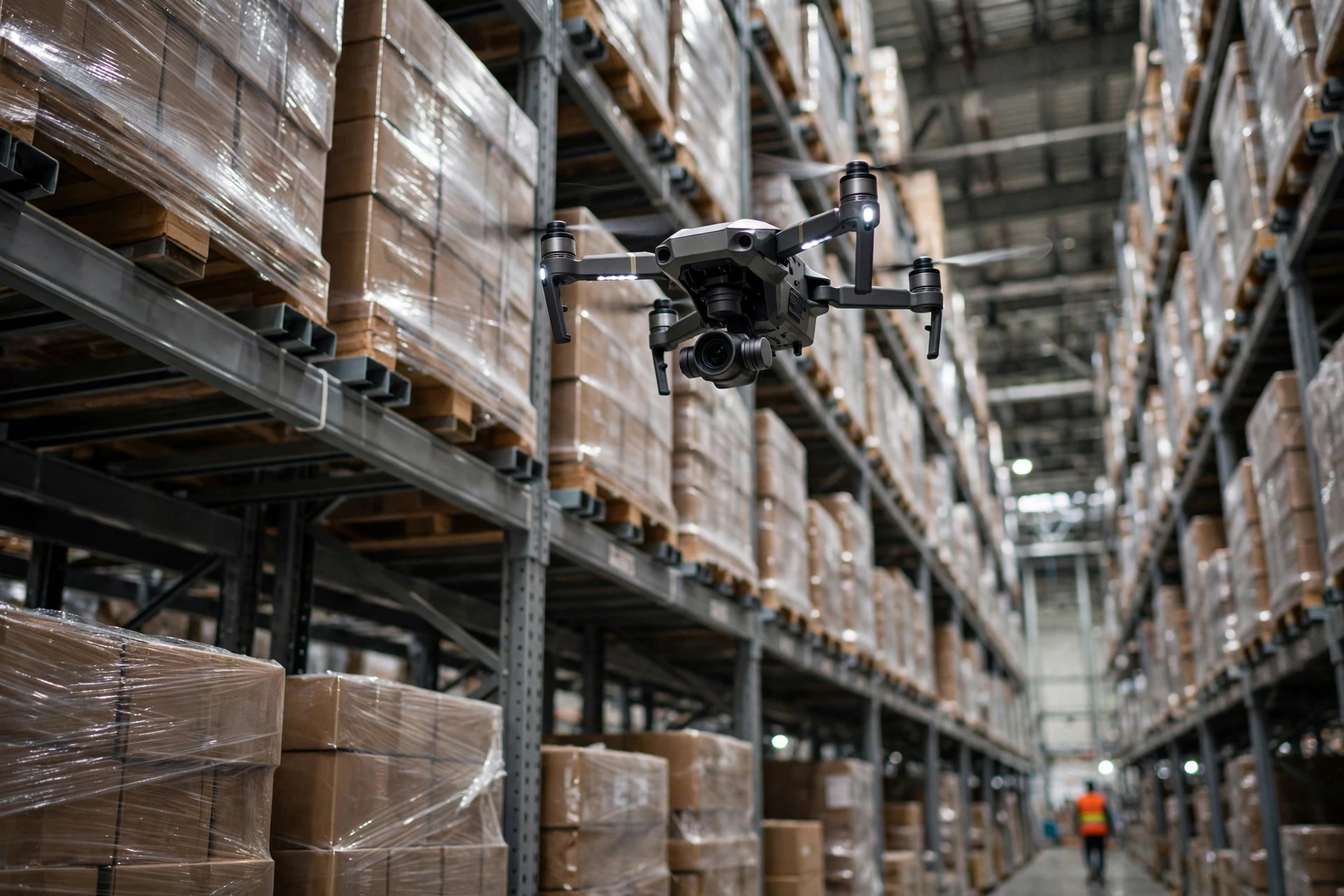
Fly: somebody maps the aisles and rack levels into the software first, then the drone runs a serpentine pattern, one aisle at a time, bottom to top. It's got collision sensors, so it stops itself before kissing a rack. When a forklift comes through, it hovers and waits its turn. Nobody's really "flying" it — more like babysitting.
Look: the camera underneath reads barcodes and location labels. It hovers at each slot for a second or two, snaps a photo, and the software matches the barcode against the inventory record. Here's the thing — the top levels of high-bay racking are exactly where humans are worst at counting. From the ground you can't reach them; climbing up is slow and dangerous. The drone lives for that job.
Log: every read goes straight back to the system — matched, mismatched, or empty slot, flagged on the spot. The old way, guys counted on handhelds and somebody keyed it all in back at the office. That whole step just disappears.
The Fontana operation flew a dozen-plus high-bay aisles in one afternoon. The old crew of four needed two full days for those same upper levels, plus a forklift on standby. On speed alone, it's not close.
The Real Cost of Drone-Based Cycle Counting
I'm not selling drones, so here's a back-of-the-envelope for a mid-size warehouse — call it 50,000 square feet — one full count cycle. Round numbers, just to give you the shape of it:
| Manual count (one cycle) | Drone count (one cycle) | |
|---|---|---|
| Labor | 4 people × 2 days | 1 trained operator × half day |
| Equipment/support | Forklift as man-lift, safety gear | Drone + software |
| Downtime | High-bay aisles blocked half to full day | Near zero — counts while you work |
| Accuracy | Worst exactly where it's highest | Best exactly where it's highest |
But don't stop at that table, because the sticker price isn't the whole story. From what I've heard, a working setup — drone plus software — runs into the tens of thousands of dollars a year depending on configuration and subscription (check current vendor pricing; I'm a trucker, not a quote desk). You don't need to hire a pilot — train one of your own people, takes a day or two.
Two costs people forget:
Insurance. The thing flies inside your building. If it clips a rack, drops onto product, or — worst case — hits somebody, whose problem is that? Sort that out before the first flight, not after.
Labels. This is the one that gets people. The drone reads barcodes. If your location labels are crooked, faded, or caked in dust, it reads nothing. I visited a second warehouse, an older building near downtown LA, where the labels hadn't been refreshed in a decade. The drone flew for hours and the read rate was embarrassing — they ended up sending guys up ladders anyway. Money spent, job half done.
So the real math on drone warehouse inventory counting: it saves you high-bay labor plus the cost of shutting down aisles to count. It costs you the hardware and software, insurance, and the upfront work of getting every label straight, clean, and scannable. If you've got tall racks and count often, the math works. If you count twice a year in a low building, keep your ladders.
What Drone Inventory Counting Still Can't Handle
Everybody asks me if the big risk is the drone smashing into a rack. Honestly? No. The collision sensors are good — crashes are rare. What drives operators crazy is air.
Warehouse air is rougher than you'd think. A dock door opens and a gust rolls in. A forklift rips down the aisle and drags a wake behind it. Big ceiling fans churn the top levels. These little machines are light — a gust pushes them sideways, the camera shot blurs, and that slot has to be reflown. The operator in Fontana told me on windy days, when the dock doors stay open, he'd rather wait half an hour than fight it.
Then there's dust. It cakes on top of high beams and upper rack levels thicker than you'd believe. The drone's own downdraft kicks it up, it films the lens, and read rates fall off a cliff. So warehouses that run drones sweep the flight aisles before a count. There's something funny about the most high-tech counting method on the market losing to plain old dust.
And the battery is a hard limit. Indoor machines fly maybe twenty minutes a charge, then it's swap and go again — a dozen-plus swaps in a full day. Somebody has to mind the batteries, move the data, check the machine. "Unmanned counting" sounds great in a brochure. In real life, there's always a person standing nearby.
Here's the trade-off nobody puts in the sales deck: the drone is literal-minded. A crooked label, a pallet in the wrong slot, a torn barcode — a human spots the situation and figures it out. The drone just flags an exception and moves on. So "counts fast" and "counts right" still have a manual review step sitting between them. The machine does the climbing; people still do the thinking.
Straight Talk for Shippers and Warehouse Operators
One for shippers: next time you're vetting a 3PL, ask how they count the high bays. If they run drones on a schedule up there, it tells you two things — their inventory accuracy is probably solid, and management actually invests in the operation. But don't take the pitch at face value. Ask to see a count report: empty-slot rate, discrepancy rate. Numbers don't bluff.
One for warehouse operators: don't start by shopping for drones. Ask three questions first. Are your racks tall enough? Are your aisles straight and your labels clean? Do you count often enough to matter? Three yeses — go get quotes. Any no — fix the basics first. A drone is a multiplier on a good operation, not a rescue for a sloppy one.
Fifteen years on the road taught me this: there's no such thing as a good tool or a bad tool, only the right tool for the job. Tall straight racks, clean labels, frequent counts — a drone will save you real money. An old beat-up building with crooked labels? Straighten the labels first. In counting, like in trucking, steady beats fast every time.
By Shifu Zhao, Trucking Veteran (15 yrs)