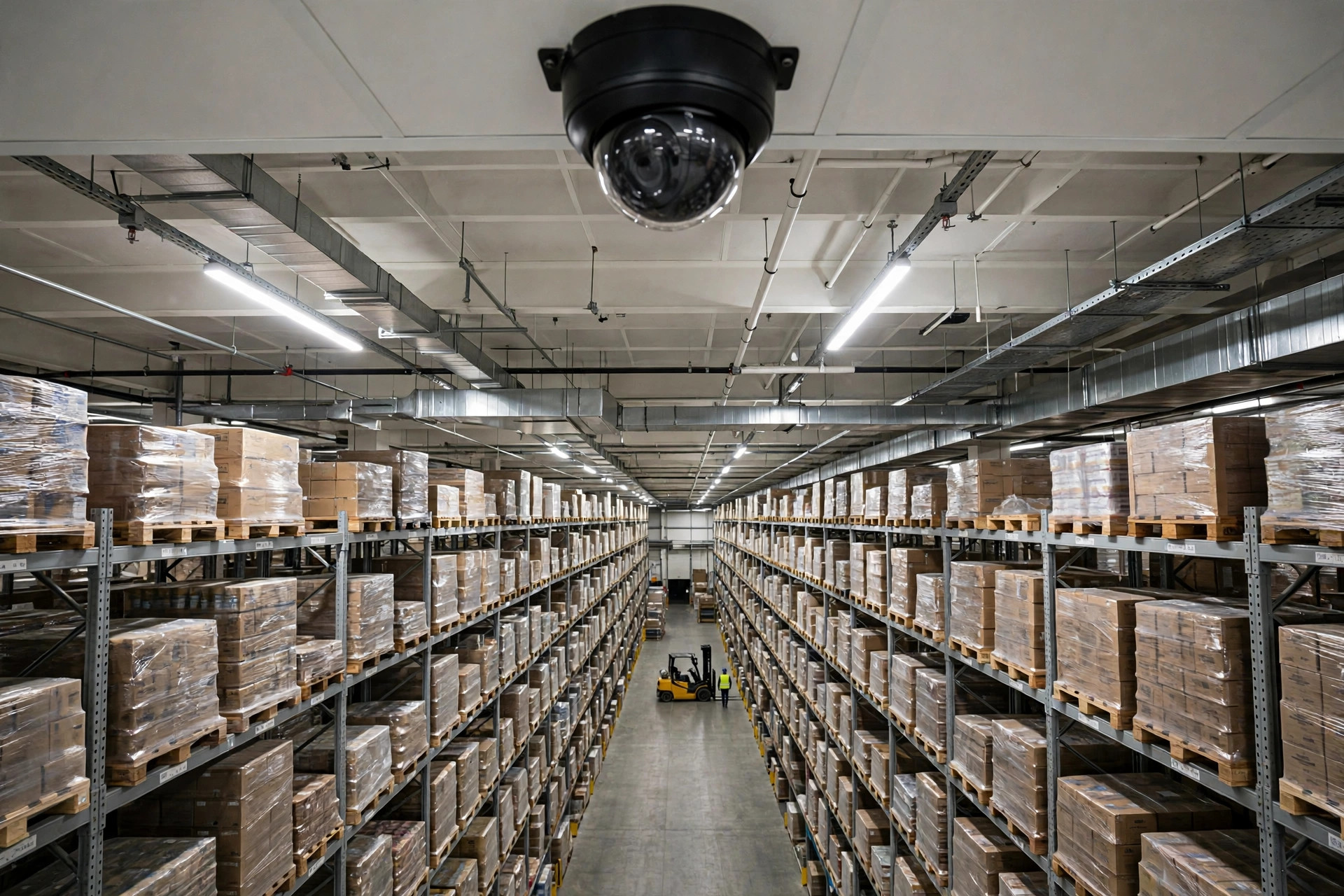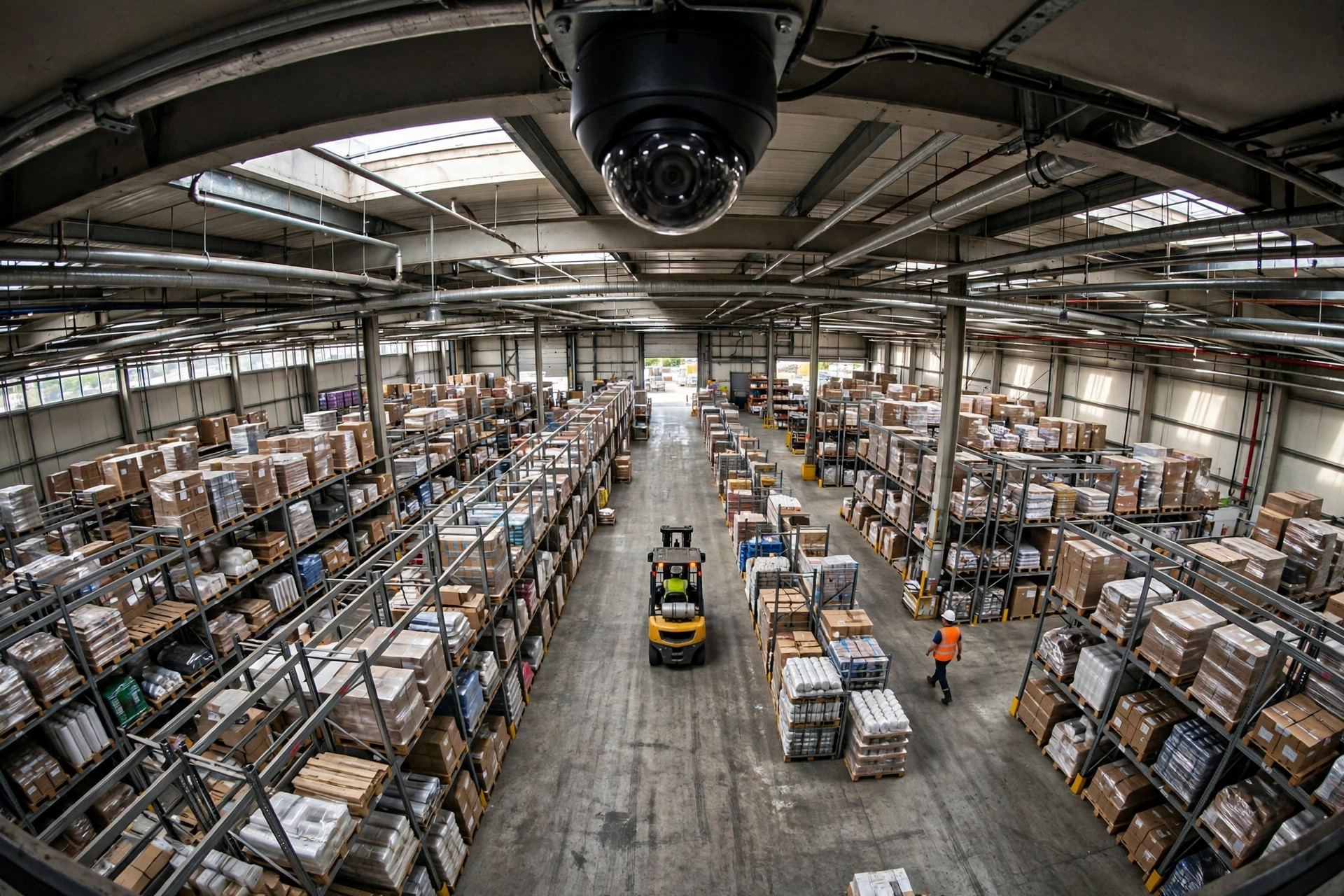
Most warehouse cameras today do exactly one job: they record footage for someone to rewind after something goes wrong. That is a very expensive rearview mirror. It tells you where you crashed, not that someone was standing in front of you. AI camera warehouse safety monitoring flips the job description. The same cameras go from "watch the replay" to "shout while it is happening," flagging a violation in the moment it occurs.
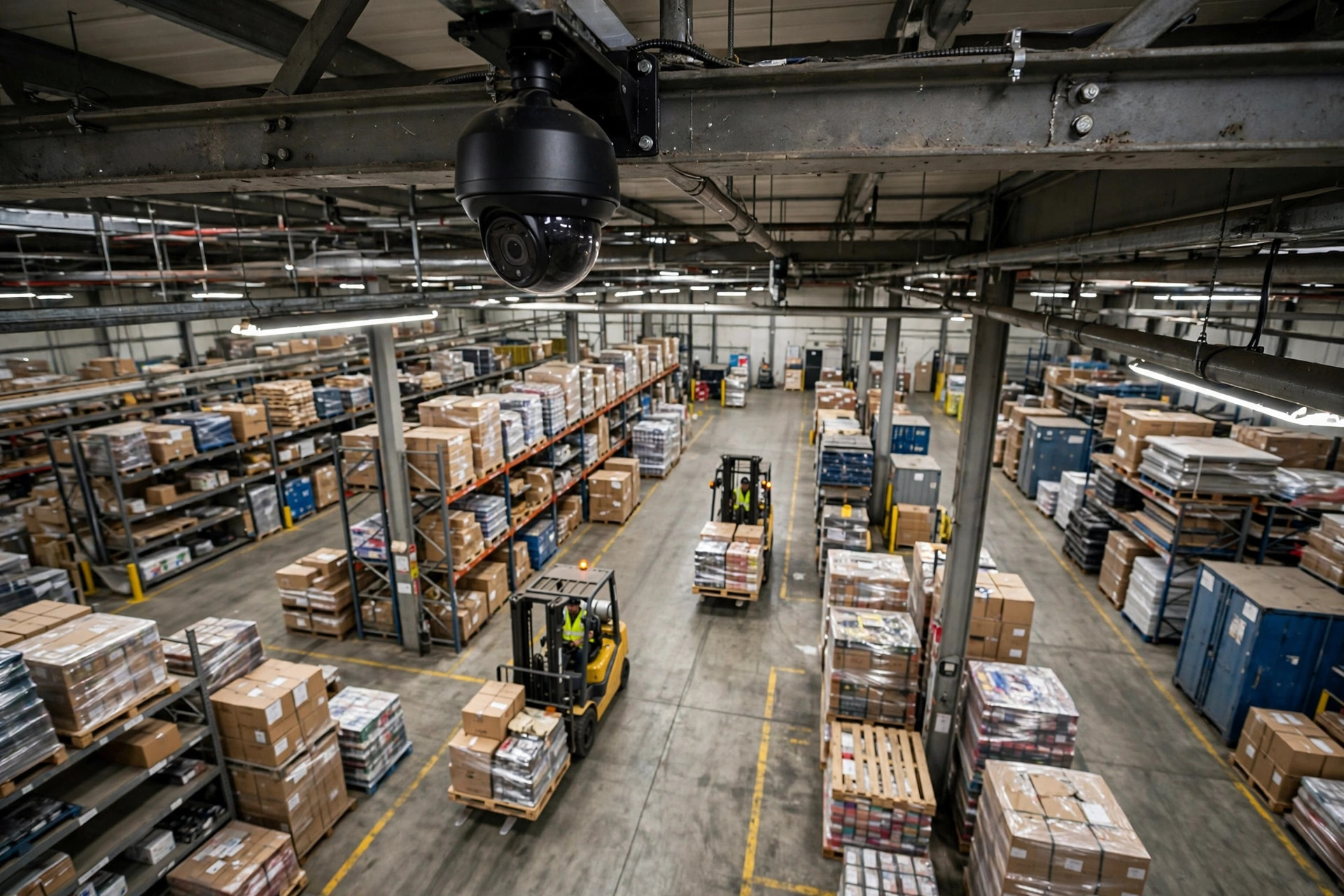
Let me be blunt about what this is and is not. You are not replacing cameras. You are adding a brain behind the cameras you already have. The video feed goes into an analysis box or a cloud service, and the model reads it frame by frame: a worker without a hard hat, a forklift drifting into the pedestrian lane, someone walking into a restricted zone. Each hit becomes a timestamped record. The hardware stays. What changes is whether anyone is actually watching the picture.
How AI Camera Warehouse Safety Monitoring Actually Sees
Think of it as three yes-or-no questions asked about every frame.
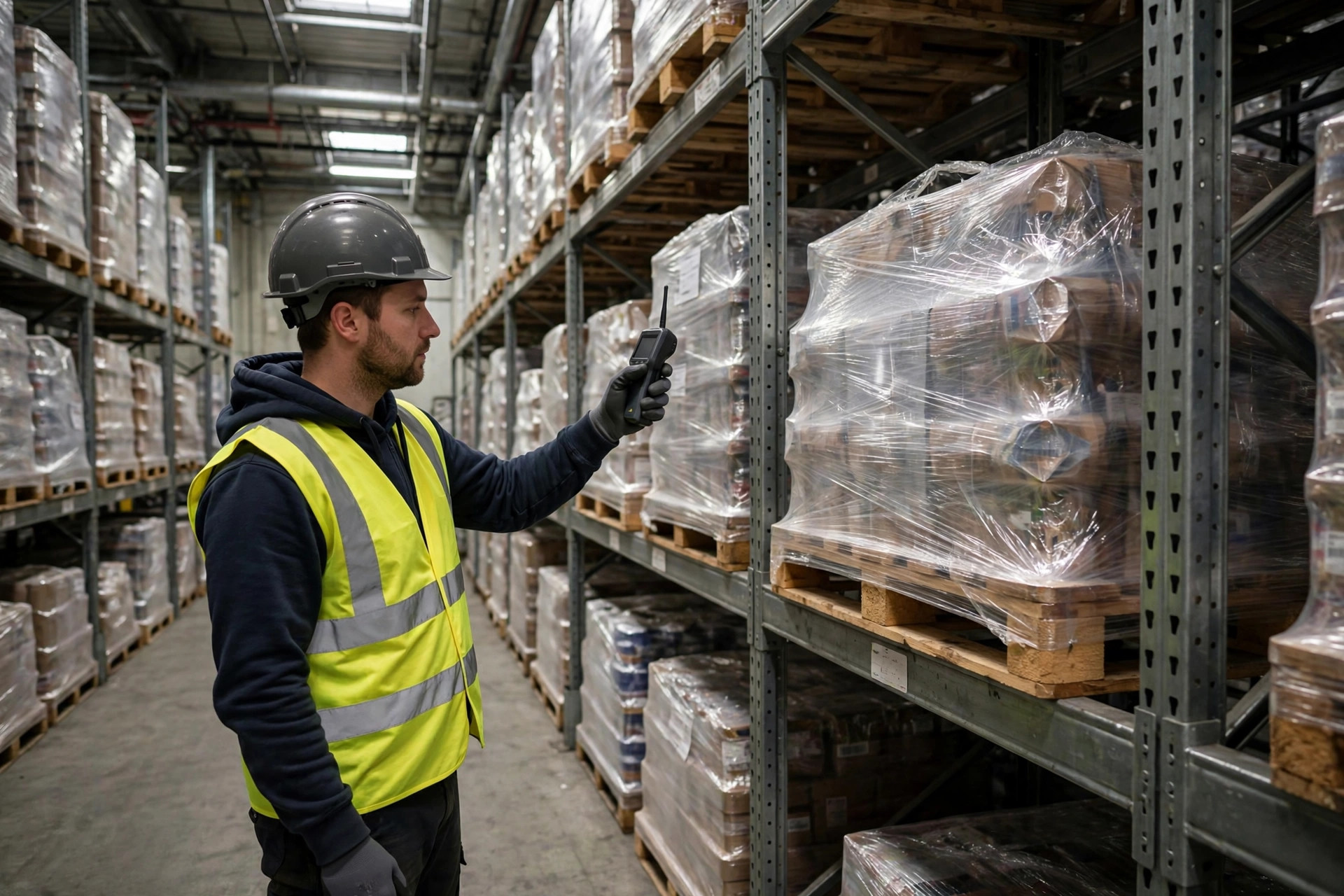
First, what is in the picture? The model draws boxes around people, forklifts, pallets, and spills. This is object detection, the same family of tricks your phone uses when it circles faces in your photo library, except here it is circling hard hats, hi-vis vests, forklifts, and pedestrians.
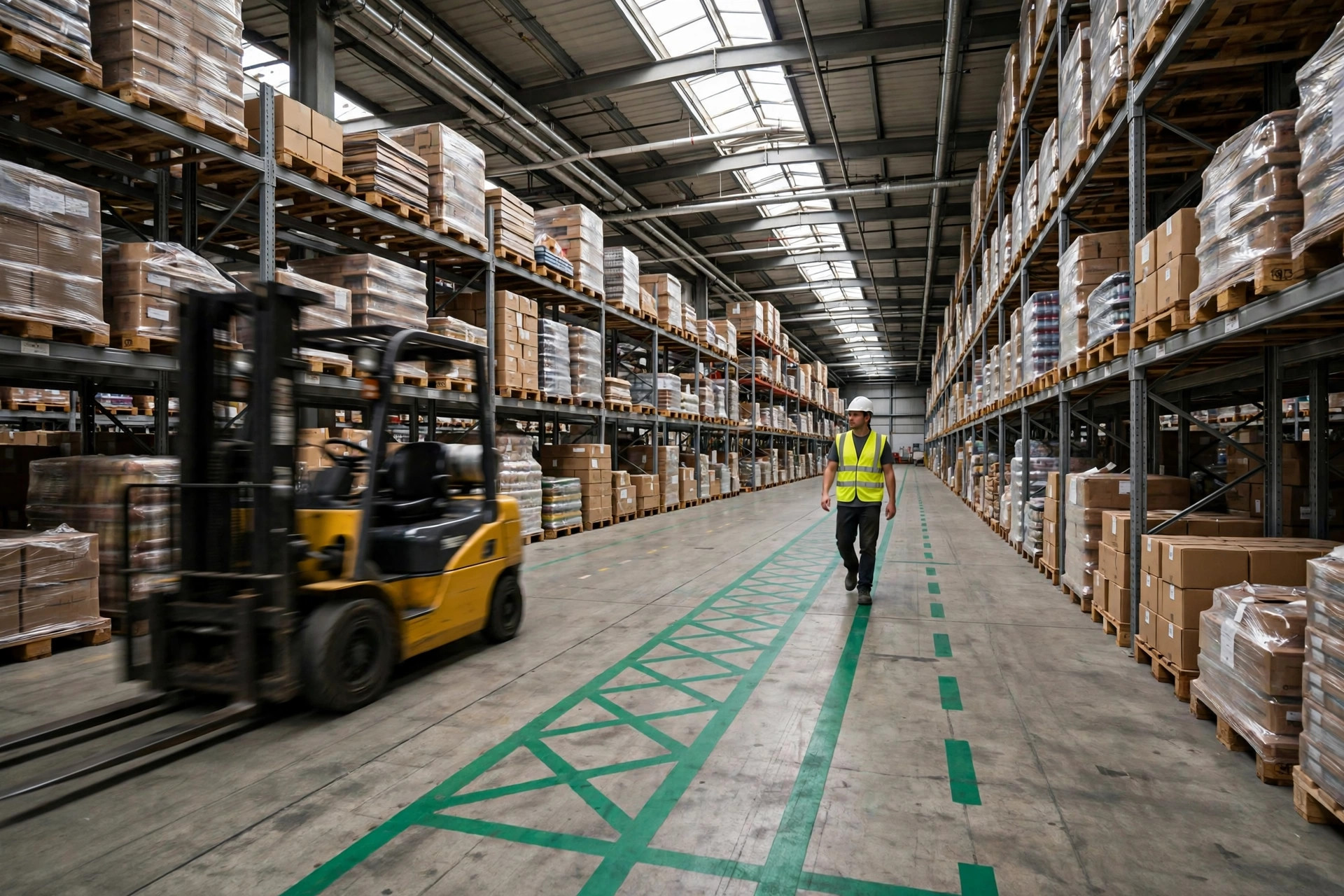
Second, is that thing where it belongs? Before go-live, you draw virtual zones over the camera view: pedestrian walkways, forklift travel lanes, restricted areas, dock edges. A pedestrian steps into the forklift lane, or a forklift crosses into the walkway, and the system logs it. Drawing a virtual fence is like drawing a property line on a map. The closer it hugs the real traffic flow, the fewer false alarms you get.
Third, is it moving the way it should? Forklift speed is the example I get asked about most. The model tracks the same forklift across consecutive frames, measures how far it traveled against ground distances calibrated from the camera view, and estimates speed. You can think of it as the system using floor joints and rack spacing as a ruler. Cross the limit you set, and it fires an alert. Hard hat detection works the same way: find the person first, then check whether there is a hard-hat shape on top of the head. No hat, one record.
I saw the real value of this in a 3PL warehouse in the Midwest, where three dock aisles fed one shared intersection used by both forklifts and walking pickers. One safety manager covered the whole floor, and there was no way he could watch that crossing all shift. In the first week after go-live, the top alert was not forklift speeding. It was pedestrians cutting across the forklift lane as a shortcut. The safety manager used to catch one or two of those a day with his own eyes. The system caught every single one, with a time, a screenshot, and a location. Armed with that record, the team moved the walkway entrance so the shortcut stopped making sense. The lesson was not "the AI is clever." The lesson was "nobody knew how often this was happening."
A second site made the point differently. Night-shift drivers sped in empty aisles, then drove politely whenever a supervisor was around. A camera does not work shifts. After several nights of logged speeding events, the talk changed from "I think you were speeding" to "let us look at these records." That is what this technology sells: opinions into evidence.
The Buying Line: Where It Fits and Where It Does Not
I have no patience for fake needs, so here is the filter I use before anyone spends money.
First, are your cameras good enough? A blurry picture will not magically become a hard-hat detector. The honest test: can you look at the monitor and tell the color of a hard hat thirty feet away? If yes, the cameras will do. If no, fix the cameras and the lighting first. Dim night-shift areas are the classic trap. A better light fixture is cheaper than a better algorithm.
Second, is your violation the visible kind? AI cameras are good at catching things you can see: missing hard hats, missing vests, zone intrusions, forklift speeding, forklift-pedestrian proximity, spills, smoke. They cannot catch things you cannot see: worn forklift tires, loose rack bolts, driver fatigue, mislabeled chemicals. Those belong to inspections and training. Do not ask a camera to do them.
Third, does anyone own the alerts? A system that fires dozens of alerts a day into an inbox nobody reads is the same as no system. Before you buy, answer three questions: who gets the alert, who follows up, and where does the follow-up get recorded? If the answer is "we will figure that out later," do not buy yet. An unhandled alert is worse than no alert, because it lets you believe you are covered when you are not.
| Scenario | Good fit for AI camera safety monitoring? | Why |
|---|---|---|
| Shared forklift-pedestrian intersections, docks, aisle crossings | Yes | Behavior is visible, consequences are severe, humans cannot watch it all |
| PPE compliance: hard hats, hi-vis vests | Yes | Features are distinct, rules are clear |
| Forklift speeding, forklift-pedestrian proximity | Yes | Speed and distance are measurable, records are auditable |
| Restricted-zone entry, line-crossing work | Yes | Draw the virtual fence once and it works |
| Equipment inspections: bolts, tires, labels | No | The camera cannot see it, no matter the software |
| Driver fatigue, distraction | No | A fixed ceiling camera cannot read a driver inside a cab |
Alert Fatigue: How AI Camera Safety Monitoring Projects Actually Die
Most of these projects do not die on technology. They die on too many alerts. The first two weeks are usually the loudest, because the system surfaces every violation nobody used to record. The classic mistake is to set the thresholds too sensitive, so the safety lead gets a flood of notifications, goes numb by day three, and mutes the whole thing by week two. Once alert fatigue sets in, the system is dead weight.
Do it the other way around: start narrow, then widen. In week one, turn on only the two or three most dangerous categories, like forklift-pedestrian proximity and restricted-zone entry, and build the habit of "every alert gets a follow-up." Once that loop runs reliably, switch on the rest. Every alert needs a named owner, an action, and a close-out standard. An alert with no closure is just noise.
Then there is the maintenance trap nobody budgets for. When a camera angle moves, the algorithm's judgment goes with it. In a warehouse this happens constantly: someone wipes a lens, a forklift clips a mount, a rack row gets relocated, and suddenly the virtual zones no longer line up with reality. I have seen a site move two rack rows and leave the old restricted zone painted on the video feed. The fix is unglamorous: check camera angles and virtual zones once a month, and recalibrate whenever you move racking or change traffic flow.
The Privacy Line Has to Be Drawn First
The moment cameras watch people, someone asks whether this is employee surveillance. My position is simple: put the rules in writing before go-live. First, detect behavior, not identity. The system should answer "is this person wearing a hard hat," not "who is this person." No facial recognition, no face database of your workforce. Second, set a retention policy: keep alert clips and a short window of routine footage, then delete. Third, tell workers up front what the cameras look for, how alerts get handled, and who can see the data.
There is also the regulatory side. In the United States, timestamped alert records can serve as OSHA documentation: they show you found problems and acted on them. But the same records cut both ways. If the log shows you found a problem and did nothing about it, that becomes evidence too. So alert records are not wallpaper. Every one of them needs a resolution. Decide that before you buy, not after.
So is the money worth it? Look at one number: three months after go-live, has your near-miss log gone from "written down when someone remembers" to "recorded automatically, with every item followed up"? If yes, the money was well spent. If the alerts are still sitting unread in someone's inbox, the problem is not the algorithm. You never gave it a human to work with.
By Da Liu, Automation Engineer