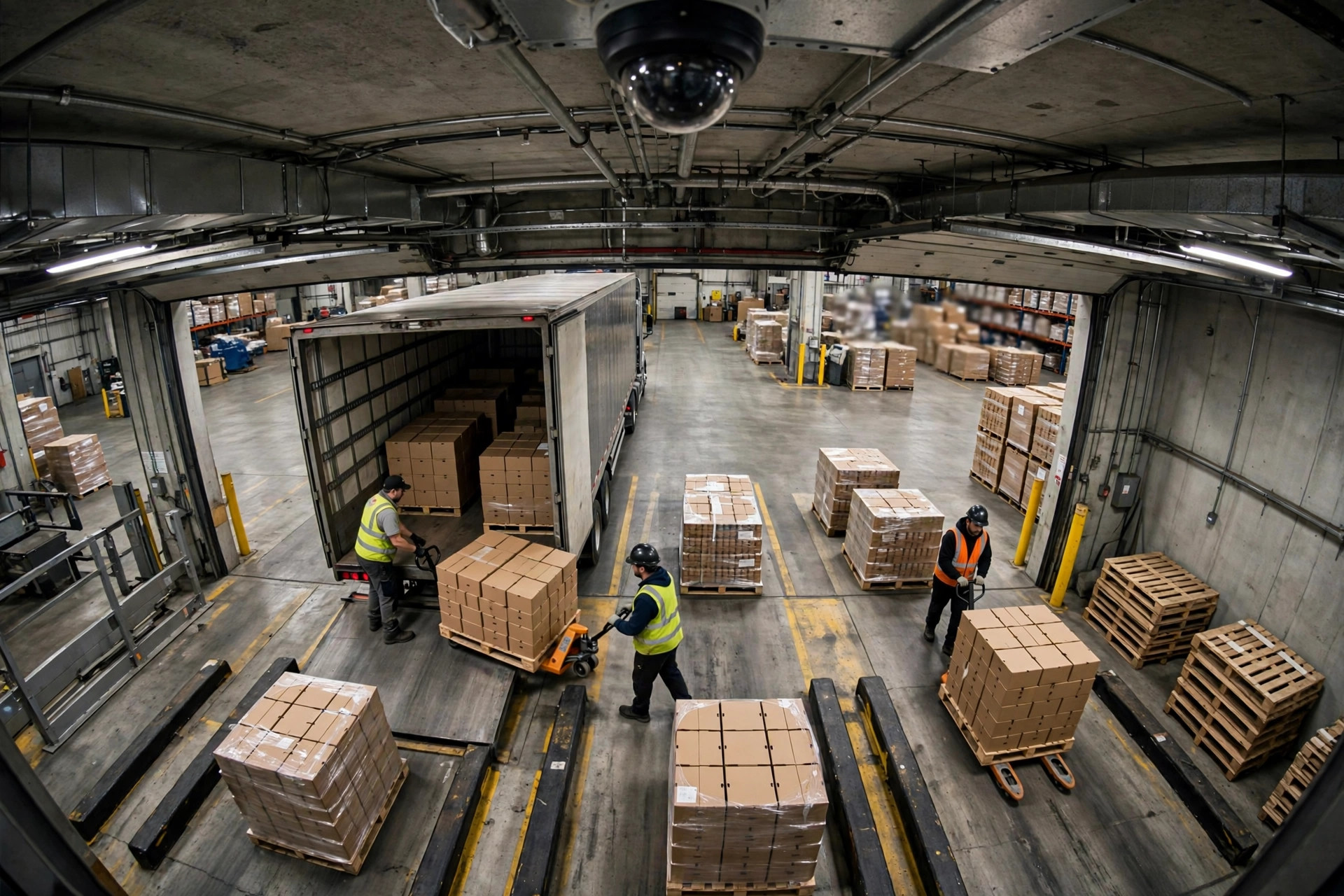
Receiving is where human reliability falls apart fastest in a warehouse. Computer vision for inbound receiving inspection changes the equation by putting eyes on the dock itself. A container shows up with 800 cartons, they hit the conveyor in a pile, and a receiver with a printed PO counts by eye and ticks boxes on paper. That workflow hasn't changed in 30 years. Miscounts, missed cartons, damage nobody notices until the goods are already put away — and by then the carrier's truck is 200 kilometers down the road, and your dispute has no evidence.
Computer vision at the receiving dock does one thing: it puts eyes on the dock itself. The moment freight passes through, the system counts cartons, reads carton labels, matches against the PO, and photographs damage for evidence. Think of it as a receiver who never blinks — and whose eyes come with a video recorder.
How It Works: What the Camera Actually Does at the Dock
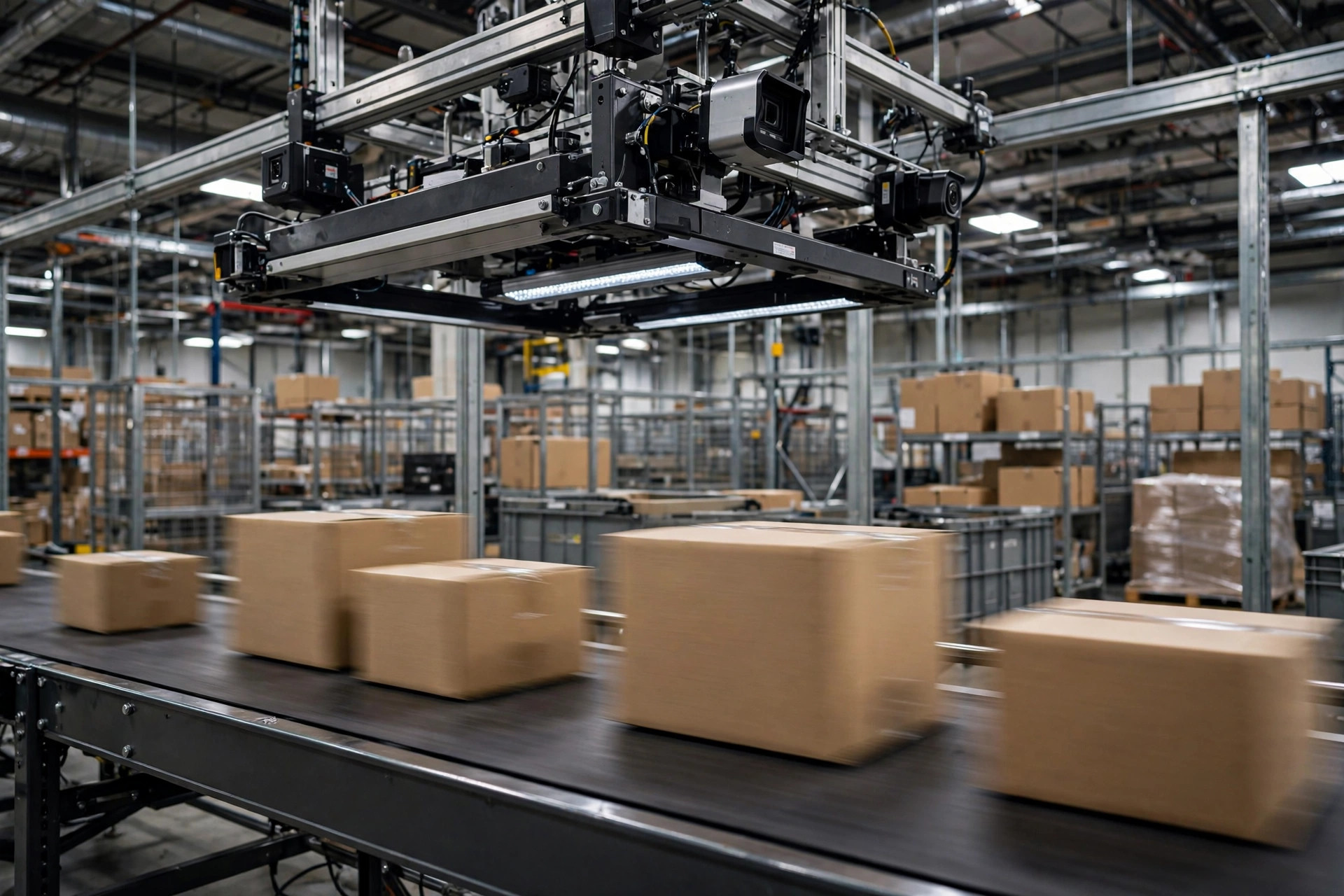
A vision inspection setup breaks down into three pieces: capture, recognition, and PO matching — gantry-mounted 2D industrial cameras handle carton counting, label reading, and damage photos; 3D cameras (structured light or stereo) measure volume — when a carton's dimensions don't match the PO's declared figures, it's usually the wrong product or a short fill. Think airport baggage screening: X-ray checks shape, the scale checks weight, two dimensions cross-checking each other.
Recognition is the algorithm's job. Counting is object detection, with 98%+ count accuracy as the baseline for mature deployments. Label reading is OCR, typically 95%~99% depending on print quality and lighting. Damage detection is anomaly detection — collapsed cartons, re-taped seals, water stains — catching roughly 90% of the obvious cases; subtle damage, no.
Matching is the WMS interface. The camera counts 198 cartons against a PO for 200 — the system auto-generates an exception and freezes the putaway instruction until a human confirms. That's the soul of the whole setup: exceptions get frozen before putaway, not discovered after stock is already in the racks.
2D vs 3D: Where the Selection Line Sits for Receiving Vision
This is the question I get asked most, and my answer is blunt: 2D is enough for counting and label reading; add 3D only if you have dimension verification or volume-based freight disputes.
2D cameras are cheap, mature, and fast. Cartons move at 1~2 meters per second; with strobe lighting, per-carton processing time is 0.5~1 second — the camera keeps up. Hardware cost is friendly: a gantry with 2~4 2D cameras plus lighting often costs less than a single 3D camera.
3D earns its keep in two scenarios. First, dimensional-weight freight billing (e-commerce parcel): measured volume reconciled against freight invoices recovers real money over a year. Second, nested-carton fraud — a big carton with a short-filled inner layer looks fine to 2D; 3D volume measurement flags it. But 3D is expensive, calibration is fiddly, vibration-sensitive, and costly to maintain.
So the line is clear: counting, PO matching, and damage evidence — the 2D family does the job. Only add 3D for genuine volume-billing or anti-fraud needs. And if an integrator pitches "3D full-featured, one step," they're usually selling hardware.
Two Real Deployments
Case one: a 3PL warehouse in Guangdong, live since June 2024. Three people handled receiving — roughly 4,000 cartons a day, about 10 damage disputes a month, each taking an average of 2 weeks to argue, with carrier recovery under 30%: no evidence. After deploying 2D vision inspection (3 cameras on a conveyor gantry): 98.5% count accuracy, damage auto-photographed and archived with timestamps bound to the truck's plate number. The biggest change was disputes: when the carrier sees timestamped photos with their own plate in frame, the recovery rate jumped past 90%. Receiving headcount went from 3 to 1 exception reviewer, saving roughly 200k RMB a year in labor; the system cost about 450k RMB.
Case two: an auto parts warehouse in East China, live early 2025. Mixed pallets with 6~8 SKUs each took 15 minutes per pallet to match manually, and still went wrong. With OCR-equipped vision, line-by-line label scanning against PO detail cut matching time to under 3 minutes per pallet, and the mismatch rate dropped from about 5% to under 1%. The key was the exception freeze mechanism — quantity mismatch or unreadable label automatically locks that pallet's putaway task and routes it to an exception review zone. No more wrong stock discovered at pick time.
The Counterintuitive Take: The Biggest Value Isn't Labor Savings
Most people size up this system's ROI by counting receivers eliminated. I'll say it straight: computer vision's biggest value at receiving isn't saving labor — it's locking in dispute evidence while the carrier is still on site. Damage in the carrier's hands is the carrier's bill; damage discovered after it's in your warehouse is yours. Manual inspection's real flaw isn't speed — it's that discovery always comes after the carrier has left, and the evidence chain is broken. Vision photographs at unload and binds the timestamp to the plate number — a border health check for every carton, evidence fixed before the carrier signs off.
So when you do the ROI math, don't just count eliminated headcount. Add up what you failed to recover in damage and quantity disputes over the past year. That's the big number. The Guangdong 3PL saved 200k a year in labor — but recovered over 300k a year in claims it used to eat.
Time to Call Out the "AI Can Do Everything" Crowd: What Vision Can't Handle
To be clear, this isn't magic. Vision fails in these scenarios, and if a salesperson tells you otherwise, make them demo it live:
First, nested cartons. A big carton around a small one with filler inside — everything looks fine from outside while half the contents are missing. Only weight cross-checks or open-box sampling catch this.
Second, stretch-wrap glare. A fully wrapped pallet reflects 2D camera light straight back; labels become unreadable. Workarounds exist — photograph labels before wrapping, or polarizers plus adjusted lighting — but cost and complexity both go up.
Third, dust and lighting. In a dusty dock, an uncleaned lens fogs in two weeks; direct sunlight at the dock door can swing noon-to-dusk light enough to blow up the algorithm's thresholds. Lighting and cleaning are the lifeblood of operations — don't cut that budget, or you're digging your own hole.
WMS Integration: How Receiving Vision Freezes Exceptions Before Putaway
The technology isn't the hardest part — process integration is. The vision system must bind deeply into the WMS receiving flow. The standard pattern has three steps:
- Pre-arrival sync: the WMS pushes ASN/PO detail to the vision system, so the cameras know what carton count and SKUs to expect on this truck.
- Real-time matching: freight passes the gantry, count plus label reads are compared line by line against PO detail. Counts match, labels match — a receiving record is generated. Mismatch — an exception ticket is generated.
- Exception freeze: the WMS automatically freezes putaway instructions for the flagged pallet or cartons and routes them to an exception review zone. After human confirmation (re-photograph, open-box check, supplier contact), the goods are either released to putaway or a claim ticket is raised.
A system without step 3 is just an expensive counter. During selection, ask the integrator first: "How do exceptions freeze, and through which interface does the freeze command travel?" If they can't answer, pass.
The Maintenance Pit: Affordable to Buy Isn't Affordable to Keep
Finally, maintenance — my favorite rant. Many projects launch gloriously, then accuracy slides to 85% after six months, and the answer is always "nobody maintained it."
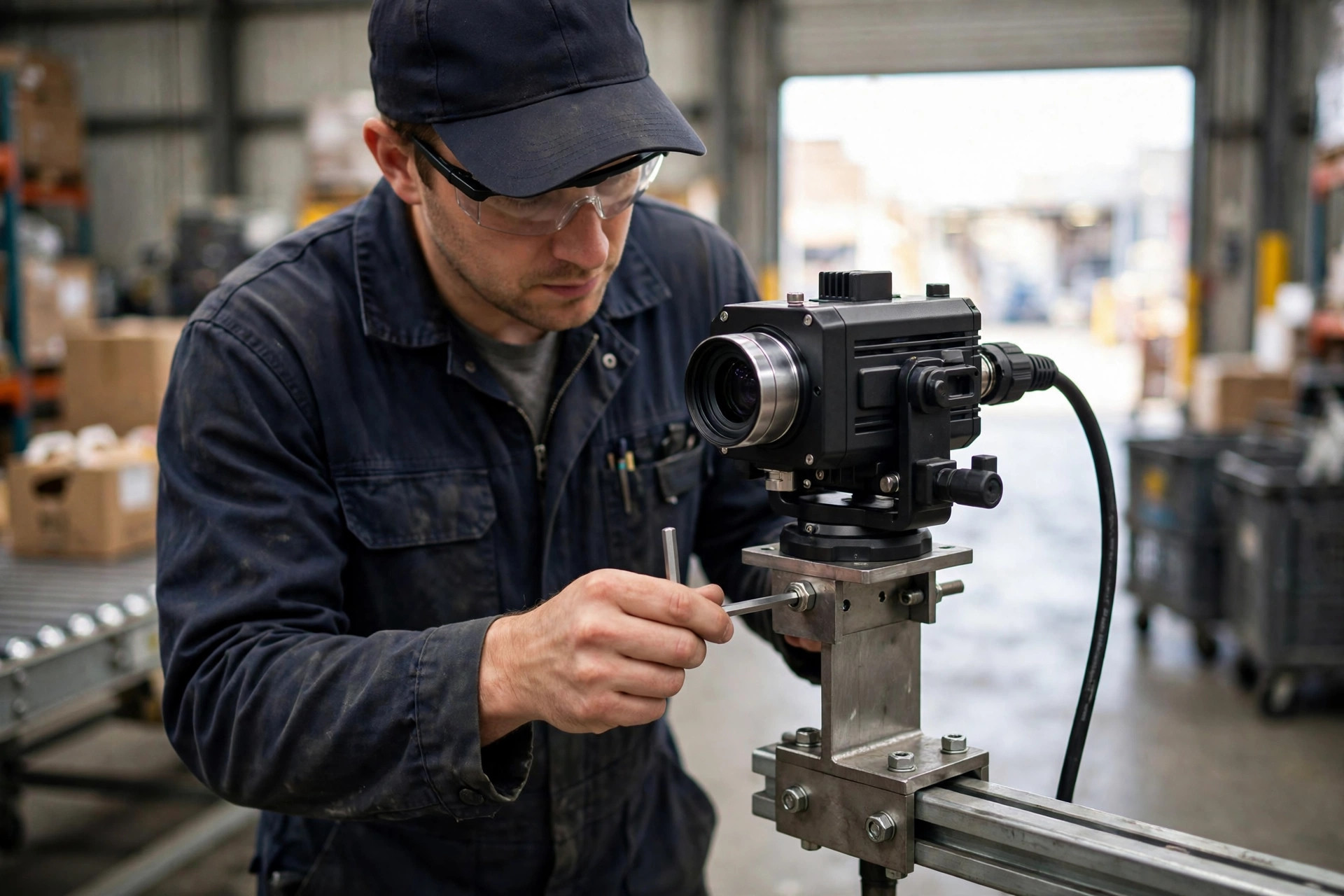
Three mandatory maintenance actions: wipe the lenses weekly (dust is killer number one), check light-source decay monthly (LED lumen depreciation drifts the algorithm's thresholds), and feed new SKU label samples (supplier change, label layout change — the OCR model needs incremental training or recognition falls off a cliff).
Write these three into the SOP, assign owners, make them part of monthly inspection. If you can't commit to that, don't deploy — without vision you were merely slow; with unmaintained vision you get a system that is confidently wrong, and wrong with confidence is scarier than human error.
Is the Money Worth It? Watch This One Number
Total math: a 2D vision inspection setup runs roughly 300k~600k RMB in hardware plus implementation. Worth it? Don't count receivers. Watch this one number: over the past 12 months, the money you failed to recover in damage and quantity disputes — does it exceed half the system cost?
If yes, deploy with confidence; a two-year payback is conservative. If no, your supplier and carrier management is solid — manual inspection plus process optimization is the better deal. It's good technology, but only for people with real pain.
By Da Liu, Automation Engineer