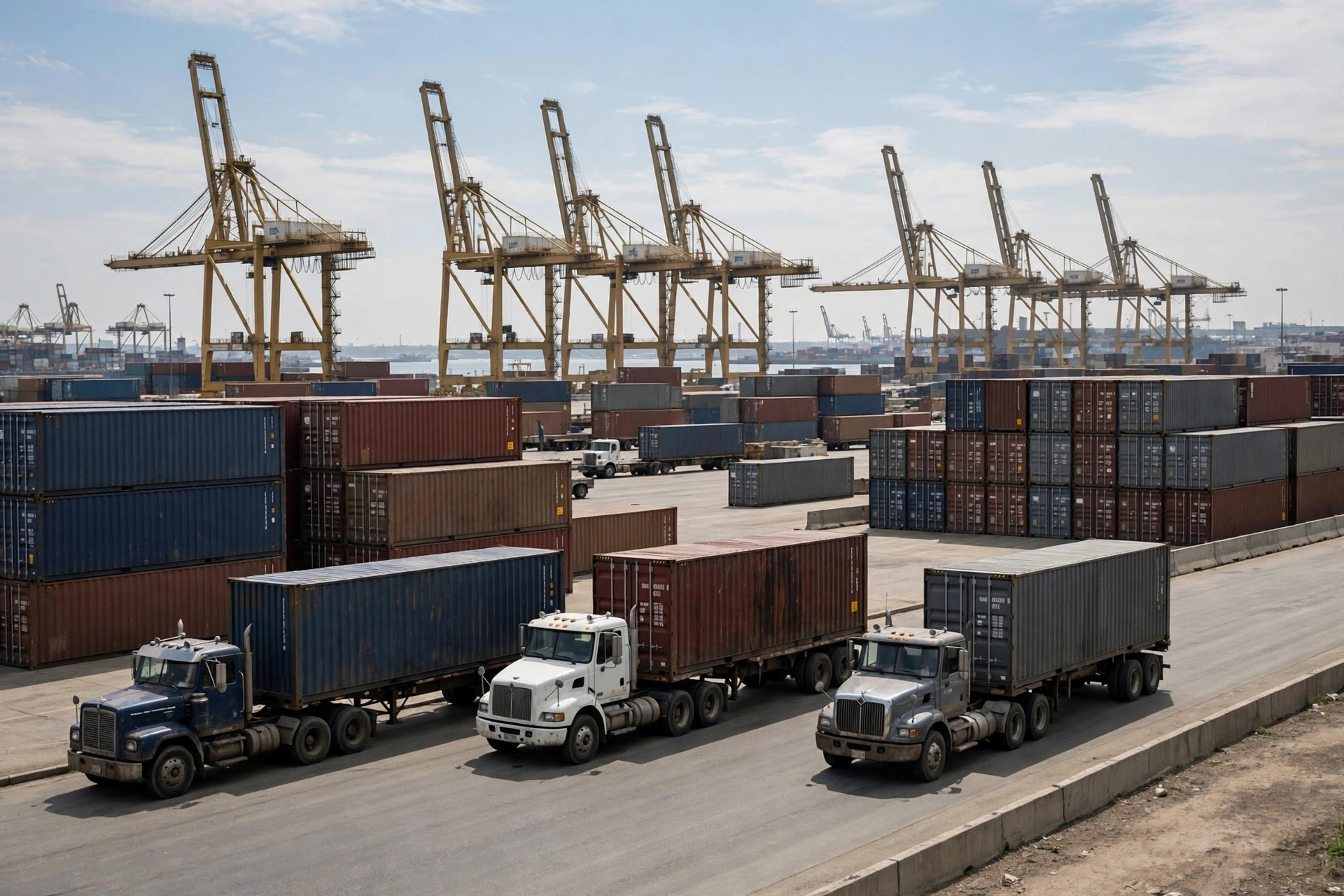
We have a client who imports furniture. Thirty 40-foot boxes a month, pulled from the Ports of Los Angeles and Long Beach to a warehouse in Eastvale. When they rebid their drayage contract last year, the boss lined up three quotes on the table and picked the cheapest linehaul — forty bucks less per container. Six months later he called me, and he was not in a good mood. "Susan, is this how every drayage quote works in your industry? Because I feel like I got played."
I pulled six months of his invoices. The linehaul was indeed cheaper. But the fuel surcharge and the chassis charges together cost him nearly twenty percent more than the runner-up quote. That forty dollars he "saved" got handed right back, with interest.
So today I'm going to take apart the two fattest line items on a drayage quote — fuel surcharge and chassis fees — and show you how they actually work.
The Fuel Surcharge Is Tied to Somebody's Diesel Index. Find Out Whose.
Here's something you only learn on the carrier side of the table: the fuel surcharge line is where the real margin flexibility lives. Everybody can see the linehaul rate, and everybody beats it down to nothing. The FSC line is the actual battlefield.
On a legitimate drayage quote, the fuel surcharge shouldn't be a made-up number. It typically tracks the U.S. Department of Energy's published weekly retail diesel average, adjusted weekly or monthly. Here's how the mechanics are supposed to work: the contract sets a baseline diesel price — at that level, the surcharge is zero. Every step the diesel price climbs above the baseline adds a point to the surcharge. And when diesel falls, the surcharge is supposed to come back down.
Pay attention to that last part — "supposed to." Plenty of contracts spell out the upward adjustment in loving detail and say nothing about the downward one. The shipper signs with a smile, diesel prices drop, and he's still paying the peak surcharge. Ask me how I know.
Our furniture client fell into the first trap right there. The cheap carrier he picked used a "proprietary fuel index," published internally every Monday. Proprietary index means they raise it whenever they feel like it. I told him to ask for the past year's FSC adjustment history. They hemmed and hawed and never produced it. He eventually moved to the runner-up carrier, who attached a DOE-linked FSC table straight into the contract appendix — diesel price on one side, surcharge percentage on the other, no mysteries.
My rule of thumb for you: any FSC that isn't tied to a public index, with a published table, is a non-starter. That's not a pricing question. That's a trust question.
Chassis Fees Are Where the Real Damage Happens
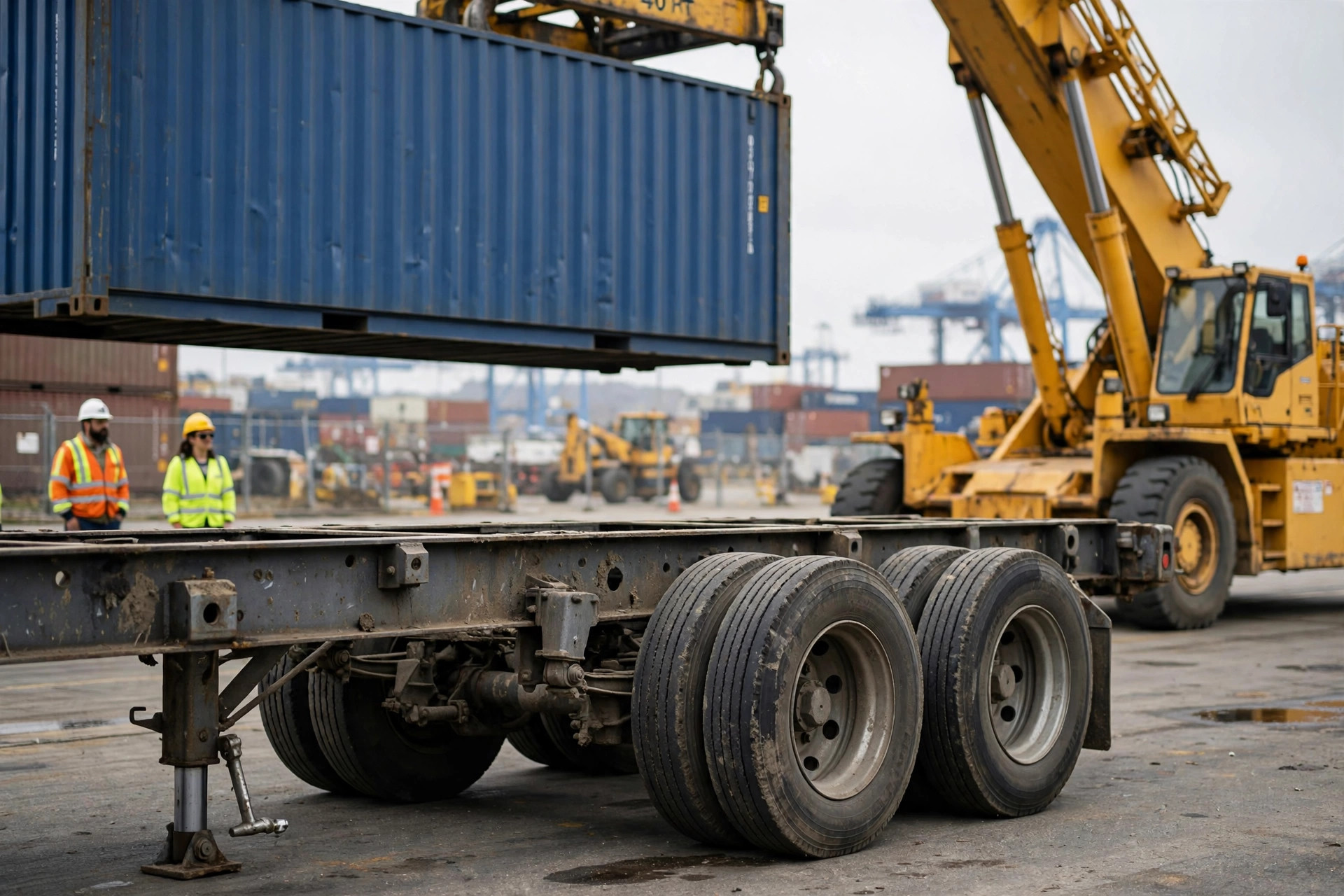
When an import box leaves the terminal, it rides on a chassis — the wheeled steel frame a truck hooks onto. Whose chassis? The port's chassis pool. The carrier rents it, and the rental flows straight through to your invoice. Chassis charges usually show up as several separate line items on the quote, and most people only read the first line. The lines below it are where the money disappears.
A complete drayage quote looks something like this:
| Line item | How it's calculated | Your negotiation lever |
|---|---|---|
| Drayage base rate | Fixed per container size and distance | Comparable, but thin margins |
| Fuel surcharge | Indexed to DOE diesel, floats weekly | Lock the baseline and the table |
| Chassis usage fee | Daily rental, usually 1 free day included | Push for 2 free days |
| Chassis per diem | Daily charge once free time expires | Critical if your warehouse unloads slowly |
| Chassis split fee | Pickup and return at different locations | Ask where your return point is |
| PierPass / clean truck fee | Third-party per-container port fee at LA/LB | Pass-through at cost, no markup |
| Driver wait time | Hourly, after your warehouse exceeds free time | Agree on the free waiting window up front |
| Pre-pull | Container pulled early and staged at carrier's yard | Not every box needs it — ask what triggers it |
Second story, and this one's uglier. We have an auto parts client in Ontario, sixty-odd miles from Long Beach. During a port congestion stretch, one of his containers got pre-pulled and sat at the carrier's yard for four days. The chassis per diem burned day after day. Four days of add-ons cost more than the linehaul itself. When he came to me, my first question was: "How many free chassis days does your contract say?" He said: "I don't think it says." When it doesn't say, the carrier's shortest default applies. And guess how generous that default is.
Here's the counterintuitive part, and it's the whole point of this article: on a typical drayage quote, the base rate is only about sixty percent of the all-in cost. The other forty percent is surcharges. Negotiating only the linehaul is amateur hour — you're haggling over sixty percent of the price and leaving forty percent to chance. The people who actually know how to negotiate drayage always open with the same question: "Besides the linehaul, what does one container cost me, all in, from the terminal to my dock?" You want the landed total, not the linehaul.
Next Time You Negotiate a Contract, Remember to Ask These Three Questions
One: "Which public diesel index is your FSC tied to? What day does it adjust? Show me the up-and-down table." If they can't produce the table, the FSC is a black box.
Two: "How many free chassis days do I get? What's the daily rate after that? Are my pickup and return points the same, and is there a split fee?" These three answers decide whether peak season surcharges will ambush you.
Three: "Which of these fees are third-party pass-throughs, like PierPass? Can they be billed at cost, with the receipts?" Marking up pass-through fees is an open secret in this business. A carrier willing to show you the receipts is almost always a straight shooter.
One last insider confession: the customer carriers fear most isn't the one who haggles hardest — it's the one who asks the most detailed questions. Run through those three questions and they'll know they're dealing with someone who's done this before. Half the padding on the quote evaporates on its own. Forty dollars off the linehaul isn't a win. Forty dollars off the all-in is.
By Susan, 3PL Sales Director