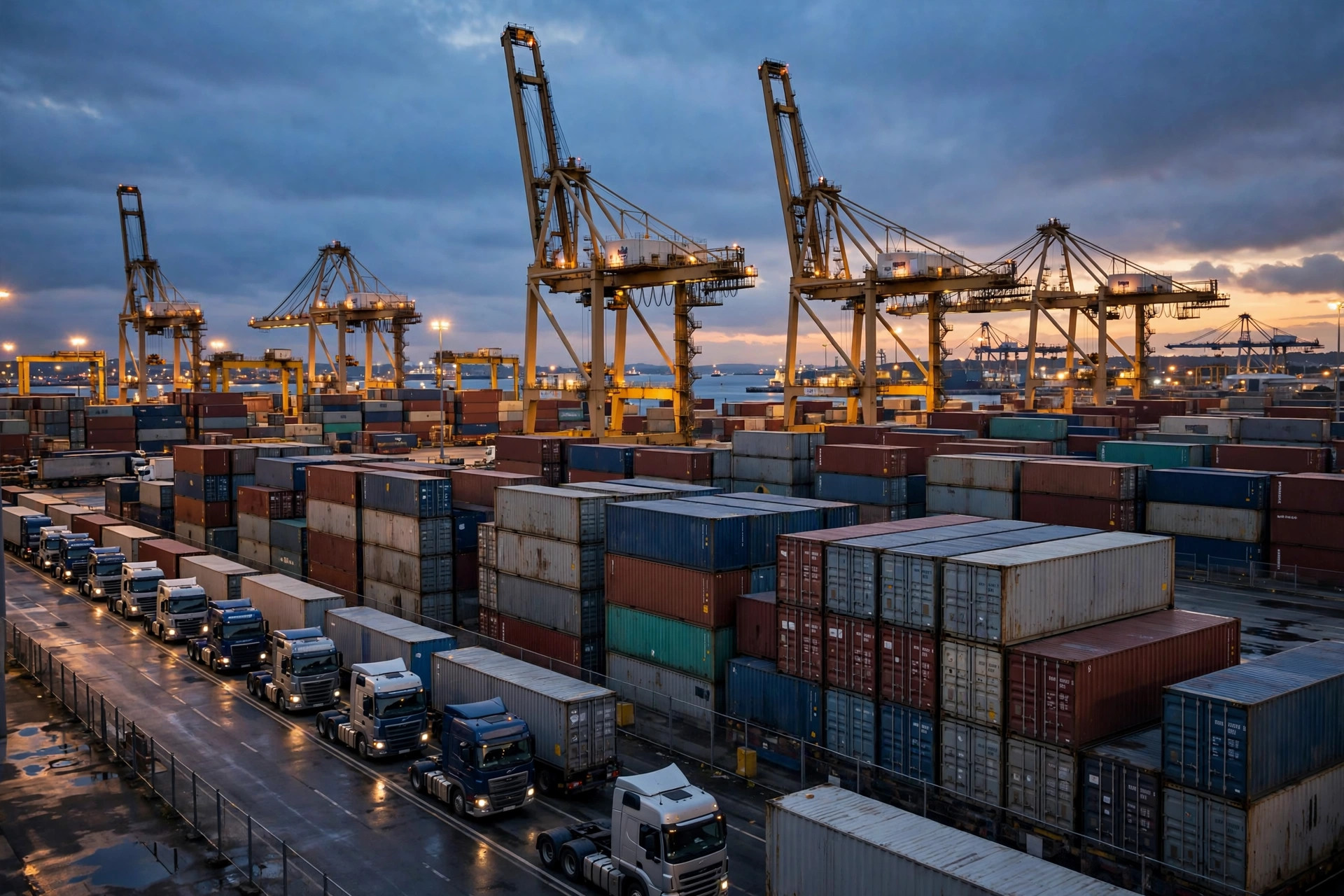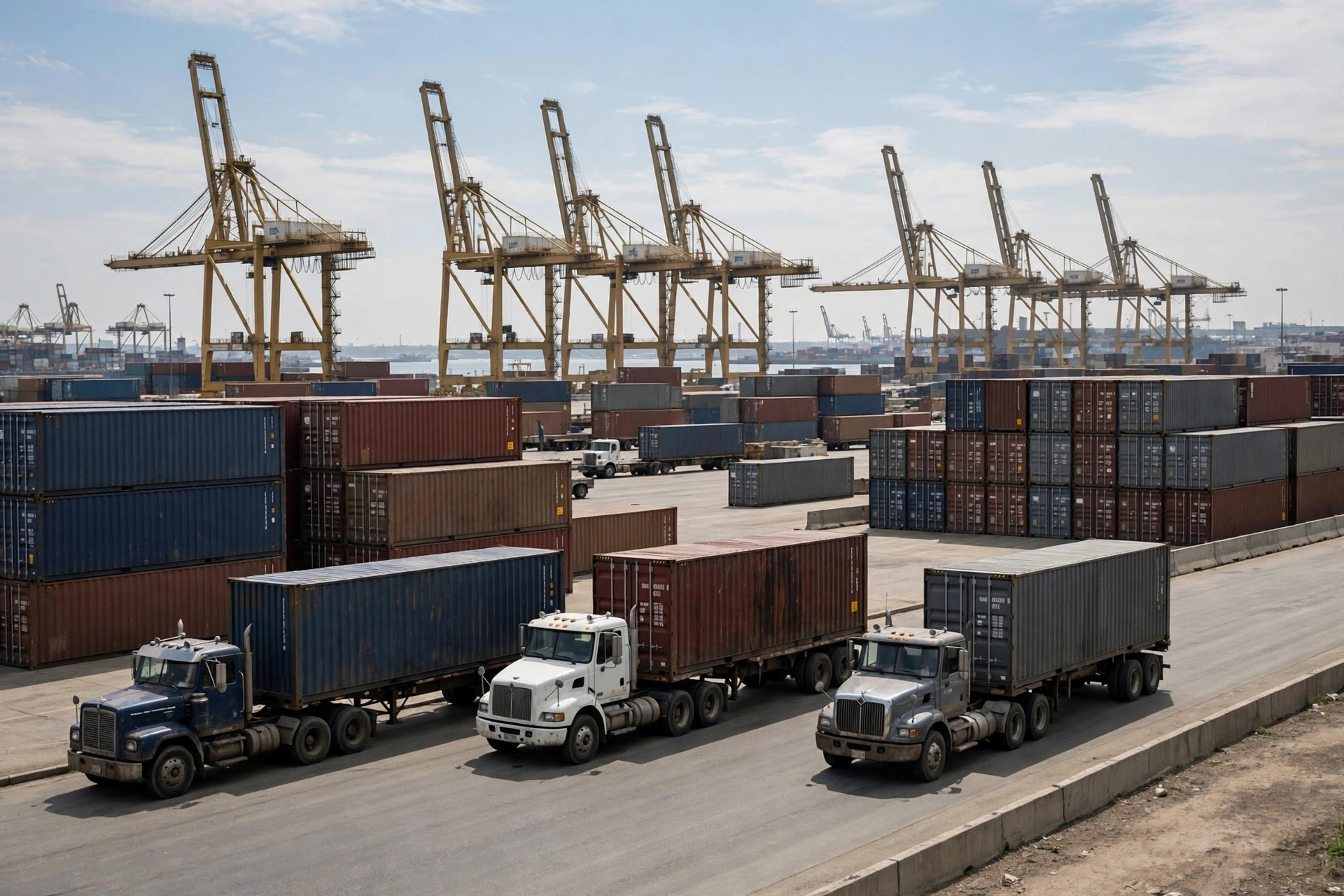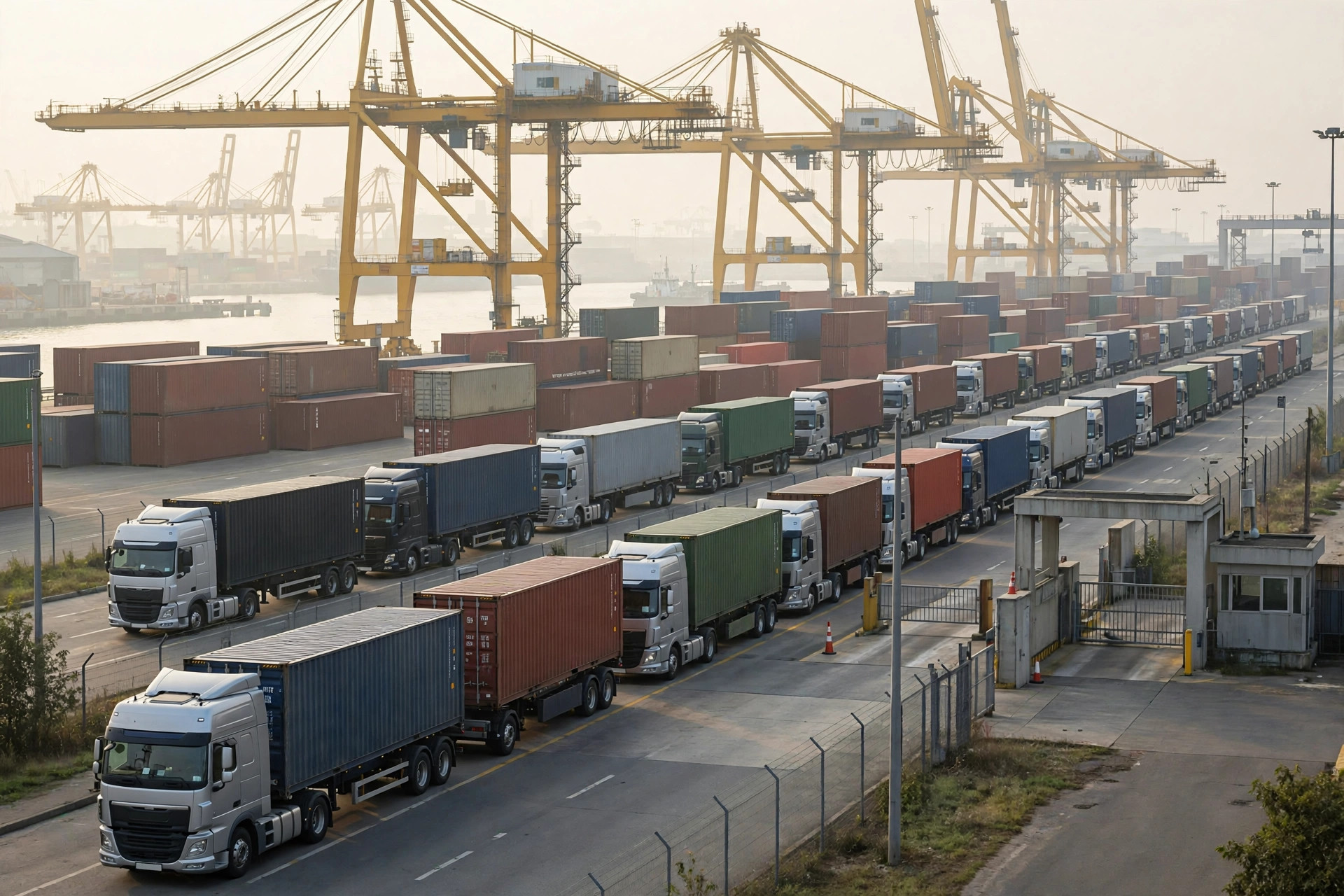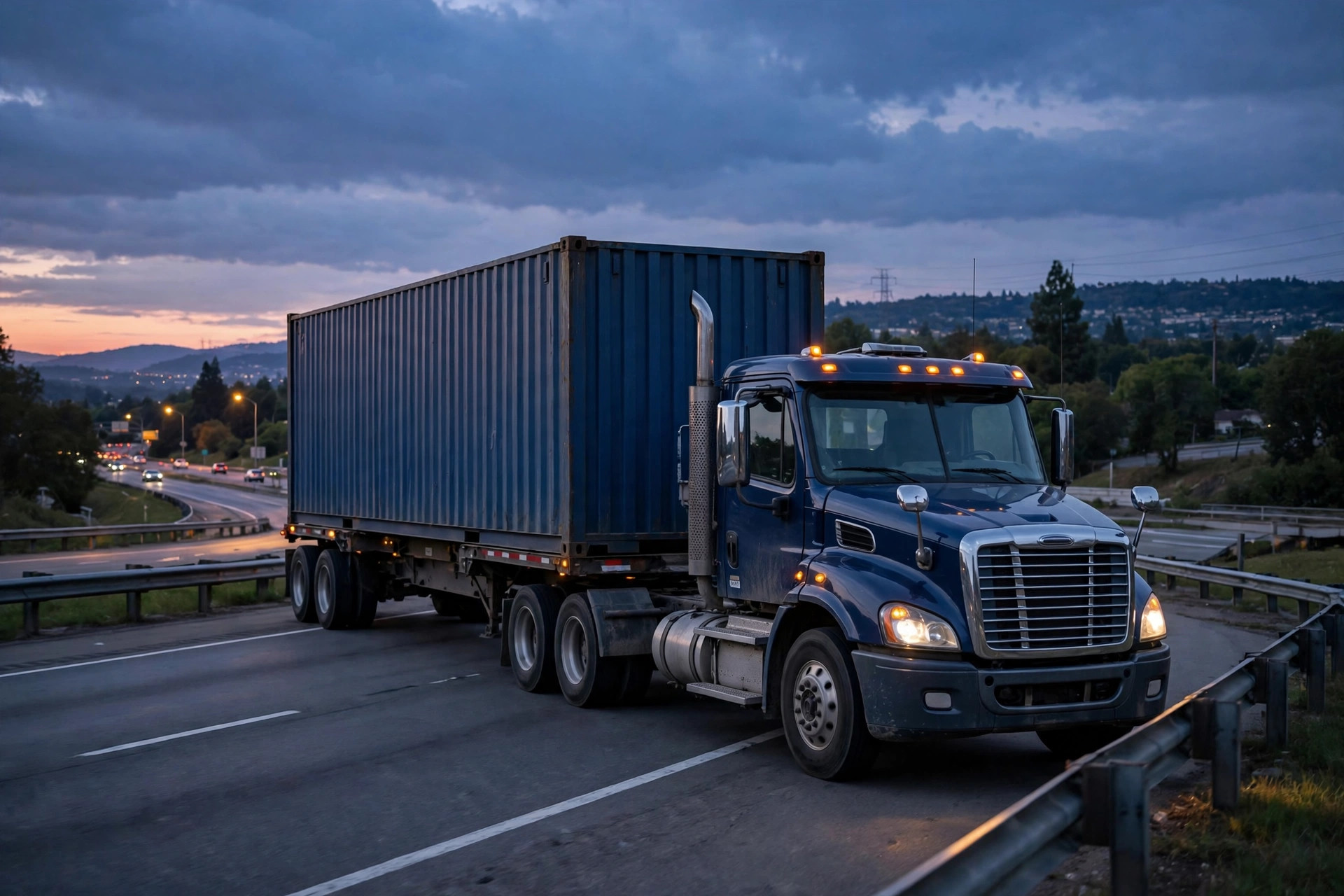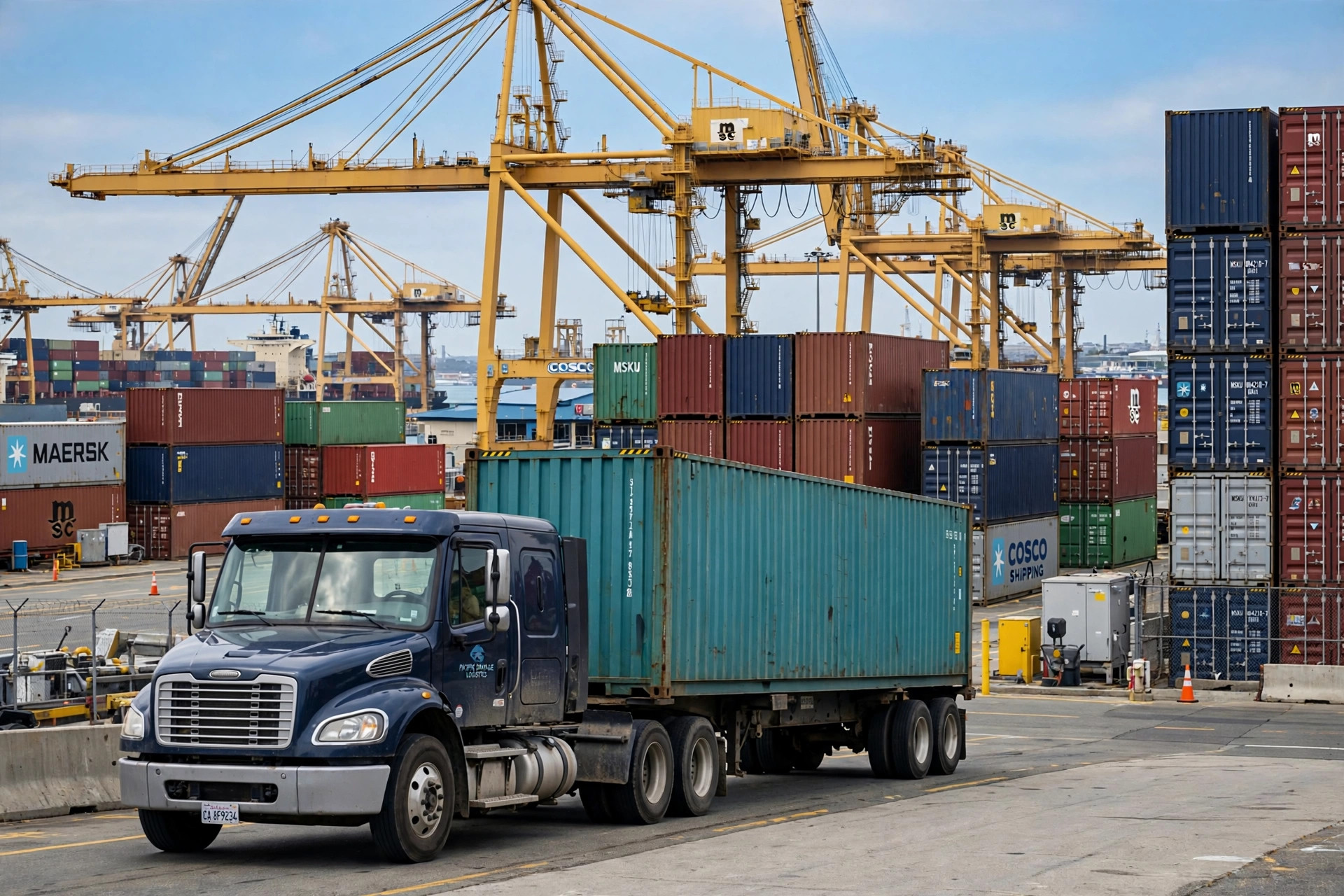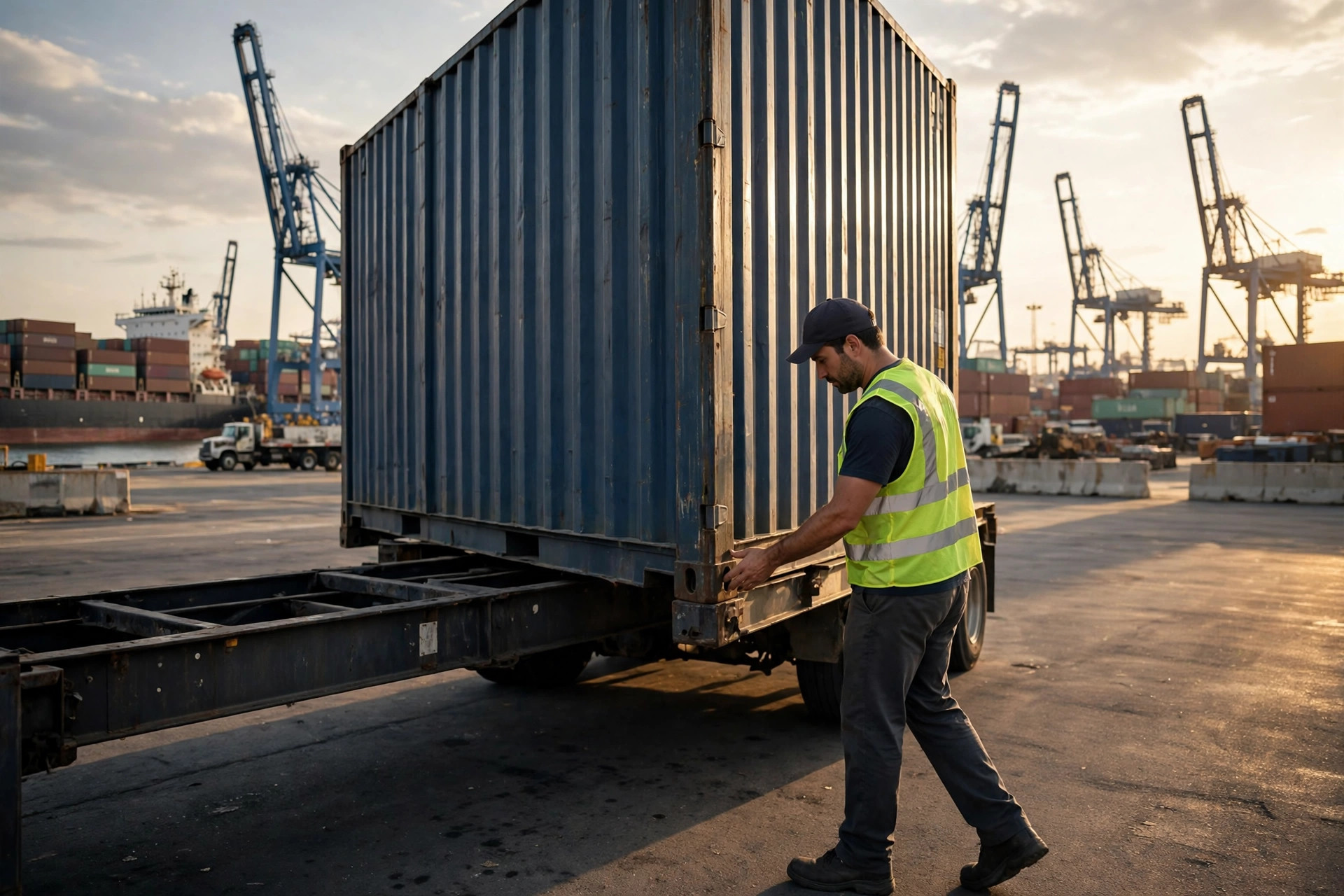
In 2024, the ports of Los Angeles and Long Beach together handled 19.94 million TEUs, the second-busiest year on record for the San Pedro Bay complex according to the Pacific Merchant Shipping Association, trailing only the pandemic peak of 20.06 million in 2021. Behind that aggregate number lies an enormous volume of individual handovers: every loaded container that rolls out of a marine terminal gate changes custody in a transaction documented by a single piece of paper, the Equipment Interchange Receipt, or EIR. Some drayage drivers spend ten minutes walking around the box, photographing every panel before they leave; others glance at the container number and hit the throttle. That ten-minute difference determines who has a defense and who simply pays when a repair invoice lands on someone's desk months later.
What an EIR Actually Transfers
The EIR is the legal instrument of custody transfer in the U.S. intermodal system. Under the Uniform Intermodal Interchange and Facilities Access Agreement (UIIA), Section D.2 requires the parties to execute an EIR at the time of interchange, describing the equipment and any damage observable on it at that moment, reasonable wear and tear excepted. The physical condition may be recorded in writing on the EIR or through recorded images taken at the time of interchange. Section D.3 then obliges the motor carrier to return the equipment in the same condition, wear and tear excepted, and Section E.3 makes the carrier responsible for the reasonable and customary cost of repairing damage done during its possession.
Taken together, these provisions create a remarkably clean burden-of-proof logic: the EIR issued at outgate is a snapshot of the container's condition at pickup, and any damage found at return that was not noted on the EIR is presumed to have occurred during the carrier's custody, unless the carrier can prove it was preexisting. The UIIA's dispute arbitration panels have confirmed this reading repeatedly. In published decisions, arbitrators have found against motor carriers with reasoning that amounts to a single sentence: the carrier failed to prove the damage was preexisting, so the repair invoice stands. The EIR, in other words, is not a delivery receipt. It is a transfer of the burden of proof, and whatever is not written on it is treated in law as if it never existed.
The Ten-Minute Inspection That Decides Everything
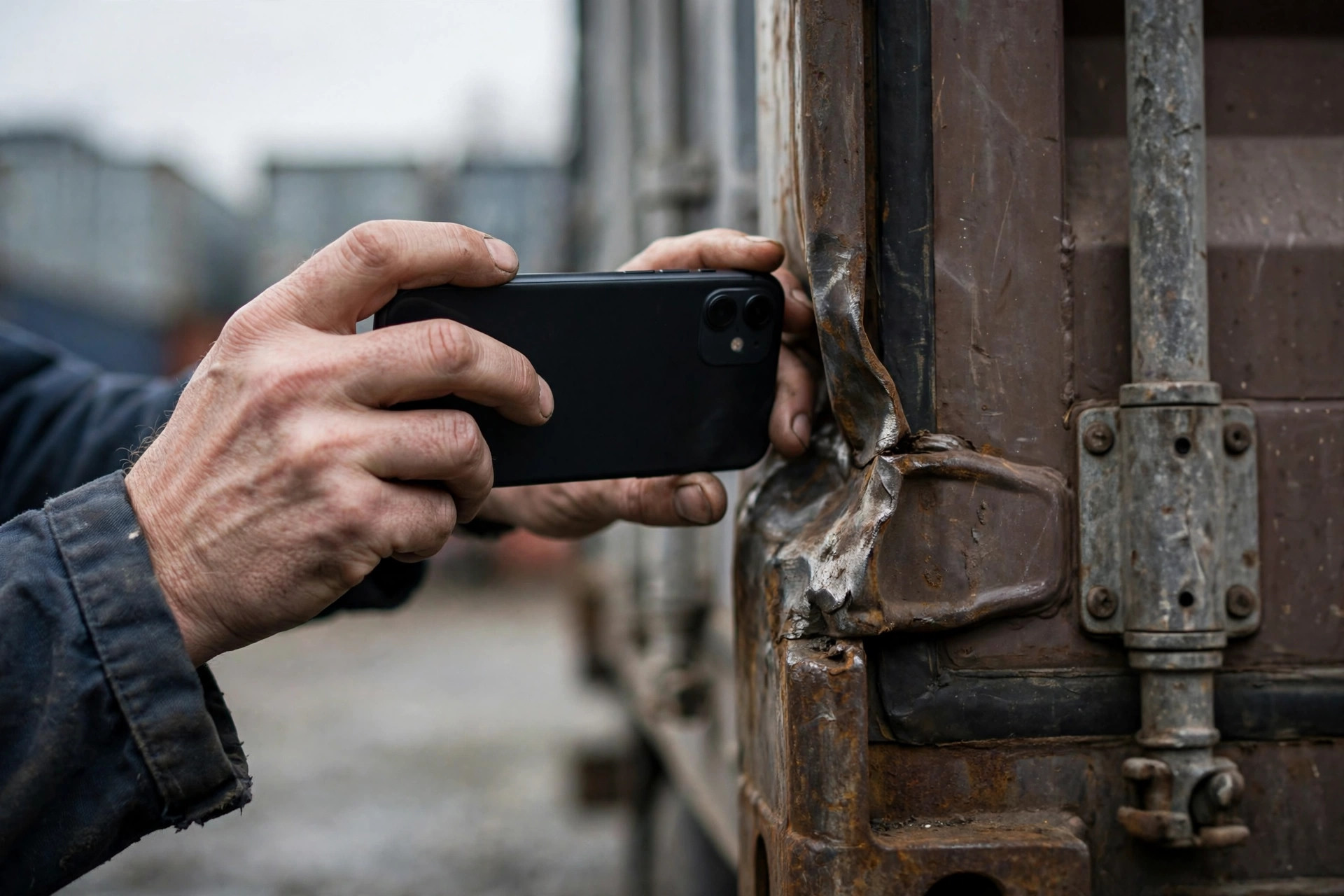
Once the proof logic is clear, the inspection has a defined objective: to make the outgate EIR as complete, precise, and retrievable as possible. A field-tested sequence runs like this: verify the container number and seal number against the EIR, check the structural members (corner castings and posts for deformation, side and roof panels for dents and rust-through), step inside to inspect the flooring against the light, and examine the doors, the most forklift-exposed and disputed part of the box. For photos, four elements matter: the container number in frame, a close-up plus a wider locating shot per defect, timestamp and location on, and a full set at both pickup and return.
In the fall of 2024, an owner-operator with six years of drayage experience in Long Beach picked up a 40-foot loaded container at one of the terminals. The EIR handed to him at the gate carried a single scribbled word, "dent," with no indication of which side or where. Running against his appointment window, he drove off without taking photos. Two weeks later, at empty return, the terminal inspector found a deformed bottom rail on the left side, and the repair depot's invoice came to more than $1,800. His appeal went nowhere: he had no images from pickup, and the lone word "dent" could not be tied to any location. Under UIIA's burden-of-proof logic, he lost. The instructive part is not the amount but the fact that his EIR was, for legal purposes, blank. A vague notation and no notation are treated the same.
This is where a counterintuitive insight emerges: the dirtier the EIR, the safer the driver. A pristine EIR with no damage remarks looks reassuring, but it amounts to the driver personally vouching for the container's entire prior history. An EIR that documents every dent, rust patch, and scratch draws the liability boundary with precision. Experienced drivers often ask the gate clerk to record everything visible at pickup, because the more that is noted going out, the fewer "new" findings the terminal inspector can produce coming back.
There is a subtler trap worth naming: the street turn, where an empty container passes directly from one driver to another for an export load without going through a depot. I came across a case in 2024 in which a driver handed his emptied box straight to an acquaintance for an export move, skipping any interchange record to save time. Under UIIA rules, an unrecorded direct transfer leaves the equipment legally interchanged to the original carrier, along with per-diem exposure, repair liability, and loss responsibility. When the second driver returned the box and a deformed door hinge was flagged, the invoice landed on the first driver, who had not touched the container since. Many in the industry learn this rule only after paying for it.
The Real Cost of a Damage Dispute
Decomposed, a typical container damage dispute has the following cost structure:
| Cost item | Order of magnitude | Notes |
|---|---|---|
| Repair invoice | Hundreds to low thousands of dollars | Panel straightening typically runs in the hundreds; corner casting, lock rod, or flooring structural work moves into the thousands |
| Demurrage | $200–$400 per day | Hapag-Lloyd's 2026 Los Angeles terminal tariff, for example, scales a 40-foot box from $300 to $525 per workday across escalating tiers |
| Chassis per-diem | $30–$60 per day | Chassis free time is counted separately from the container's, and is frequently overlooked |
| Time and management cost | Weeks | Appeals and arbitration consume fleet management bandwidth and erode driver trust in the terminal |
The genuinely expensive part, however, is not the repair bill but a trade-off: those ten inspection minutes compete against a terminal appointment window of one to two hours. Queuing at the gate can consume most of the window, so the rational choice for a driver is to compress the inspection to protect the window, because missing it means losing the day's revenue, an immediate and certain loss, while a damage dispute is distant and probabilistic. This incentive misalignment produces a systemic outcome: the document that functions as the driver's best protection gets sacrificed precisely when time pressure is highest. It is not individual negligence; it is a problem that needs institutional design, not lectures.
The EIR Is Going Digital, but Disputes Are Not Going Away
The direction of travel is clear. UIIA Section D.2.b, revised back in 2017, already required that whoever provides an electronic EIR must give the motor carrier a channel to describe the equipment's condition electronically, without substantially burdening the carrier. Today, a growing number of large terminals operate optical capture portals at their gates that automatically photograph the container as the truck passes through, and the management systems used by drayage fleets commonly let drivers upload pickup and return photos tied to the container number. The evidentiary form is shifting from a handwritten line on paper to a stream of timestamped, geolocated imagery.
My assessment, though, is that digitization changes the abundance of evidence, not the allocation of the burden of proof. The UIIA logic, that what is absent from the interchange record is presumed sound, survives intact into the electronic era, and it arguably demands even stricter timestamp discipline from drivers. As photographs multiply, the focus of disputes slides from whether damage exists to whose custody window it falls in, and the answer to that question still comes down to the record the driver created during those ten minutes at pickup. The Institute of International Container Lessors publishes a dedicated container inspection guide, so the industry is not short on standards for what counts as damage versus normal wear. What has always been missing is execution at every single interchange.
I will close with an open question rather than a conclusion. When the terminal, the ocean carrier, and the fleet each hold timestamped imagery of the same container, the scales of liability determination will tilt toward whichever party holds the more complete data. The question is whether the drayage driver's EIR will one day become a read-only row in someone else's system, with the driver no longer even getting the chance to add one more "dent" to it. Technology solves the efficiency of record-keeping, but who holds the power of the record remains a question with no standard answer.
By Dr. Chen, Supply Chain Researcher