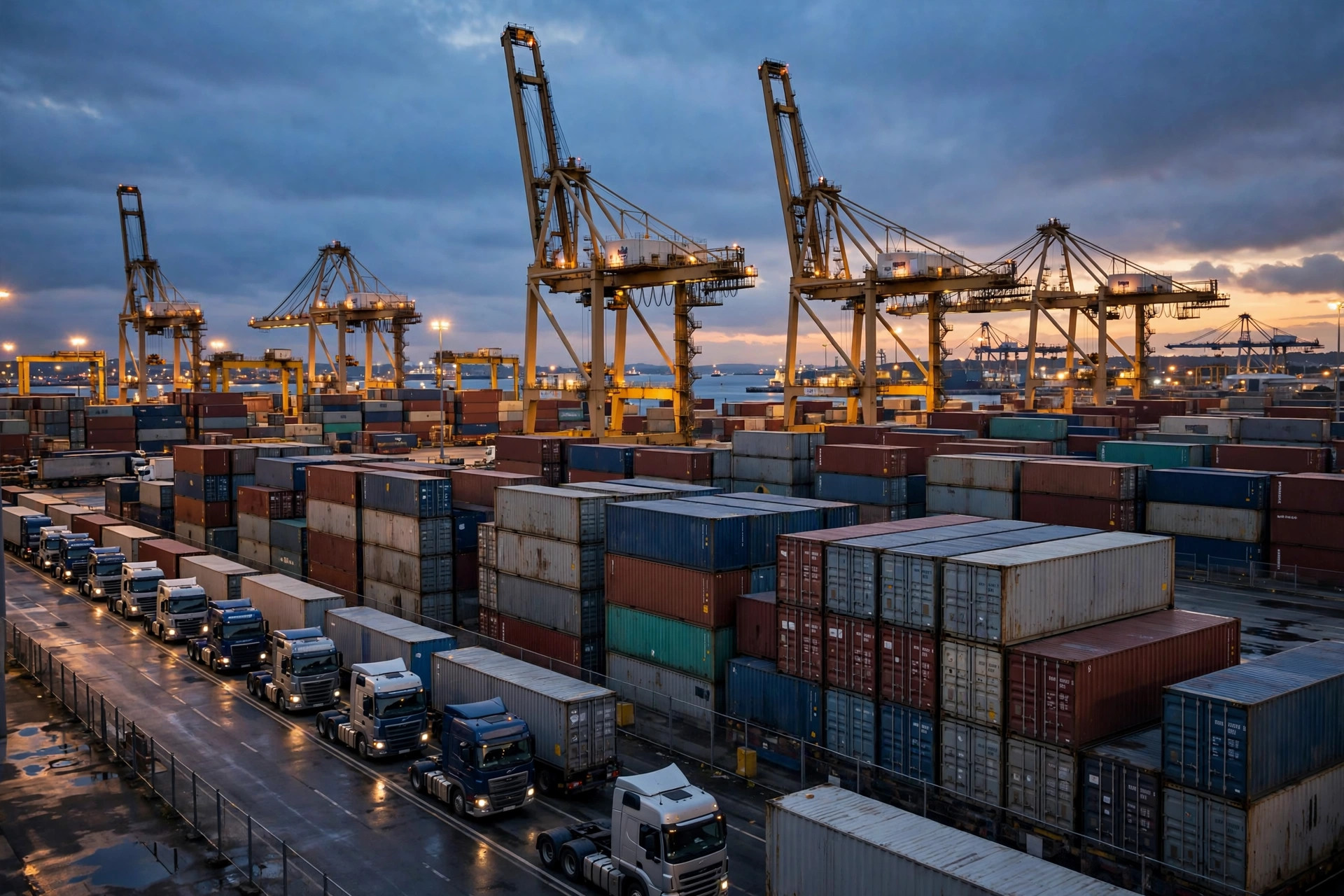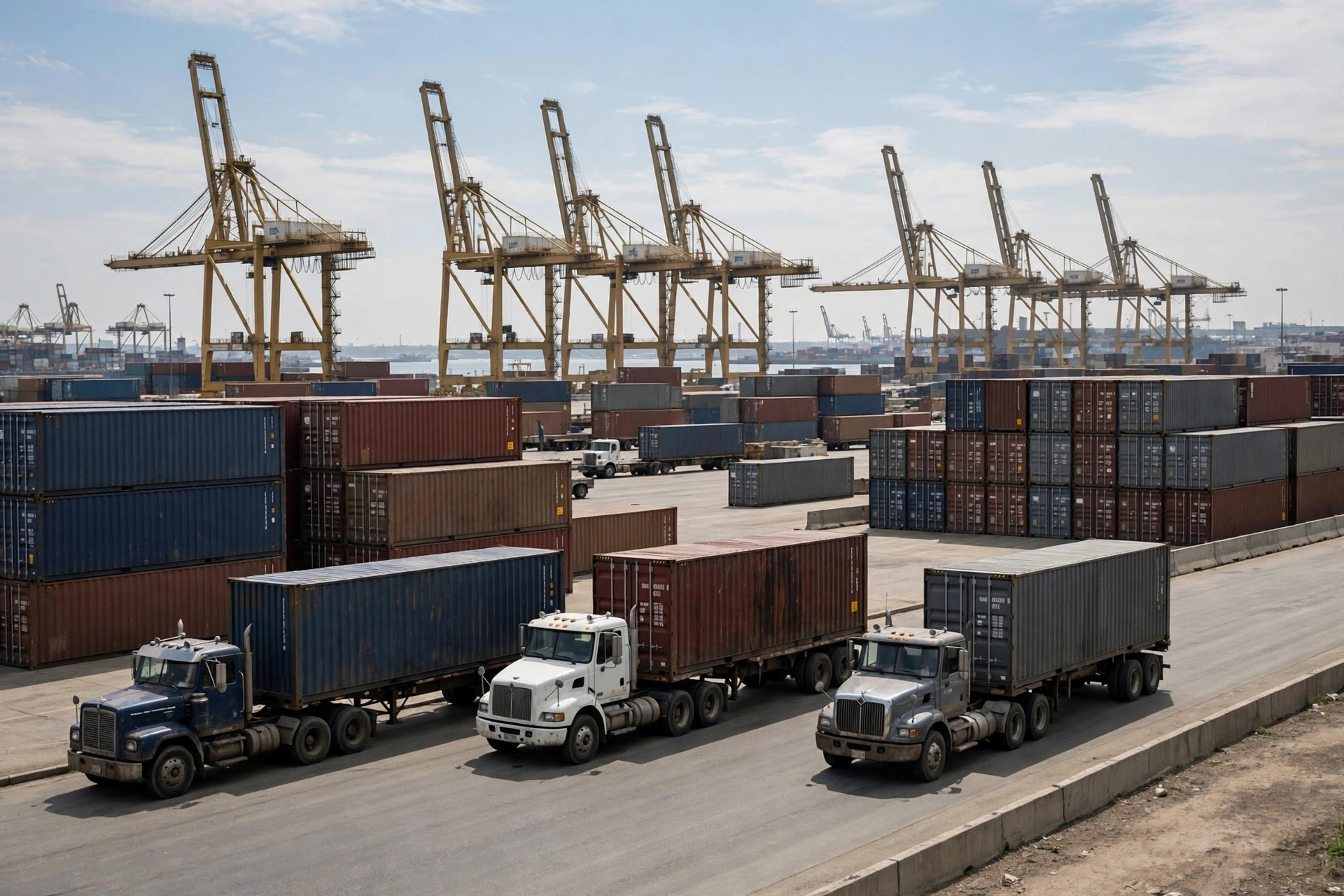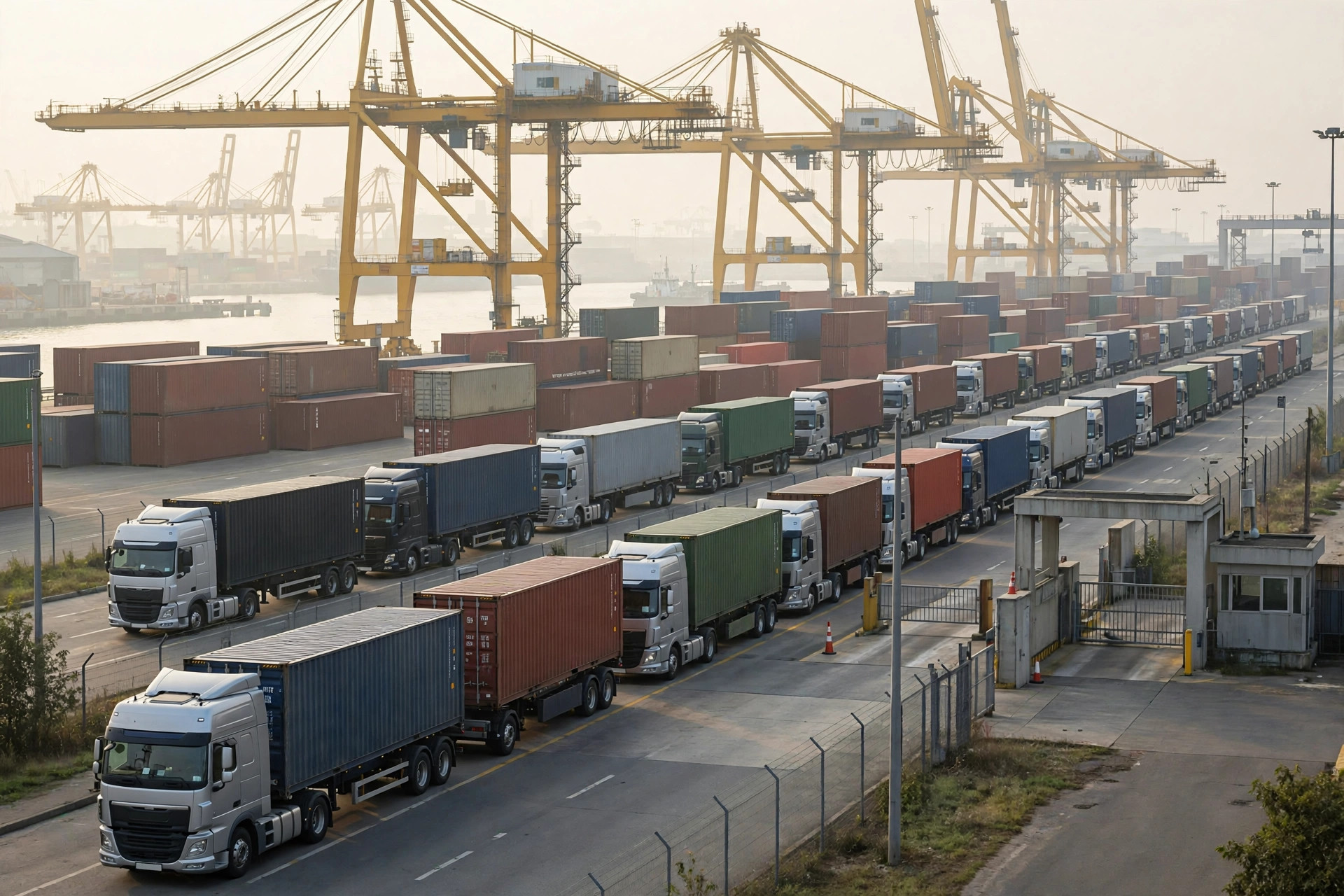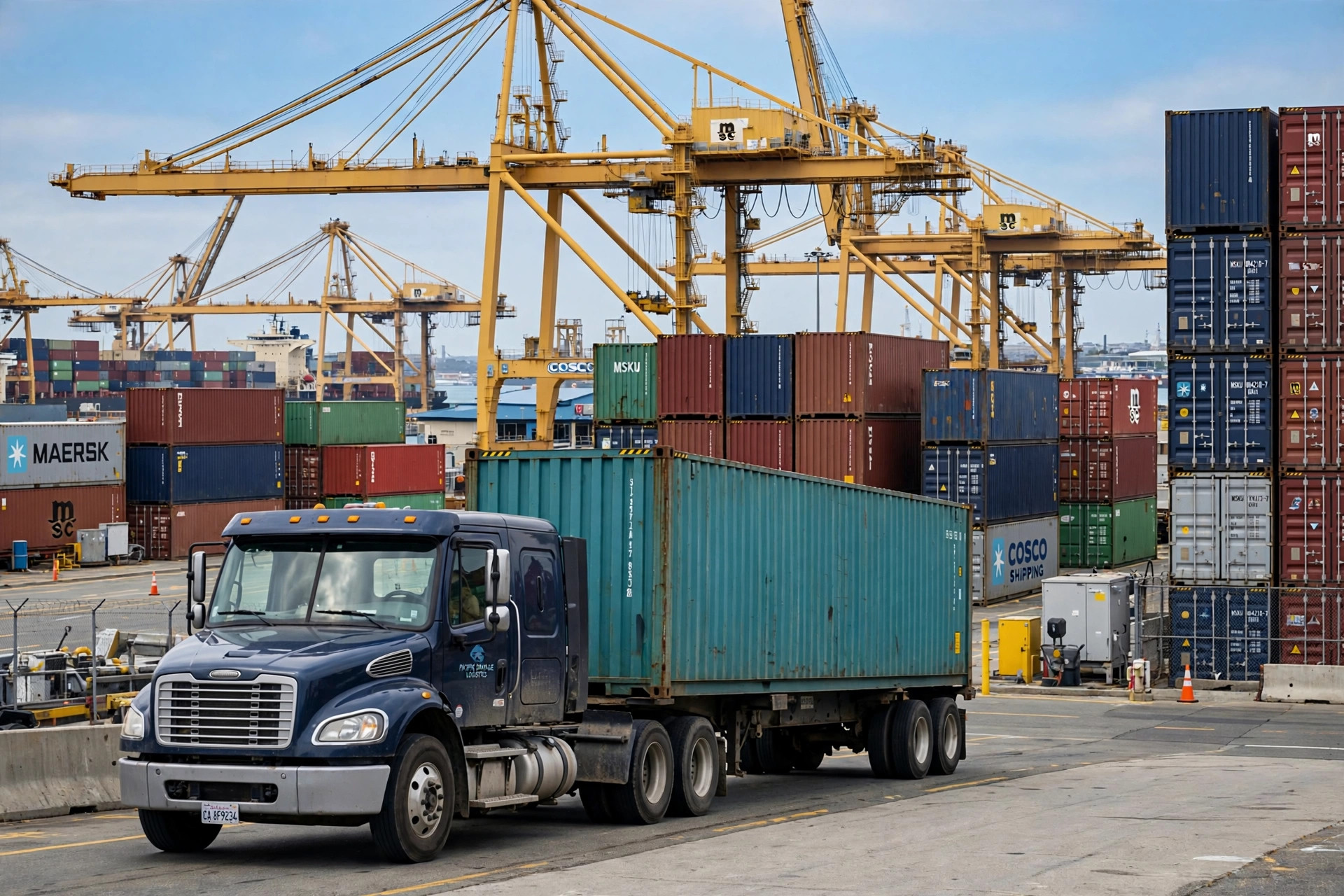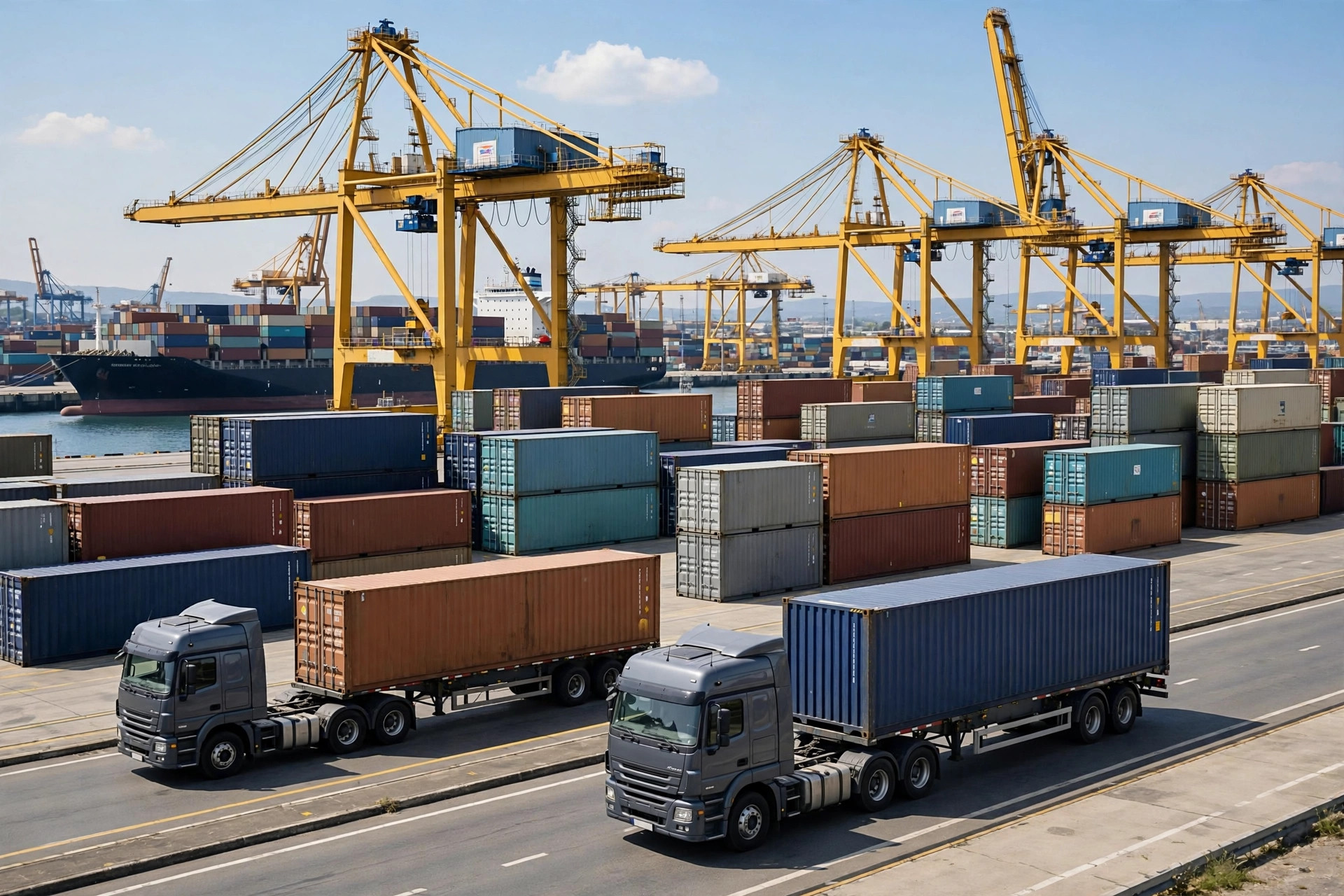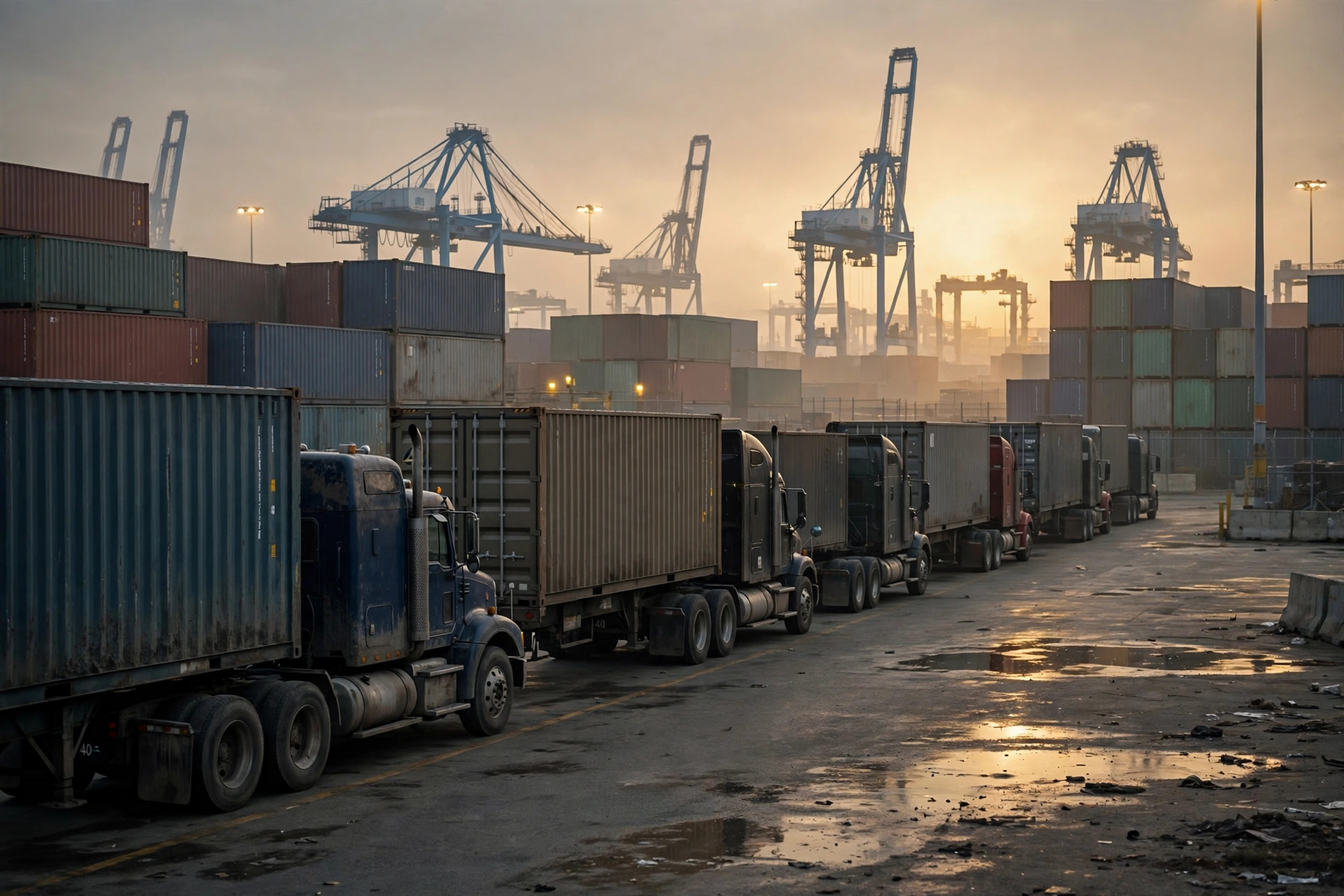
Let me tell you about a morning last July, five-thirty, sitting in line at the Port of Long Beach gate waiting to pick up a container.
I've been running drayage for years, and I'll tell you straight: when it comes to drayage dispatch for a small fleet, nine out of ten small carriers still run the whole show on one phone and one group chat. That morning I watched it happen live. The dispatcher for the fleet next to me — Old Zhang, dispatching six trucks for his boss Old Chen — was doing the entire day's drayage dispatch on a single phone. One call — "Old Wang, grab the container at stack 7, drop it at the Fontana warehouse" — and the load was covered in thirty seconds. Driver shows up at the gate, calls out the pickup number, rolls out.
Then the port system hiccuped and pickups backed up for almost four hours. Old Zhang's phone never stopped ringing. Drivers asking "what's my pickup number again," then "was that message in the group for me or for Xiao Li." By the time I got my container and rolled out, Zhang was still on the phone, voice cracking.
That's the real face of drayage dispatch in a small fleet. Let me break it down the way I've lived it.
Phone-and-chat drayage dispatch: the good and the ugly
Give the old-school method credit where it's due: it's fast.
One phone call, load covered, done. The driver gets a location pin and a photo of the container in the group chat, and he's rolling. Three reasons it works:
First, zero learning curve. Try teaching a driver in his fifties to install an app, register an account, and remember a password — he'll walk out. A phone? He already knows how to use it.
Second, flexibility. Last-minute changes, a driver emergency, a congested port needing a reroute — one call handles it. Updating a system takes longer than just yelling it over the phone.
Third, it costs nothing. A phone and a group chat don't charge a monthly fee. When a small fleet's margin per truck per month is thin, saving every dollar matters.
Old Chen ran his six trucks that way for seven or eight years, and it worked fine. Until the day it didn't.
Last October, peak season, I was loading at a yard near Fontana and ran into Old Zhang. He bent my ear about how his fleet nearly fell apart a few days earlier.
That morning three drivers were asking about their loads in the group chat at the same time — hundreds of messages a day during peak season. Zhang was hand-writing dispatch notes and copied one pickup number wrong. One digit. Two trucks went to pick up the same container, and nobody covered the other load. The shipper was waiting to unload; two hours passed before anyone figured it out. Two trucks drove back and forth for nothing — 60-plus deadhead miles, tens of dollars in fuel burned (my estimate; actual costs vary), and two drivers in a shouting match.
That's the ceiling of phone-and-chat dispatch:
- Once volume picks up, the chat is unscrollable, and finding a load number in the message history is a matter of luck. A mistake isn't a question of if, it's when.
- There's no paper trail. Who said what, and when — it all lives in phone calls. When there's a dispute, it's one person's word against another's.
- The dispatcher takes one day off and the whole fleet is lost. Every load lives in his head. Nobody else can pick it up.
Six trucks, you can hold it in your head, barely. Past ten trucks, or double the volume in peak season, phone dispatch stops being fast — it becomes chaos. And what you lose in the end isn't loads. It's drivers and shippers.
Is a dispatch app worth it? Look at which step it actually saves.
Now the other side. Late last year, a twelve-truck outfit in the Inland Empire — boss named Old Zhou — bit the bullet and put in a dispatch app, the small-fleet TMS kind, charged per driver, roughly a hundred dollars a month (going rate when I looked; check actual quotes).
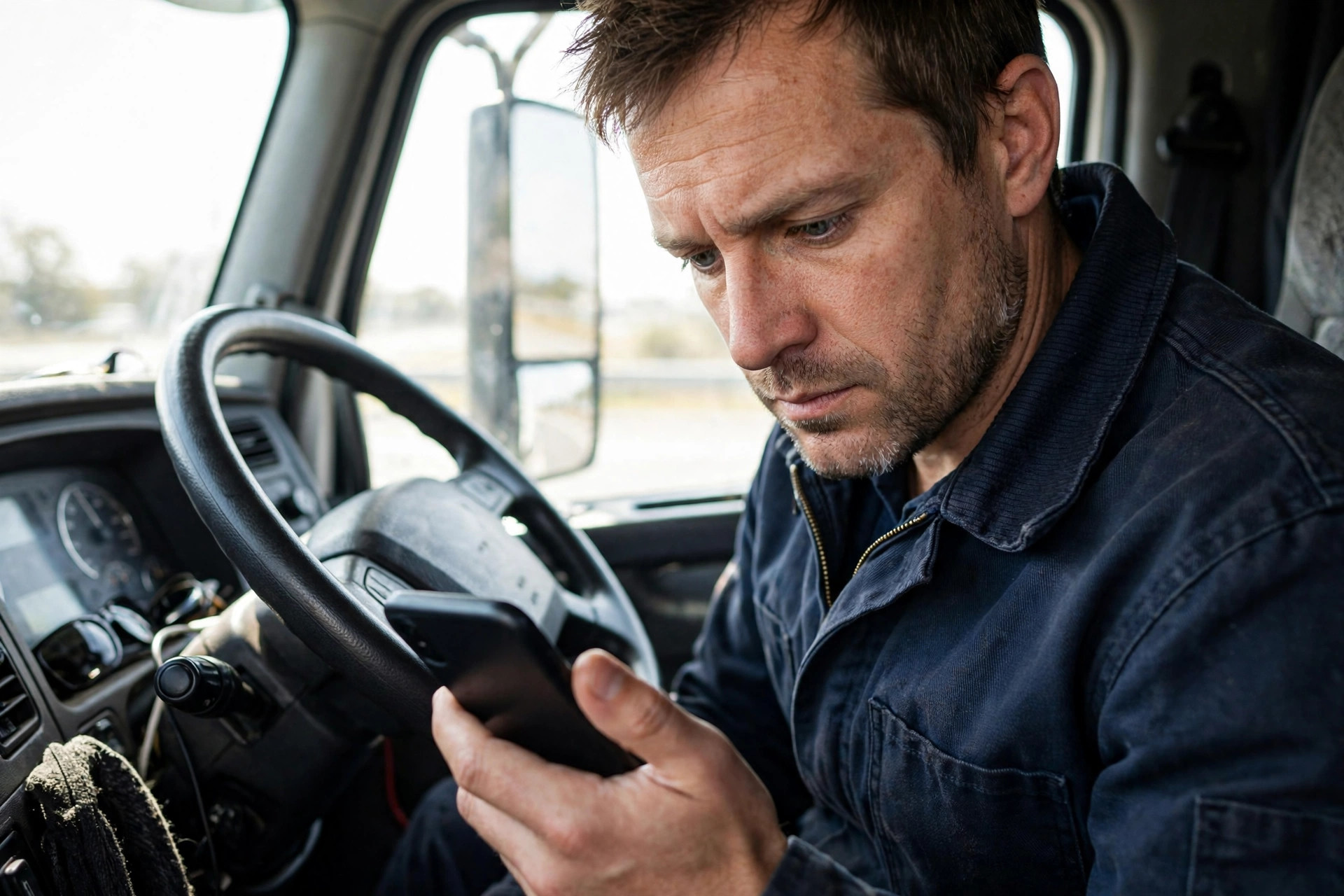
Old Zhou ran the numbers for me. Before the app, his whole day was phone calls: drivers asking about loads, shippers asking for status, the terminal asking for pickup numbers — seventy, eighty calls a day. With the app, loads get pushed straight to the driver's phone: pickup number, return location, appointment time, all in there. The driver taps "pickup complete" on site, and dispatch sees it update. Per load, the back-and-forth confirmation calls dropped by 15 to 20 minutes, in his experience.
Twelve trucks. Over a full day, the time the dispatcher got back was enough to take on two or three more loads.
But the cost was real. The first two months, the older drivers couldn't use it — forgotten passwords, loads they couldn't see, so dispatch had to call them anyway. One veteran nearly quit: "I've been driving twenty years, and now I need to learn to type?" Old Zhou kept him on and taught him by hand for three weeks before he got the hang of it.
So the math has to be split apart. Here's the honest table:
| What you're comparing | Phone / group-chat method | Dispatch app / small TMS |
|---|---|---|
| Learning curve | Zero — pick up the phone | Needs training, and the older guys struggle most |
| Dispatch speed (low volume) | Fast — one load covered in thirty seconds | About the same, plus the data entry |
| Dispatch speed (high volume) | Chaos — messages unscrollable, numbers get miscopied | Steady — loads queue up and push to drivers |
| Records and invoicing | None — disputes are shouting matches | Timestamps and records — invoicing is clean |
| Dispatcher calls in sick | Fleet is lost | Someone else can take over |
| Last-minute changes | Extremely easy — one call | Changes go through the system; old-timers find it slow |
| Cost | Zero software cost | Per-driver subscription, starting in the tens of dollars a month for a small fleet (check actual quotes) |
| Right size | Five trucks and under, smooth sailing | Past ten trucks, it pays for itself |
The hybrid playbook: the least painful way for a small fleet to go digital
Here's something that goes against the grain. The worst digital-adoption stories I've seen aren't the ones where the app never got used. They're the ones where it got half-used: half the loads in the app, half still arranged over the phone. The dispatcher thinks it's "double insurance" — but the two versions don't match, and drivers freeze: do I follow the app or the phone call?
Half-baked digital beats nothing. It loses to the pure old way. The pure old way at least has one clear rule: when in doubt, call. Half a system means the rules are gone.
And one more thing people don't like to hear: no app replaces the dispatcher's mental map. Which truck is near which terminal, which driver is having an off day, which port gets jammed at what hour — the app doesn't know that. A person does. Don't buy software and then run off your veteran dispatcher — that's trading watermelons for sesame seeds.
So my advice for a small fleet going digital on drayage dispatch is a hybrid — but done with discipline:
First, before you buy anything, standardize your load numbers. Pickup number, container number, return address — sent in the group chat in one fixed format, no voice-message dispatch. That one rule alone kills most of the miscopied-number accidents.
Second, when you hit around ten trucks — or you're already losing loads and drivers are fighting — then get the app. And when you do, make it all or nothing: every load goes through the app, the phone is only for emergencies. No running two systems side by side.
Third, remember what the software is really worth. It's not speed — it's the record. When there's a dispute, the timestamps in the app are your evidence. The old way can never give you that.
Fourth, keep your veteran dispatchers. The system is a tool; the dispatcher is the brain. You're buying the app so Old Zhang makes fewer phone calls — not so you can replace him.
One word for shippers and warehouses.
And for you shippers: don't just chase the rate that's two dollars cheaper. A fleet still dispatching everything by phone is far more likely to drop a load in peak season. If you want that fleet's price, send the appointment time and pickup requirements in writing. Don't just say it once over the phone. Paper protects everybody.
Sharpen the axe before you swing. Figure out which link in your drayage dispatch is actually broken before you decide whether to keep using the phone or go digital.
By Shifu Zhao, Trucking Veteran (15 yrs)