Let me give you the punchline first: the most expensive line item on a cold storage power bill usually isn't an aging compressor. It's the door.
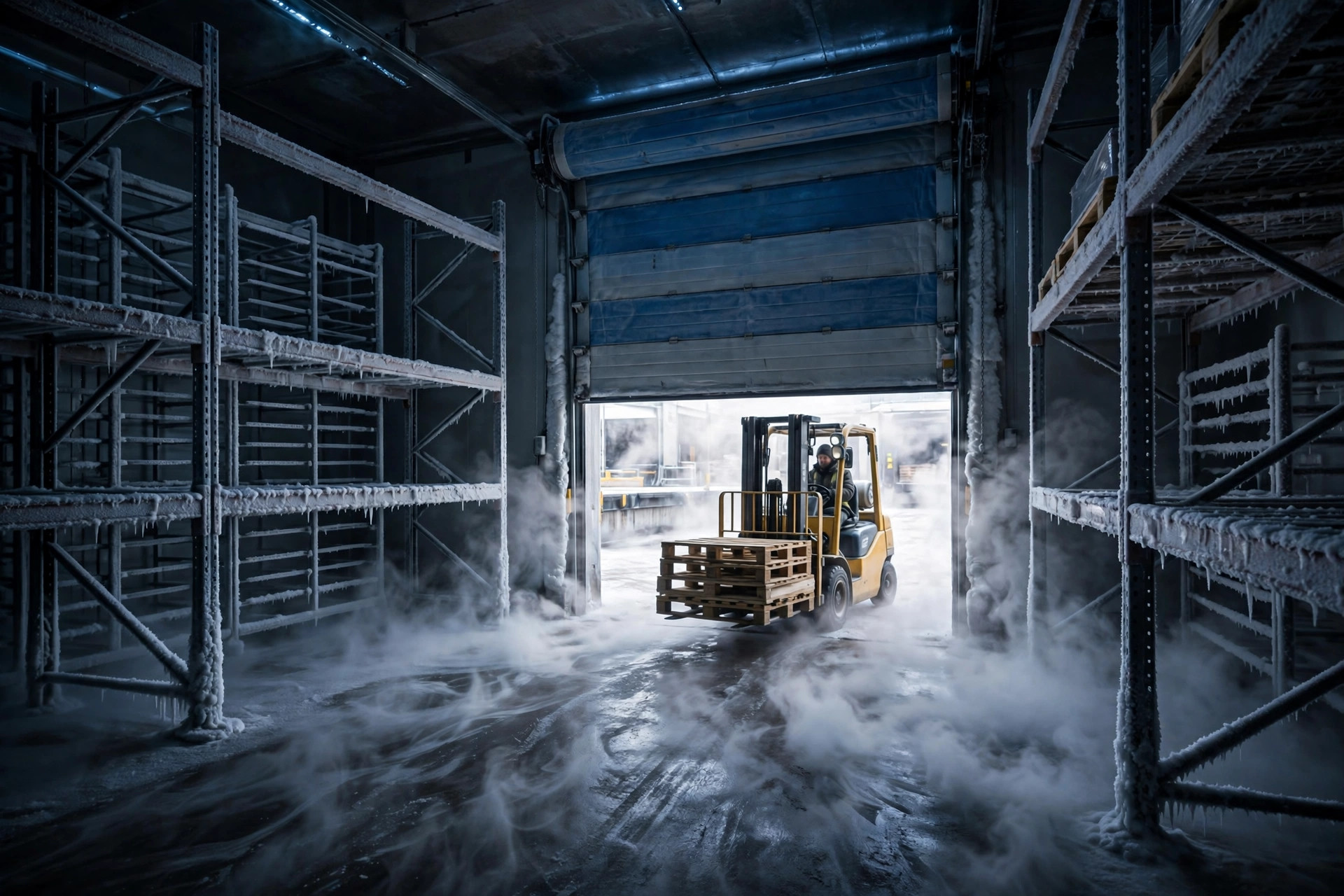
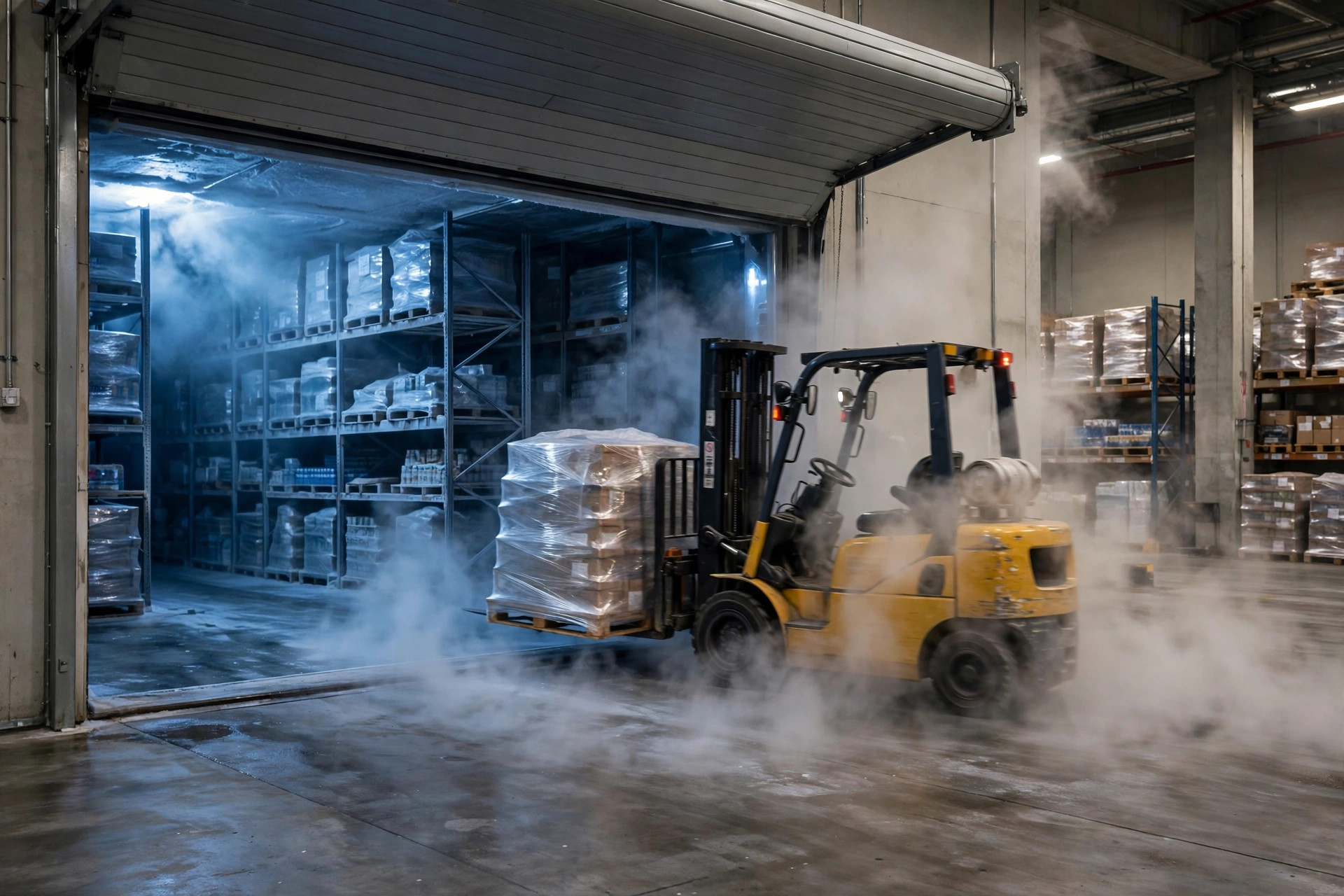
Open and close it 200 times a day, leave it hanging open for half a minute each time, and warm air floods in, temperatures near the door climb back up, and the refrigeration plant works overtime to drag them back down. Almost nobody in this business has ever sat down and done the math on that. So I did it for you.
Every Opening Bleeds Cold Air — and Money
Here's how the money burns, in three parts.
First, the sensible heat load. Air at 25°C pouring into a freezer held at -18°C — every degree of that difference is heat your compressors have to pump back out. Leave a 3-by-3-meter door open for one minute and the cold you've thrown away would keep a household refrigerator busy for days.
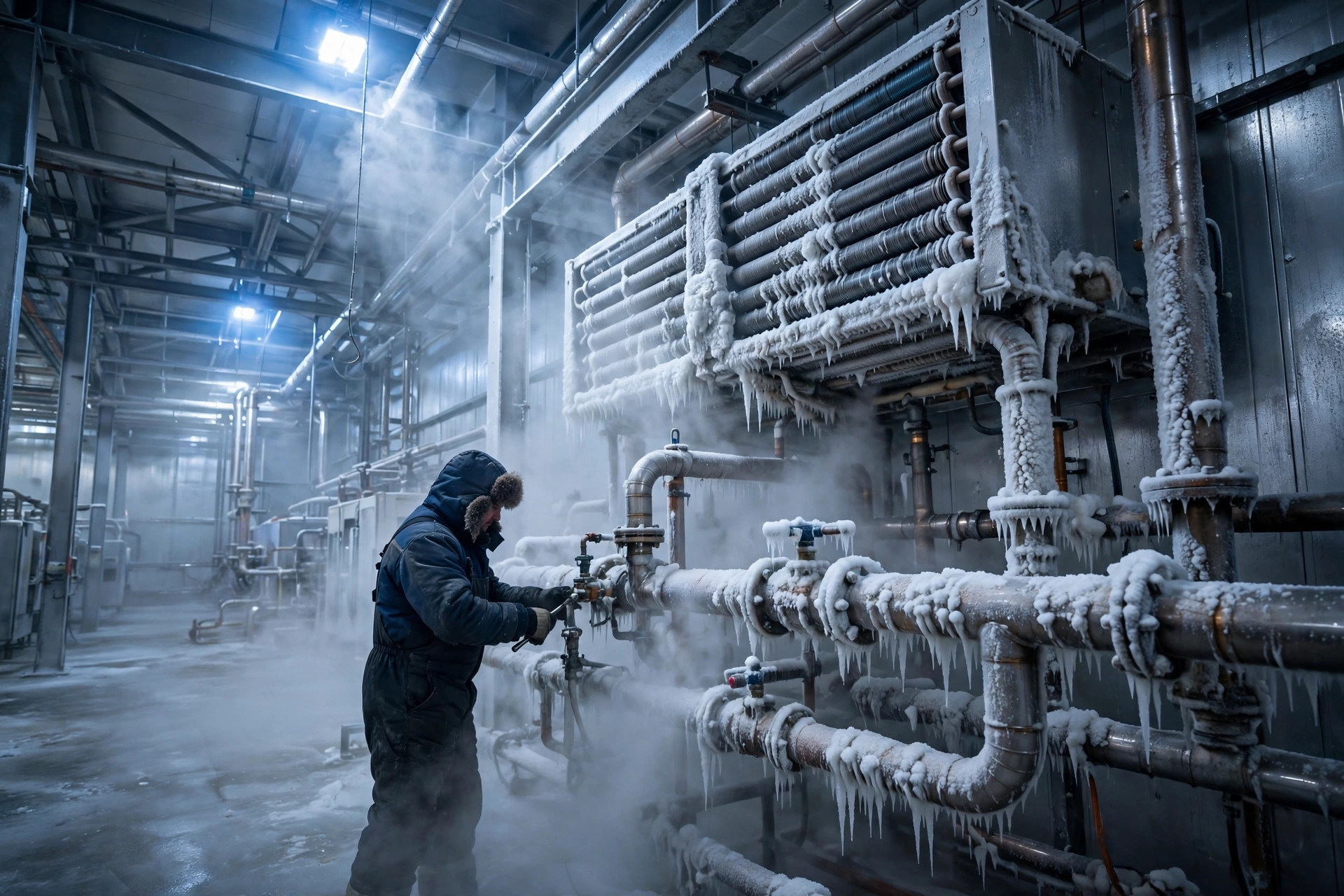
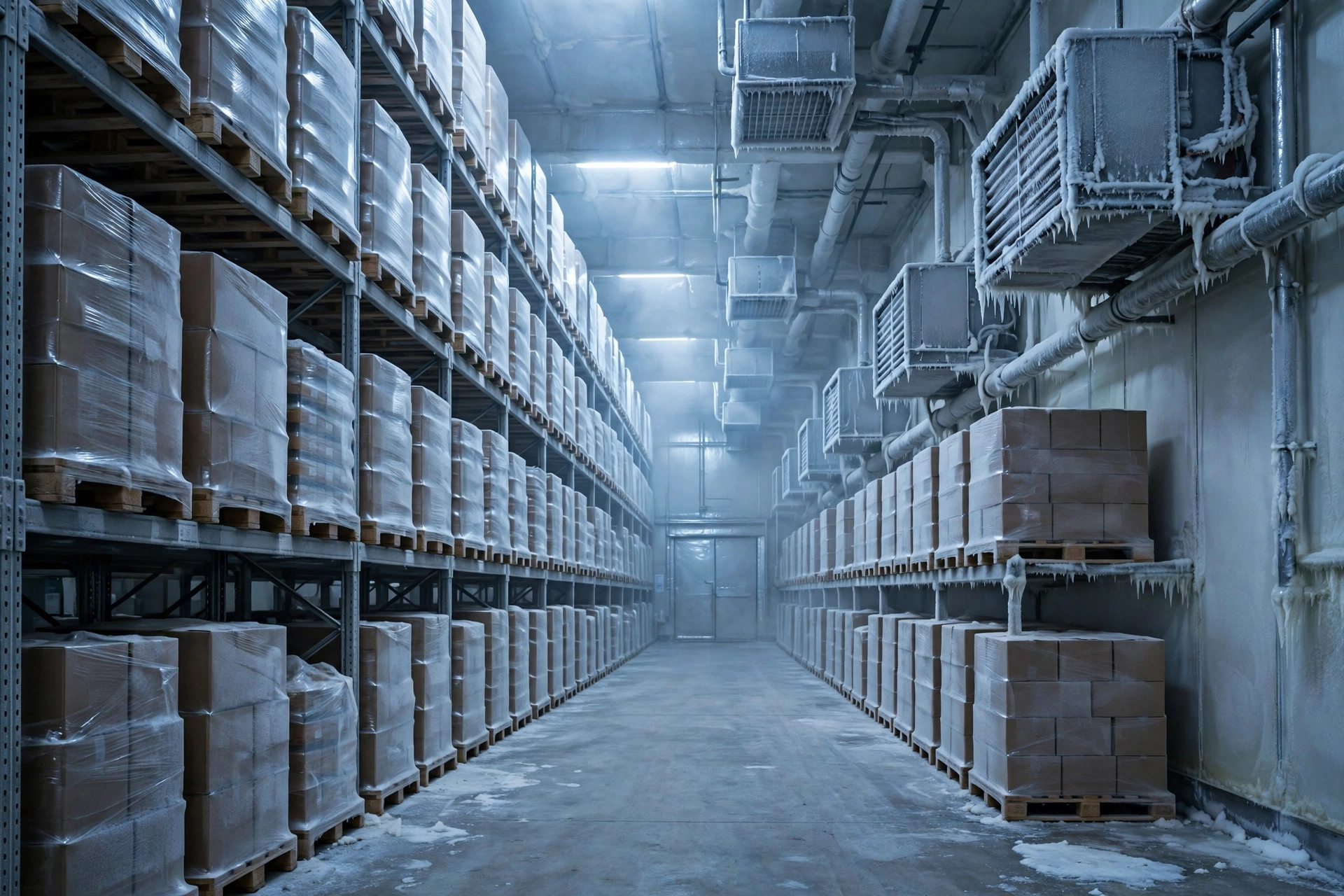
Second, moisture and frost — the sneaky one. Water vapor in the warm air condenses on the evaporator coils and freezes. Frost is insulation. Coil efficiency falls off a cliff, and the compressors have to run harder to compensate. I've walked into too many freezers where the coils were choked with frost until barely any air moved through them, and the operators were blaming the compressor. The disease is at the doorway, not in the machine room.
Third, the "catch-up" penalty. The moment temperatures near the door rebound, the controls scream and the plant goes to full load chasing the setpoint. That chase happens exactly when the system runs at its worst efficiency. That's when the meter spins fastest.
Add it up, and refrigeration — already more than half of a typical cold storage facility's electricity spend — carries a very real surcharge from door traffic alone. On U.S. industrial power rates (EIA 2025 data puts the national average around 8.6 cents per kWh, with states like California running 15 cents or more), the math gets ugly fast. The pricier your power, the more that door costs you.
The Energy Cost Math, Done for You
Here's a simplified model. My assumptions, up front so you can argue with them: a 3×3-meter doorway, freezer at -18°C, ambient at 25°C, system COP of 2.5 (typical for low-temperature ammonia plants), power at $0.10/kWh, 26 working days a month. One minute of open door admits roughly 4.4 kWh of thermal load (sensible plus moisture latent), which costs about 1.76 kWh of electricity — around $0.176.
| Door openings per day | Avg. 20 sec open | Avg. 45 sec open | Avg. 90 sec open |
|---|---|---|---|
| 100/day | ~$150/mo | ~$340/mo | ~$690/mo |
| 200/day | ~$300/mo | ~$690/mo | ~$1,370/mo |
| 400/day | ~$610/mo | ~$1,370/mo | ~$2,750/mo |
Read that middle row again. Two hundred openings a day at 45 seconds each — a rhythm I see in real freezers all the time — burns nearly $700 a month on the door alone. That's the better part of $10,000 a year, and it doesn't count the hidden costs: frosted coils running degraded, compressors aging faster.
Two sides to this, as always: the model is simplified, and real infiltration swings a lot with temperature differential, wind, and doorway size. But the direction is right. Pull your own meter data and door logs and check — you'll land in the same neighborhood. Waste you can see is waste you can manage.
Two Expensive Lessons I've Lived Through
Lesson one: Fresno, California, 2019. A frozen-food 3PL with 14 dock doors. The night shift, trying to save time on an inbound, left three doors standing open for over 40 minutes. The result? Twenty pallets of ice cream near the door went soft on the surface — QA nearly rejected the whole lot. The evaporators frosted up overnight so badly that defrosting ate the entire next morning. The compressor ran flat-out all night. That month's power bill came in nearly ten grand above the prior month — that's a bill-to-bill comparison, estimated, but the magnitude is right. They saved 20 minutes of labor and burned a whole night of refrigeration. Do that math however you like; it never works.
Lesson two: Dallas, Texas, 2021. A food distribution center. The owner took advice and installed air curtains — spent the money, got nothing. Temperature rebound near the door actually got worse. I went to look and almost laughed: the curtains were angled wrong, blowing outward. The thing was acting as an exhaust fan for cold air — every door opening actively pumped the cold out. We re-angled them to tilt slightly inward and tied them to the door controls (curtain runs when the door runs, stops when it stops). The rebound narrowed immediately. The equipment was fine. The mistake was installing it and walking away.
The Uncomfortable Truth: Fix the Door Before the Compressor
This is the misconception I most want to kill. Power bill too high? Most operators' first instinct is a high-efficiency compressor or a VFD retrofit — hundreds of thousands of dollars, COP up 10%, power bill down maybe 5 to 8%. Feels great.
Frankly, that's picking up pennies. Run the table above: cutting average open time from 45 seconds to 20 seconds saves more electricity than the compressor upgrade, for a fraction of the money. No equipment vendor will volunteer this — selling you a compressor pays a lot better than selling you door discipline.
Both sides, as always: if the compressor is genuinely due for replacement, replace it. I'm not against spending money. But the order of spending should be: doors first (behavior plus cheap retrofits), equipment second. The highest-ROI energy project in a cold store is always the doorway.
Four Fixes That Actually Cut Energy Cost: High-Speed Doors, Air Curtains, Vestibules, Dock Discipline
One, high-speed doors. A conventional sectional door takes ten-plus seconds per cycle. A high-speed door does it in 1–2 seconds (opening speeds of 100 inches per second and up, per manufacturer specs). You cut open time by three-quarters or more, and infiltration follows. One published vendor case: a Chicago-area food production and distribution facility cut total energy consumption 40% after switching to high-speed doors. Payback runs 24–36 months per the manufacturers, as short as 18 months in high-traffic operations. Expensive — but the math closes.
Two, air curtains. Two iron rules: angle them slightly inward, never outward; and interlock them with the door — curtain on when the door's on, off when it's off. A curtain running 24/7 empty is its own power hog. Treat it as a supporting actor, not the star; don't ask it to fight a big temperature differential alone.
Three, vestibules. Put a small airlock outside your busiest doors. You sacrifice a dozen square meters of floor and gain a thermal buffer. Forklifts stage handoffs in the vestibule; the freezer door only opens when it must. Works beautifully on receiving docks. The price is construction, so it's best done in a new build or a major remodel.
Four, dock discipline. The cheapest fix of all — it costs nothing. Batch your moves so doors open for full pallets, not dribs and drabs. Stage pallets in the vestibule before the forklift arrives. Put a magnetic door timer on every freezer door with a little display at the dock: "this door has been open X minutes today." I've watched too many operations where drivers suddenly got very disciplined the week the timers went up. Data in plain sight beats ten "please close the door" signs.
All four are the same trade-off wearing different clothes: throughput versus energy. Doors wide open and held long means fast flow and a burning meter; doors policed to death means forklifts queuing and labor bleeding out. There's no free lunch. But once the math is on the table, you know exactly where each dollar should go — and where each second should be saved.
Next time the power bill lands, don't curse the utility first. Go check how long that door was open today.
By Lao Mi, Supply Chain Veteran (20 yrs)