It was a Friday afternoon last July, hot enough that standing by the dock door felt like work on its own. We shipped out 86 cases of cold chain product that day, and the cold chain packaging insulated box coolant setup we used looked solid on paper. Monday morning the customer opened the first box, checked the temperature logger, and called us. The reading was over the limit. We paid the freight, we paid for the product, and we spent the whole weekend explaining what happened. Listen, cold chain packaging looks boring until it fails. Then it gets expensive fast.
That shipment was supposed to stay between 2 and 8 degrees. We packed Friday at 3 p.m. The driver said he would arrive Sunday night. He actually signed in Monday at 9 a.m. The boxes sat in the trailer for half a day longer than planned. Worse, packing landed right on the shift change. Two crews were rushing the same job. Some boxes got extra coolant on top and none at the bottom. Some got packed so tight there was no air path left at all. Same boxes, same coolant, totally different results.
After that, we pulled every logger that came back and read the curves one by one. The answer was simple. It was not that the box was too thin. It was not that we used too little coolant. The packing was inconsistent. A well-packed box could hold for two days. A badly packed one could fail in one. Cold chain work is not really about buying expensive material. It is about doing the same careful job every single time.
Picking the Box First: cold chain packaging insulated box coolant Starts With the Box
We run three kinds of insulated boxes in our warehouse now. Each one has its own personality. Foam boxes are the cheapest and insulate well enough for one-way shipments. They hate being crushed or dropped, and once the shell cracks, the insulation drops with it. Paper-based insulated boxes are light and easy to break down on the customer side, but they hate water. One rainstorm on the dock and they go soft. Reusable hard boxes cost the most and hold temperature best. They make sense on fixed routes where boxes come back. Lose one and you feel it.
Do not start with price. Start with three questions. How long is this trip? Will the box sit in the sun? Is the box coming back? A 48-hour trip needs a thicker foam box or a hard box. A summer route through the south means the box might bake on the dock for half an hour before loading. A one-off shipment to a scattered customer is a bad place for a reusable box, because the return rate will be terrible.
We learned that one the hard way. Once we put a shipment that should have gone in hard boxes into thin foam boxes to save money, and the driver stopped two extra hours at a rest area. By delivery time the boxes had gone soft. The customer sent photos. I had nothing to say. Since then, thin boxes are off the table for trips over 48 hours, unless the customer signs off on the risk in writing.
Coolant Is Where It Goes Wrong: cold chain packaging insulated box coolant and the Freeze-Damage Trap
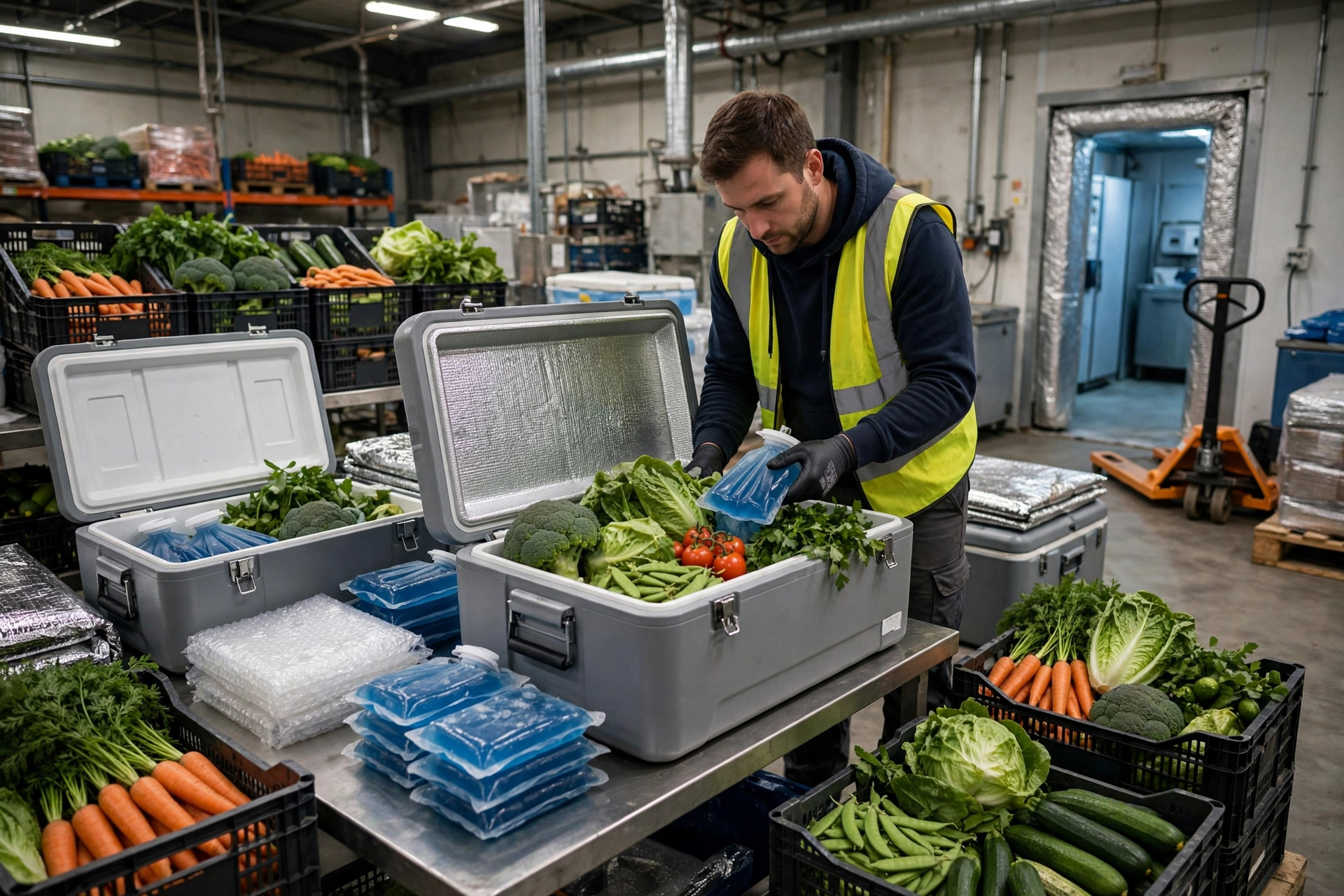
Here is the honest truth about coolant. More is not better. Pack in too many ice packs and part of the box can drop below freezing. Product rated for 2 to 8 degrees gets freeze damage. It can look fine on the outside and turn out wrong after it thaws. Dry ice is even stronger. It is fine for frozen product and a disaster for chilled product. Phase-change material holds temperature gently and steadily, but it costs more, and it has to be fully frozen before use. Half-frozen phase-change packs are basically dead weight.
Our rule now is simple. Pick the temperature band first, then the coolant amount, then the coolant position. For 2 to 8 degree product, coolant never touches the product directly. We put a layer of corrugated cardboard or bubble wrap in between. For frozen product it is the opposite. Coolant should sit tight against the product, with gaps filled so there is no big empty air pocket. Packing speed matters too. Leave a box open in a warm staging area for five minutes and you have already thrown away part of your insulation.
There is one more trap, and it is the unboxing order. When the driver unloads, the boxes that come off first get opened last, and the boxes that come off last get opened first. Mix that order up and some boxes bake in the sun for an extra round. We now tape a small card on each shipment that spells out the opening order. The driver follows it. Arguments dropped a lot after that.
The 48-Hour Setup We Actually Use Now
Back in March we ran a road test with 12 boxes. Same route, same product, three packing methods. Shipped Friday, received Monday, every box carrying a logger. When the results came back, the whole warehouse switched to the winning method. Nobody packs by feel anymore. New hires memorize this table before they touch a cold chain order.
| Temperature band | Box | Coolant | Packing notes |
|---|---|---|---|
| 2–8 °C chilled | Thicker foam box or hard box | Ice packs or phase-change material, with a separator between coolant and product | Coolant around the sides and on top, leave an air path, close the lid fast |
| Frozen | Hard box preferred | Dry ice or fully frozen ice packs, coolant tight against product | Fill gaps, no big empty cavity inside, opening order taped on the box |
This table is not magic. Ship somewhere hotter than usual, or add an extra transfer stop, and you need to step the coolant up a level. Our rule for anything outside the table is clear. Run one test box first. If the logger curve passes, ship the batch. If you ship without testing, you are driving blind.
Test It, or Do Not Ship the Batch
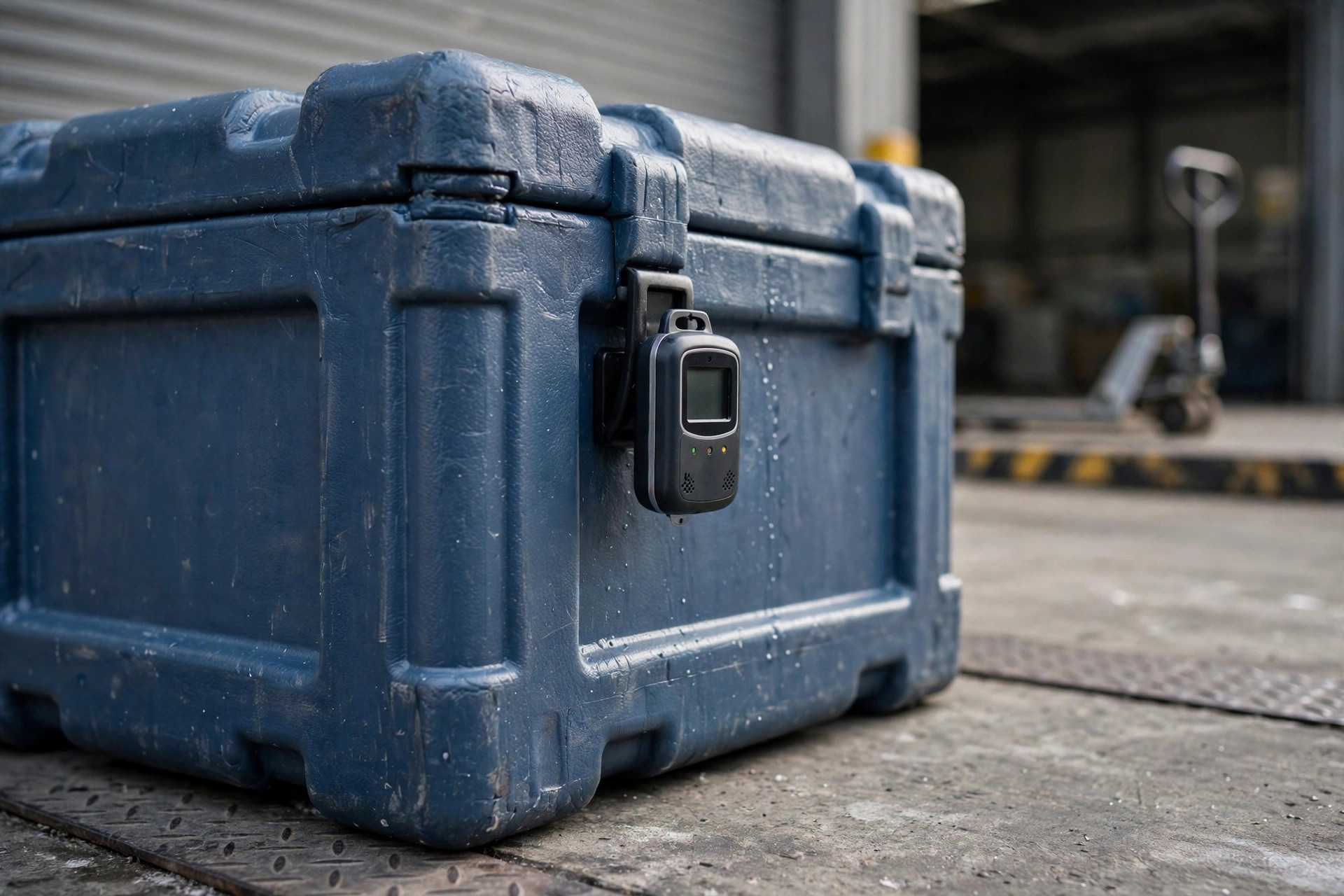
The biggest enemy of cold chain packaging is not summer. It is "I thought." I thought the box was thick enough. I thought the coolant would hold. I thought the driver would not be late. A logger fixes "I thought." A small device that costs a few dollars can save a whole truck of product. That math is easy.
Here is how we run it now. A new route gets three test boxes with loggers all the way through. An existing route gets retested when seasons change, once in summer and once in winter. A big customer's first order always gets tested, and we send the customer the temperature curve. That builds trust and cuts down on arguments. Once a customer told us our product arrived warm. We pulled the logger curve. It showed their warehouse left the boxes on the dock for two hours after unloading before putting them away. The responsibility question settled itself.
Scheduling matters too. Do not put cold chain packing right on the shift-change window. People swap out, technique drifts, and the job gets sloppy. We now keep cold chain packing with one fixed crew. One person packs, another person checks. Coolant count, coolant position, lid seal, each item gets a tick on a checklist. It sounds fussy. When something goes wrong, that checklist is our protection.
Here is the counterintuitive part. The box does not need to be as thick as possible. The coolant does not need to be as heavy as possible. What cold chain packaging really comes down to is two things. One is thermal inertia, meaning how long the box-plus-coolant combination can hold its ground. The other is packing speed, meaning how many minutes pass between pulling product from the cooler and closing the lid. The table handles thermal inertia. Floor discipline handles packing speed. A great table with slow packing still fails.
So here is my reminder to anyone shipping long-haul cold chain. Pick the right box. Match the coolant to the temperature band. Keep the packing technique steady. And put a logger in the box. If you can look at a 48-hour shipment and honestly say it would still hold if it arrived Monday instead of Sunday, ship it. If you cannot say that, test one box first.
By Chen Feng, Warehouse Operations Manager