The $800 duty-free ride is over. Done. Finished.
The de minimis $800 rule change didn't just tweak a tariff rate — it ripped up the foundation that small-parcel direct shipping was built on for the past decade. Under the old rule, any shipment valued at $800 or less could enter the US basically duty-free with minimal paperwork. Now every parcel goes through formal import procedures, every dollar of duty gets collected, and every data field gets reported.
Freight forwarders and brokers have already written this story to death, but always from the "notice to importers" angle. Let me write it differently — from the seller's angle: exactly how much more each order costs now, and which of the three plays wins: keep direct shipping with DDP, stock a US 3PL, or shift production origin.
De Minimis $800 Rule Change Timeline: Four Hits in One Year
Facts first. Every date below is public policy, not rumor:
Hit one: August 29, 2025. Executive Order 14324 suspended duty-free de minimis treatment for all countries, effective August 29, 2025. Sub-$800 parcels lost their automatic exemption overnight. During a transition period, postal operators and carriers could pay a flat duty per parcel — $80, $160, or $200 depending on country of origin — with the transition ending February 28, 2026.
Hit two: February 2026. The White House reaffirmed the exemption "shall not apply" regardless of value, origin, transport mode, or entry method.
Hit three: June 24, 2026. US Customs and Border Protection (CBP) issued two interim final rules indefinitely suspending the $800 exemption — effective immediately for non-postal shipments, July 24, 2026 for international mail. Non-postal parcels now need Entry Type 11 (informal entry, for goods valued at $2,500 or less) or another formal entry type. Postal shipments got their own new process: qualified filers report monthly, sending a spreadsheet with 10-digit classifications, origin, duty rates, values, and duties owed to CBP by the 7th of the following month, paying via Pay.gov on the same deadline — and an import bond is required. Certain special categories got a delayed compliance date of October 22, 2026.
Hit four: July 1, 2027 (already law, pending effect). The One Big Beautiful Bill Act, signed in July 2025, statutorily eliminates the de minimis exemption effective July 1, 2027. Today's "suspension" is just a bridge.
See the pattern? This isn't a policy adjustment. The whole road got shut down. If you're still betting on a reversal, find another road.
How Much More Per Order: Run the Math First
Don't pick a lane before you know the price of each one.
Before: a direct-ship small parcel carried roughly $0 in duty. Freight was the entire cross-border cost, and pricing never had to account for tax.
Now (direct shipping + DDP): per-order compliance cost = order value × actual combined duty rate + per-parcel filing allocation + speed penalty.
Breaking it down:
First, the duty itself. The rate depends on your product's actual HTS code, and origin countries can stack additional duties on top. This part is non-negotiable. Take my own LED strip: $45 average order. Suppose a combined rate of 30% (just an example — look up your own product's HTS rate, don't copy mine). That's $13.50 in duty per order.
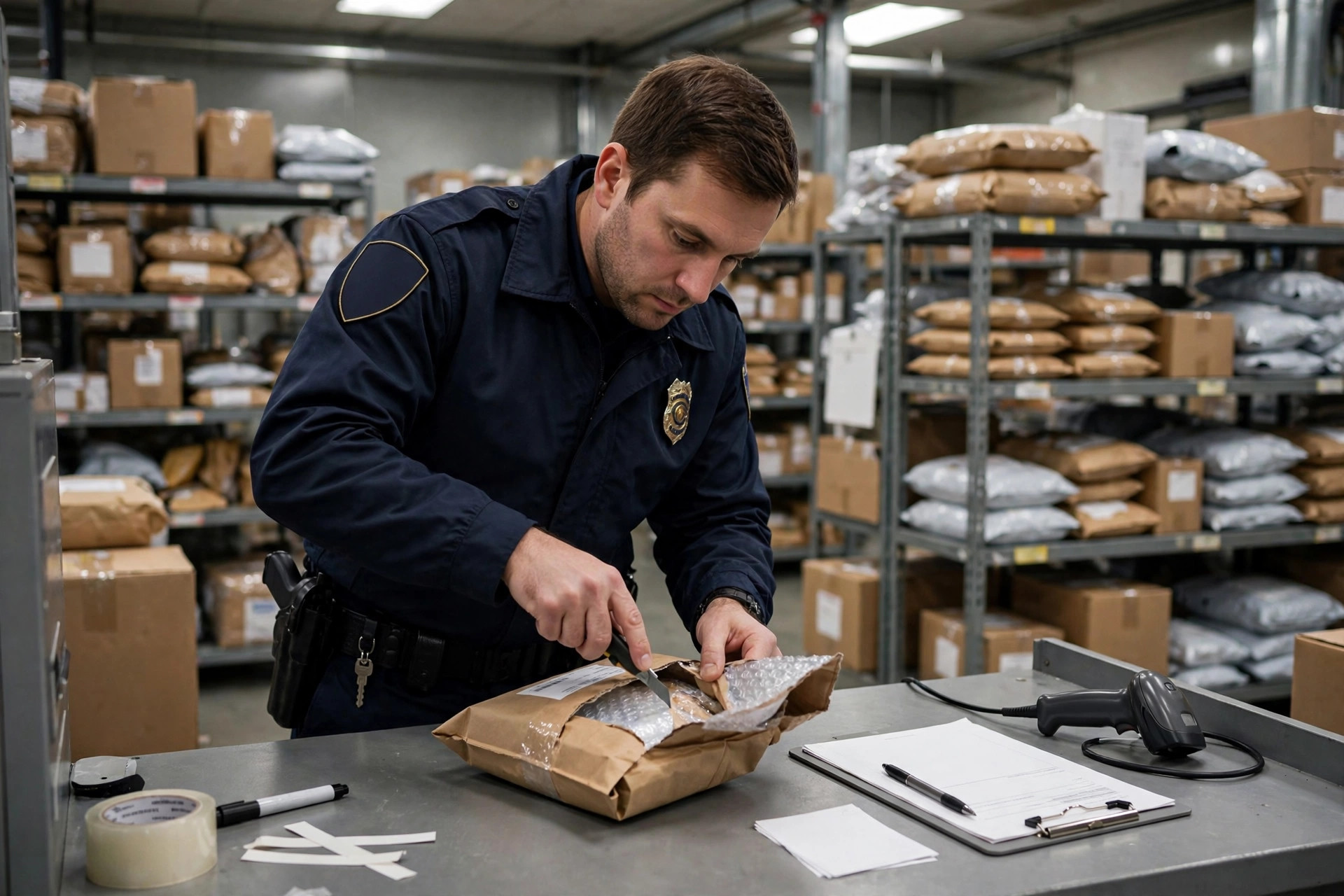
Second, per-parcel filing allocation. Every parcel needs an Entry Type 11 filing, which means a partnered customs broker. Brokers charge per parcel or per month — either way, this cost didn't exist before and now lands on every order. On my own goods, freight plus filing allocation runs about $9 per parcel.
Third, the speed penalty — the hidden cost. Per-parcel filing means per-parcel clearance, and my shipments now take 2–5 days longer to release (my experience, for reference). Slower delivery means more WISMO tickets, more bad reviews, more refunds — costs no forwarder quotes, but your refund rate feels.
Add it up: $13.50 + $9 = $22.50 per order — half of a $45 selling price. That $22.50 used to be just freight. That's the real per-order price tag of the de minimis $800 rule change.
Three Plays Compared: Direct + DDP vs US 3PL vs Origin Shift
With the math clear, here are the three plays side by side:
| Keep Direct + DDP | Stock a US 3PL | Shift Production Origin | |
|---|---|---|---|
| How duty is paid | Per parcel at actual rate | Paid once on bulk inbound, amortized per order | At the new origin's actual rate (look yours up) |
| Filing | Entry Type 11 per parcel, broker required | One filing per inbound shipment | One filing per inbound shipment |
| Cash tied up | Low, no inventory | High, 45–60 days of stock upfront | Highest: tooling, MOQs, new supply chain ramp-up |
| Speed | Per-parcel clearance, slower overall | One bulk clearance, then 2–5 day domestic delivery | Depends on new origin-to-US logistics |
| Returns | Cross-border returns basically mean writing off the goods | Domestic returns, some residual value recoverable | Goods sit in a US warehouse, domestic returns |
| Best for | High-ticket, long-tail SKUs | Fast movers with stable sales | High-volume categories hit hard by origin-specific duties |
My decision formulas:
Direct vs 3PL: switch when "per-parcel duty + per-parcel filing allocation" exceeds "amortized inbound duty + amortized US warehousing." Using my example: direct costs $22.50 per order in compliance. With a 3PL, ocean inbound amortizes to a couple of dollars per parcel, US warehousing about $1.50, duty still $13.50 — total around $17 per parcel. Saving $5 per parcel; at 2,000 orders a month that's $10,000. The math picks the winner.
Whether to shift origin: (Country A combined rate − Country B combined rate) × annual purchase value, versus one-time switching investment + annual operating delta. If the first number wins, it's worth negotiating. One warning: the origin change has to be substantial and real — relabeling goods from another shed is illegal transshipment, and getting caught means heavy penalties. Origin shift is supply chain restructuring, not loophole hunting.
My own setup: my 20 fastest-moving SKUs go to a US 3PL, long-tail items stay on direct + DDP, one broker on retainer. Origin shift is still in negotiation — hasn't crossed my threshold yet.
The Contrarian Take: Killing De Minimis Helped Serious Sellers
Here's a take most people don't want to hear: the death of de minimis is actually good news for serious small-parcel sellers.
Why? When the $800 exemption existed, the barrier to entry was basically zero. Anyone could ship a parcel from overseas and sell into the US. Competition came down to who had cheaper freight and lower prices — a race to the bottom.
Now compliance itself is the moat: 10-digit HTS capability, a broker, Entry Type 11 know-how, DDP collection. Casual sellers can't play. The price-war crowd exits, real operators stay, and margins recover. Several friends who moved to a 3PL early are running 5–8 points higher margins in the second half of 2026 than in 2025.
So stop mourning the duty-free era. Rules changed, the game changed. The ones who adapt outlive the ones who don't.
Pitfalls: Red Lines You Don't Cross
First, don't undervalue your goods. Some sellers think "declare it lower, pay less duty." CBP's parcel data is more connected than ever. Getting caught isn't just back taxes — it's fines, seized goods, and potentially a blacklist. Don't touch this line.
Second, don't assume postal channels are a loophole. The postal exemption was suspended too, effective July 24, 2026, with its own monthly reporting and payment process. Anyone hoping to dodge through the mail should give up now.
Third, spell out who pays duty under DDP. Buyers who see a surprise duty charge at checkout abandon carts or leave one-star reviews. Either bake the duty into your price or tell buyers upfront, clearly. Hiding it kills your conversion rate.
Fourth, don't trust a "duty-included line" on a verbal promise. Ask: which broker? Who files the Entry Type 11? Is duty actually remitted or just gambled on no-inspection? A "duty-paid" promise without written confirmation is running naked.
Fifth, don't bet on a 2027 rollback. The July 1, 2027 statutory elimination is already law. The direction only gets stricter — plan for the strictest version. Policy is still evolving, so check the official source for the latest policy before placing inventory bets.
The de minimis $800 rule change left direct-ship sellers two options: build compliance capability or get pushed out. I picked the first — broker signed, 3PL stocked, weak SKUs cut, origin-shift math on a formula. This one actually worked for me: my store's profit went up in the second half of 2026. Policy won't wait. Move early, pay less.
By Ah K, E-commerce Seller (5 yrs)