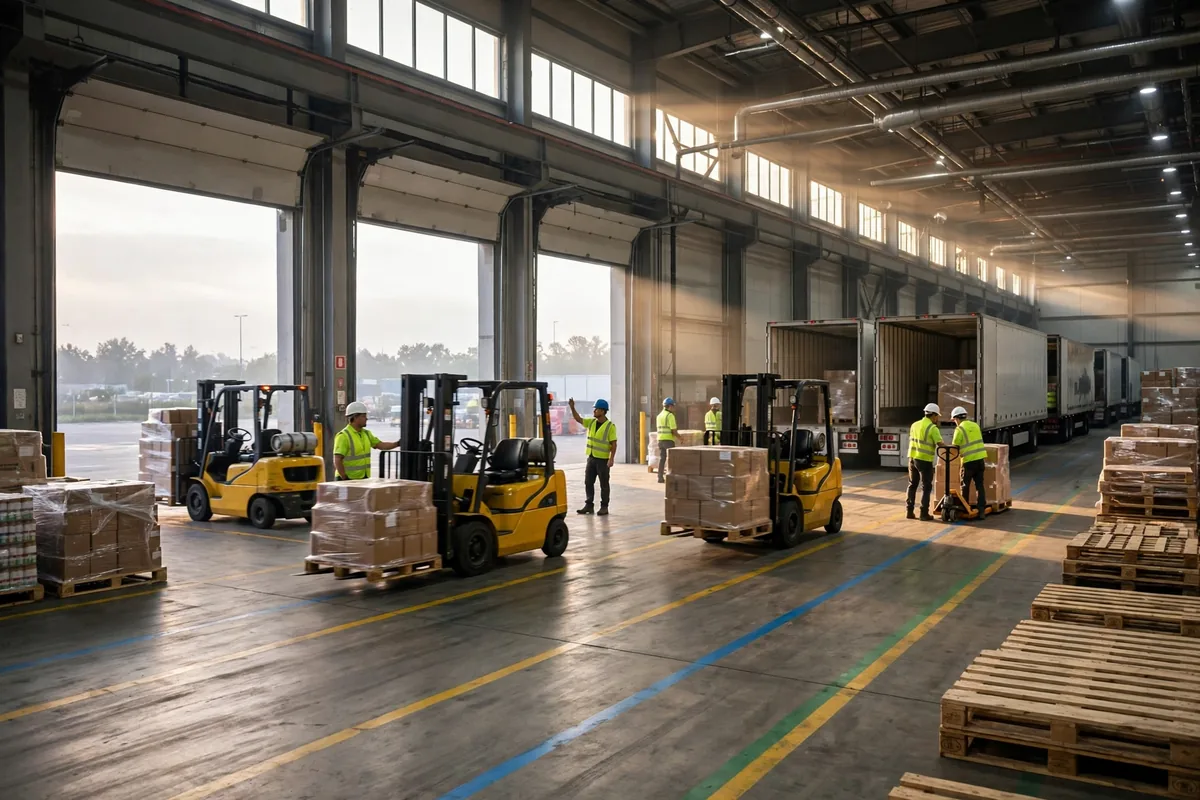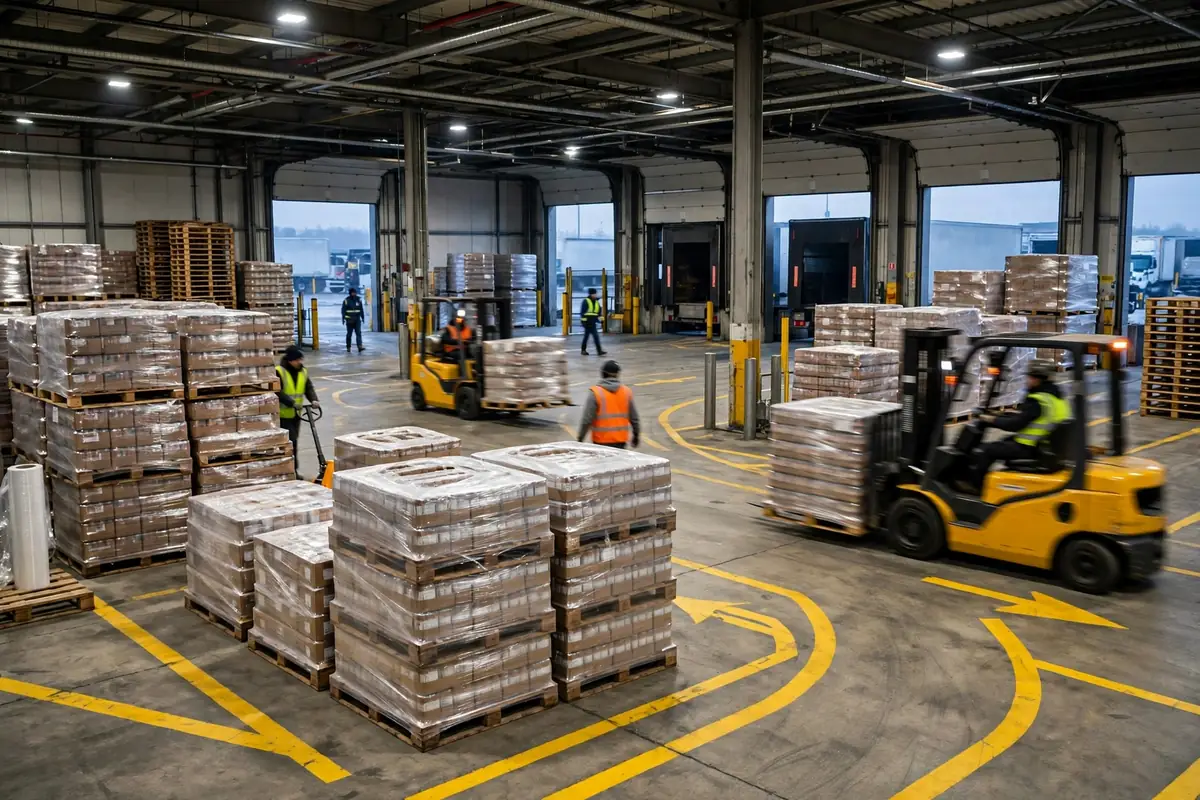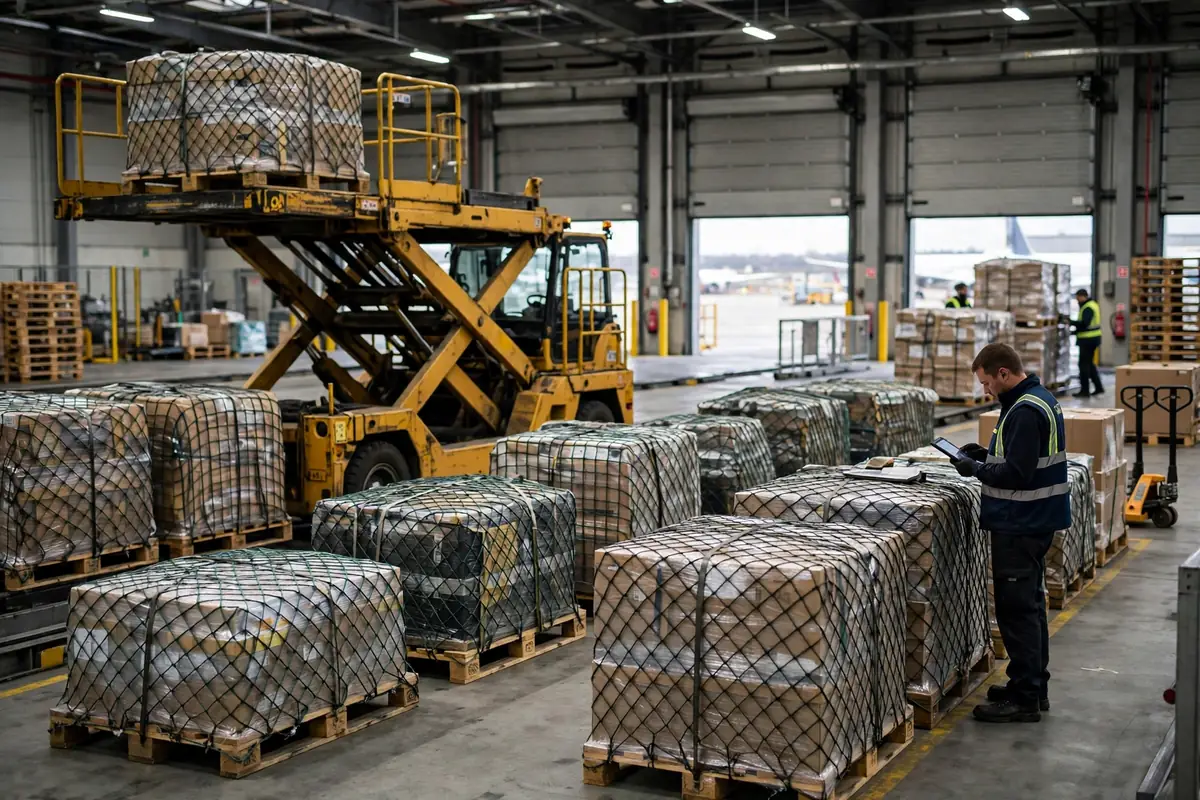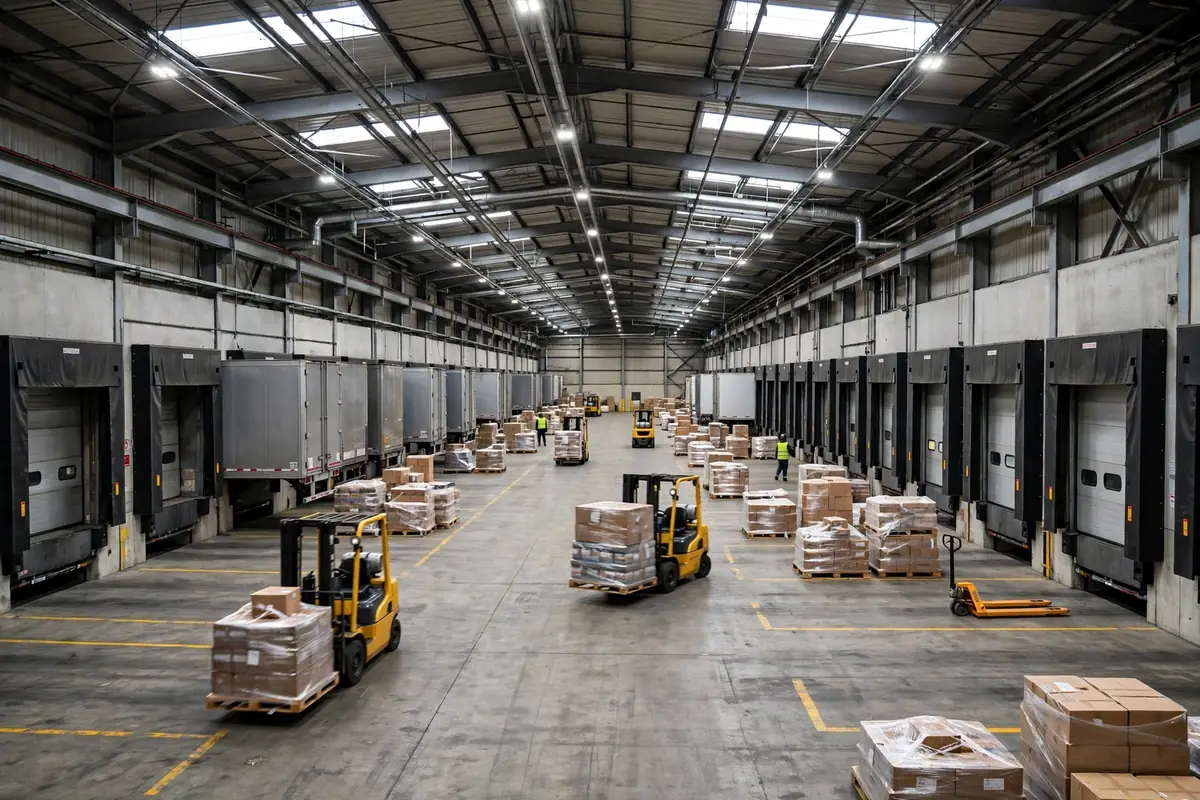
Cross dock door assignment warehouse work sounds simple until 5:40 in the morning, when seven trailers are already lined up in the yard, it is still half dark, and every driver is leaning out of the cab asking the same question: which door is mine? I have run that morning. The lead has a radio in each hand, his voice is gone, and the doors — not the people — are the first thing to break in peak season.
A cross-dock does not store anything. Freight comes in one door, crosses the floor, and leaves through another. On paper it is a straight line. Assign the doors badly and that line turns into a knot: forklifts cut across the whole sort area, pallets circle in the middle, and people and machines fight for the same lane. The crew is not slow. The doors made them slow.
Cross dock door assignment warehouse: how peak hour actually jams
Take an illustrative example, with assumed numbers for a mid-size cross-dock, not a real customer. Assume a site with 28 doors takes 9 inbound and 11 outbound trailers between 6 and 9 a.m. Under first-come, any-free-door assignment, two outbound trailers for the same lane ended up at opposite ends of the building. The same freight had to be pushed in two directions, forklifts travelled roughly 40 percent farther on those moves in the assumed measurement, and 3 trailers waited more than 90 minutes in the yard. One driver switched off, went for breakfast, and no amount of shouting was going to move him.
The problem was not a shortage of doors. Inbound and outbound doors were never paired. Freight should leave through a door close to where it came in, matched to its lane. Get that pairing wrong and the sort area becomes a parking lot.
We tried the opposite extreme next: nail every door down. Each customer and lane got a fixed door, with a big sign. For three days it was beautiful. Drivers found their door blindfolded. On day four one customer spiked, four trailers queued at its fixed door, and two doors next to it sat empty because the sign did not have their name on it. Fixed assignment saves communication. It has zero flex.
Fixed doors or dynamic doors: run the trade-off honestly
Here is a second illustrative example. Assume a consumer-goods cross-dock handling around 600 pallets a day in peak season, as an assumed volume. The team compared three approaches:
| Approach | Strength | Cost in the assumed test |
|---|---|---|
| All fixed doors | Drivers never ask, new staff learn fast | Idle doors in peak, queues on spiked lanes, longer average wait |
| Fully dynamic assignment | Highest door utilisation | Needs a dispatcher watching the board; a notice 5 minutes late means a trailer docks wrong and must re-spot |
| Fixed backbone plus flex doors | Stable lanes stay stable, flex doors rescue the peak | You must decide in advance which doors are flex, and write the rule down |
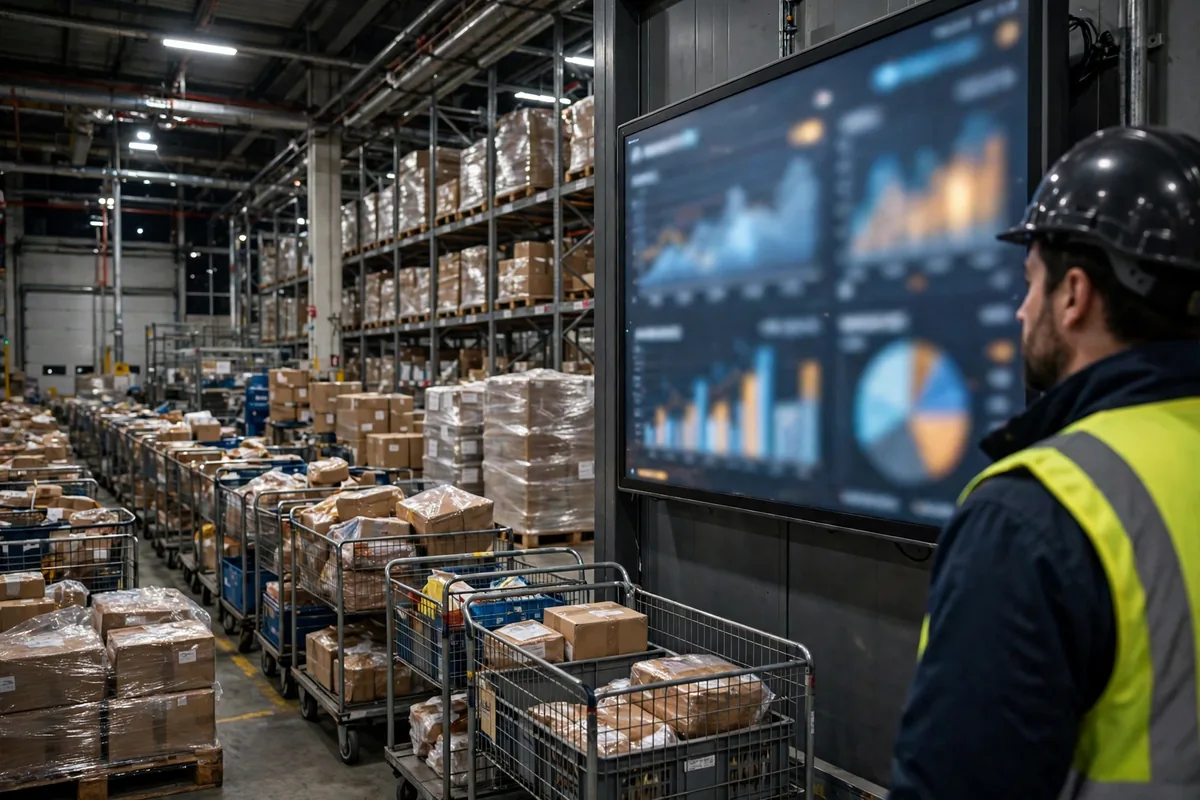
They chose the third: about 70 percent of doors fixed to steady lanes, 30 percent held as flex. In their assumed measurement, waits over 30 minutes fell noticeably, and the dispatcher stopped running the yard and worked from the screen. I will not promise the same number in your building. Time it for a week with a stopwatch before you believe anyone, including me.
Now the counter-intuitive part: fair door assignment is not good door assignment. Many supervisors rotate the good doors so no driver feels cheated. The result is every lane is a medium distance from the sort area, and the whole building slows down together. Cross-docking lives or dies on its busiest lane. Give the best, clearest doors to the highest-volume outbound lane first, let the smaller lanes wait a little, and total throughput goes up. Fairness belongs in shift rosters, not in door plans.
The routine we locked in, and yard communication that works
First, look at the outbound before you assign the inbound. Before a trailer docks, check which outbound lanes its freight feeds, then choose an inbound door on that side. Reverse that order and forklifts haul freight the long way all shift.
Second, flex doors are sacred. An empty flex door is not waste; it is the rescue lane for the late trailer and the spiked order. The moment someone stages freight in front of it, the peak has nowhere to go. We painted a yellow box on the floor. Nothing sits in the box. The lead checks it on every walk.
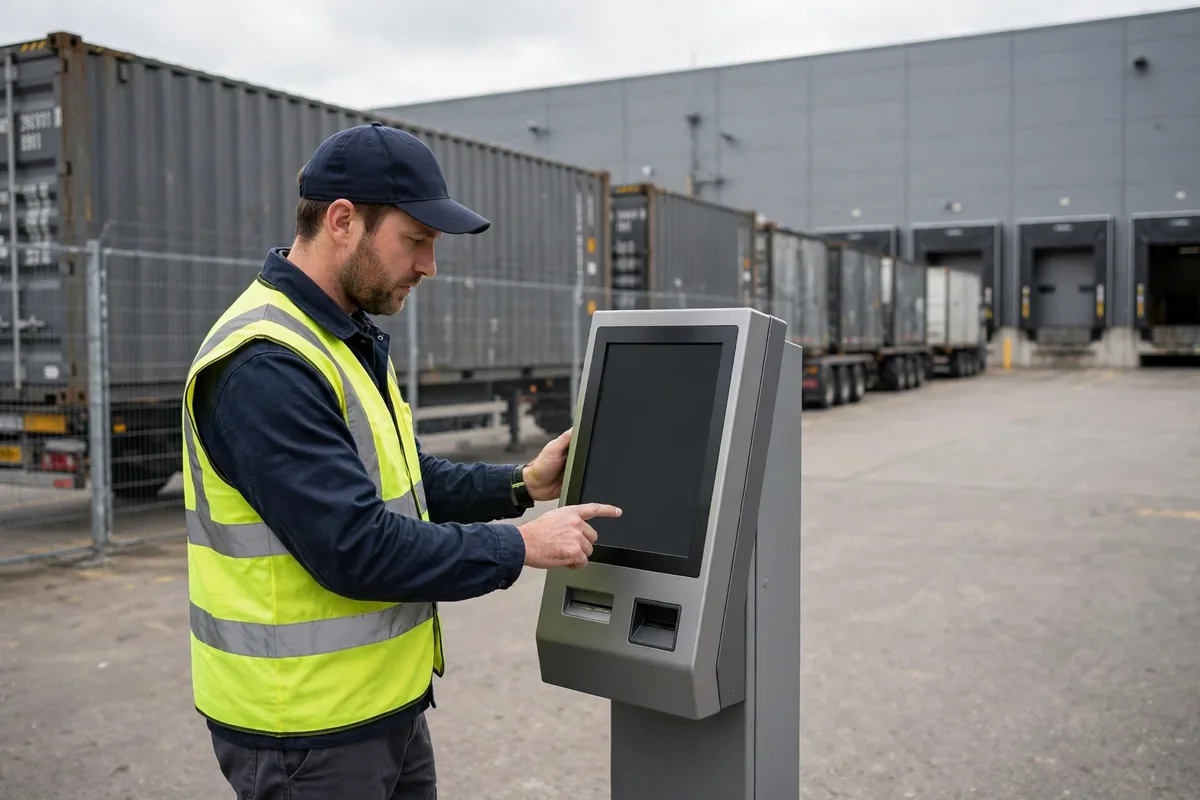
Third, one channel for the yard, only one. Drivers used to phone the lead, message dispatch, and lean on the horn — three instructions, three door numbers. Now it is simple: driver reports the plate at the gate, dispatch replies with one door number, driver repeats it back before moving. On the radio you say plate plus door, nothing else. Wrong-door dockings dropped a lot after that. I never counted it precisely, but the night lead says his ears finally get a rest, and that is honest data.
Fourth, a five-minute huddle 30 minutes before peak. Which lane is heavy today, which trailer will be late, who gets the first flex door. Five minutes up front saves an hour of arguing later.
A word to fellow managers: do not start by buying a system or a bigger screen. Chalk the inbound, outbound, and flex doors on the floor, run it clean for a week, and only then talk about dynamic assignment. If the doors do not make sense on the ground, software will just display the confusion in higher resolution. One more lesson from a night shift, because peaks are not the only test. In an illustrative example, a refrigerated trailer once arrived three hours early at around 2 a.m., with the driver insisting the freight had to move at once. The night crew felt sorry for him, gave him a flex door, and unloaded half the trailer. At 6 a.m. the scheduled fleet arrived on time, the flex door was blocked, and the early trailer could not leave because its outbound lane was not staffed yet. Both sides jammed face to face while the lead ran the yard dripping with sweat. That is the honest truth about rules like these: they are not written for the trailers that arrive on time. They are written for the early, the late, and the spiked. Whoever still holds a flex door when the surprise lands has options. Give it away out of kindness at 2 a.m. and the morning peak gets settled by shouting.
Staffing matters here too, and good cross dock door assignment warehouse practice is partly a roster problem. Do not leave assignment to one new hire, and do not leave it to one veteran's gut either. We pair two people: one watches arrivals and lanes in the system, the other owns the radio and answers with door numbers, nothing else. In peak we add a third person at the gate to log plates and sequence trailers before they enter, the way a nurse triages before the ward. If we are short-handed, we would rather close one sort position than lose the gate post. Get the order right outside and the crew inside stays calm, and calm crews mis-sort and damage less. None of this is glamorous. Cross-docking is an order business: doors, trailers, and people — let one of the three fall into disorder and the other two follow within the hour.
By Chen Feng, Warehouse Operations Manager